
Asia
Uzbekistan’s Silk Road Cities: Samarkand, Bukhara, Tashkent & Khiva Travel Guide
Explore Uzbekistan’s most captivating Silk Road cities with this insider’s travel guide covering Samarkand, Bukhara, Tashkent, and Khiva attractions, logistics, and tips.

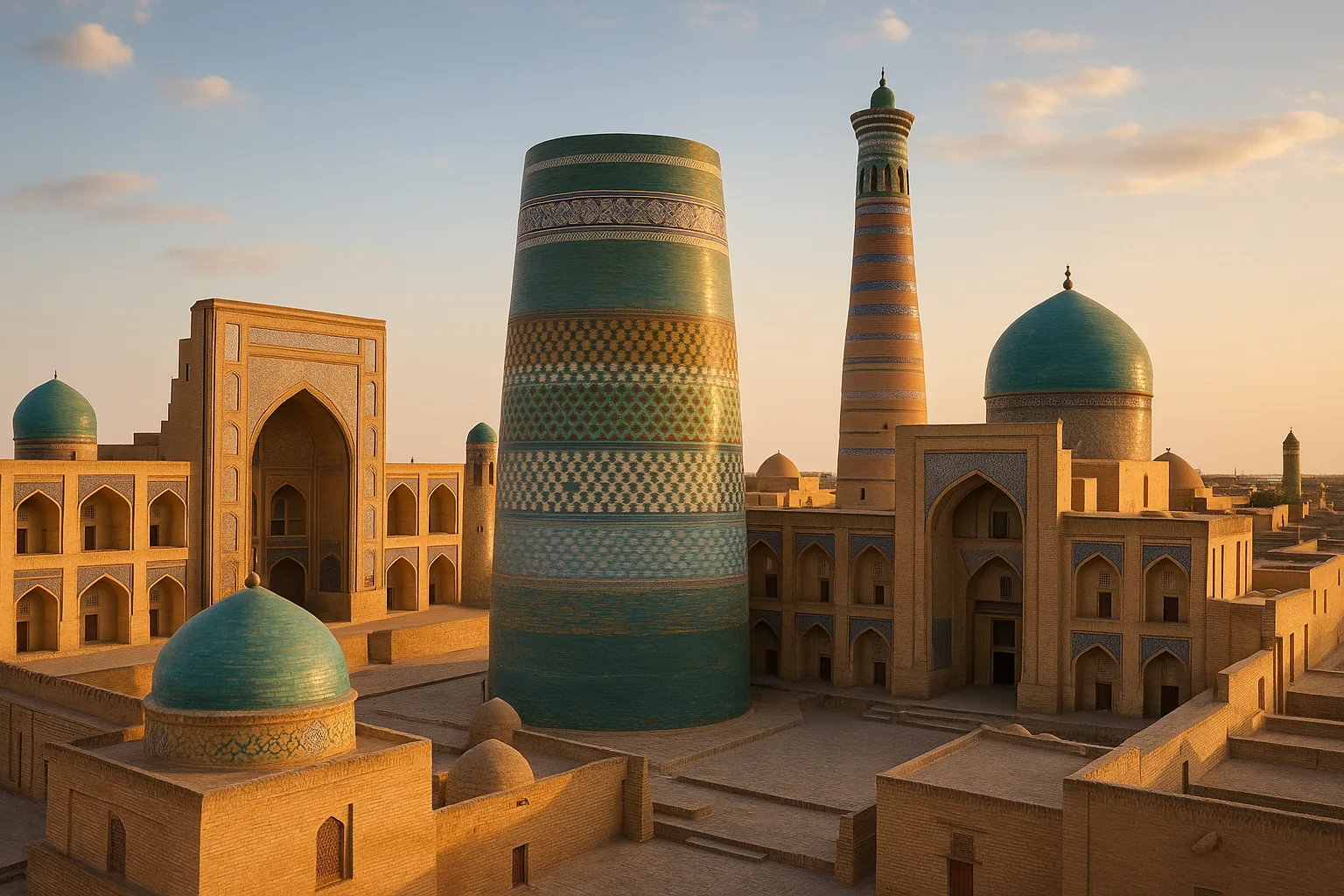
There’s a moment — somewhere between stepping through a mosaic-tiled archway and hearing the call to prayer echo across an ancient courtyard — when Uzbekistan stops feeling like a destination and starts feeling like a dream you didn’t know you had. The Uzbekistan Silk Road cities of Samarkand, Bukhara, Tashkent, and Khiva are some of the most visually and culturally overwhelming places on earth, and yet most travelers under thirty have never seriously considered putting them on their radar. That’s starting to change. Central Asia’s most captivating country is opening up to a new generation of curious, adventurous travelers — and if you’re the kind of person who wants to walk through history rather than read about it, this is your guide.
What the Silk Road Actually Was — and Why It Still Matters
Before you pack your bag, it helps to understand what you’re actually stepping into. The Silk Road was an ancient network of trading routes connecting East and West, where caravans journeyed thousands of miles carrying fine silks, precious porcelain, spices, glassware, and horses. It wasn’t a single road — it was a web of paths, oases, and city-states that shaped civilizations for centuries. The term itself was coined by the German geographer Ferdinand von Richthofen during his 19th-century expeditions to the east, though the routes themselves are far older.
Uzbekistan sits at the very heart of all of this. The country lies at the crossroads of Asia, where green oases interrupt vast deserts and blue-tiled domes rise above busy bazaars. Walking through its cities isn’t just sightseeing — it’s tracing the footsteps of merchants, scholars, conquerors, and poets who built something extraordinary. That context makes every monument, every market, and every shared meal feel loaded with meaning. And that’s exactly the kind of travel that stays with you.
Samarkand: The City That Lives Up to Its Legend
If Uzbekistan has a crown jewel, it’s Samarkand. This city has been inspiring travelers, traders, and conquerors for millennia, and the moment you arrive at Registan Square — a vast plaza framed by three enormous madrasas covered in intricate tilework — you’ll understand why. It’s one of those places where photographs genuinely fail to capture the scale and the feeling. You have to be there, standing in the middle of it, to fully absorb what you’re looking at.
But Samarkand isn’t just one monument. Wander a little further and you’ll find the Shahi Zinda necropolis, a historical cemetery made up of a long corridor of mausoleums decorated in some of the most dazzling tilework in the entire Islamic world. Blues, turquoises, and golds shimmer in the afternoon light. It’s quiet, spiritual, and genuinely moving — especially if you visit early in the morning before the tour groups arrive.
The city also rewards the kind of slow, unplanned exploration that young travelers tend to do best. Get lost in the streets around the old town. Find a tea house where locals are playing backgammon. Pick up a piece of hand-painted pottery from a workshop where the craftsperson has been doing this work their entire life. Samarkand has a living culture that runs alongside its ancient monuments, and connecting with both is what makes the experience feel complete.
Practical tips for Samarkand
- Visit Registan at dusk as well as during the day — the light changes everything.
- Hire a local guide for at least one morning; context transforms what you’re seeing.
- The area around the Siab Bazaar is great for fresh bread, dried fruit, and genuine local life.
- Allow at least two full days — one day is never enough.
Bukhara: The Living Museum You Can Actually Sleep In
Bukhara is the kind of place that makes you want to slow down. Where Samarkand feels grand and monumental, Bukhara feels intimate and lived-in. The old city is remarkably well-preserved — narrow lanes, ancient mosques, caravanserais, and bazaar domes that have been trading goods since the medieval era. Walking through it feels less like visiting a heritage site and more like wandering into a different century.
The Poi Kalyan complex — anchored by the towering Kalyan Minaret — is the obvious starting point, and it earns its reputation. But spend time beyond the highlights too. Bukhara has a strong tradition of suzani embroidery, and you’ll find workshops where artisans create intricate textile pieces using techniques passed down through generations. Even if you don’t buy anything, watching the process is fascinating.
👉 Read also: Silk Road Cities for Culture Seekers: Samarkand, Bukhara & Tashkent in Uzbekistan
One of the best things about Bukhara is that you can stay inside the history. There are guesthouses and small hotels converted from traditional courtyard homes — called havelis — where you sleep in a tiled room, have breakfast in a garden, and step directly out into the old city every morning. For young travelers on a budget, these places often offer surprisingly good value compared to what you’d pay for a fraction of the atmosphere in Western Europe.
Evenings in Bukhara are special. The main square around the Lyabi-Hauz pond fills up with locals and travelers sharing food, music, and conversation. It’s one of those spontaneous, communal experiences that reminds you why travel is worth doing in the first place.
Practical tips for Bukhara
- Stay in the old city if you can — location makes a huge difference here.
- The trading domes (covered bazaars) are still functioning markets; browse them properly.
- Try plov — Uzbekistan’s national dish of rice, carrots, and meat — at a local canteen rather than a tourist restaurant.
- Give yourself at least two to three days to explore at a comfortable pace.
Tashkent: The Capital That Surprises You
Most travelers use Tashkent as a gateway — it’s the country’s capital and main international hub — but it deserves more than just a night in transit. The city has a fascinating dual identity: it’s a modern, functioning metropolis with wide Soviet-era boulevards, a buzzing food scene, and contemporary art spaces, but it also has pockets of genuine old-city character that reward exploration.
The Chorsu Bazaar is one of the most vibrant markets in Central Asia. The main dome covers an enormous trading floor where vendors sell everything from spices and dried fruits to handmade ceramics and embroidered fabrics. Go hungry, because the food stalls around the perimeter are excellent. This is where Tashkent reveals its personality — noisy, colorful, generous, and completely alive.
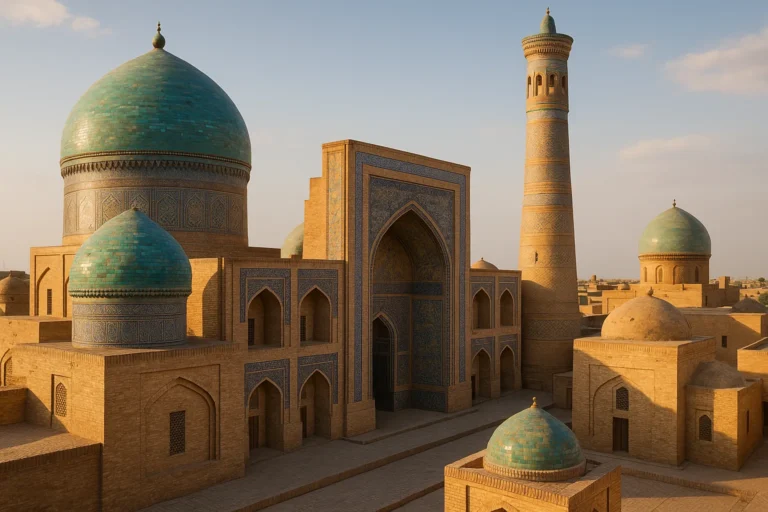
The city also has a strong café culture and a growing community of young creatives who are doing interesting things with food, design, and music. If you’re open to it, Tashkent can be the kind of place where you end up staying longer than planned because you keep finding reasons to explore. It’s also a good place to sort out any logistics before heading to the older cities — stock up on local currency, get your bearings, and talk to other travelers about what they discovered.
Khiva: The Walled City That Feels Like Another World
Khiva is the most remote of the four major Uzbekistan Silk Road cities, and that remoteness is part of what makes it so extraordinary. The inner walled city — Ichan-Qala — is essentially an open-air museum where you can walk between palaces, minarets, mosques, and madrasas within a compact, well-preserved area. It’s smaller than Samarkand or Bukhara, which means you can cover it on foot in a day or two, but the density of remarkable architecture is astonishing.
What sets Khiva apart is the feeling of stepping into something genuinely intact. The mud-brick walls, the narrow lanes, the carved wooden columns of the old palaces — it all feels less restored and more real than some of the more heavily visited sites elsewhere. Arrive in the late afternoon, when the light turns golden and the day-trippers have left, and you might find yourself almost alone in a courtyard that’s been standing for centuries.
Getting to Khiva takes a bit more effort — it’s typically reached by overnight train or a domestic flight from Tashkent — but that journey is part of the experience. The landscape you pass through, the conversations you have along the way, the sense of arriving somewhere that takes real commitment to reach: all of it adds up to something memorable.
👉 Read also: Uzbekistan's Silk Road Cities: Samarkand & Bukhara in 2026
Getting There, Getting Around, and Staying on Budget
Uzbekistan has become significantly more accessible in recent years. Many nationalities can now visit without a visa or obtain one on arrival, though you should always check the current requirements for your specific passport well in advance through an official government or embassy source. The country has invested in its tourism infrastructure, and the experience of traveling here is generally smooth and welcoming.
The high-speed train between Tashkent, Samarkand, and Bukhara is fast, comfortable, and genuinely enjoyable — a highlight in itself for many travelers. Khiva requires a separate journey, either by overnight train or a short domestic flight. A well-paced itinerary covering all four cities typically takes around nine to ten days, which gives you enough time to explore without feeling rushed. If you have two weeks, even better.
Accommodation options range from budget guesthouses to boutique hotels, and the mid-range options in Uzbekistan offer remarkable value compared to most European or Southeast Asian destinations at the same price point. Staying in a traditional courtyard guesthouse in Bukhara or Khiva is one of those experiences that costs relatively little but delivers a lot — good food, genuine hospitality, and a sense of being part of the place rather than just passing through.
Food is another area where your budget goes a long way. Uzbek cuisine is hearty and delicious — plov, samsa (baked pastries filled with meat or vegetables), lagman (pulled noodle soup), and fresh flatbreads called non are staples you’ll find everywhere. Eating at local canteens and bazaar stalls is both cheaper and more interesting than tourist restaurants, and it’s often how you end up having the best conversations with people.
Why Young Travelers Are Discovering Uzbekistan Right Now
There’s a particular kind of traveler who is drawn to the Uzbekistan Silk Road cities — someone who’s done the obvious European capitals, maybe backpacked Southeast Asia, and is now looking for something that feels genuinely different. Uzbekistan delivers that. It’s a destination where the history is on a scale that’s hard to comprehend, the culture is warm and genuinely curious about visitors, and the infrastructure is developed enough to travel comfortably without losing the sense of adventure.
It’s also a place where you’re unlikely to run into the same crowds you’d find in more heavily marketed destinations. That’s changing — and the window to experience it before mass tourism fully arrives is arguably open right now. For a generation of travelers who value authentic experiences over manufactured ones, that matters. You can explore a UNESCO-listed old city in Bukhara and find yourself almost alone in a courtyard. You can strike up a conversation at a tea house in Samarkand that turns into a shared meal and an invitation to someone’s home. Those moments are harder to find in places that have been on every travel bucket list for decades.
For a useful starting point on planning your route and understanding the region’s history, Advantour’s Silk Road Uzbekistan guide offers solid background on the cities and their historical connections.
What to Know Before You Go
- Best time to visit: Spring (April–May) and autumn (September–October) offer the most comfortable temperatures. Summers can be extremely hot, especially in Khiva and Bukhara.
- Currency: The Uzbek som is the local currency. Carry cash, especially outside of Tashkent, as card acceptance can be limited in smaller guesthouses and markets.
- Dress: Uzbekistan is a predominantly Muslim country. Dress modestly when visiting mosques and religious sites — cover shoulders and knees. Outside of sacred spaces, the dress code is relaxed.
- Language: Uzbek is the official language; Russian is widely spoken, especially among older generations. English is increasingly understood in tourist areas, but learning a few words of Uzbek or Russian goes a long way.
- Safety: Uzbekistan is generally considered very safe for travelers, including solo travelers. As always, use common sense and trust your instincts.
- Photography: Ask before photographing people, especially in markets and religious sites. Most people are happy to be photographed, and asking opens conversations.
Uzbekistan isn’t a destination that announces itself loudly. It doesn’t have a beach or a nightlife scene or a viral social media moment driving people there. What it has is something rarer: layers of history so deep and a culture so genuinely alive that every day of exploring feels like it’s adding something real to your understanding of the world. The cities of the Silk Road — Samarkand with its impossible blue domes, Bukhara with its labyrinthine lanes, Tashkent with its surprising energy, Khiva with its walled silence — each offer something the others don’t, and together they make for one of the most complete travel experiences available to anyone willing to look a little further than the usual options. Book the train ticket. Walk through the archway. Let the place surprise you.
This article was produced with AI assistance and reviewed editorially.


Almaty & Tashkent: Central Asia’s Modern Cities Beyond the Silk Road Clichés

Stay Smart in Asia: Budget Accommodation in Osaka, Kyoto & Kuala Lumpur 2026


