
North America
Mountain Towns in the US Rockies: Where to Stay in Vail, Telluride & Glacier National Park
Explore mountain towns in Colorado and Montana with guides to Vail and Telluride lodging, Glacier National Park stays, and adventure activities for every season.

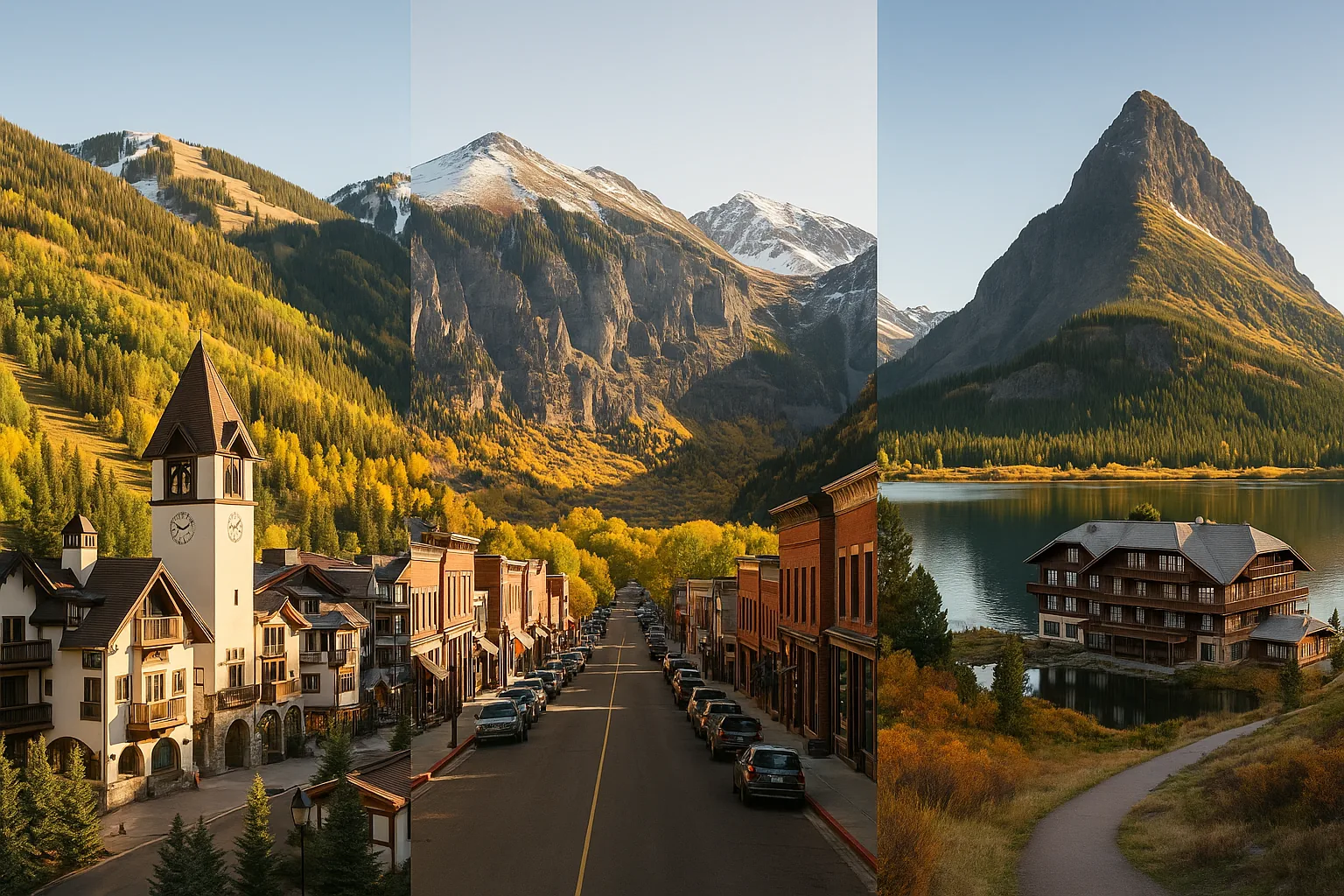
There’s something about mountain towns in Colorado and Montana that hits differently. Maybe it’s the way the air thins just enough to remind you you’re somewhere extraordinary, or the way a single trail can take you from a buzzing little main street to total wilderness in under an hour. Whether you’re drawn to the polished alpine energy of Vail, the raw, cinematic drama of Telluride, or the untouched grandeur of Glacier National Park, the mountain towns of Colorado and Montana offer the kind of travel that sticks with you. This guide breaks down what makes each destination worth your time, where to sleep, and how to make the most of every day you’re there.
Why Mountain Towns in Colorado and Montana Belong on Your Radar
The American Rockies stretch through some of the most dramatic landscapes on the continent. But it’s not just the scenery that draws travelers — it’s the culture that grows up around it. Mountain towns have their own rhythm. Life moves at a pace shaped by the seasons, the trails, and the weather. You’ll find a mix of locals who’ve lived there for generations, seasonal workers chasing powder or summer sun, and travelers passing through who end up staying far longer than planned.
What makes mountain towns in Colorado and Montana particularly compelling for young travelers is the range they offer. You can go from a rooftop bar to a backcountry trail to a local farmers’ market all in the same day. These aren’t destinations you just pass through — they’re places you actually live for a while, even if only for a week.
The key is knowing what each place does best. Vail and Telluride are both Colorado mountain towns, but they feel completely different on the ground. And Glacier National Park in Montana is in a category of its own. Understanding those differences helps you choose the right base — and plan the right kind of trip.
Vail, Colorado: Alpine Energy with Room to Breathe
Vail has a reputation for being upscale, and that reputation isn’t wrong — but it’s also not the whole story. Yes, there are luxury hotels and high-end restaurants. But there’s also a genuinely walkable, energetic town that welcomes travelers at every budget level, especially if you’re willing to be a little flexible about timing and accommodation type.
The town itself is built around Vail Village, a pedestrian-only area that feels almost European in its layout. Stone bridges, alpine architecture, and a creek running through the center give it a character that’s easy to fall into. You don’t need a car once you’re here — everything from gear rental shops to coffee spots to trailheads is within walking distance.
Where to Sleep in Vail
Accommodation in Vail runs the full spectrum. At the higher end, you’ll find full-service lodges and hotel-style properties right in the village. For budget-conscious travelers, the smarter move is to look at properties on the edges of the village or in nearby East Vail and West Vail, where prices tend to drop considerably while still keeping you close to the action.
Hostels aren’t as common here as in more backpacker-heavy destinations, but vacation rental platforms often list shared condos and basement suites that can work out to a reasonable per-person rate if you’re traveling with a group. Booking during shoulder season — late spring or early autumn, when neither ski season nor peak summer has kicked in — can also make a real difference to your wallet without sacrificing much in terms of experience.
What to Do Beyond the Slopes
Most people associate Vail with skiing, and the mountain is genuinely world-class in winter. But summer Vail is its own thing entirely. The same gondolas that carry skiers up in winter take hikers up to alpine meadows, wildflower fields, and ridge walks with views that go on forever. Vail Mountain transforms into a hiking and mountain biking destination, with trails ranging from easy lakeside walks to serious multi-hour ridge routes.
In town, the Gerald R. Ford Amphitheater hosts outdoor concerts and events through the warmer months. The Betty Ford Alpine Gardens — free to visit and sitting at one of the highest elevations of any botanical garden in the country — is worth an hour of anyone’s afternoon. And if you want to explore further, the Eagle River corridor offers fly fishing, kayaking, and some genuinely peaceful riverside camping a short drive away.
👉 Read also: USA Road Trip Bases: Where to Stay in 7 Underrated American Towns (2026)
Telluride, Colorado: Drama, History, and the San Juans
If Vail is polished, Telluride is raw. Situated deep in the San Juan Mountains of Colorado, Telluride sits at the end of a box canyon — meaning there’s literally one road in and one road out. That geographic isolation is part of what makes it so special. The town hasn’t been able to sprawl the way other resort destinations have. What you get instead is a tight, walkable historic district with Victorian-era buildings, independent shops, and a community that takes its mountain identity seriously.
Getting to Telluride is part of the adventure. The drive through the San Juans — especially if you come via the Million Dollar Highway section of US-550 — is one of the most dramatic road trips in the American West. Narrow lanes, sheer drop-offs, and jaw-dropping views around every bend. If you’re the kind of traveler who loves a journey as much as a destination, this one delivers.
Finding a Place to Stay
Telluride’s accommodation scene reflects its character. You’ll find historic hotels in the main town, plus a newer resort area called Mountain Village connected to Telluride by a free gondola. Mountain Village tends to have more modern lodging options and can sometimes offer better value, while still giving you easy access to the historic town below.
For budget travelers, the best strategy is to look at vacation rentals with multiple bedrooms that can be split across a group, or to consider camping in the surrounding national forest land. The San Juan National Forest surrounds the area and offers dispersed camping opportunities that put you right in the landscape — waking up to mountain views without paying resort prices.
What Makes Telluride Different
Telluride has a genuine festival culture. Throughout the warmer months, the town hosts a rotating calendar of music, film, and cultural events that draw visitors from across the country. These events transform the already-vibrant main street into something even more alive — and they’re often free or low-cost to attend, at least in part.
The hiking around Telluride is exceptional. Bridal Veil Falls, the tallest free-falling waterfall in Colorado, sits just above town and is reachable on foot. The Bear Creek Trail climbs through aspen groves into alpine terrain. And for those willing to push further, the surrounding peaks offer serious mountaineering routes alongside more accessible day hikes. The town also has a genuine commitment to its mining history — you can explore remnants of that era throughout the canyon, which adds a layer of storytelling to the landscape that you don’t find everywhere.
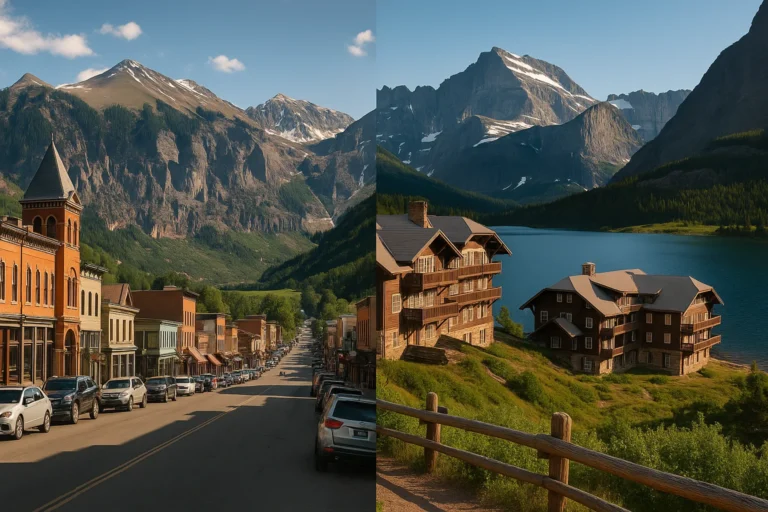
Glacier National Park, Montana: Where the Wilderness Takes Over
Shifting north to Glacier National Park in Montana feels like crossing into a different world entirely. This is one of the most intact ecosystems in the continental United States — a place where grizzly bears still roam, where glaciers (though shrinking) still define the high country, and where the sheer scale of the landscape can genuinely stop you in your tracks.
Unlike Vail or Telluride, Glacier isn’t really a town experience. It’s a park experience. The small communities around it — Whitefish, Kalispell, and others — serve as practical bases, but the draw is the park itself. Understanding that distinction helps you plan better. You’re not here to wander a main street; you’re here to disappear into the mountains.
Where to Stay Near Glacier
Accommodation options around Glacier range from in-park lodges and campgrounds to hotels and vacation rentals in the gateway towns. Many Glacier campground, located on the east side of the park, is one of the most sought-after spots in the entire national park system — and for good reason. It puts you right in the heart of some of the best hiking terrain in the park, surrounded by peaks and sitting beside a beautiful lake. Camping here runs around $20 per night, and the campground offers group sites, making it a genuinely affordable option for travelers who don’t mind sleeping under the stars.
Getting a reservation at Many Glacier or any of the in-park campgrounds requires planning ahead — these spots fill up fast, often months in advance. If you miss the reservation window, the gateway towns offer a range of hotels, motels, and hostels at various price points. Whitefish, about an hour from the west entrance, has a particularly good selection and a lively enough downtown to keep you entertained on rest days.
👉 Read also: Where to Stay in US National Parks: Budget Lodging Near Arches, Rocky Mountain & Great Smoky Mountains
For those who want a more curated experience, Jeff Hyer — a travel advisor who was born and raised in northwest Montana — has made it his mission to evaluate accommodation options throughout the Glacier region. Having personally stayed at more than fifteen different properties in and around the park, he offers firsthand knowledge that goes well beyond what most travel sites can provide. His insights are worth seeking out if you’re trying to narrow down where to base yourself.
Getting Around Montana’s Mountain Region
This is where Montana differs most from the Colorado options. Having your own vehicle is essentially non-negotiable for a Glacier trip. The park is large, the distances between trailheads are significant, and public transport options are limited. Renting a car — ideally something with decent clearance if you plan to explore dirt roads — gives you the freedom to chase the light, arrive at trailheads early before crowds build, and explore beyond the main corridor.
The Going-to-the-Sun Road, the park’s famous alpine highway, is a destination in itself. It climbs through some of the most extraordinary scenery in North America, but it’s also subject to seasonal closures and vehicle size restrictions. Checking road conditions and permit requirements before you go is essential, especially if you’re visiting in early summer when the road may still be partially closed.
Seasonal Timing: When to Go and What to Expect
Timing matters enormously when it comes to mountain towns in Colorado and Montana. Each destination has a distinct seasonal personality, and choosing the right window can completely change your experience.
In Vail and Telluride, winter brings skiing and snowboarding culture at its peak — but also peak prices and peak crowds. If your goal is hitting the slopes, that’s the trade-off you make. Summer, roughly late June through September, is when the hiking, biking, and festival scenes come alive. Shoulder seasons — May and October — offer the best of both worlds: lower prices, thinner crowds, and landscapes in transition that have their own kind of beauty.
For Glacier National Park, the window is narrower. The park is technically open year-round, but the full experience — including access to the Going-to-the-Sun Road and most trailheads — is really only available from roughly late June through mid-September. July and August are the busiest months; visiting in early July or late August can help you avoid the absolute peak while still catching the park in full summer mode. Spring and autumn visits reward experienced hikers who don’t mind variable conditions and reduced services.
Practical Tips for Exploring All Three Destinations
- Book early — especially for Glacier. Campgrounds and popular lodges fill up months in advance. Set a reminder for when reservations open and be ready to move fast.
- Layer your clothing — mountain weather changes fast at altitude. Even in July, temperatures can drop significantly in the evening or when storms roll in. Packing a lightweight insulated jacket and a waterproof shell is always a good call.
- Consider traveling mid-week — weekends in all three destinations get noticeably busier. Arriving on a Tuesday or Wednesday and leaving on a Saturday gives you the quiet days without missing the weekend energy.
- Explore beyond the main attractions — in Vail, that might mean heading into the Eagle River valley. In Telluride, it’s taking the gondola up to Mountain Village and hiking from there. In Glacier, it’s choosing one of the less-visited trailheads on the east side of the park.
- Respect the altitude — Vail sits above 8,000 feet, and Telluride is even higher. Give yourself a day to acclimatize before pushing hard on trails. Drink more water than you think you need, and don’t underestimate how quickly altitude can affect your energy levels.
- Support local businesses — the independent restaurants, gear shops, and guides in these towns are what give them their character. Choosing them over chains makes a real difference to the communities that make these places worth visiting.
For official trail conditions, permit information, and park updates, the National Park Service’s Glacier National Park page is the most reliable source you’ll find.
How to Choose Between These Three Destinations
If you’re trying to decide where to focus your time, think about what kind of experience you’re actually after. Vail is the move if you want a blend of outdoor adventure and town culture — easy access to trails, good food, and a social scene that doesn’t require much effort to find. Telluride is for travelers who want something with more edge — more dramatic scenery, more history, more of a sense that you’ve earned your way to somewhere special. And Glacier is for those who want to genuinely disappear into wilderness, where the mountains are the whole point and everything else is just logistics.
Of course, if you have the time, combining two or more of these destinations into a longer road trip is entirely possible — and deeply rewarding. A week in Colorado’s mountain towns followed by a drive north into Montana creates a journey that covers an extraordinary range of landscapes, cultures, and experiences. The mountain towns of Colorado and Montana aren’t just individual destinations; together, they form one of the great American road trip routes.
Whatever draws you there — the powder, the peaks, the festivals, the wildlife, or simply the feeling of being somewhere that operates on its own terms — these mountains will give you more than you came looking for. Pack light, plan smart, and leave room for the unexpected. That’s where the best stories always happen.
This article was produced with AI assistance and reviewed editorially.


Mountain Towns in the US Rockies: Where to Stay in Vail, Telluride & Glacier National Park

Japan & Turkey for Budget Backpackers: Fukuoka & Bodrum Neighborhood Guides


