
North America
Where to Stay in US National Parks: Budget Lodging Near Arches, Rocky Mountain & Great Smoky Mountains
Find affordable places to stay near three major US national parks. Compare hostels, cabins, and budget hotels near Arches, Rocky Mountain, and Great Smoky Mountains with

Why National Parks and Budget Travel Go Together Better Than You Think
There’s a particular kind of freedom that comes from waking up early, stepping outside into cold mountain air, and knowing that one of America’s most spectacular landscapes is right in front of you. Finding budget lodging near national parks used to feel like a compromise — like you were trading comfort for adventure. But that’s not really true anymore. Whether you’re planning a road trip through the American Southwest, chasing alpine trails in Colorado, or exploring the misty ridges of Appalachia, there are genuinely good, affordable places to stay that put you close to the action without draining your account.
This guide focuses on three parks that consistently draw young travelers: Arches National Park in Utah, Rocky Mountain National Park in Colorado, and Great Smoky Mountains National Park spanning Tennessee and North Carolina. Each one has a different character, a different surrounding landscape, and a different set of gateway towns with lodging options to match. We’ll walk through what’s available, what to expect, and how to approach booking — especially during the busy months when everyone else wants to be there too.
Arches National Park, Utah: Moab Is Your Home Base
Arches is one of those places that genuinely looks like another planet. More than two thousand natural stone arches rise out of the red desert, and the light at sunrise and sunset turns everything gold and crimson. It’s visually overwhelming in the best way. And the good news for budget travelers is that the town of Moab — the primary gateway to the park — has a solid range of lodging options that won’t force you to choose between accommodation and actually doing things.
What Moab Offers
Moab is a proper adventure town. It’s the kind of place where you grab coffee at a local café before a big hike and end the day at a brewery talking to other travelers about the trails you tackled. The town has motels, vacation rentals, and camping options spread across the area, giving you real flexibility depending on your budget and travel style.
If you’re traveling light and want to keep costs low, camping is one of the most rewarding ways to experience the Arches area. There are campgrounds inside the park itself, though they fill up fast — especially from spring through fall. Booking well in advance through the official reservation system is essential if you want a spot inside the park boundary. Outside the park, the surrounding desert has dispersed camping areas and established campgrounds that give you a similarly immersive experience at a lower cost.
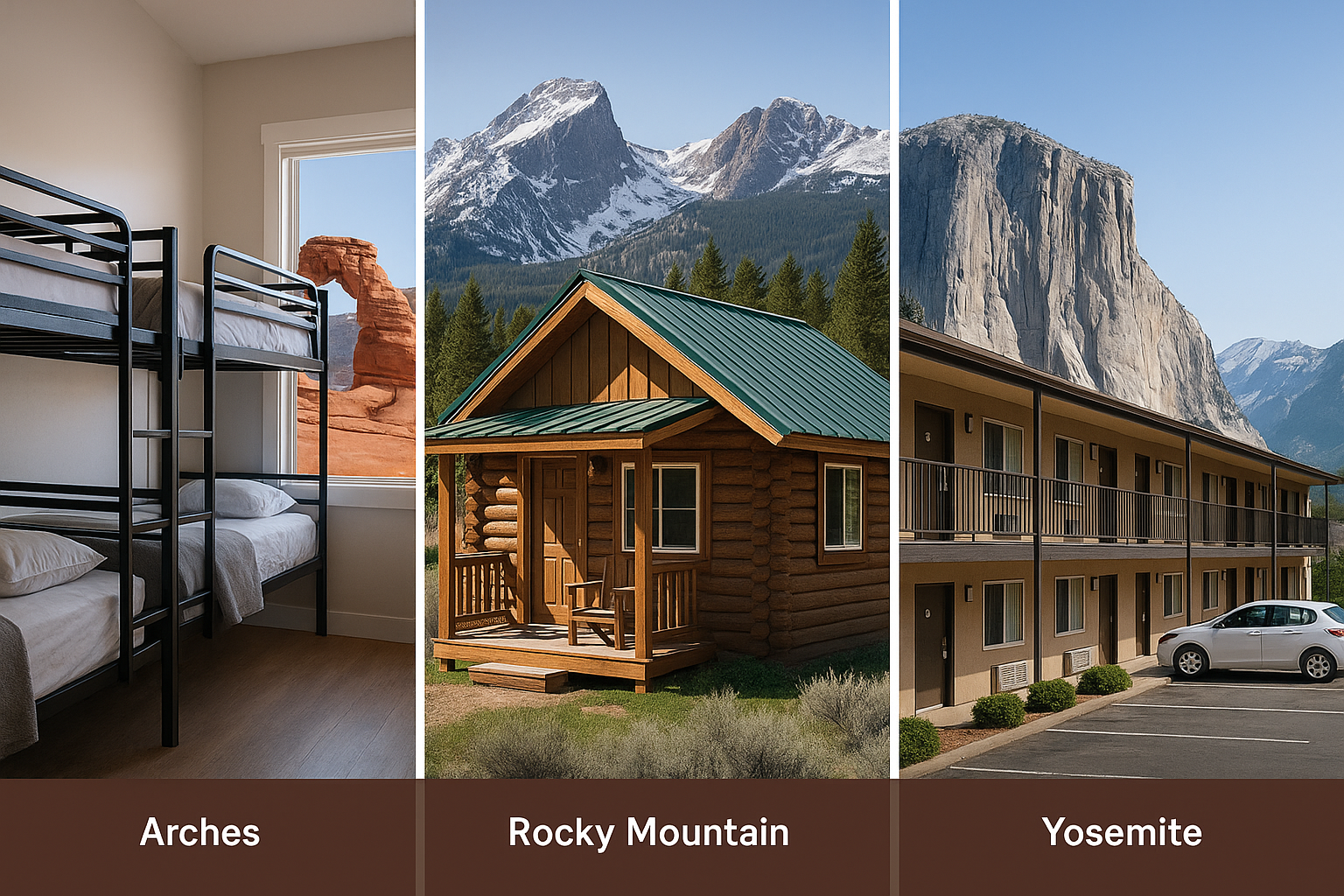
For those who want a roof overhead, Moab’s motel scene covers the basics well. You’ll find clean, no-frills rooms that are perfectly comfortable after a long day on the trails. Vacation rentals are another option worth exploring, particularly if you’re traveling with a group — splitting a house or cabin between four or five people can work out cheaper per person than individual motel rooms, and you get a kitchen, which helps enormously with food costs.
The lodging landscape around Arches also includes boondocking — essentially free camping on public lands managed by the Bureau of Land Management. If you have a vehicle suited for it and you’re comfortable with a more self-sufficient setup, this can be one of the most memorable ways to experience the Utah desert. You wake up with nothing between you and the landscape. For a full breakdown of accommodation types near Arches, Adventures of a Plusk’s guide to staying near Arches covers the range in useful detail.
Booking Tips for Arches
Peak season at Arches runs roughly from spring through early summer and again in autumn, when the temperatures are manageable and the light is extraordinary. During these windows, campground reservations inside the park go quickly — sometimes within minutes of becoming available. Set reminders, check the reservation window dates, and be ready to book the moment spots open. If you miss out, don’t panic. Moab’s surrounding options mean you’re never far from a place to sleep, even if it’s not exactly where you’d planned.
Rocky Mountain National Park, Colorado: Gateway Towns with Real Character
Rocky Mountain National Park is the kind of place that makes you feel genuinely small — in the best way. Towering peaks, alpine lakes, and meadows full of elk create a landscape that shifts dramatically with the seasons. The park draws visitors year-round, but summer and early autumn are when the trails are most accessible and the crowds are at their peak.
One important thing to know upfront: there are no hotels or lodges inside Rocky Mountain National Park itself. All accommodation is located in the surrounding gateway towns, primarily Estes Park on the eastern side and Grand Lake on the western side. This isn’t a drawback — both towns have genuine character and offer a range of places to stay, from budget-friendly motels to cozy cabins.
Estes Park: The Eastern Gateway
Estes Park sits at the eastern entrance to the park and is the larger of the two main gateway towns. It has a lively main street with restaurants, shops, and the kind of energy that comes from being surrounded by people who are all there for the same reason — to get outside and explore. For budget travelers, Estes Park offers motels and smaller inns that are considerably more affordable than the upscale lodges that also dot the area. Booking early is key here, particularly for summer weekends.
If you’re open to camping, Rocky Mountain National Park has several large campgrounds within its boundaries, as well as wilderness tent sites for those willing to go deeper into the backcountry. Campground reservations are managed through the national system and, like Arches, they fill up fast during peak months. Wilderness permits for backcountry camping require a separate process, but they open up parts of the park that most visitors never reach — which is a reward in itself.
Grand Lake: The Quieter Side
Grand Lake, on the park’s western edge, has a slower pace and a slightly different feel. It’s smaller and less busy than Estes Park, which makes it appealing if you want to avoid the biggest crowds. Budget lodging options here tend toward cabins and small motels, and the town itself sits on the edge of Colorado’s largest natural lake, which adds a whole other dimension to the experience.
For a comprehensive look at lodging options across both sides of the park, Rocky Mountain National Park’s lodging gallery is a useful starting point for planning your stay.
Making the Most of Your Budget at Rocky Mountain
One practical strategy for keeping costs down at Rocky Mountain is to visit during the shoulder seasons — late spring or early autumn — when accommodation prices tend to be lower and the park is less congested. The landscape is stunning in these periods: wildflowers in late spring, golden aspen trees in autumn. You also get a more genuine sense of the place when you’re not competing with peak-season crowds for trailhead parking spots.
If you’re driving in from Denver or another Colorado city, consider making the trip mid-week rather than on a weekend. Prices for accommodation in both Estes Park and Grand Lake tend to soften on weekdays, and the trails feel noticeably quieter.
Great Smoky Mountains National Park: America’s Most-Visited Park
The numbers around Great Smoky Mountains are genuinely staggering. The park covers 522,427 acres across Tennessee and North Carolina, and it receives over 12 million visitors every year — more than any other national park in the country. That volume of visitors means the surrounding towns have developed a wide range of accommodation options, including plenty that are accessible on a younger traveler’s budget.
The landscape here is different from the stark desert of Arches or the alpine drama of Rocky Mountain. The Smokies are lush, green, and atmospheric — ancient mountains wrapped in mist, with dense forests that turn extraordinary shades of red and orange in autumn. It’s a place that rewards slow exploration. Early morning hikes before the crowds arrive, quiet drives along the Cades Cove loop, waterfalls tucked into the forest — this park has depth that takes multiple visits to fully appreciate.
Gateway Towns and Budget Lodging Options
The Tennessee side of the park is anchored by Pigeon Forge and Gatlinburg, while the North Carolina side has quieter options like Bryson City and Maggie Valley. Each of these towns has a distinct character and a range of places to stay.
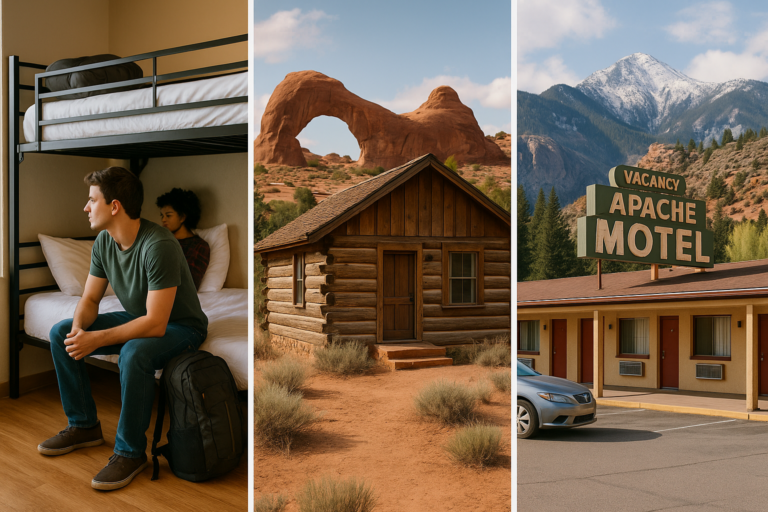
Pigeon Forge is the most commercial of the gateway towns — it’s busy, built for tourism, and has an enormous number of accommodation options. With around 198 budget hotel listings in the area, it’s one of the easiest places to find an affordable room near the park. The trade-off is that Pigeon Forge itself is a sensory experience of its own, with attractions and entertainment venues lining the main strip. If you’re there primarily for the park, it can feel like a lot. But for budget travelers who want convenience and a wide selection of options, it delivers.
Bryson City, on the North Carolina side, has a completely different atmosphere. It’s small, genuinely charming, and sits right at the edge of the park’s southern boundary. With around 34 budget hotel options in the area, it’s a more limited selection, but the town itself is worth the trip. There’s a real community here, with local restaurants and a slower pace that feels like a genuine contrast to the park’s wilder spaces.
Maggie Valley offers another quieter alternative on the North Carolina side, with around 31 budget accommodation options. It’s a good base if you want to explore the southern sections of the park without the crowds that gather on the Tennessee side.
Camping in the Smokies
The park has several developed campgrounds across both states, and they’re popular for good reason — waking up inside the park, with the forest sounds and morning mist, is an experience that no motel room can replicate. Campground reservations are strongly recommended during peak season, particularly in summer and during the autumn leaf season, which draws enormous numbers of visitors.
For a curated look at where to stay across both sides of the park, Condé Nast Traveler’s guide to Great Smoky Mountains accommodation covers a range of options with helpful context.
Cross-Park Strategies: How to Book Smart on a Budget
Across all three parks, a few consistent principles apply when you’re trying to find good budget lodging near national parks without ending up disappointed or overpaying.
Book Earlier Than You Think You Need To
This is the single most important thing. National park gateway towns fill up fast during peak season, and campgrounds inside the parks fill up even faster. The reservation windows for park campgrounds open months in advance, and popular spots are often gone within hours. Mark those dates in your calendar and treat them like a priority.
Consider Weekday and Shoulder Season Stays
Prices for accommodation near all three of these parks tend to be noticeably lower mid-week and outside of the main summer rush. If your schedule has any flexibility, shifting your visit by even a few days can make a real difference to both your budget and your experience. Shoulder seasons — late spring and early autumn — often offer the best combination of good weather, lower prices, and smaller crowds.
Think About What You Actually Need
Budget lodging near national parks doesn’t have to mean roughing it. But it does mean being honest about what you actually need versus what you think you need. A basic motel room near Moab is perfectly comfortable after a day of hiking under the Utah sun. A campsite inside Rocky Mountain National Park gives you something that no hotel room can — the sound of the wind through the pines and a sky full of stars. Focus on the experience you’re there for, and let that guide your accommodation choices rather than defaulting to what’s most comfortable on paper.
Use Multiple Booking Platforms
Don’t rely on a single booking site. Prices for the same property can vary across platforms, and some smaller motels or cabin rentals in gateway towns may only list on one or two sites. Check the property’s own website too — direct booking sometimes comes with a small discount or better cancellation terms.
Group Travel Can Unlock Better Value
If you’re traveling with friends, vacation rentals and cabin rentals near all three parks can work out to be excellent value when the cost is split. You get more space, a kitchen to cook in (which cuts food costs significantly), and a shared base that makes the whole trip feel more like an adventure and less like a series of logistics.
The Bigger Picture: Why These Parks Are Worth the Effort
America’s national parks are some of the most accessible wilderness areas in the world. The infrastructure around them — the gateway towns, the campgrounds, the trail systems — exists to make these landscapes reachable for everyone. And while the most famous parks do get busy, the experience of standing inside Arches as the morning light hits the sandstone, or watching elk cross a meadow in Rocky Mountain, or looking out over the Smokies from a ridge above the mist, is something that stays with you. These aren’t just places to visit. They’re places that change the way you see things.
Finding budget lodging near national parks is genuinely possible. It takes a bit of planning, some flexibility, and the willingness to prioritize the experience over the amenities. But that’s exactly the kind of travel that tends to produce the best stories — the ones you’re still telling years later, to anyone who will listen. Start planning, book early, and get out there. The parks are waiting.
This article was produced with AI assistance and reviewed editorially.


Vietnam Uncovered: Beyond the Chaos, Into the Real Story

Beyond the Guidebook: What Hanoi Actually Feels Like


