
Asia
Kumano Kodo Trail: Japan’s Sacred Pilgrimage Hike (5 Days, Costs & Logistics)
Walk Japan’s ancient pilgrimage route through the Kii Mountains. This guide covers the 5-day Nakahechi route, accommodation costs, logistics from Tokyo, and what makes th

Why the Kumano Kodo Trail Should Be on Every Young Traveler’s Radar
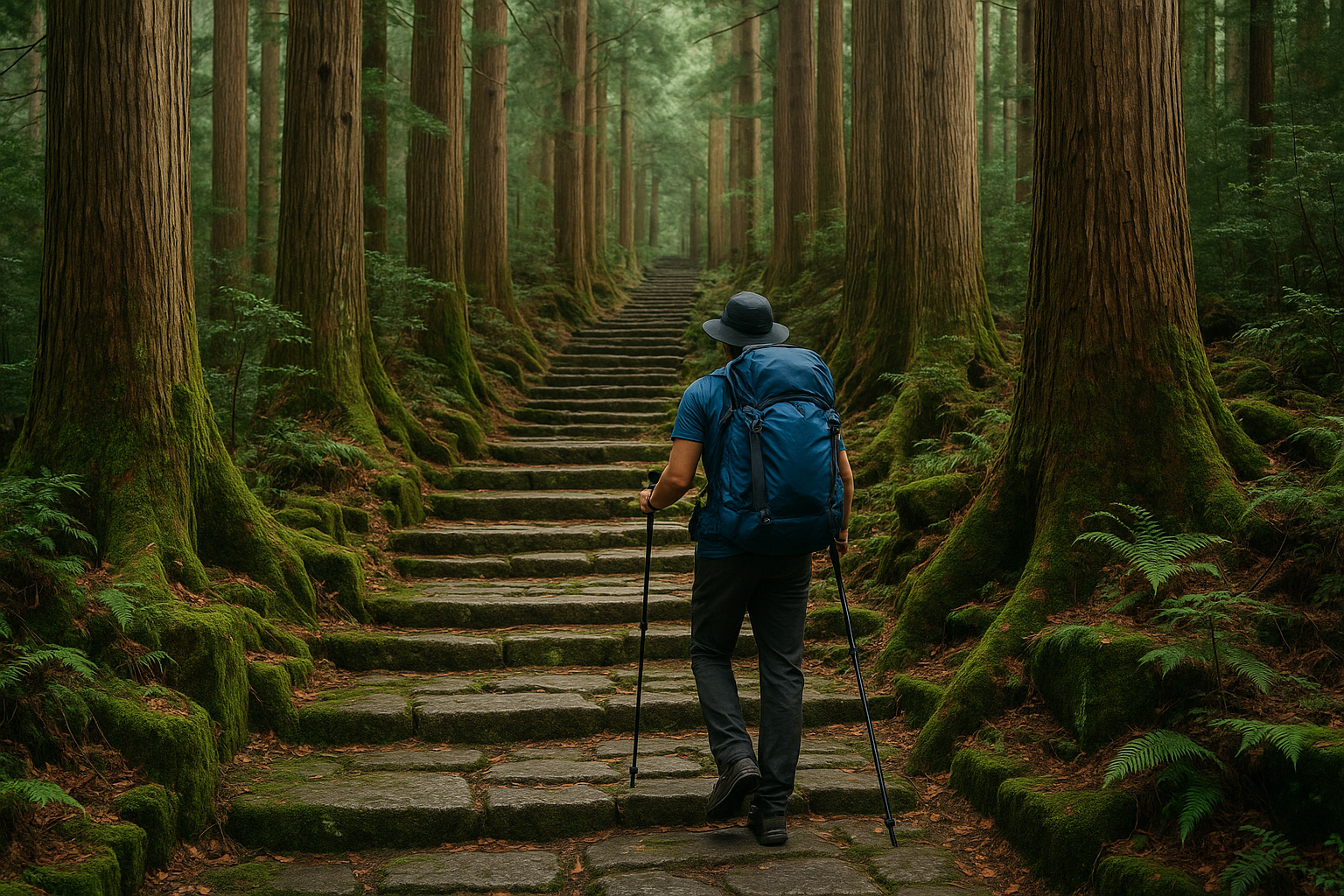
There are hikes, and then there are journeys that stay with you long after your boots dry out. The Kumano Kodo trail is firmly in the second category. Winding through the mist-covered Kii Mountains of Japan, this ancient pilgrimage route has been guiding travelers for over a thousand years — and it still feels like stepping into another world. It’s not just a hike. It’s one of the most spiritually charged, visually stunning, and culturally rich walks you can do anywhere on the planet.
What makes it genuinely special? The Kumano Kodo trail holds the rare distinction of being one of only two pilgrimage routes in the world certified by UNESCO as a World Heritage Site — the other being the Camino de Santiago in Spain. That alone tells you something about the weight this place carries. But unlike the Camino, the Kumano Kodo remains relatively under the radar for international travelers, which means you’re walking through cedar forests and past family farms without the crowds that often come with bucket-list destinations. If you’re between 16 and 30 and craving something that feels genuinely off the beaten path, this is it.
The History Behind the Hike
The trail’s roots stretch back to the 9th century, when it began as a spiritual trek through the mountains of the Kii Peninsula. Emperors, nobles, and ordinary pilgrims alike made the journey to pay their respects at three sacred Shinto shrines: Kumano Hongu Taisha, Kumano Nachi Taisha, and Kumano Hayatama Taisha. Together, these shrines are known as the Kumano Sanzan, and reaching them has been considered an act of deep spiritual significance for over a millennium.
The trail itself is a network of interwoven paths rather than a single straight line, which means you can approach the shrines from different directions and tailor your journey based on how much time and energy you have. The most popular route for international hikers today is the Nakahechi route, which starts in the coastal town of Kii-Tanabe in the south, turns northeast through the mountains, and eventually ends at the coast in Kii-Katsura. Along the way, the route winds through small villages, past family farms, and deep into misty cedar forests that look remarkably similar to how they must have appeared centuries ago.
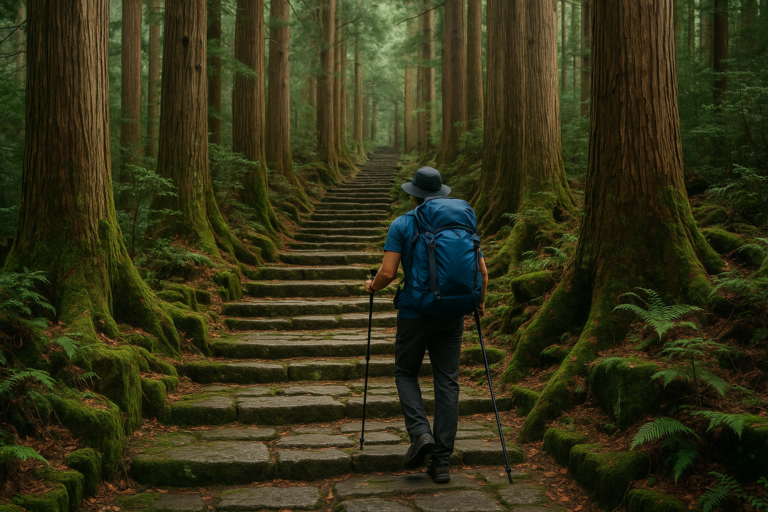
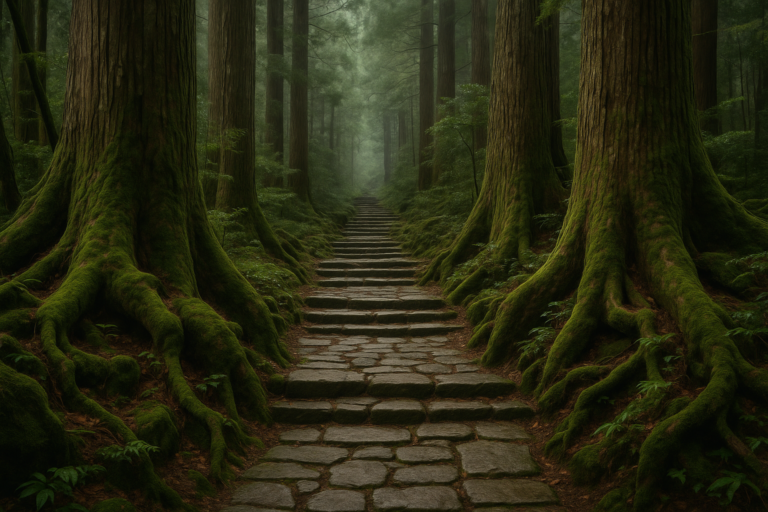
This isn’t a trail that’s been modernized for tourism. The stones underfoot are worn smooth by generations of pilgrims. The small stone markers and moss-covered lanterns you pass weren’t placed there for Instagram — they’ve been there for hundreds of years. That authenticity is exactly what makes the experience so powerful.
Planning Your 5-Day Adventure on the Kumano Kodo
Most hikers find that five days gives you enough time to walk the core sections of the Nakahechi route without feeling rushed. That said, the trail is flexible, and your exact daily breakdown will depend on your fitness level, how much you want to linger in certain spots, and where you decide to stay each night.
A typical approach looks something like this:
- Day 1: Arrive in Kii-Tanabe and get oriented. This coastal town is your gateway to the trail, and it’s worth spending an evening here to pick up supplies, grab a meal, and mentally prepare for what’s ahead.
- Day 2: Begin walking. The early sections of the Nakahechi route ease you in with manageable terrain, passing through forested hillsides and small rural communities. You’ll start to feel the rhythm of pilgrimage walking — slow, intentional, and deeply present.
- Day 3: Push deeper into the mountains. This is where the trail really opens up, with longer stretches through ancient cedar forest and increasingly dramatic scenery. The physical challenge picks up, but so does the sense of being somewhere truly remote.
- Day 4: Approach the sacred sites. Arriving at Kumano Hongu Taisha after days of walking is an experience that’s hard to put into words. The scale of the grand torii gate and the atmosphere of the shrine itself hit differently when you’ve earned your way there on foot.
- Day 5: Continue toward the coast or explore the surrounding area before making your way back. Some hikers extend their trip to visit Kumano Nachi Taisha, home to Japan’s tallest waterfall, which adds a spectacular visual finale to the journey.
Keep in mind that these are general guidelines rather than a rigid schedule. The Kumano Kodo rewards flexibility. If you find a village that captivates you, stay longer. If your legs are tired, rest. The whole point of a pilgrimage is the journey, not the pace.
Getting There: From Tokyo or Osaka
The Kii Peninsula is in Wakayama Prefecture, and while it’s not the easiest place to reach, it’s absolutely manageable with a bit of planning. Most travelers use either Tokyo or Osaka as their starting point.
From Osaka, the journey is more straightforward. The Kii Peninsula is served by the JR Kisei Line, and you can reach Kii-Tanabe by train in a few hours. If you have a Japan Rail Pass — which is well worth considering if you’re planning to travel around Japan more broadly — this leg of the journey is covered.
From Tokyo, the most efficient route is to take the Shinkansen to Shin-Osaka and then connect to the Kii Peninsula from there. The total travel time from Tokyo to the trailhead is roughly half a day, so plan to arrive in Kii-Tanabe in the afternoon and use your first evening to settle in.
There’s also a highway bus option from Osaka and other major cities, which tends to be cheaper than the train. If you’re watching your budget closely, it’s worth comparing both options before you book. Either way, getting to the trail is a journey in itself — a long ride through increasingly rural Japan that sets the tone perfectly for what’s ahead.
Where to Sleep: Accommodation Along the Trail
This is one of the most practical questions hikers have, and the good news is that the Kumano Kodo has a well-established accommodation network. You won’t be wild camping in bear country — though you will be sleeping in places that feel genuinely local and often deeply charming.
The most common options are guesthouses and minshuku (family-run Japanese inns), which are scattered along the main routes. These tend to offer simple but comfortable rooms, and many include breakfast and dinner in the price — which is a real bonus when you’re tired from a full day of walking and the nearest convenience store is a long way away.
For a more immersive experience, look into staying at a ryokan — a traditional Japanese inn. These often come with tatami floors, futon bedding, and communal baths, and they offer a window into Japanese hospitality that you won’t find in a city hotel. Prices vary depending on the location and what’s included, but it’s worth budgeting on the higher end for at least one night in a proper ryokan. It’s the kind of experience you’ll be describing to people for years.
Booking ahead is strongly recommended, especially during peak seasons. The accommodation network along the trail is not huge, and spots fill up. The Much Better Adventures guide to the Kumano Kodo has useful tips on planning your accommodation strategy, and it’s worth reading before you finalize anything.
What It Actually Costs
One of the most common questions is: how much does this trip actually cost? The honest answer is that it depends significantly on how you travel, where you stay, and how much you eat out versus self-catering.
To give you a rough sense of scale: one documented account of a three-day version of the hike came in at around $575 for two people, covering accommodation and basic expenses. That works out to roughly $95 per person per day — not cheap by backpacker standards, but not extreme either, especially given that many guesthouses include meals.
A five-day trip will naturally cost more, but you can manage the budget by:
- Choosing guesthouses over ryokan for most nights, saving the splurge for one special evening
- Picking up food at convenience stores or local shops in the towns you pass through
- Using a Japan Rail Pass if you’re also planning to travel elsewhere in Japan
- Traveling in the shoulder season rather than peak autumn or spring periods, when accommodation prices can rise
Japan has a reputation for being expensive, and it’s not entirely undeserved — but the Kumano Kodo is actually one of the more budget-friendly ways to experience rural Japan authentically. You’re not paying for luxury. You’re paying for access to something rare.
When to Go and What to Expect from the Seasons
The Kumano Kodo is a year-round trail, but the experience changes dramatically depending on when you visit. Each season brings something different, and none of them is wrong — it just depends on what you’re looking for.
Spring (roughly March to May) brings cherry blossoms and fresh greenery, with mild temperatures that make walking genuinely comfortable. It’s one of the most visually spectacular times to visit, but it’s also when domestic tourism in Japan peaks, so accommodation books up fast.
Summer (June to August) means heat and humidity, which can be tough on longer hiking days. The rainy season in early summer brings its own atmosphere — mist clinging to the cedar forests, everything impossibly green — but you need to be prepared for wet conditions and slippery stone paths.
Autumn (September to November) is widely considered the sweet spot. Temperatures drop to comfortable hiking range, the forests turn gold and red, and the light on the mountain shrines is extraordinary. Expect company on the trail — this is peak season for a reason.
Winter (December to February) is quiet, cold, and occasionally snowy. Some sections of the trail can be challenging in icy conditions, and a handful of guesthouses close for the season. But if you’re prepared and experienced, a winter walk on the Kumano Kodo has a stillness and solitude that’s genuinely moving.
As for permits: the Kumano Kodo does not currently require a formal hiking permit for most sections, which keeps the logistics simple. That said, it’s always worth checking current conditions and any local requirements before you go, as these things can change. The MT Sobek guide to the Kumano Kodo is a solid resource for up-to-date practical information.
What Makes This Hike Different from Typical Japanese Tourism
Most travelers who visit Japan spend their time in Tokyo, Kyoto, and Osaka — all extraordinary cities, but also deeply familiar to anyone who’s done even a little research. The Kumano Kodo takes you somewhere else entirely. The Kii Mountains are rural, quiet, and deeply traditional in a way that the cities simply aren’t.
You’ll walk through villages where life moves at a different pace. You’ll pass small shrines tucked into hillsides that see far more deer than tourists. You’ll eat meals prepared by the family who owns the guesthouse, sometimes without a shared language but with a warmth that crosses every barrier. These are the moments that don’t make it onto travel highlight reels, but they’re the ones you carry home.
There’s also something about the act of pilgrimage itself that changes how you move through a place. Walking with intention — not rushing to the next photo opportunity, but actually moving through the landscape at human pace — opens you up to details you’d otherwise miss. The sound of a stream running alongside the path. The smell of cedar after rain. The way the light shifts through the canopy in the late afternoon. The Kumano Kodo invites you to slow down in a way that’s becoming increasingly rare.
Practical Tips Before You Go
- Train your legs beforehand. The trail involves significant elevation gain and loss, and stone steps can be hard on the knees. A few weeks of regular hiking before your trip will make a real difference.
- Pack light but smart. You’ll be carrying your bag every day, so weight matters. Good waterproof gear is essential regardless of season.
- Download offline maps. Mobile signal is unreliable in the mountains. Apps like Maps.me or offline Google Maps sections are worth setting up before you leave civilization.
- Learn a few words of Japanese. English is limited in rural areas, and even a basic greeting goes a long way with locals.
- Book accommodation early. Especially for autumn visits, guesthouses fill up weeks in advance.
- Respect the trail’s sacred nature. This is still an active pilgrimage route. Move quietly through shrine areas, follow posted guidelines, and remember that for many people walking alongside you, this is a deeply meaningful spiritual journey.
The Kumano Kodo Trail Is Worth Every Step
Some travel experiences are impressive. The Kumano Kodo trail is something more than that. It’s the kind of journey that shifts something inside you — quietly, without announcement, somewhere between the mossy stone steps and the cedar canopy and the moment you arrive at a shrine that people have been walking toward for over a thousand years. You don’t need to be religious to feel it. You just need to show up, put one foot in front of the other, and let the trail do the rest. If you’re looking for an adventure that combines physical challenge, cultural depth, and the kind of authentic experience that’s getting harder to find, this is your hike. Start planning, pack your rain jacket, and go.
This article was produced with AI assistance and reviewed editorially.


Vietnam Uncovered: Beyond the Chaos, Into the Real Story

Beyond the Guidebook: What Hanoi Actually Feels Like


