
North America
US Road Trip Gems: Asheville, Chapel Hill, Michigan & More (2026)
Discover top US road trip destinations in 2026, from Asheville’s Blue Ridge Mountains and breweries to Chapel Hill’s college charm and Michigan’s natural beauty.

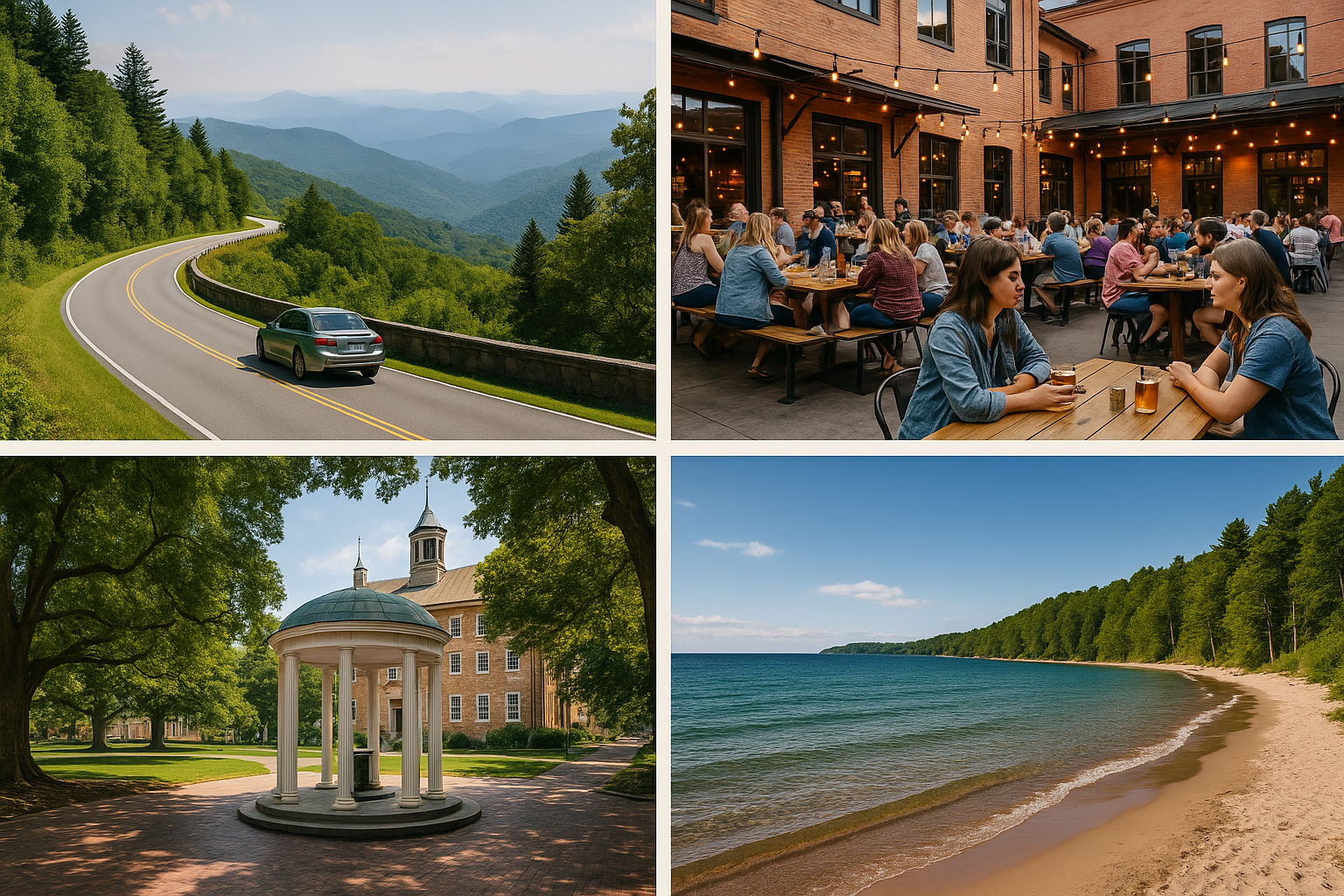
Why the Open Road Still Hits Different in 2026
There’s something about a road trip that no flight can replicate. The slow build of a landscape changing outside your window, the spontaneous detour down an unmarked road, the diner you stumble into that ends up being the highlight of your week. If you’re looking for the best us road trip destinations to add to your 2026 plans, you’re in the right place. America is enormous, wildly varied, and genuinely full of corners worth exploring — and this guide is here to help you figure out where to point the car.
We’re not talking about a checklist of famous landmarks you’ve already seen on Instagram. We’re talking about places that feel alive, that reward curiosity, and that give you stories to tell. From the mountain towns of the Appalachians to the sweeping Great Lakes shoreline, from college towns buzzing with creative energy to backcountry routes where you might not see another car for miles — the US road trip landscape in 2026 is as rich as it’s ever been.
Asheville, NC: Where the Mountains Meet the Creative Spirit
If you haven’t heard about Asheville, North Carolina yet, it’s time to pay attention. Tucked into the Blue Ridge Mountains, this city punches well above its weight. It’s the kind of place where you walk down the main street and every block offers something genuinely different — a local bookshop, a mural covering an entire building, a craft brewery with a view of rolling forested hills, a jazz bar that doesn’t get going until midnight.
Asheville has long been a favorite stop on the Nashville-to-Asheville road trip corridor, a route that takes you from the neon energy of Tennessee’s music capital through the quieter, greener world of the Appalachians. That contrast alone is worth the drive. You leave one kind of American culture and arrive, a few hours later, at something completely different.
What to Do in Asheville
- Hike the Blue Ridge Parkway: The parkway winds through some of the most beautiful terrain in the eastern United States. Pull over at any overlook and you’ll understand immediately why people keep coming back. In autumn, the foliage turns the hills into something out of a painting.
- Explore the River Arts District: Dozens of working artists have studios here, and many are open to visitors. You can watch a glassblower at work, browse ceramics, or pick up an original painting for a surprisingly reasonable price.
- Eat your way through the food scene: Asheville has a food culture that feels both rooted in Southern tradition and genuinely experimental. Look for farm-to-table spots, Vietnamese-Southern fusion, and everything in between.
- Stay in a hostel or independent guesthouse: Asheville has a solid range of budget-friendly accommodation that keeps the experience local rather than corporate.
Fall is an exceptional time to visit. The North Carolina fall road trip route through Asheville and the surrounding Blue Ridge region has become a well-documented seasonal experience for good reason. The temperatures drop just enough to make hiking comfortable, the crowds thin slightly compared to summer, and the landscape earns every cliché ever written about it. If you’re planning a road trip for September or October, build Asheville into the route.
Chapel Hill, NC: College Town Energy with Real Depth
About two and a half hours east of Asheville, Chapel Hill offers a completely different kind of American experience. This is a university town, and it wears that identity proudly — but don’t let the college-town label fool you into thinking it’s just bars and sports jerseys. Chapel Hill has a genuine intellectual and artistic energy that makes it worth a stop even if you graduated years ago.
The streets around the university campus are lined with independent coffee shops, used bookstores, record shops, and restaurants that have been feeding students and locals for decades. There’s a permanence to the place that feels grounding. People here are curious, engaged, and generally happy to talk to strangers.
Making the Most of Chapel Hill
- Walk Franklin Street: This is the main drag, and it’s best explored slowly. Duck into whatever looks interesting. The best discoveries here are unplanned.
- Catch live music: The local music scene is active and varied. Check local listings for acoustic sets, indie bands, or jazz nights at smaller venues.
- Visit the public gardens: The botanical garden connected to the university is free and genuinely beautiful — a quiet counterpoint to the busier parts of town.
- Day trip to Durham or Raleigh: Chapel Hill sits in the Research Triangle, which means Durham and Raleigh are both within easy reach. Durham in particular has developed a vibrant food and arts scene worth an afternoon.
If you’re driving the eastern half of North Carolina, threading Chapel Hill into your route between the coast and the mountains makes geographic and experiential sense. It breaks up the drive and gives you a taste of a different kind of Southern life.
Michigan’s Great Lakes: America’s Hidden Coastline
Most people think of beaches and they picture the Atlantic or Pacific coasts. Michigan quietly offers something that surprises almost everyone who experiences it for the first time: freshwater coastline that goes on for hundreds of miles, with sand dunes, clear water, and a pace of life that feels genuinely unhurried.
A Michigan road trip can take several different shapes depending on your interests and how much time you have. The Upper Peninsula is remote, forested, and genuinely wild — this is where you go if you want to feel like you’ve actually gotten away from everything. The Lower Peninsula’s western shore, running along Lake Michigan, is more accessible and offers a string of small towns, state parks, and local wineries that make for a relaxed, satisfying drive.
Key Stops on a Michigan Road Trip
- Sleeping Bear Dunes National Lakeshore: Climbing these massive sand dunes and then looking out over the deep blue of Lake Michigan is one of those experiences that stays with you. It’s physically demanding and visually extraordinary.
- Traverse City: A small city with a surprisingly robust food and drink culture. The surrounding region produces cherries and wine grapes, and both make their way into local menus in creative ways.
- Pictured Rocks National Lakeshore (Upper Peninsula): Kayaking along the multicolored sandstone cliffs of Lake Superior is the kind of activity that feels almost unreal while you’re doing it. Guided tours are available if you’re not an experienced paddler.
- Mackinac Island: No cars are allowed on the island, which means you get around by bicycle or horse-drawn carriage. It’s charming in a way that doesn’t feel manufactured.
Michigan is one of those us road trip destinations that tends to be underestimated by travelers who haven’t been. Once you’ve driven the Lake Michigan shoreline at sunset, watched the light change over the dunes, and eaten fresh whitefish at a dockside restaurant, you’ll understand why people who grew up there are so fiercely proud of the place.
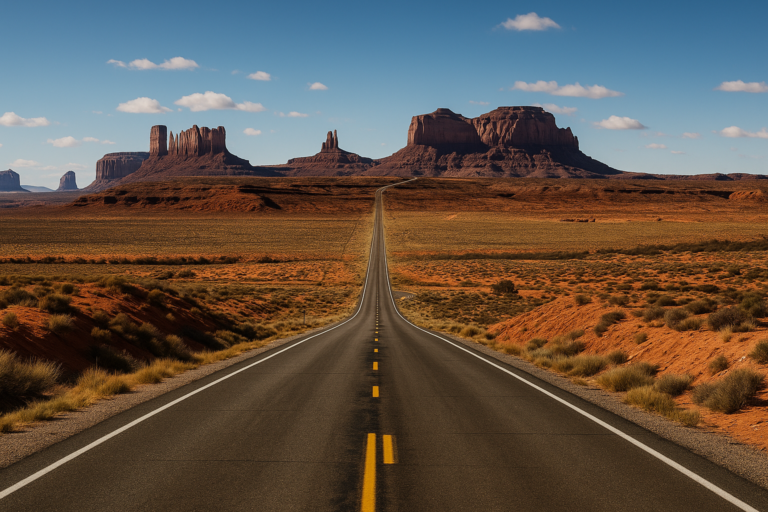
The Nashville to Asheville Route: A Road Trip with Real Range
If you’re looking for a route that packs genuine variety into a manageable drive, the Nashville to Asheville corridor is worth serious consideration. This is a documented and well-traveled road trip route that connects two very different but equally compelling versions of Southern American culture.
Nashville gives you music history, honky-tonks on Broadway, incredible hot chicken, and a city that’s evolved rapidly while somehow holding onto its identity. Then you head east, and the landscape shifts. The cities give way to smaller towns, the terrain starts to rise, and by the time you’re crossing into North Carolina, you’re in a different world entirely.
Along the way, there are stops worth making. Cookeville, Tennessee is often bypassed but has a genuinely pleasant downtown and sits near some excellent state parks. The small towns of eastern Tennessee offer antique shops, local diners, and the kind of slow-moving afternoon that’s increasingly hard to find. Then Asheville arrives, and suddenly you’re back in a place with energy and momentum, but of a completely different kind than Nashville.
This route works well in any season, though spring and fall are particularly rewarding. Summer is beautiful but busy; if you’re going in July or August, book accommodation well in advance, especially in Asheville.
Planning Your US Road Trip: Practical Advice That Actually Helps
Choosing the right us road trip destinations is only part of the equation. How you plan — and how flexible you’re willing to be — determines whether the trip becomes a great story or a stressful blur of logistics.
Before You Leave
- Don’t over-schedule: The best road trip moments are usually unplanned. Build buffer days into your itinerary so you can stay somewhere longer if it’s worth it, or recover if you’re tired.
- Research camping and hostel options: Budget accommodation in the US has improved significantly. Many national and state parks offer affordable camping, and hostels in cities like Asheville and Traverse City are genuinely good.
- Check road conditions for your season: Mountain routes in particular can be affected by weather. The Blue Ridge Parkway, for example, has sections that close during winter storms.
- Download offline maps: Cell service disappears in rural areas and mountain regions. Having offline maps saves real headaches.
On the Road
- Eat local whenever possible: Chain restaurants exist everywhere. The regional food you can only get in a specific place is part of the experience. Seek it out.
- Talk to people: Gas station attendants, hostel staff, the person sitting next to you at a diner counter — locals know things that no travel guide does. Ask for recommendations and actually follow them.
- Stop when something looks interesting: This sounds obvious, but it’s easy to stay locked into a schedule. Some of the best stops on any road trip are the ones you didn’t plan.
- Keep a loose journal: Even a few sentences at the end of each day helps you hold onto the texture of the trip. Photos capture what things looked like; notes capture what they felt like.
For broader inspiration on structuring a longer American road trip, resources like Nomadic Matt’s US road trip itinerary guide offer well-researched route ideas that cover multiple regions. And if you’re looking for route-specific breakdowns with personal experience woven in, Angie Away’s best US road trips guide is worth reading before you finalize your plans.
Beyond the Highlights: Finding Your Own Version of the Trip
Every great road trip has a version that belongs specifically to you. The destinations in this guide — Asheville, Chapel Hill, Michigan’s Great Lakes, the Nashville corridor — are starting points, not a fixed itinerary. The point is to give you enough to work with so that you can shape something that fits your interests, your timeline, and the kind of traveler you are.
Maybe you want to spend four days in Asheville and skip the cities entirely. Maybe you want to drive the entire Great Lakes shoreline over two weeks, camping every night. Maybe you want to combine the mountain towns of North Carolina with a detour into the Tennessee countryside. All of these are valid. All of these will give you something worth carrying home.
The US is one of the most geographically and culturally varied countries on earth, and a road trip is the best way to feel that variety in your bones rather than just understand it intellectually. The distance between a mountain town in North Carolina and a freshwater beach in Michigan isn’t just miles — it’s a completely different relationship with the land, with food, with community, with pace. That’s what makes these us road trip destinations worth the effort of getting there.
Start Planning, Stay Curious
You don’t need a perfect plan to have a great road trip. You need a direction, a willingness to be surprised, and enough flexibility to follow the trip wherever it wants to go. The destinations are ready. The roads are there. The only thing left is to decide when you’re leaving — and then actually go. Pack light, drive slow when the scenery earns it, and remember that the point was never to cover the most ground. It was always to collect the best moments along the way.
This article was produced with AI assistance and reviewed editorially.


Southeast Asia on a Shoestring: Budget Travel Guide to Border Crossings & Regional Itineraries

London Beyond the Eye: 8 Walks from Landmarks to Hidden Neighborhoods (2026)


