
Asia
Chiang Mai Beyond the Tourist Season: Navigating the Burning Season (2026)
Navigate Chiang Mai’s burning season from late February through May. Learn air quality realities, seven safety tips, and why some travelers still visit despite the smoke.

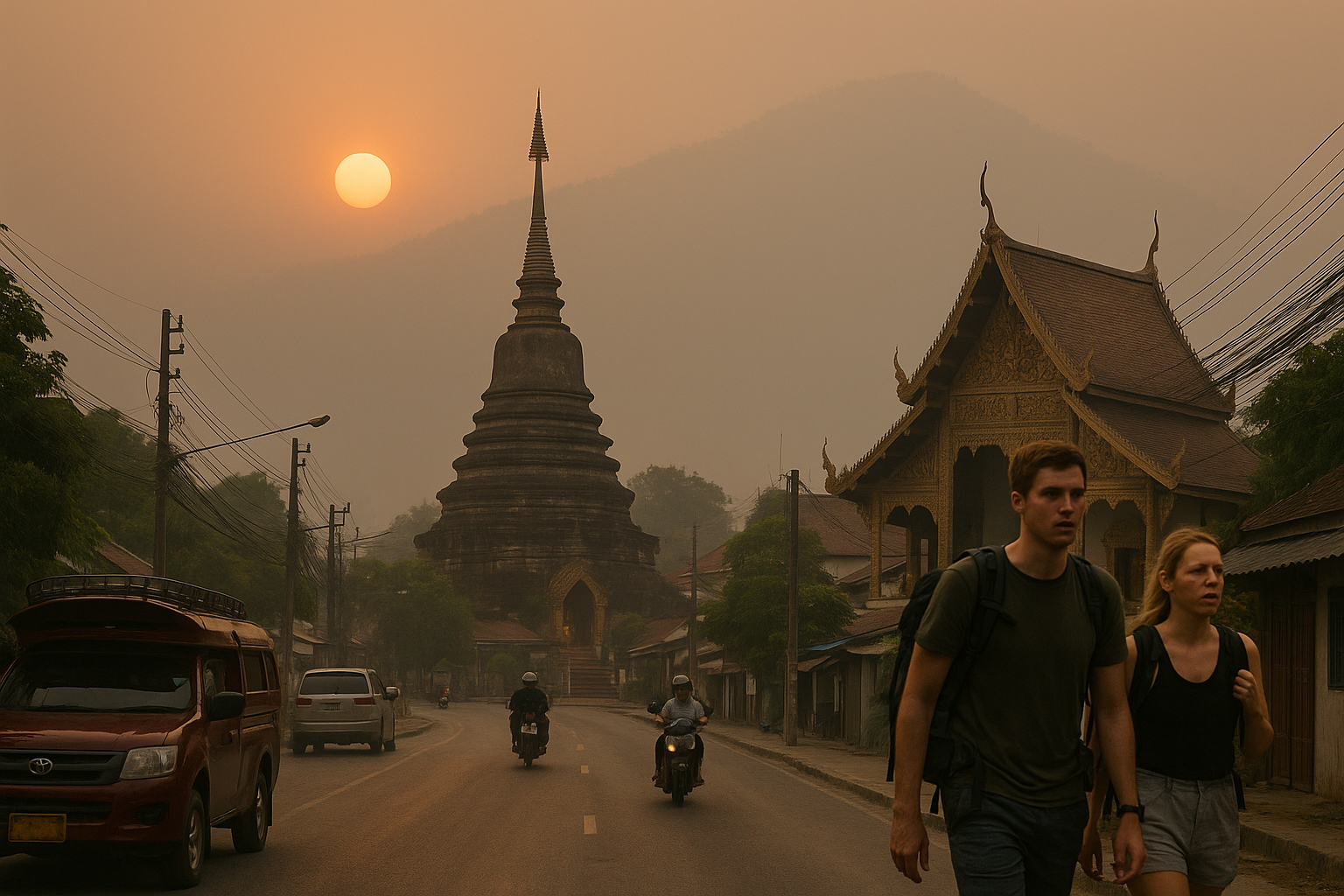
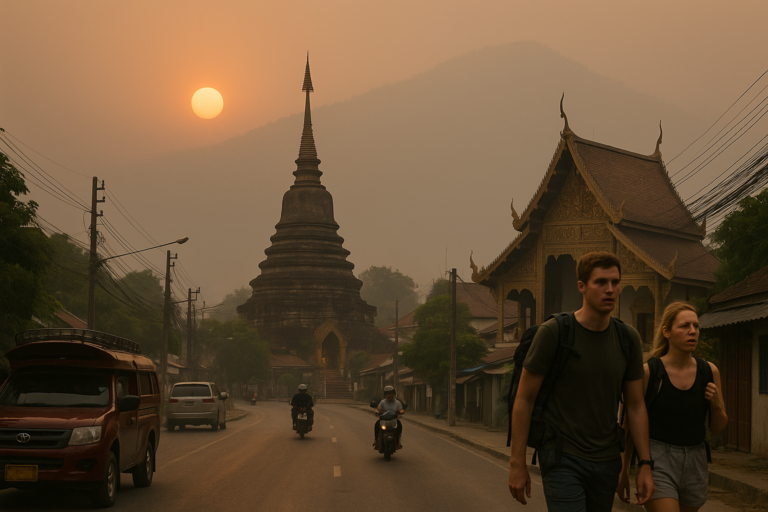
Chiang Mai During the Burning Season: What You Actually Need to Know Before You Go
If you’ve been dreaming about Chiang Mai — the ancient temples, the night markets, the mountain trails — you’ve probably also stumbled across warnings about the Chiang Mai burning season. Maybe a friend mentioned it, or you saw a photo of the city skyline swallowed in a thick grey haze and thought, “wait, is that normal?” It is. And it’s worth understanding before you book your flights. Every year between late February and May, agricultural burning across Northern Thailand and neighboring regions fills the air with smoke and particulate matter, transforming one of Southeast Asia’s most beloved cities into a place that genuinely challenges your health and your expectations. This guide won’t sugarcoat the reality — but it will give you everything you need to make an informed decision about whether to go, when to go, and how to make the most of it if you do.
What Is the Burning Season and Why Does It Happen?
The burning season — sometimes called the smoky season across Southeast Asia — is an annual period when farmers across Northern Thailand, Myanmar, and Laos burn their fields to clear land for the next agricultural cycle. It’s a practice deeply tied to local livelihoods and traditional farming methods. The fires produce enormous quantities of smoke, and because Northern Thailand sits in a valley surrounded by mountains, that smoke gets trapped. It has nowhere to go.
The season typically begins in late February and peaks through March and April, with conditions often improving by May as the monsoon rains arrive and clear the air. March tends to be the worst month. Travel advisors frequently recommend avoiding Northern Thailand — and Northern Laos — during this period entirely, and that advice exists for good reason.
It’s not just a bit of haze. During peak burning, air quality in Chiang Mai can reach levels that are genuinely harmful to breathe, particularly for people with respiratory conditions, allergies, or asthma. The city regularly records air quality index readings during this period that fall into the “unhealthy” or “very unhealthy” categories by international standards. You’ll feel it in your throat. You’ll see it in the sky. The mountains that normally frame the city disappear entirely behind a curtain of smoke.
Understanding this is not about scaring you away. It’s about making sure you arrive prepared rather than blindsided.
Should You Actually Skip Chiang Mai During Burning Season?
Here’s the honest answer: for most travelers, visiting Chiang Mai between late February and late April means accepting a significantly compromised experience. The outdoor activities that make this city so compelling — hiking in Doi Inthanon National Park, cycling through countryside villages, exploring temple complexes in the open air — become uncomfortable or inadvisable during heavy smoke days.
That said, travelers continue to visit during this period every year, and many of them have a great time. Here’s why some people still go:
- Accommodation prices drop noticeably. The burning season coincides with low tourist season, which means guesthouses, hostels, and boutique hotels that are fully booked in November or December often have availability and lower rates during March and April.
- Crowds are thinner. The popular temples, markets, and neighborhoods feel less overrun. You’ll spend less time queuing and more time actually experiencing the city.
- The culture doesn’t stop. Songkran — Thailand’s legendary water festival and New Year celebration — falls in mid-April, right in the heart of burning season. If experiencing Songkran in Chiang Mai is on your list, you’ll need to weigh the smoke against one of the most joyful, chaotic, and memorable festivals in Southeast Asia.
- Some years are better than others. Burning intensity varies depending on rainfall patterns, wind direction, and regional fire management. Not every March is equally bad.
The key is going in with eyes open and a flexible mindset, not assuming it’ll be fine and then feeling cheated when the sky turns brown.
Seven Essential Safety Tips for Navigating the Chiang Mai Burning Season
1. Monitor Air Quality Daily Before You Go Outside
Air quality during burning season doesn’t stay constant — it shifts day by day and even hour by hour depending on wind patterns and how much burning is happening nearby. Before you head out each morning, check a reliable air quality index resource. IQAir’s real-time Chiang Mai air quality tracker is one of the most widely used tools for this. On days when the AQI is in the moderate range, you can move around relatively freely. On days when it spikes into the unhealthy zone, consider staying indoors or limiting outdoor exposure.
2. Invest in a Proper Mask — Not a Cloth One
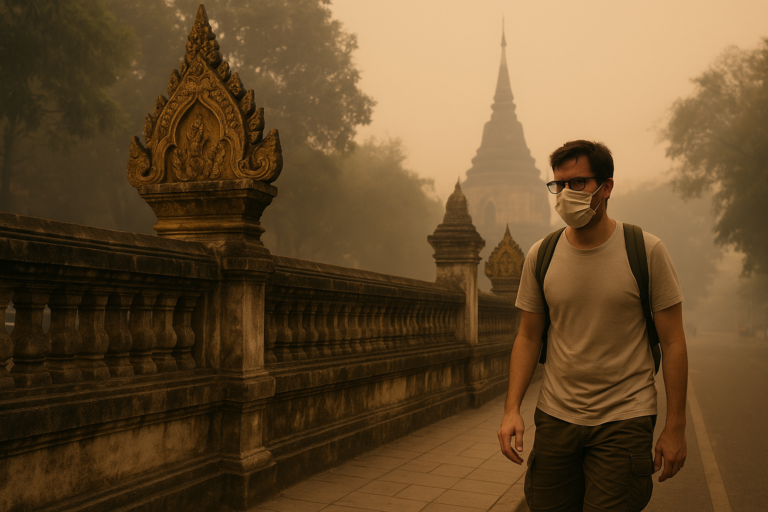
A standard cloth face covering does very little against the fine particulate matter (PM2.5) that makes burning season smoke genuinely dangerous. These tiny particles are small enough to penetrate deep into your lungs, and they’re what causes the most harm. If you’re visiting during burning season, bring or buy N95 or KN95 masks. They’re widely available in pharmacies across Chiang Mai. Wear them whenever you’re outdoors on high-smoke days, and especially if you’re on a motorbike or in a tuk-tuk where you’re directly exposed to the air.
3. Choose Air-Conditioned Accommodation Wisely
Not all guesthouses and hostels are created equal when it comes to air filtration. If you’re visiting during burning season, look for accommodation that has air conditioning with proper filtration, or consider bringing a small portable air purifier. Some travelers bring compact HEPA filter purifiers in their luggage specifically for this season. It sounds like overkill until you’ve spent a night coughing in a room that’s letting in smoky air through open windows.
4. Stay Hydrated and Pay Attention to Your Body
Smoke exposure dehydrates you faster than you’d expect, and the dry heat of the pre-monsoon season compounds this. Drink more water than you think you need. If you notice persistent headaches, a scratchy throat that won’t clear, or unusual fatigue, take it seriously. These can be early signs that the air quality is affecting you more than you realize. Rest, hydrate, and move to a cleaner indoor environment.
5. Plan Your Outdoor Activities Around the Best Windows
Even during burning season, there are often cleaner windows of air quality — typically in the early morning before agricultural fires are lit for the day, or after rainfall. If you want to visit temples, explore the old city, or take a walk along the moat, aim for early morning when conditions are often at their best. Check your AQI app before heading out and build flexibility into your day so you can retreat indoors if conditions deteriorate.
6. Have a Plan for Medical Care If You Need It
If you have asthma, a chronic respiratory condition, cardiovascular issues, or you’re pregnant, the burning season poses a more serious risk than it does for a healthy young adult. That’s not to say you can’t visit — but you should discuss it with a doctor before you go, carry any necessary medication, and know where the nearest international clinic or hospital is in Chiang Mai. Even healthy travelers can experience respiratory irritation. Knowing your options in advance removes a lot of stress if something does go wrong.
7. Consider a Short Escape to Higher Altitude or Cleaner Air
One of the smartest strategies for burning season travelers is building in a few days away from the city. The mountains directly around Chiang Mai can sometimes be just as smoky as the valley, but heading south toward the coast — Koh Lanta, Koh Tao, or even Bangkok — gives your lungs a real break. Some travelers use Chiang Mai as a base for a few days and then escape to cleaner air before returning. It turns a potential health problem into a built-in excuse to see more of Thailand.
What to Do in Chiang Mai When the Air Is Poor
Burning season doesn’t mean you’re stuck staring at the walls of your guesthouse. Chiang Mai has a genuinely rich indoor and semi-indoor scene that comes into its own when outdoor exploration isn’t ideal.
- Explore the city’s café culture. Chiang Mai has one of the most vibrant independent café scenes in Southeast Asia. Spend a slow morning in an air-conditioned specialty coffee shop, order something you’ve never tried before, and let the city come to you.
- Take a cooking class. Northern Thai cuisine is distinct from what you’ll find in Bangkok or on the islands — earthier, spicier, deeply aromatic. Indoor cooking classes are a brilliant way to spend a smoky afternoon and leave with skills you’ll actually use at home.
- Visit museums and galleries. The Chiang Mai City Arts and Cultural Centre and the Lanna Folklife Museum offer real depth on the history and culture of Northern Thailand. They’re climate-controlled, uncrowded during low season, and genuinely interesting.
- Get a traditional Thai massage. Chiang Mai is considered one of the best places in the world to learn or receive traditional northern-style massage. On a day when the air outside is thick with smoke, a two-hour massage in a calm studio is a very reasonable alternative to hiking.
- Take a Thai language or craft workshop. Many local studios and community organizations offer short workshops in weaving, silverwork, or basic Thai language. These are the kinds of experiences that connect you to local culture in a way that no temple visit can replicate.
The Best Time to Visit Chiang Mai If You Want to Avoid the Smoke
If the burning season sounds like more than you want to deal with, the good news is that Chiang Mai is genuinely spectacular during other parts of the year. Southeast Asia Backpacker’s guide to the burning season notes that the smoky season is a recurring concern travelers raise when planning trips to Northern Thailand — and the simple solution for many is to shift their travel dates.
November through February is widely considered the best time to visit. The air is clear, temperatures are cooler (Chiang Mai can actually feel cold at night in December and January, which surprises a lot of first-timers), and the landscape is green and lush from the previous rainy season. The famous Yi Peng lantern festival, when thousands of paper lanterns float into the night sky above the city, typically falls in November — and it’s one of those experiences that stays with you for years.
If you’re locked into a trip during burning season and can’t change it, go with the strategies outlined above and keep your expectations flexible. Some people visit during March and have a perfectly enjoyable trip. Others find the air quality genuinely distressing. The difference usually comes down to preparation and attitude.
Burning Season and the Bigger Picture
It’s worth taking a moment to think about the burning season beyond the personal inconvenience it causes travelers. The fires are not random or careless — they’re tied to agricultural systems, land tenure issues, and economic pressures that affect communities across Northern Thailand, Myanmar, and Laos. Many of the people burning their fields have been doing so for generations, and the shift toward alternative land management practices is a slow, complex process involving governments, NGOs, and local communities.
As a traveler, you can engage with this reality thoughtfully. Support local businesses and community organizations that are working on sustainable agriculture or forest protection. Ask questions when you visit. Listen when locals talk about the season and what it means for them. The Chiang Mai burning season is not just a travel inconvenience — it’s a window into a much larger story about land, livelihoods, and the environment in Southeast Asia.
Final Thoughts: Is Chiang Mai Worth It During Burning Season?
The honest answer is: it depends on you. If clear skies, outdoor adventure, and unrestricted exploration are what you’re after, shift your dates to November or December and you’ll have one of the best travel experiences Southeast Asia has to offer. But if your dates are fixed, if Songkran is calling your name, or if the lower costs and quieter streets appeal to your travel style, then go — just go prepared. Pack your N95 masks, download an air quality app, book accommodation with good filtration, and build some flexibility into your plans. The Chiang Mai burning season is a real challenge, but it doesn’t make the city any less worth discovering. The temples are still ancient, the food is still extraordinary, the people are still warm, and the stories you’ll collect are entirely your own.
This article was produced with AI assistance and reviewed editorially.


Southeast Asia on a Shoestring: Budget Travel Guide to Border Crossings & Regional Itineraries

London Beyond the Eye: 8 Walks from Landmarks to Hidden Neighborhoods (2026)


