
Asia
Ulaanbaatar Beyond First Impressions: 3 Days in Mongolia’s Misunderstood Capital (2026)
Discover Ulaanbaatar’s authentic character in this candid travel guide. Explore what locals actually do, from Sukhbaatar Square to hidden neighborhoods, beyond the pollut

Your Ulaanbaatar Travel Guide Starts Here — And It’s Not What You Expect
Most travelers land in Ulaanbaatar with one plan: get out as fast as possible. Book a jeep to the steppe, organize a Gobi Desert tour, and treat the capital as nothing more than a stopover. If that sounds familiar, you’re not alone — and you’re also missing something real. This ulaanbaatar travel guide isn’t here to sell you a perfect city. It’s here to show you what happens when you slow down, look past the smog, and actually pay attention. Because Ulaanbaatar — chaotic, cold, and frequently misunderstood — has a character that gets under your skin in the best possible way.
Understanding the City Before You Arrive
The Reputation vs. The Reality
Let’s be honest about what you’ve probably heard. Ulaanbaatar holds the record as the coldest capital city in the world, with winter temperatures that regularly plunge to -40°C (-40°F). In winter, coal heating across the city creates thick, toxic smog that turns the skyline a murky grey and genuinely affects air quality in ways you can feel in your lungs. These aren’t travel myths — they’re real, and they’re worth knowing before you pack your bags.
But here’s the thing about cities with hard reputations: they tend to be underestimated. The same cold that keeps casual tourists away is what makes the local culture so resilient, warm, and worth connecting with. The same industrial sprawl that looks bleak from a taxi window sits right next to neighborhoods where locals gather in lively restaurants, modern galleries, and tea houses that feel like they belong in a different era entirely.
Many travelers treat Ulaanbaatar as an obligation — a place to land, sort logistics, and escape. Three days here will change that perspective completely.
When to Go
If you have flexibility, aim for late spring through early autumn — roughly May to September. The air is cleaner, temperatures are manageable, and the energy of the city shifts noticeably. You’ll see locals out on the streets, markets in full swing, and the surrounding landscape turning green in a way that makes the city feel more connected to the vast countryside around it.
That said, if winter is your only option, don’t cancel the trip. The city in deep cold has its own kind of drama — frost-covered rooftops, locals wrapped in traditional deels, and a quietness that feels almost cinematic. Just come prepared with serious layers and an air quality mask for the worst smog days.
Day One: Getting Your Bearings and Finding the Pulse
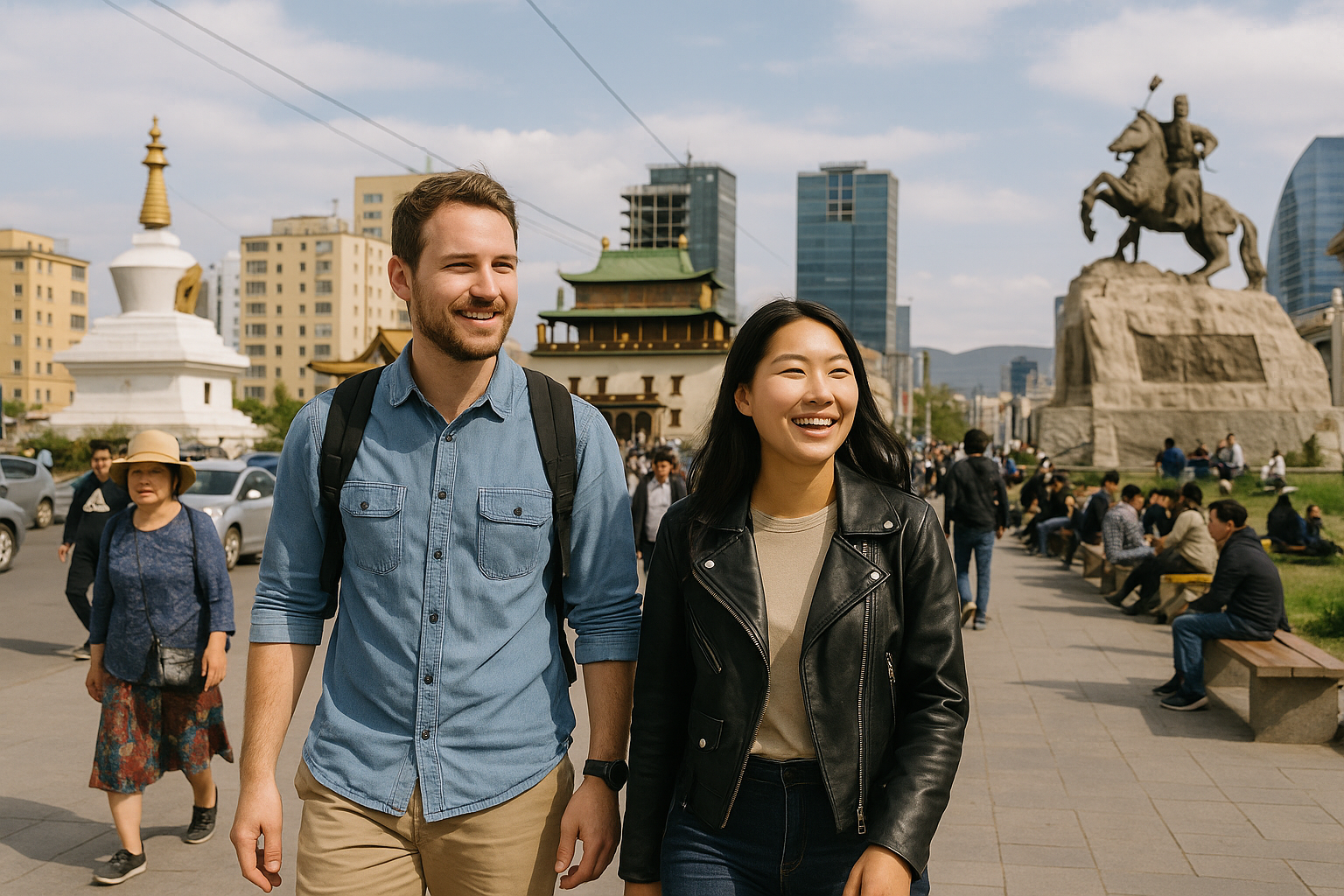
Start at Sukhbaatar Square
Every journey through Ulaanbaatar starts at the central square. It’s the geographic and symbolic heart of the city — wide, windswept, and framed by government buildings that mix Soviet-era architecture with more recent construction. Don’t rush through it. Sit on one of the steps, watch who’s around, and let the scale of the place settle in. You’re in a city of well over a million people sitting in the middle of one of the most sparsely populated countries on Earth. That contrast is part of what makes this place fascinating.
From the square, you can walk in almost any direction and find something worth exploring. Head north and you’ll hit the main commercial streets. Head east and the city starts to open up into a mix of residential blocks and local markets. Wander without a fixed plan for your first hour. It’s the fastest way to get a feel for how the city actually moves.
The National Museum of Mongolia
If you’re only going to visit one museum in Ulaanbaatar, make it this one. The collection walks you through Mongolian history from prehistoric times to the present — nomadic culture, the rise of the Mongol Empire, the Soviet period, and the country’s transition into the modern era. It’s genuinely absorbing, and it gives you context that makes everything else you see in the city (and the country) more meaningful.
Give yourself at least two hours here. The exhibits on traditional nomadic life are particularly worth your time — the detail on ger construction, seasonal migration patterns, and traditional dress is the kind of thing you’ll keep referencing throughout your trip.
Eat Where the Locals Eat
Mongolian food is hearty, meat-forward, and built for cold climates. Buuz — steamed dumplings filled with minced meat — are the thing to try first. You’ll find small restaurants and canteen-style spots serving them throughout the city, and the quality at a busy local place is almost always better than anything tourist-facing. Look for spots where the menu is in Mongolian and the tables are full of people who clearly eat there every week. That’s where the real meal is.
The city also has a growing food scene that goes well beyond traditional fare. Korean restaurants, craft coffee shops, and a handful of genuinely creative local chefs are part of Ulaanbaatar’s emerging identity. Don’t be surprised to find a beautifully designed café tucked between a Soviet-era apartment block and a mobile phone shop — that kind of contrast is very Ulaanbaatar.
Day Two: Culture, Community, and Getting Off the Main Streets
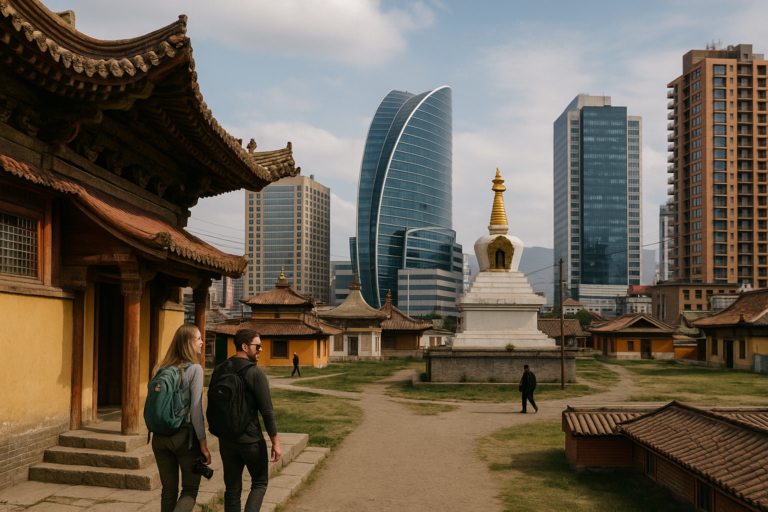
The Gandantegchinlen Monastery
This is one of the most important active Buddhist monasteries in Mongolia, and visiting in the early morning is an experience that stays with you. Monks in deep red robes move between buildings, prayer wheels spin along the outer walls, and the smell of incense drifts across the courtyard. It’s a living, breathing spiritual center — not a museum piece — and that distinction matters.
Arrive before the morning prayer session if you can. The sound of chanting in the main hall, layered over the distant noise of the waking city, is one of those travel moments that’s genuinely hard to describe. Respectful visitors are welcome, but move quietly and follow the lead of those around you.
Explore the Ger Districts
The ger districts — the sprawling residential areas surrounding the city center where traditional felt tents sit alongside wooden fences and small homes — are where the majority of Ulaanbaatar’s population actually lives. They’re not on most tourist itineraries, and that’s exactly why they’re worth exploring.
Walking through these neighborhoods gives you a completely different picture of city life. You’ll see vegetable gardens wedged between gers, children playing in dusty lanes, and older residents going about their day in a rhythm that feels far removed from the commercial center. If you have the chance to visit with a local guide or through a community-focused tour operator, take it — the context adds enormously to what you’re seeing.
It’s worth noting that the ger districts are also central to the city’s pollution challenges. Most heating here relies on coal stoves, which is a major source of the winter smog. Understanding that connection — between poverty, housing, and environmental impact — gives you a more honest picture of the city than any highlight reel would.
Art, Music, and the Creative Scene
Ulaanbaatar has a creative community that most visitors never find. Independent galleries, live music venues, and cultural spaces have been growing steadily, particularly in areas around the city center. Keep an eye out for local listings — a live performance of traditional Mongolian throat singing, or khoomei, is something that will stay with you long after you’ve left the country.
The intersection of traditional Mongolian culture and contemporary art is one of the most interesting things happening in the city right now. Young Mongolian artists are working with themes of nomadic identity, urbanization, and global influence in ways that feel urgent and original. If you find a gallery opening or a small venue performance, go.
Day Three: Day Trips and Preparing for the Steppe
Chinggis Khaan Statue Complex
About an hour’s drive east of the city, the enormous stainless steel statue of Chinggis Khaan stands on a hillside overlooking the open countryside. It’s one of those sights that genuinely earns its reputation — the scale is extraordinary, and the setting, with the steppe stretching out in every direction, gives you your first real taste of Mongolian landscape.
You can climb up inside the statue for views across the surrounding area. The complex also includes a museum focused on the Mongol Empire period, which is worth exploring if you want to deepen what you started at the National Museum. Combine this with a stop at Hustai National Park if your schedule allows — it’s one of the few places on Earth where you can see the Przewalski’s horse, the world’s last truly wild horse species, in its natural habitat.
Planning Your Onward Journey
If Ulaanbaatar is your base for exploring wider Mongolia, your third day is a good time to finalize logistics. The country beyond the capital holds extraordinary things — the Gobi Desert, Erdene Zuu Monastery, the ancient ruins at Kharkhorin, and the wildlife of Khogno Khan reserve. Most travelers organize jeep tours or join small group expeditions departing from the city.
Ulaanbaatar’s guesthouses and hostels are well-connected to reputable local operators, and the community of travelers passing through the city means you can often find people to share costs with. For inspiration and practical planning, resources like Never Ending Footsteps and TourRadar’s Mongolia guide are genuinely useful starting points.
Practical Things Worth Knowing
Getting Around
Ulaanbaatar’s traffic can be genuinely intense, particularly in the city center. Taxis are affordable and widely available — agree on a price before you get in, or use a local ride-hailing app if you have a local SIM. Walking is the best way to explore the central areas, and most of the main sights are within reasonable distance of each other on foot.
For day trips, hiring a driver for the day is the most practical option. Rates are reasonable, and many drivers double as informal guides with solid knowledge of the surrounding area.
Money, Language, and Staying Connected
The local currency is the Mongolian tögrög. ATMs are available throughout the city center, and card payments are increasingly accepted in hotels, restaurants, and larger shops. Smaller local spots and market vendors will almost always prefer cash.
English is spoken in tourist-facing businesses and by younger city residents, but having a few words of Mongolian goes a long way — locals genuinely appreciate the effort. A local SIM card is easy to pick up at the airport or in the city and gives you affordable data for navigation and translation apps.
Health and Safety
Ulaanbaatar is generally safe for travelers, but standard precautions apply — keep an eye on your belongings in crowded areas and be aware of your surroundings at night. During winter and in periods of heavy smog, an air quality mask is a practical addition to your packing list, not an overreaction. The pollution on bad days is serious enough to affect your comfort and health if you’re spending long periods outside.
Why Ulaanbaatar Deserves More Than a Stopover
The cities that challenge you are usually the ones that leave the deepest impressions. Ulaanbaatar doesn’t make things easy — the weather is extreme, the infrastructure is uneven, and the pollution is real. But it’s also a city in the middle of a fascinating transition, caught between ancient nomadic traditions and a rapidly modernizing present, between Soviet-era architecture and emerging luxury hotels and restaurants, between the vast silence of the steppe and the noise of a growing urban population.
That tension is exactly what makes it worth your time. The travelers who rush through miss the monastery at dawn, the dumplings at a canteen table surrounded by locals, the throat singing in a small venue, the view from a ger district hillside at sunset. They miss the part where Ulaanbaatar stops being a place on a map and starts being a memory you actually want to keep.
Use this ulaanbaatar travel guide as your starting point, not your script. The best version of your time here will be the one you build by showing up curious, staying open to the unexpected, and giving the city more than a single night to show you what it’s made of. Mongolia’s steppe will be extraordinary — it always is. But the capital that most people overlook? It might just be the part of your journey you end up talking about most.
This article was produced with AI assistance and reviewed editorially.


Mountain Towns in the US Rockies: Where to Stay in Vail, Telluride & Glacier National Park

Japan & Turkey for Budget Backpackers: Fukuoka & Bodrum Neighborhood Guides


