
Mexico
Guanajuato and Mexico’s Underrated Cities: Beauty Beyond Cancún and Mexico City
Discover underrated cities in Mexico beyond Cancún and Mexico City. Explore Guanajuato’s colonial architecture, local culture, and authentic travel experiences.

Why Mexico’s Most Beautiful Cities Aren’t the Ones You’d Expect
Ask most people where they’re heading in Mexico, and you’ll get one of two answers: Cancún or Mexico City. Both are worth visiting — nobody’s arguing that. But if you’re the kind of traveler who wants to wander down a cobblestone alley without a crowd behind you, eat at a table where the menu is handwritten in Spanish, and feel like you’ve actually arrived somewhere — then you need to know about the underrated cities in Mexico that most tourists skip entirely. And at the top of that list, without question, is Guanajuato.
Mexico is a vast, layered country. It holds rainforests and deserts, ancient ruins and colonial plazas, world-class food and centuries of stories carved into stone. The resort strip gets all the attention, but the real heart of Mexico beats somewhere else — in the central highlands, in the Yucatán interior, in the valleys of Oaxaca. Once you start exploring beyond the tourist trail, you’ll wonder why it took you so long.
Guanajuato: Mexico’s Most Beautiful City
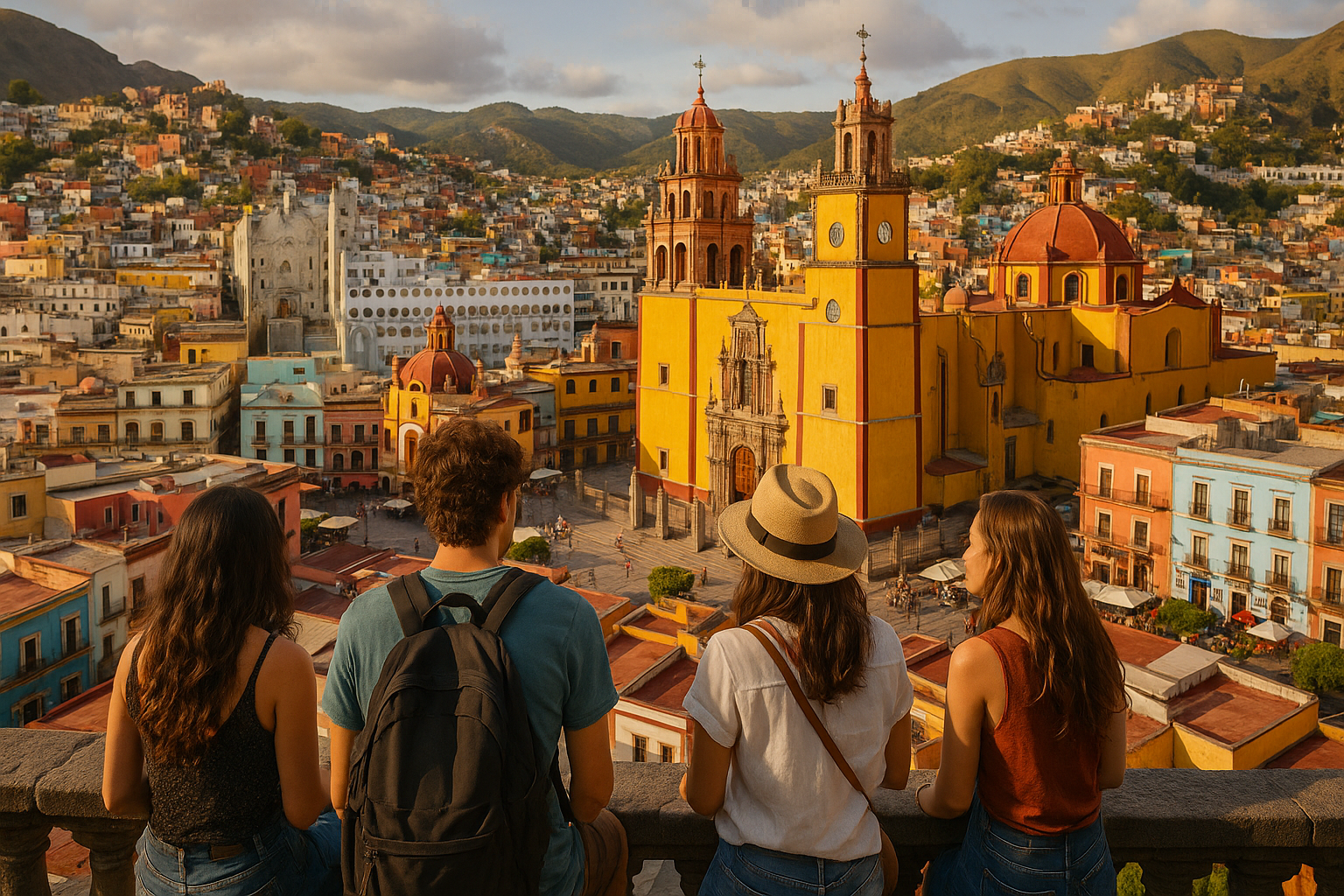
There’s a moment when you first see Guanajuato from above — from one of the hillside viewpoints that overlook the city — and it genuinely stops you. The whole valley is painted in color. Pastel pinks, burnt oranges, dusty yellows, deep blues. Houses stacked on top of each other like a mosaic, climbing the hillsides in every direction. Wrought-iron balconies draped in bougainvillea. Church towers rising above it all.
It’s not a postcard version of Mexico. It’s the real thing.
Guanajuato is the capital of the state of the same name, founded by the Spanish in the early 16th century and built on the wealth of silver. By the 18th century, it had become the world’s leading silver-extraction centre — and the money poured into the city shows. The architecture here is extraordinary: baroque churches, sweeping plazas, ornate facades, and a network of underground tunnels that were originally built to manage flooding and now serve as the city’s main road system. Walking through those tunnels feels like moving through the veins of the city itself.
In 1988, Guanajuato was designated a UNESCO World Heritage Site, recognising its exceptional colonial architecture and its role in Mexico’s silver-mining history. That designation matters — it means the city is protected, preserved, and genuinely cared for. You feel that when you walk through it. Nothing here feels like a theme park recreation of colonial Mexico. It’s the original.
The Streets, the Plazas, and the Everyday Magic
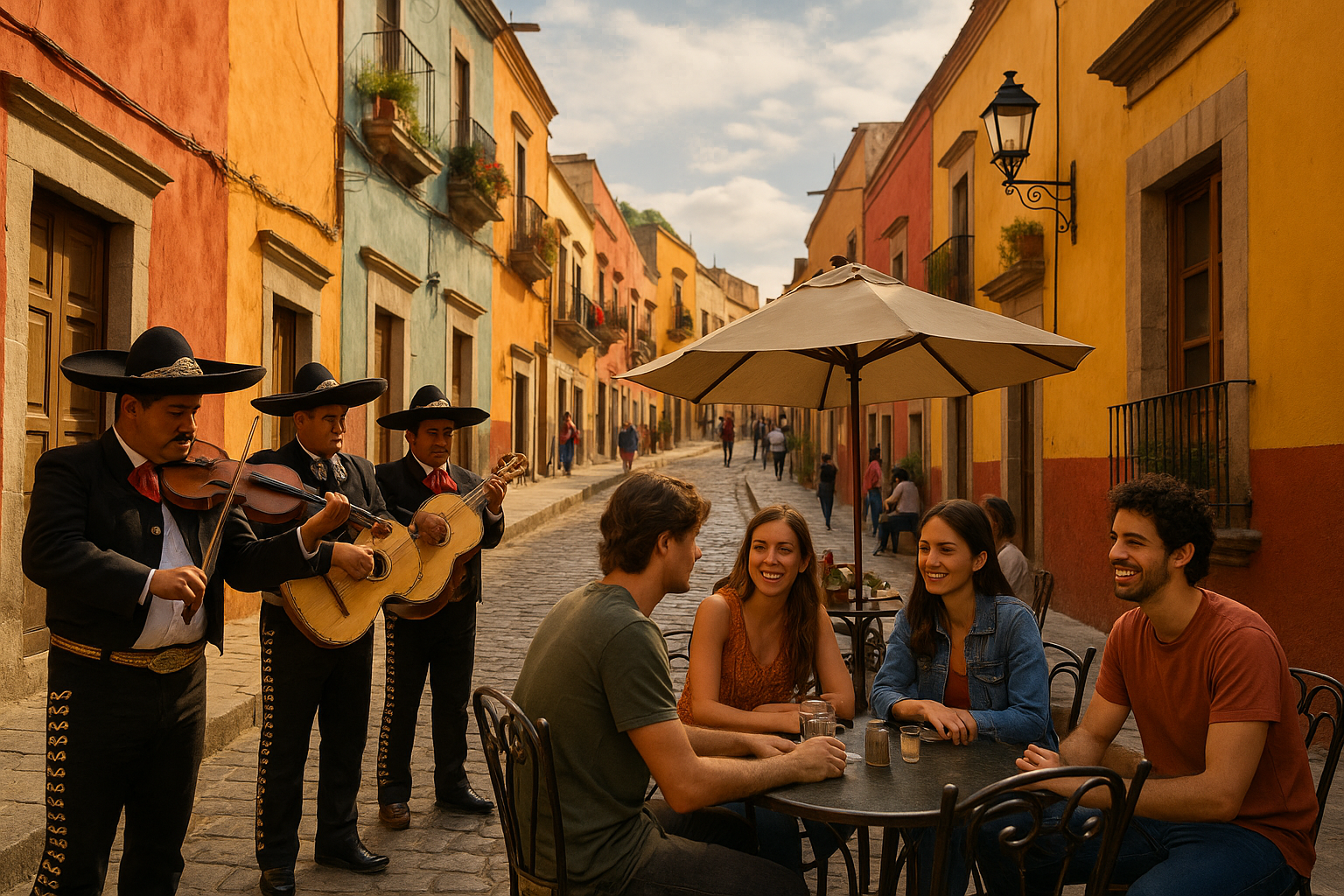
Guanajuato is a city built for wandering. There’s no efficient way to explore it, and that’s exactly the point. The streets twist and fork unpredictably. Staircases appear between buildings. Narrow alleys — some barely wide enough for two people to pass — lead you somewhere unexpected every time. Get lost here on purpose. It’s one of the best things you can do.
The main plaza, the Jardín de la Unión, is the social centre of the city. Students from the local university gather here in the evenings, musicians play on the steps, and the terraced cafés fill up as the sun drops behind the hills. It has the easy, unhurried energy of a place where people actually live — not just a city performing itself for tourists.
The colorful alleys are among Guanajuato’s most photographed spots, and they deserve every shot. The terracotta and pastel houses with their wrought-iron balconies and bougainvillea-covered facades create scenes that feel almost unreal in the best way. But what makes it feel alive rather than just pretty is that people actually live in those houses. Laundry hangs from the balconies. Kids run down the steps. Neighbours call to each other across the narrow gaps between buildings.
History You Can Actually Feel
Guanajuato’s silver mining heritage isn’t just a footnote — it shaped everything about this city. The wealth it generated funded the churches, the plazas, the grand public buildings. But the history here isn’t only about colonial splendour. Guanajuato was also a flashpoint in Mexico’s War of Independence, and the city holds that history with pride. The local museums and monuments connect the silver-era past with the revolutionary present in ways that are genuinely interesting to explore, even if you don’t consider yourself a history person.
Walking through Guanajuato, you get a sense of how layered Mexican history really is — Indigenous roots, Spanish colonialism, independence, revolution, and a modern identity that draws on all of it. That layering is what makes cities like this so much more rewarding than a beach resort, where the history has been smoothed away to make room for swim-up bars.
The Underrated Cities in Mexico That Deserve Your Attention
Guanajuato might be the crown jewel, but it’s far from the only city in Mexico that gets overlooked. Several other destinations offer equally rich, authentic experiences — and they’re all well within reach for a young traveler on a budget.
San Miguel de Allende
Just a couple of hours from Guanajuato, San Miguel de Allende is another UNESCO World Heritage site — this one known for its 17th-century Spanish colonial architecture and cobblestone streets that seem to belong to a different century entirely. San Miguel de Allende has been repeatedly recognised as one of the world’s best cities by Travel + Leisure magazine, which tells you something about the quality of experience on offer here.
The city has a thriving arts scene, a strong sense of community, and a pace of life that encourages you to slow down and actually absorb where you are. The central Jardín Principal, flanked by the famous neo-Gothic parish church, is one of the most striking public spaces in all of Mexico. Pair a visit here with Guanajuato and you’ve got one of the best city-pairing itineraries in the country.
Oaxaca City
Oaxaca is the kind of city that converts people. You arrive expecting a pleasant colonial town and leave having completely rearranged your understanding of what Mexican culture actually is.
The food alone is worth the journey. Oaxaca is famous for its diverse mole sauces — rich, complex preparations that can take days to make and contain dozens of ingredients. It’s also known for Aztec-influenced vegetarian dishes and French-heritage pastries like pan de yema, a sweet egg bread that reflects the layered culinary history of the region. Artisanal chocolate, locally grown coffee, and mezcal distilleries round out a food and drink scene that draws enthusiasts from across the world. But beyond the food, Oaxaca has a thriving Indigenous culture, extraordinary markets, and surrounding archaeological sites that put the city in a completely different league from most destinations in the country.
Mérida
Head to the Yucatán Peninsula and skip the resort strip — Mérida, the regional capital, is where the real story lives. Described as Mexico’s safest city, Mérida combines colonial grandeur with a relaxed, walkable city life that feels genuinely welcoming. The wide boulevards, the colourful houses, the local markets, and the proximity to some of Mexico’s most important Maya sites make it a natural base for exploring the peninsula properly.
From Mérida, you can reach Chichén Itzá — one of the Seven Wonders of the World — as well as a string of cenotes, smaller archaeological sites, and coastal towns that feel nothing like Cancún. This is the Yucatán that most tourists never see.
Loreto and the Baja California Coast
For something completely different, the Baja California towns of Loreto and San José del Cabo offer colonial-style architecture alongside access to the Sea of Cortez — one of the most biodiverse marine environments on the planet. Loreto in particular is a quiet, unhurried town that feels like a reward for travelers willing to seek it out. Whale watching, kayaking, and snorkeling in the Sea of Cortez are all within easy reach. This is adventure travel and cultural exploration in the same package.
Why These Cities Beat the Resort Experience
Here’s the honest truth about Cancún and Playa del Carmen: they’re designed for a specific kind of trip. All-inclusive hotels, beach clubs, organised excursions. There’s a place for that. But if you’re 20 years old and you want to come back from Mexico with stories — real ones, the kind that start with “so I ended up at this tiny restaurant where nobody spoke English” — then the resort strip isn’t where those stories happen.
The underrated cities in Mexico offer something that no resort can replicate: the feeling of being somewhere that exists for its own reasons, not for yours. Guanajuato doesn’t need tourists to justify itself. It was here before the tourism industry arrived, and it’ll be here long after. That authenticity is palpable the moment you arrive.
Practically speaking, central Mexico also tends to be significantly more affordable than the resort zones. Accommodation in colonial cities like Guanajuato and Oaxaca ranges from budget hostels to beautiful guesthouses in converted colonial buildings — the kind of places that would cost several times as much in a beach resort town. Street food is plentiful, excellent, and easy on your wallet. Local transport — buses, shared taxis — connects most destinations in the region without requiring expensive transfers or tourist shuttles.
How to Plan Your Trip to Central Mexico
Getting There and Getting Around
Most international flights into central Mexico arrive in Mexico City, which works as a natural gateway. From there, buses connect to Guanajuato, San Miguel de Allende, and Oaxaca — all well-served by Mexico’s comfortable long-distance coach network. The buses here are a genuine travel experience in themselves: air-conditioned, on time, and far more pleasant than you might expect.
Within cities like Guanajuato, you won’t need much transport at all. The historic centre is compact and best explored on foot. The underground road network handles cars and taxis, but for a traveler staying in the centre, walking is almost always the right choice.
When to Go
Central Mexico has a highland climate that keeps temperatures comfortable year-round. The rainy season runs roughly from late spring through early autumn, bringing afternoon showers that cool the air and make the evenings particularly atmospheric. The dry season, from late autumn through early spring, offers clear skies and cooler nights. Both have their appeal — the rainy season brings lush greenery and fewer tourists, while the dry season is ideal for outdoor exploration.
If you can time your visit to Guanajuato around the Festival Internacional Cervantino — one of Latin America’s most celebrated arts festivals — you’ll experience the city at its most vibrant. The streets fill with theatre, music, and performance, and the energy is electric.
What to Pack and Prepare
- Comfortable walking shoes — cobblestones are beautiful but uneven
- A light layer for highland evenings, which can be cooler than you’d expect
- Basic Spanish phrases — locals appreciate the effort, and it opens doors
- A reusable water bottle — tap water in most Mexican cities isn’t drinkable, so staying hydrated affordably matters
- An open itinerary — the best experiences in these cities tend to be unplanned
The Mindset Shift That Changes Everything
The biggest barrier to exploring the underrated cities in Mexico isn’t cost or logistics — it’s the assumption that “Mexico” means beach resorts. That assumption is worth questioning. Mexico is one of the most culturally rich, geographically diverse, and historically layered countries on earth. Its colonial cities are among the most beautiful in the Western Hemisphere. Its food culture is recognised by UNESCO as an Intangible Cultural Heritage of Humanity. Its people are warm, proud of their heritage, and genuinely welcoming to travelers who come with curiosity rather than just a checklist.
Guanajuato captures all of that in one extraordinary city. But it’s also a starting point — a place that shows you what Mexico can be when you look beyond the obvious. Once you’ve stood on a hillside above those pastel-colored rooftops, watched the city light up at dusk, and eaten something extraordinary at a table on a cobblestone street, the resort strip stops feeling like the destination and starts feeling like the thing you almost settled for instead.
Mexico has so much more to offer than most travelers ever discover. The cities in this article are just the beginning. Go curious, go open, and go somewhere that surprises you — because the best version of any trip is the one you didn’t fully plan.
This article was produced with AI assistance and reviewed editorially.


New Zealand’s Geothermal Wonders: Rotorua & Where to Stay for Adventure & Maori Culture

Adventure Beyond the Beach: Things to Do in Jeju, South Korea & Tayrona Park, Colombia


