
Asia
Walking the Silk Road: What You Need to Know Before Exploring Samarkand, Bukhara & Uzbekistan
Explore Uzbekistan’s Silk Road cities with this essential travel guide covering Samarkand, Bukhara, visas, transport, and what makes each destination unique.

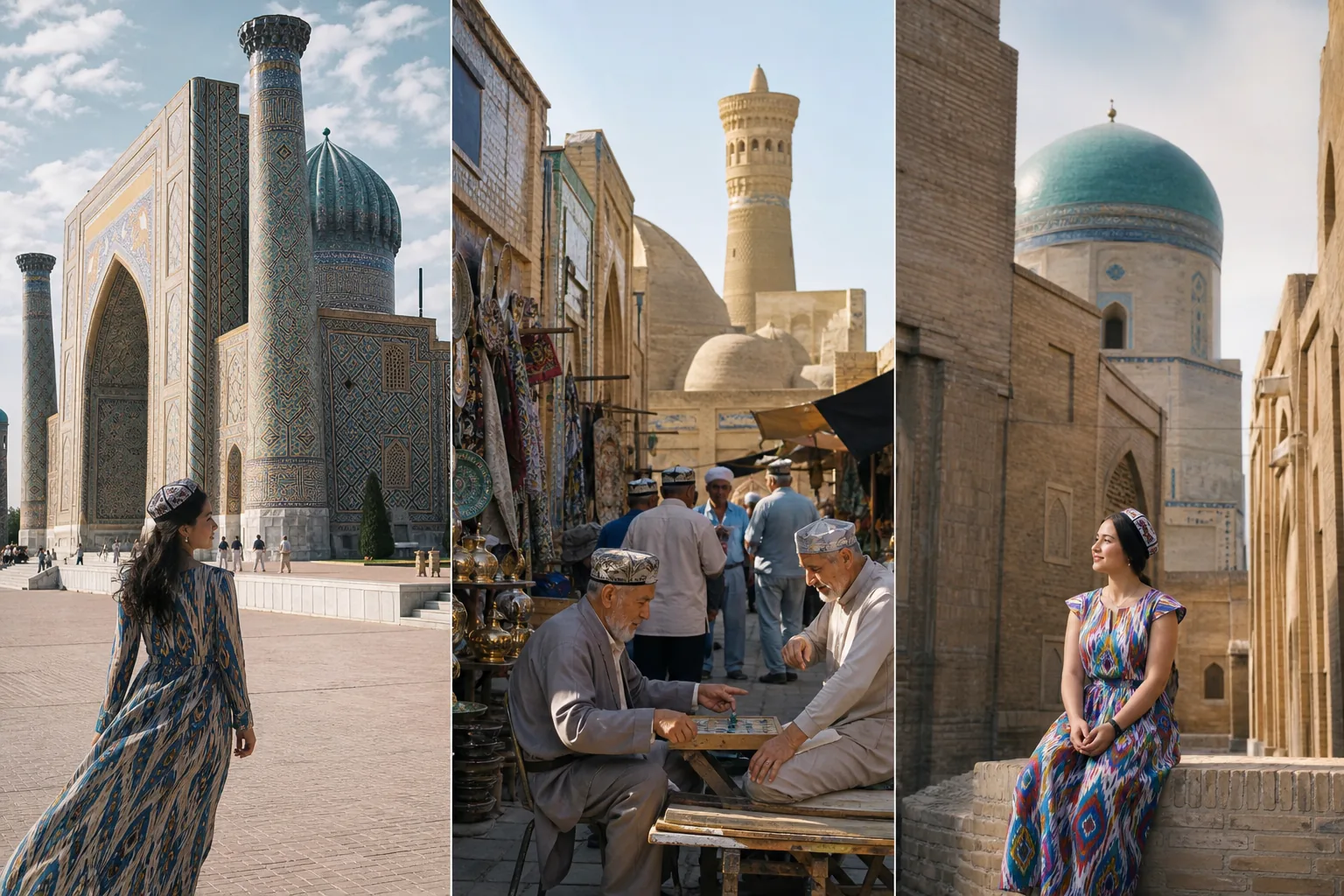
Few journeys on earth carry the weight of history quite like this one. Uzbekistan sits at the heart of the ancient Silk Road, and a well-planned silk road uzbekistan travel guide can turn what might seem like a distant, unfamiliar destination into one of the most vivid, alive travel experiences of your life. Think turquoise-tiled domes catching the morning light, bazaars spilling over with dried fruit and hand-woven textiles, and cities that were already old when medieval Europe was still finding its feet. This is Central Asia at its most magnetic — and right now, it’s more accessible than ever.
Why the Silk Road Still Matters (and Why You Should Care)
The Silk Road wasn’t a single road. It was a vast, shifting network of trade routes that connected East Asia with the Mediterranean world for centuries. Through Uzbekistan’s deserts and oasis cities, merchants carried silk, spices, glassware, and ideas — and the cultures they passed through absorbed and transformed all of it. The cities of Bukhara, Samarkand, and Khujand were key stops along these routes, thriving as centers of commerce, scholarship, and art long before most modern capitals existed.
The Silk Road passed through an extraordinary range of landscapes — the deserts of Uzbekistan and Turkmenistan, the dramatic Pamir Mountains of Tajikistan, and the high-altitude lakes of Kyrgyzstan. Uzbekistan sits right in the middle of this geography, a landlocked country between open steppe and desert, where ancient oasis cities grew up around water sources and became some of the most remarkable urban environments in the medieval world. Walking through Samarkand or Bukhara today, you can still feel that layered history under your feet. That’s not a cliché — it’s genuinely what makes this region different from anywhere else you’ll travel.
Getting In: Visas and Entry Points
Here’s some genuinely good news for young travelers: Uzbekistan currently offers visa-free entry for citizens of a large number of countries, making it significantly easier to visit than it was even a few years ago. Before you book, check the latest requirements for your specific nationality through the official Uzbekistan Ministry of Foreign Affairs website, as policies can update. But for most travelers in 2026, crossing into Uzbekistan is far less bureaucratic than you might expect from a Central Asian destination.
Tashkent, the capital, is the main international entry point. It has direct connections to major hubs across Europe, the Middle East, and Asia, so it’s typically where you’ll fly in. Spend at least a day or two here — it’s a city that doesn’t always get the credit it deserves. The metro system is genuinely beautiful, the food markets are worth exploring, and the contrast between Soviet-era architecture and modern development tells its own story about how quickly this country is changing.
Some travelers also enter or exit through Almaty in Kazakhstan, which sits a manageable distance from Uzbekistan’s northern regions and has strong international flight connections. If you’re planning a broader Central Asia loop, using Almaty as your exit point can open up an efficient multi-country route. Either way, build in a little buffer time at your entry city — jet lag is real, and you’ll want to arrive at Samarkand’s Registan feeling sharp, not exhausted.
Samarkand: Where Empires Left Their Mark
Samarkand is the city that tends to stop travelers in their tracks. It was one of the most important cities on the Silk Road — a place where great empires rose, fell, and left behind architecture that still feels almost impossibly grand. The Registan, a monumental square framed by three elaborately tiled madrasas, is the image most people associate with Uzbekistan, and seeing it in person doesn’t disappoint. The scale of it, the detail of the mosaic work, the way it looks different in morning light versus sunset — it rewards slow, patient attention.
Beyond the Registan, Bibi-Khanym Mosque is another essential stop. Built in the early 15th century and heavily restored, it gives you a sense of the ambition behind the city’s great building projects — the sheer size of the structure speaks to how significant Samarkand was as a political and cultural center. Wander the surrounding streets afterward, where local life carries on at its own pace and the gap between the historic and the everyday becomes pleasantly blurry.
→ Read also: Samarkand & Bukhara: Chasing the Silk Road Through Uzbekistan's Ancient Cities
Give yourself two to three days in Samarkand. That’s enough time to visit the main monuments without rushing, explore the Shah-i-Zinda necropolis (a lane of royal mausoleums with some of the most intricate tilework in the entire country), and get genuinely lost in the older residential neighborhoods. Eat at a local chaikhana — a traditional teahouse — and order plov, the rice-based dish that Uzbeks consider a national treasure. You’ll understand why after the first bite.
Practical Notes for Samarkand
- The main monuments are within walking distance of each other, but the city is spread out — taxis are cheap and easy to find.
- Visit the Registan early in the morning if you want fewer crowds and better light for photos.
- The area around Tashkent Street has a good mix of guesthouses, cafés, and local restaurants catering to travelers without being a tourist trap.
- Many guesthouses are family-run and genuinely welcoming — staying in one adds something to the experience that a hotel can’t replicate.
Bukhara: The Living Museum
If Samarkand is the grand statement, Bukhara is the conversation. It’s a city that feels more lived-in, more intimate, and in some ways more authentically connected to its own past. The old city of Bukhara is remarkably well-preserved — walking through it feels like moving through a place that hasn’t entirely decided what century it belongs to, and that’s meant as a compliment.
The historic center is compact enough to explore on foot over a couple of days. You’ll pass ancient caravanserais — the roadside inns that once sheltered Silk Road merchants and their goods — that have been converted into craft shops and guesthouses without losing their atmosphere. The trading domes, known as toki, still function as covered bazaars, selling everything from silk scarves to hand-painted ceramics. It’s one of those places where shopping doesn’t feel like a commercial transaction — it feels like participating in a tradition that’s been running for centuries.
The Kalon Minaret dominates the skyline and has done so for nearly a thousand years. The story goes that even Genghis Khan, who destroyed much of Central Asia during his campaigns, looked up at it and ordered it spared. Whether or not that’s historically precise, the minaret has survived while empires around it have come and gone, and standing at its base gives you a very specific kind of perspective on time. Nearby, the Ark Citadel — a massive fortress that served as the seat of Bukharan rulers for centuries — is worth a few hours of exploration.
Bukhara’s pace is slower than Samarkand’s. The evenings are particularly special: locals gather around the Lyabi-Hauz pool, a central plaza shaded by mulberry trees, to drink tea and talk. Sit with them. Order something from one of the surrounding restaurants. Watch the light fade over the minaret. This is the kind of moment that doesn’t appear in any itinerary but ends up being the one you remember most clearly.
What Makes Bukhara Different
- The old city is more walkable and compact than Samarkand’s spread-out monuments.
- The craft tradition here is particularly strong — look for suzani embroidery and hand-painted papier-mâché.
- Bukhara has a quieter, more meditative atmosphere — it suits travelers who want to slow down and absorb rather than check off a list.
- The surrounding desert landscape is accessible on day trips and adds a different dimension to the experience.
Building Your Uzbekistan Itinerary
A 7 to 10-day trip is the sweet spot for first-time visitors and gives you enough time to cover the essential cities without feeling like you’re constantly rushing to the next train. The recommended route covers Tashkent, Samarkand, Bukhara, and Khiva — four cities that each have a distinct character and together give you a genuinely comprehensive picture of what Uzbekistan offers.
Start in Tashkent (one to two days), then take the high-speed train to Samarkand (two to three days), continue to Bukhara (two days), and if time allows, push on to Khiva in the west — a walled city that feels almost entirely unchanged from its medieval layout. Khiva is the most remote of the four and rewards the extra travel time with an atmosphere unlike anything else in the country.
If you’re working with a tighter schedule, the Tashkent–Samarkand–Bukhara triangle is perfectly manageable in a week and covers the highlights most travelers come specifically to see. The high-speed rail connections between these cities are efficient and comfortable, making the journey itself part of the experience rather than a logistical headache.
→ Read also: Uzbekistan's Silk Road Cities: Samarkand, Bukhara, Tashkent & Khiva Travel Guide
When to Go and What to Expect
Timing matters in Uzbekistan more than in many destinations. The best seasons to visit are spring (March to May) and autumn (September to November). During these months, the temperatures are genuinely pleasant — warm enough to enjoy outdoor monuments and bazaars, cool enough that you’re not wilting in the midday heat. Spring also brings flowering orchards and a freshness to the landscape that makes the desert surroundings feel unexpectedly lush.
Summer (June to August) can be intensely hot, particularly in Bukhara and the western regions. It’s manageable if you plan around it — early mornings and evenings are comfortable, and the midday heat becomes a natural excuse for long lunches and afternoon tea. Winter (December to February) brings cold temperatures and occasional snow, which transforms the tiled monuments into something genuinely dramatic. Crowds are minimal, and accommodation tends to be easier to find. It’s not the obvious choice, but winter Uzbekistan has its own quiet magic.
Practical Essentials Before You Go
Uzbekistan uses the Uzbekistani som as its currency. Cash is still king in many places, particularly in markets and smaller guesthouses, so carry enough local currency for day-to-day spending. ATMs are available in the main cities, but less reliable in smaller towns — plan accordingly.
Accommodation ranges from international-standard hotels in Tashkent to family-run guesthouses in the historic centers of Samarkand and Bukhara. The guesthouses, known locally as mehmonxona, are often the better choice — they’re typically housed in traditional courtyard buildings, the hosts are genuinely welcoming, and the breakfasts alone (fresh bread, local honey, dried fruit, tea) are worth it. Book ahead during peak spring and autumn seasons, as the best places fill up quickly.
For getting around between cities, the high-speed Afrosiyob train connecting Tashkent, Samarkand, and Bukhara is fast, comfortable, and a genuine highlight of the trip. Book tickets in advance where possible. For Khiva, you’ll need to fly or take an overnight train from Bukhara — both options work, and the overnight train has a certain romantic logic to it on a Silk Road journey.
Dress modestly when visiting religious sites — covered shoulders and knees are expected, and a light scarf is useful for women entering mosques. Outside of religious sites, Uzbekistan is relaxed about dress standards, and locals are generally warm and curious about foreign visitors. A few words of Uzbek or Russian — hello, thank you, how much — go a long way and are always appreciated.
The Silk Road Mindset: How to Travel This Region Well
The best silk road uzbekistan travel guide isn’t really a list of monuments — it’s a permission slip to slow down and pay attention. The Silk Road cities of Uzbekistan reward travelers who are genuinely curious rather than simply ticking boxes. Sit in a teahouse and let a conversation happen. Wander away from the main tourist routes and into the residential streets. Accept an invitation if one comes — hospitality is deeply embedded in Uzbek culture, and the moments that happen spontaneously are often the ones that define a trip.
These cities were shaped by the movement of people, goods, and ideas across enormous distances. That history is still present — in the architecture, in the food, in the crafts, in the way the light hits a blue-tiled dome at golden hour. You don’t need to be a history scholar to feel it. You just need to show up with an open mind and give yourself enough time to actually be somewhere rather than just pass through it.
Uzbekistan is one of those destinations that genuinely surprises people — not because it’s exotic or difficult, but because it’s so much more layered and alive than they expected. The Silk Road isn’t just a historical concept here. It’s the reason these cities exist, the reason their architecture looks the way it does, and the reason strangers have been welcomed here for centuries. That tradition hasn’t disappeared. You’ll feel it from the moment you arrive.
This article was produced with AI assistance and reviewed editorially.


Skip the Tourist Traps: Where Barcelona Locals Actually Eat

Egypt in 2026: What’s Actually Different (And What Myths You Can Finally Forget)


