
Tips & Tricks
Travel on a Shoestring: How Young Travelers Are Exploring the World for Less
Discover how young travelers explore globally on a budget through slow travel, work-exchange programs, smart flight booking, and authentic local experiences.

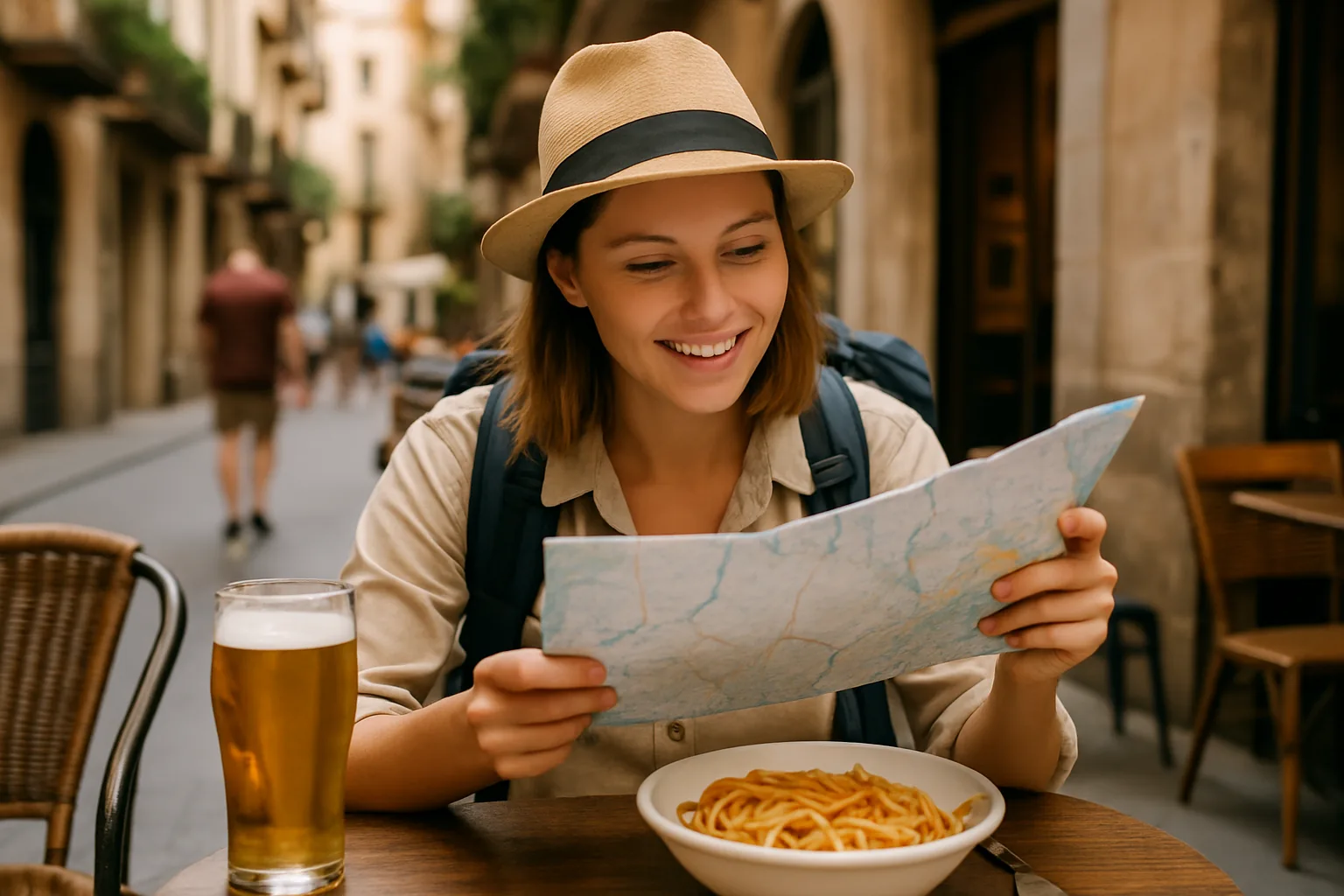
Something remarkable is happening in the world of travel right now. Despite rising costs, economic uncertainty, and the general financial chaos that comes with being in your twenties, young people are exploring the world at a pace that older generations never managed. Budget travel isn’t a compromise — it’s a whole philosophy, and an entire generation has turned it into an art form. According to research by the World Youth Student and Educational Travel Confederation, youth travelers account for 350 million travellers globally and generate 424 billion dollars in tourism receipts — and their spending has grown at 9 percent a year since 2007, nearly three times the rate of all other age groups combined. That’s not a coincidence. That’s a generation that decided seeing the world was non-negotiable, and figured out how to make it happen anyway.
Why Young Travelers Are Rewriting the Rules
For a long time, travel was framed as a reward — something you did after you’d built a career, saved enough, settled down. That framing never really resonated with Gen Z or young millennials, and honestly, it’s hard to argue it should have. The world is too interesting to wait for.
What’s changed isn’t just attitude, though. The tools available to young travelers today are genuinely different. Flight comparison platforms, hostel booking apps, work-exchange communities, and the collective wisdom of millions of travelers sharing real, honest advice online — all of it has made budget travel more accessible than it’s ever been. The barriers are lower. The information is better. And the community of people doing it is enormous.
Research from EF Ultimate Break, which surveyed 1,100 travelers aged 18 to 35 in April 2026, found that international travel for this generation is increasingly about learning something they can bring home, restoring mental and physical health, and feeling like they belong to something bigger than themselves. That’s a long way from the old “see the sights, buy the souvenir” model. And it shapes everything about how they travel — including how much they spend, and where.
The Art of Flying Smart
The flight is often the biggest single cost in any trip, and it’s also where you have the most room to be strategic. Flexibility is your greatest asset here. If you can shift your travel dates by even a few days — flying on a Tuesday instead of a Friday, or leaving early in the morning rather than in the evening — you’ll often find prices drop significantly.
Setting up price alerts for routes you’re interested in is one of the smartest habits you can build. Prices fluctuate constantly, and catching a route during a dip can save you a meaningful chunk of money. Booking too early or too late both tend to cost more; somewhere in the middle window — typically a few weeks to a couple of months out, depending on the route — tends to hit the sweet spot.
Nearby airports are worth checking, too. If you’re flying into a major European city, for example, there may be a secondary airport an hour away that’s served by budget carriers at a fraction of the price. That extra hour of travel on the ground can translate to hundreds saved in the air. And one-way tickets on different airlines can sometimes beat a return fare — it’s worth comparing both options before you commit.
Slow Travel: The Budget Strategy That Doesn’t Feel Like One
One of the most effective ways to travel on less money is also one of the most enjoyable: slow down. Slow travel — spending more time in fewer places rather than rushing through a dozen cities in two weeks — cuts your costs in almost every direction simultaneously.
👉 Read also: Travel on a Shoestring: How to Explore More by Spending Less
Transport is cheaper because you’re not constantly moving. Accommodation gets cheaper when you negotiate weekly rates at hostels or rent a room from a local family for longer stretches. You eat better because you have time to find where the locals actually eat, rather than grabbing something near the tourist attraction. And the experience itself is richer. You start to recognize faces. You find the café that becomes your café. You understand the rhythm of a place rather than just photographing its surface.
This approach also aligns naturally with what the research shows young travelers are actually looking for — depth over breadth, connection over consumption, experiences that teach them something real. A week in one city, living like you belong there, will almost always leave a stronger impression than a frantic sprint across five countries.
Work Exchanges and Long-Stay Options That Change Everything
If slow travel is the philosophy, work exchanges are one of its most powerful practical tools. Platforms built around the idea of trading a few hours of work per day — helping in a hostel, working on a farm, assisting at a guesthouse — in exchange for free or heavily discounted accommodation have opened up a genuinely different kind of travel for young people.
The appeal goes beyond just saving money on a bed. Work exchanges put you inside a community rather than passing through it. You meet other travelers doing the same thing, but you also meet the people who live and work there. You learn how a place actually functions. You pick up skills — language, cooking, farming, hospitality — that you carry home with you.
It’s not for everyone, and it’s worth being realistic about what’s involved. You’re committing to a schedule. You need to be reliable. The accommodation might be basic. But for travelers who want to stay somewhere long enough to actually understand it, and who are open to working for that privilege, it’s one of the most rewarding models out there. Many people who try it once end up building their entire travel style around it.
Eating Well Without Spending Much
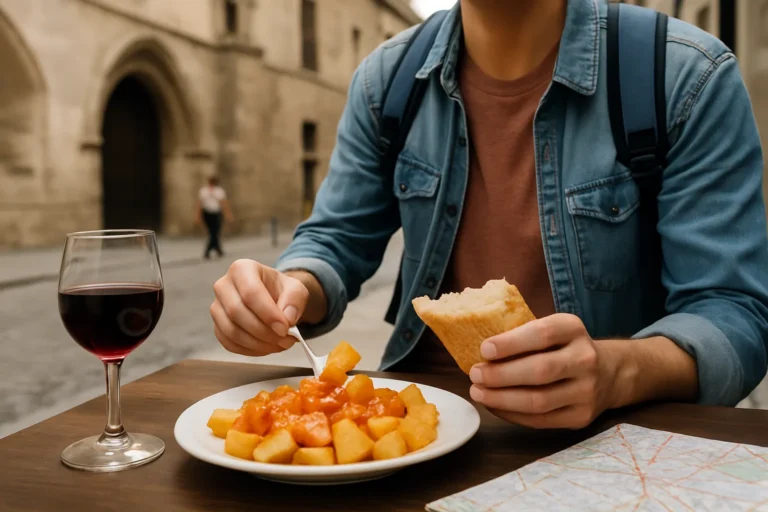
Food is one of the great pleasures of travel, and it’s also one of the areas where you can save the most money — or waste the most, depending on how you approach it. The single most effective rule is simple: eat where the locals eat.
In almost every city in the world, there’s a sharp divide between the places designed for tourists and the places where people who actually live there go for lunch. The tourist places tend to be more expensive, less interesting, and honestly, less delicious. The local spots — the market stalls, the family-run restaurants on side streets, the lunch counters near office buildings — are usually the opposite on all three counts.
Markets are particularly worth seeking out. Street food culture in Southeast Asia, Latin America, the Middle East, and across Africa offers some of the most extraordinary eating experiences in the world at prices that feel almost impossible. A full, incredible meal for the equivalent of a couple of dollars isn’t unusual. And beyond the cost, there’s something deeply satisfying about eating food that belongs to a place — food made by people who’ve been making it for years, for their own community.
Cooking occasionally, when you have access to a hostel kitchen or a shared apartment, can also stretch your budget meaningfully. Visiting a local market, picking up fresh ingredients, and cooking with other travelers is one of those small experiences that tends to become a genuine memory.
👉 Read also: Budget Travel Hacks That Actually Work (Without Feeling Broke the Whole Time)
Accommodation Beyond the Hotel Room
The standard hotel model simply doesn’t make sense for most budget travelers, and the good news is that the alternatives are genuinely good. Hostels, particularly well-chosen ones, offer far more than just a cheap bed. The best ones have common areas designed for people to actually meet each other, organize events, run tours, and create the kind of spontaneous social energy that solo travelers especially find invaluable.
Private rooms in hostels are worth knowing about, too. If you’re traveling as a couple or with a friend, a private room in a well-rated hostel often costs less than two beds in a budget hotel — and comes with all the social infrastructure of the hostel around it.
House-sitting is another option that’s grown significantly in popularity. Platforms connecting homeowners who need someone to look after their property — and often their pets — while they’re away with travelers who want free accommodation in exchange have created a surprisingly large ecosystem of opportunities. You can end up staying in beautiful homes in interesting neighborhoods, in exchange for watering plants and feeding a cat. The catch is that you need to build a profile and reputation over time, but it’s entirely achievable.
Couchsurfing communities, where locals offer their spare room or sofa to travelers for free, have been around for years and still work well when approached with the right spirit — not as a purely transactional arrangement, but as a genuine cultural exchange. The best experiences tend to come when you show up as a curious guest, not just someone looking for a free bed.
The Mindset That Makes Budget Travel Actually Work
The practical strategies matter, but underneath all of them is something more fundamental: a shift in what you’re optimizing for. The travelers who do this well aren’t constantly thinking about what they’re giving up. They’re thinking about what they’re getting.
A slower pace gives you time to get genuinely lost in a city. Eating at market stalls means sitting next to people who live there. Staying in a hostel means meeting someone who tells you about a place you never would have found otherwise. The constraints of budget travel have a way of pushing you toward exactly the kinds of experiences that make travel worth doing in the first place.
The EF Ultimate Break research found that young travelers today are drawn to travel that restores them — mentally, physically, emotionally — and that connects them to something beyond their immediate world. That kind of travel doesn’t require a big budget. It requires curiosity, flexibility, and the willingness to be a little uncomfortable sometimes. Those are free.
There’s also a growing recognition among this generation that sustainable travel and budget travel often point in the same direction. Staying longer in one place, using local transport, eating local food, choosing smaller guesthouses over large chains — all of these things tend to be both cheaper and more responsible. The traveler who spends three weeks in one country, moving slowly and spending money in local businesses, often does more good — and has a better time — than someone who rushes through six countries in the same period.
The world is genuinely accessible if you’re willing to be creative about how you move through it. You don’t need to wait until you have more money, more time, or more confidence. You need a flexible attitude, a few solid strategies, and the understanding that the most memorable travel stories almost never start with “and then I stayed in the most expensive hotel.” They start with a missed bus, an unexpected conversation, a meal you almost didn’t try, a detour that turned into the whole point of the trip. That’s the kind of travel that’s waiting for you — and it costs less than you think.
This article was produced with AI assistance and reviewed editorially.


Travel on a Shoestring: How Young Travelers Are Exploring the World for Less

Hanoi in 3 Days: A Local’s Guide to Vietnam’s Most Walkable City


