
Egypt
Egypt in 2026: Cairo, Giza & Dahab — Debunking Myths & What Solo Travelers Actually Experience
Discover what Egypt is really like in 2026. This honest travel guide covers Cairo’s reality, the Grand Egyptian Museum, Dahab’s coast, and debunks common safety myths for

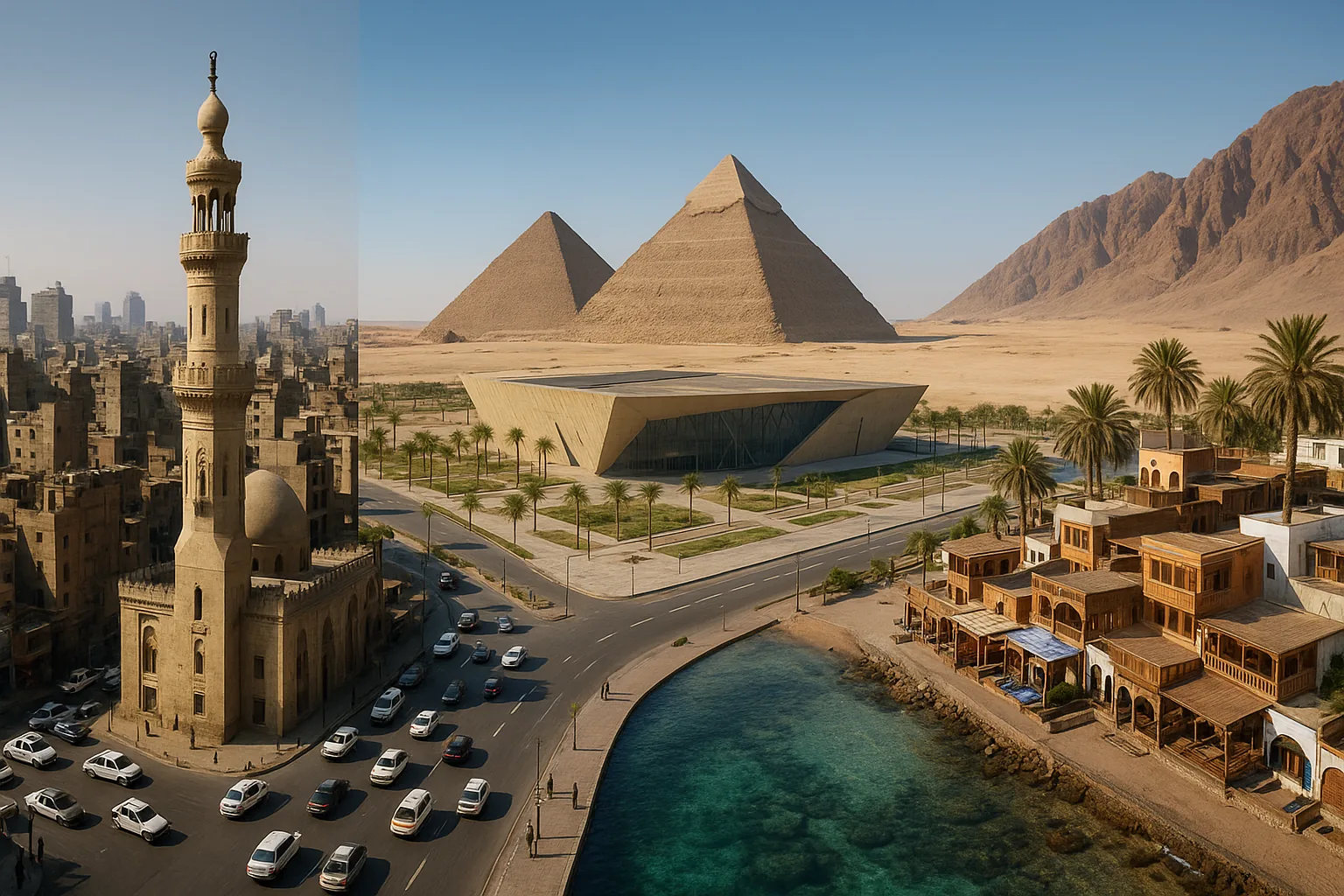
Egypt has a way of stopping you mid-sentence. You’re trying to explain what it felt like to stand in front of the Great Pyramid, and the words just don’t come. But before you even get to that moment, you’ve probably had to wade through a flood of contradictory advice — people telling you it’s dangerous, that it’s overwhelming, that you’ll be hassled every five minutes, or that it’s only for people on organised tours. This Egypt travel guide for 2026 is here to cut through all of that. Whether you’re planning a solo trip, travelling with a small crew, or still just dreaming about it, here’s what Egypt actually looks like right now — the pyramids, the chaos, the coast, and everything in between.
What Cairo Is Really Like in 2026
Let’s be honest: Cairo is not a gentle city. It’s loud, it’s sprawling, it moves at its own rhythm, and it will absolutely overwhelm you on day one. But that’s also exactly why it’s worth it. Once you stop fighting the pace and start leaning into it, Cairo becomes one of the most fascinating cities you’ll ever walk through.
Most practical itineraries suggest spending three to four days in Cairo — enough time to cover the Giza plateau, the Grand Egyptian Museum, and the layered streets of Islamic Cairo without burning out. That’s a solid framework. Don’t try to cram more in during your first visit. Cairo rewards slowness.
Islamic Cairo is where the city’s soul lives. The narrow lanes around Khan el-Khalili bazaar feel like they haven’t changed in centuries — and in many ways, they haven’t. You’ll pass spice sellers, copper craftsmen, tea houses full of old men playing backgammon, and mosques that have been standing since medieval times. Go in the morning before the heat peaks. Grab a cup of ahwa — Egyptian coffee — from a street stall and just watch the city wake up.
The city’s infrastructure has been evolving, and while Cairo is still a city of contrasts, getting around is more manageable than many travellers expect. The metro is cheap, relatively efficient, and a genuinely useful way to avoid the traffic. Taxis and ride-hailing apps work well in most areas. You don’t need to join an organised tour to navigate Cairo — though having a local guide for specific sites like Islamic Cairo can genuinely enrich the experience.
The Giza Plateau and the Grand Egyptian Museum
Here’s something that surprises a lot of first-timers: the Giza plateau is not in the middle of the desert. It sits right at the edge of the city. You can see the pyramids from certain rooftops in Cairo. That proximity is both strange and strangely moving — ancient monuments and modern apartment blocks sharing the same skyline.
The experience at the Giza archaeological zone has genuinely improved in recent years. Travellers who visited even five or six years ago and remember being constantly approached by vendors and touts will notice a real difference. Visitors can now spend time contemplating the Great Pyramid of Khufu with far less interruption than before — a change that makes an enormous difference to the experience. You can actually stand there, look up, and feel the weight of what you’re seeing.
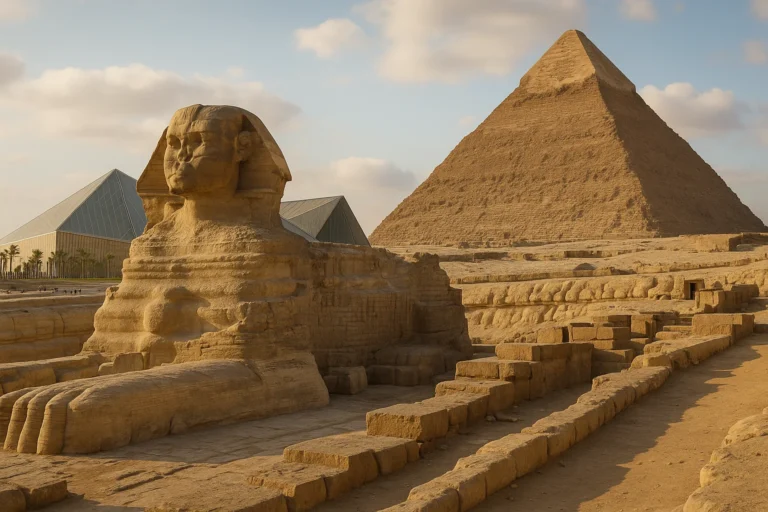
Go early. Seriously — be at the gates when they open. The light is extraordinary in the morning, the crowds are thinner, and the heat is manageable. If you can time a visit to the Sphinx for late afternoon, the golden hour light on the limestone is something you won’t forget.
The Grand Egyptian Museum, located near the Giza plateau, represents one of the most significant developments in how Egypt presents its ancient heritage to the world. The museum houses an extraordinary collection of artefacts, including the complete treasures of Tutankhamun — displayed together for the first time in their entirety. The scale of the building is staggering, and the curatorial approach is more modern and accessible than the older Egyptian Museum in Tahrir Square. Both are worth visiting if you have the time, but the Grand Egyptian Museum is genuinely unmissable. Budget at least half a day; a full day if you’re the kind of person who reads every panel.
👉 Read also: Safety First: Is It Safe to Travel to Cyprus, Baja California & Other Popular Destinations in 2026?
Rethinking Safety: What Solo Travelers Actually Encounter
This is the section that matters most to a lot of people considering Egypt for the first time. And the honest answer is: Egypt is not the dangerous place that some corners of the internet would have you believe, but it’s also not without its challenges — and those challenges vary a lot depending on who you are and how you travel.
Petty hassle — persistent vendors, unsolicited “guides,” people trying to get you into their shop — is real, particularly around major tourist sites. It’s not dangerous; it’s tiring. The best approach is calm, firm, and consistent. A polite but clear “no thank you” repeated as many times as necessary works better than engaging or showing frustration. Most experienced travellers to Egypt will tell you the same thing: once you learn to navigate this dynamic, it stops feeling threatening and starts feeling like just another part of the place.
For solo female travellers, Egypt requires more active awareness than some destinations. Harassment, particularly in crowded urban areas, is a documented reality. That said, many solo women travel Egypt successfully and meaningfully every year. Dressing modestly — covering shoulders and knees in most public spaces — is both culturally respectful and practically useful. Having a local contact or a reputable guide for certain areas adds a layer of comfort. Researching accommodation carefully, choosing places with good reviews from other solo female travellers, and trusting your instincts all matter.
What’s important is to get your information from honest, current sources rather than outdated horror stories or uncritical promotional content. Travel writers like Antonina Pattiz have published candid, nuanced assessments of Egypt’s safety landscape as recently as September 2026, and presentations by experts like Egyptologist Laura Ranieri Roy and historian François Roy have addressed the practical realities of travelling Egypt in 2025–2026, covering logistics, site conditions, and what travellers genuinely encounter on the ground. Seek out voices like these — people who’ve actually been there recently and are willing to tell you the full picture.
Dahab: The Alternative Egypt Most Travellers Miss
If you think Egypt is just pyramids and Cairo, Dahab will change your mind completely. This small town on the South Sinai coast sits on the edge of the Red Sea, backed by desert mountains, and it operates at a pace so different from Cairo that they might as well be different countries.
Dahab has long been a favourite among backpackers, divers, and anyone who wants to slow down and actually breathe. The vibe is relaxed, the accommodation is affordable, and the food — fresh fish, mezze spreads, koshari, flatbreads straight from the oven — is genuinely excellent. You can eat well here for very little money.
The diving and snorkelling around Dahab is world-class. The Blue Hole, a famous dive site just north of town, draws divers from around the world. Even if you’re not a diver, the snorkelling directly off the town’s waterfront is spectacular — coral gardens, colourful fish, and visibility that seems almost unreal. You can rent equipment cheaply and head in from the shore. No boat required.
Beyond the water, Dahab offers desert hiking, camel treks into the Sinai interior, and the chance to visit the extraordinary St. Catherine’s Monastery — one of the oldest Christian monasteries in the world — which sits at the foot of Mount Sinai a couple of hours inland. Many travellers do a night hike up Mount Sinai to watch the sunrise from the summit. It’s a hard climb in the dark, but the view at the top — desert and mountains stretching in every direction, the first light hitting the peaks — is one of those experiences that stays with you.
Dahab works beautifully as a counterpoint to Cairo. Spend your first few days in the capital absorbing history and intensity, then head to Sinai for something completely different. The contrast makes both places feel more vivid.
👉 Read also: Schengen Zone Travel: What Young Travelers Actually Need to Know in 2026
Practical Things to Know Before You Go
Egypt runs on cash more than cards in many places, particularly outside central Cairo and tourist-facing businesses. Carry Egyptian pounds and withdraw from ATMs in cities rather than relying on exchange bureaus at airports, which typically offer worse rates. Keep small denominations handy — tipping (baksheesh) is a genuine part of the local economy, not just a tourist custom, and having change makes everyday interactions smoother.
The best time to visit most of Egypt is between October and April, when temperatures are manageable. Summer in Cairo and Luxor is brutally hot — we’re talking temperatures that make sightseeing genuinely difficult during midday hours. The Sinai coast, including Dahab, is more comfortable year-round due to sea breezes, though summer is still warm.
If you’re interested in small-group travel rather than going fully independent, options are increasingly good. Organised itineraries like Pyramids & Temples Alive (running November 2026) and the Grand Tour of Egypt offer structured access to sites like Giza, Luxor, Saqqara, Abydos, and Abu Simbel with expert guidance. For first-time visitors who want the depth of knowledge without the logistics stress, this kind of trip can be genuinely worthwhile. Agencies with long track records and verified reputations — look for those with consistent independent reviews over many years — are worth the research.
For visa requirements and entry conditions, always check the Egypt Tours Portal travel tips page or your country’s official foreign affairs website before booking, as requirements can shift.
Learn a handful of Arabic phrases. Shukran (thank you), min fadlak (please), and la shukran (no thank you) will serve you constantly. Egyptians are warm and genuinely appreciate any effort to engage with the language. Even a clumsy attempt will earn you a smile.
Building Your Egypt Itinerary in 2026
A two-week trip gives you enough time to feel Egypt rather than just see it. Start with three or four days in Cairo — the Giza plateau, the Grand Egyptian Museum, Islamic Cairo, and a day trip to Saqqara, home to the Step Pyramid of Djoser, which is older than the pyramids at Giza and far less crowded. Then head south to Luxor, where the concentration of ancient temples and tombs along the Nile is almost impossible to absorb in a single visit. The Valley of the Kings, Karnak Temple, and the Temple of Luxor at night are all genuinely extraordinary.
From Luxor, consider a Nile cruise — even a short one — to reach Aswan and the temples of Abu Simbel further south. Then loop back north and east to finish in Dahab, where you can decompress, dive, hike, and eat your way through the final days of the trip at a completely different pace.
If two weeks isn’t possible, a tighter itinerary of ten days — Cairo, Luxor, and Dahab — still gives you a genuinely rounded picture of the country. Don’t try to rush Egypt. Every time you think you’ve seen the highlight, something else appears around the corner.
Egypt in 2026 is a destination that rewards the curious and the patient. It’s not always easy, and it’s rarely predictable — but that’s part of what makes it so memorable. The travellers who come back talking about Egypt with that particular light in their eyes aren’t the ones who saw it from behind a tour bus window. They’re the ones who got lost in a souk, watched the sun set over the Nile, floated above a coral reef in the Red Sea, and let the place be exactly what it is. Go with open eyes, a flexible plan, and genuine curiosity — and Egypt will give you more than you expected.
This article was produced with AI assistance and reviewed editorially.


SafetyWing Travel Insurance: Real Claims Process Review & What Actually Happens When You Need It

Underrated Cities in Southeast Asia and South America: Hat Yai, Vung Tau & Quito


