
Peru
Teaching English in Peru: What It’s Really Like to Work and Travel
Discover what it’s really like to teach English in Peru as a traveler. Learn about realistic salaries ($400–$1,000/month), visa requirements, and how to choose between to

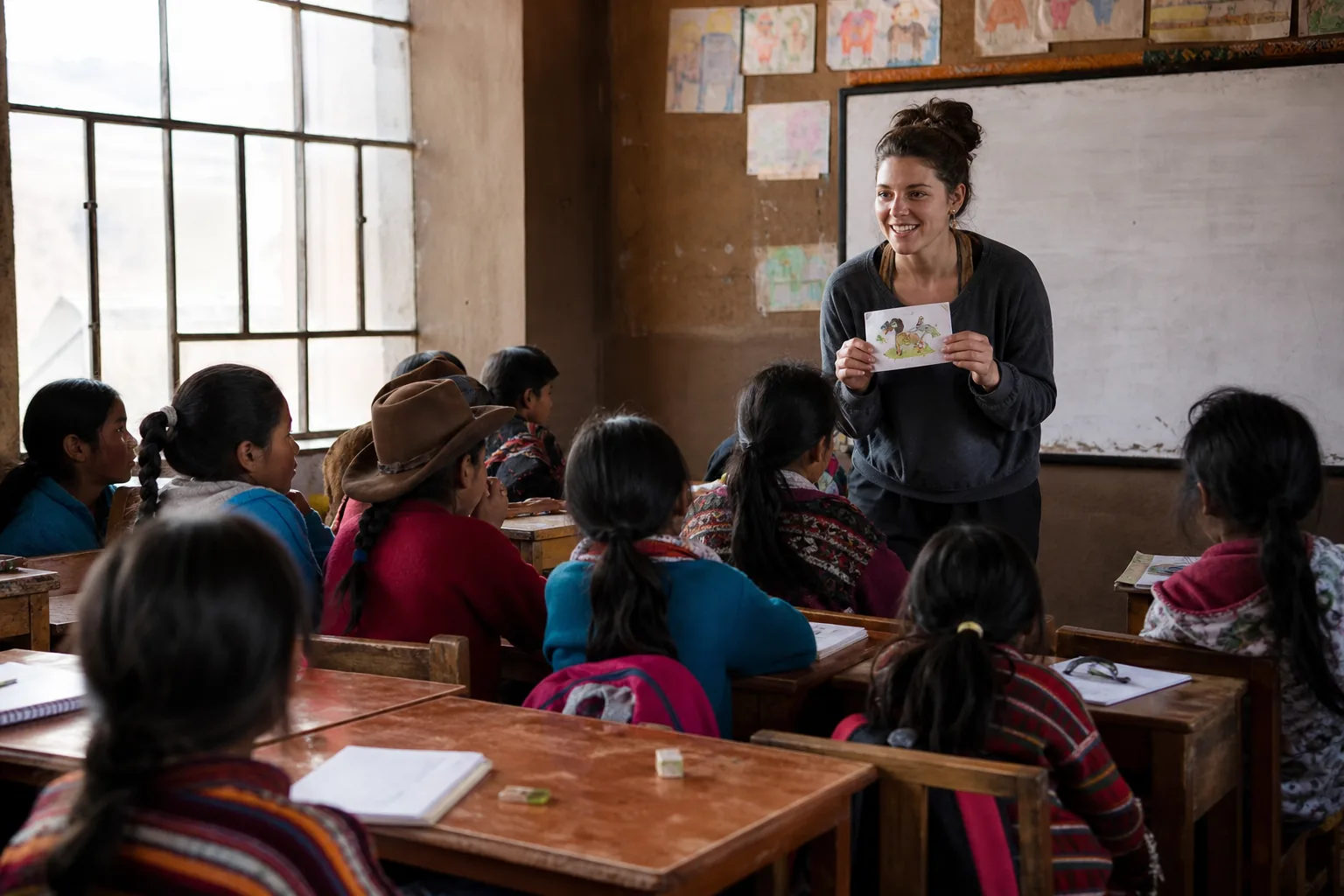
Peru has a way of getting under your skin. The kind of place where you arrive planning to spend two weeks and end up staying six months — and if you’re wondering how to actually make that happen without draining your savings, the answer for a lot of young travelers has been simple: teach English in Peru. It’s one of the most accessible ways to extend your time in South America, build real relationships with local communities, and come home with stories that go way deeper than any highlight reel.
Why Peru Is Worth More Than a Two-Week Visit
Most travelers hit Cusco, marvel at Machu Picchu, and move on. And look — those places are genuinely extraordinary. But Peru is enormous, layered, and full of corners that most tourists never reach. You’ve got the Amazon basin to the east, colonial cities like Arequipa and Trujillo to the north and south, and a Pacific coastline that surprises almost everyone who sees it. Staying longer doesn’t just mean seeing more — it means actually understanding a place.
That’s where teaching comes in. When you’re embedded in a school or a community program, you’re not a tourist passing through. You’re part of a routine. You’re invited to birthday parties, you learn which market stall has the best ceviche, and you start to understand how life actually works here. That kind of depth is hard to buy and impossible to rush.
What You’ll Actually Earn — and What It Costs to Live
Let’s be honest about the money, because it matters. Pay for English teaching in Peru typically falls between $400 and $1,000 per month — and that wide range reflects everything from volunteer placements that cover accommodation but offer little or no pay, to more competitive positions at private language institutes in larger cities. It’s not a salary that’s going to build your savings account back home. But in Peru, it can absolutely be enough to live comfortably, especially if you’re smart about where and how you live.
Rent, food, and local transport are all significantly more affordable than in Western Europe or North America. Eating at a menú del día — the set lunch offered at most local restaurants — costs very little and usually includes a soup, a main course, and a drink. If you’re cooking at home or living with a host family, your day-to-day expenses drop further. The key is to approach Peru on local terms rather than tourist ones. Skip the backpacker cafés designed for foreign budgets and eat where the teachers and students eat. That shift alone can make your monthly income feel far more comfortable.
Most teaching positions in Peru involve around 20 hours of classroom time per week, sometimes stretching to 30 hours. That leaves you with real time to explore — weekends in the mountains, afternoons wandering city markets, evenings learning Spanish with your neighbors. It’s a rhythm that suits the work-and-travel lifestyle far better than a standard nine-to-five.
Qualifications: What You Need Before You Go
The good news is that the bar to entry is lower than you might expect. Most positions require a TEFL or TESOL certification — a qualification you can earn online in a matter of weeks, or through an intensive in-person course before you leave home. A college degree is preferred by many employers, but it’s not a universal requirement. What matters more in many settings is your commitment, your communication skills, and your willingness to adapt.
If you’re 25 and fresh out of university — like Christina Romeo, a journalism and Spanish graduate from Las Vegas who went on to teach in Peru — you might find your academic background opens doors even if it’s not directly related to education. If you’re 19 and haven’t finished your degree yet, a solid TEFL certification and genuine enthusiasm can still get you placed, particularly through volunteer programs or community-based projects.
→ Read also: Skip the Tourist Trail: Why Huaraz Should Be Your Next Peru Adventure
For anyone considering this seriously, it’s worth looking at Go Overseas for a regularly updated directory of programs, placements, and honest reviews from people who’ve already done it.
Navigating Visas and Work Permits
Visa logistics in Peru can be a little murky, and it’s important to go in with realistic expectations rather than assumptions. Many travelers enter Peru on a standard tourist visa, which is typically valid for a set number of days and can be extended in-country. However, working legally on a tourist visa is a grey area — and if you’re being paid by a Peruvian employer, the technically correct path involves obtaining a work visa before or after arrival.
The honest reality is that a significant number of English teachers in Peru operate in an informal capacity, particularly those working with small community programs, NGOs, or volunteer organizations. Volunteer placements often sidestep the standard work permit issue entirely, since participants aren’t classified as employees. If you’re joining a structured program through an established organization, they’ll usually walk you through the documentation process and advise you on what’s legally required for your specific situation.
Whatever route you take, don’t skip this step. Research the current requirements before you travel, consult the Peruvian consulate in your home country, and ask your placement organization directly what documentation they expect. Rules can shift, and getting caught working without the right paperwork can cut your adventure short in the most frustrating way possible.
Tourist Hubs vs. Authentic Local Placements
This is where the experience really splits into two different paths — and neither one is wrong, but they offer very different things.
Cities like Lima, Cusco, and Arequipa have established English-teaching markets. Private language institutes, international schools, and corporate English programs are more common here, and salaries tend to sit toward the higher end of that $400–$1,000 range. You’ll have access to better infrastructure, a larger expat community, and plenty of things to do when you’re not teaching. If you’re new to living abroad and want a softer landing, starting in a city makes sense.
But if what you’re after is genuine connection — the kind that changes how you see the world — consider looking beyond the tourist trail. Smaller towns, rural communities, and Andean villages often have the greatest need for English education, and the experience of living there is something else entirely. You might be the only foreigner in town. Your students might be children who’ve never had a consistent English teacher before. The stakes feel real, and so does the impact.
Programs like Projects Abroad run volunteer teaching placements in Peru that accept participants from age 16 upward, with a minimum commitment of just two weeks and flexible start dates year-round. Accommodation is typically arranged through homestays, which means you’re living with a Peruvian family from day one — sharing meals, practicing Spanish, and getting a window into daily life that no hotel could offer.
→ Read also: Teaching English Abroad in 2026: Top Countries, Visa Requirements & Real Salaries
The Ethics of Teaching Abroad — and Why They Matter
It would be dishonest to write about teaching English abroad without talking about the ethical side. The conversation around voluntourism has grown louder in recent years, and for good reason. Short-term placements that prioritize the traveler’s experience over genuine community benefit have real downsides — inconsistency for students, dependency on foreign volunteers, and a kind of feel-good tourism that doesn’t always translate to lasting change.
So how do you make sure your time actually matters? A few things to look for:
- Program longevity — Does the organization have deep roots in the community, or did they appear recently to capitalize on demand from abroad?
- Community involvement — Are local teachers and community members involved in shaping the program, or is it designed entirely around foreign volunteers?
- Minimum stay requirements — A two-week minimum is a starting point, but longer commitments generally deliver more value to students who need consistency.
- Transparency about where your fees go — If you’re paying a program fee, a reputable organization should be able to tell you clearly how that money is used.
The most meaningful placements are the ones where you’re genuinely filling a gap, not just occupying a role that a local teacher could fill. Go in with humility, a willingness to learn as much as you teach, and a long-term mindset even if your stay is short.
How to Transition from Teaching to Independent Travel
One of the underrated advantages of teaching English in Peru is the position it puts you in once your contract or placement ends. You’ve built a network. You know the country beyond the tourist itinerary. You’ve probably picked up enough Spanish to navigate independently. And if you’ve been living on a local budget, you may have saved enough to fund a few more months of travel through South America.
Use your time teaching to do your research. Talk to locals about the places they love — the lake towns that don’t appear in guidebooks, the hiking routes that don’t have Instagram queues, the festivals that happen in villages rather than city squares. Your students and host family will often know things that no travel blog has published. That local knowledge is one of the greatest gifts of living somewhere rather than just visiting.
When the teaching chapter closes, you’re not starting from scratch as a traveler — you’re continuing a journey with context. Bolivia, Colombia, Ecuador, Argentina: they’re all within reach, and you’ll arrive at each one with a different kind of confidence. The kind that comes from having already figured out how to make a life somewhere new.
Who This Experience Is Really For
Teaching English in Peru isn’t for everyone, and it’s worth being clear about that. If you need financial security, a high salary, or a polished professional environment, this probably isn’t the right move. But if you’re curious, adaptable, and genuinely interested in people — if you want to stay long enough to actually belong somewhere, even temporarily — it’s one of the most rewarding ways to spend time abroad that exists.
You don’t need to be a born teacher. You don’t need a perfect Spanish accent. You need patience, a sense of humor, and the willingness to show up every day for people who are counting on you. That combination, more than any certificate or degree, is what makes the difference between a placement that feels like a gap year checkbox and one that genuinely shapes the direction of your life.
Peru has a way of giving back exactly as much as you put in. Arrive ready to learn as much as you teach, stay curious about everything around you, and you’ll leave with more than a longer passport stamp — you’ll leave with a place that feels, in some small but real way, like home.
This article was produced with AI assistance and reviewed editorially.


From Cancun to Tulum: Your Guide to Mexico’s Caribbean Coast and Why Isla Mujeres Should Be Your Next Day Trip

Teaching English in Peru: What It’s Really Like to Work and Travel


