
Mexico
From Cancun to Tulum: Your Guide to Mexico’s Caribbean Coast and Why Isla Mujeres Should Be Your Next Day Trip
Plan your Cancun to Tulum journey with practical transport options, cenote swims, Mayan ruins, and authentic local food beyond the resorts.

Mexico’s Caribbean coast is one of those stretches of the world that gets under your skin fast. Whether you’re plotting your first big solo trip or adding another chapter to a well-worn passport, a solid Cancun to Tulum travel guide is the difference between a surface-level holiday and a journey that actually means something. This coastline packs ancient ruins, electric-blue cenotes, island escapes, and some of the most flavourful food in Latin America into a relatively compact route — and the best part is that you don’t need a luxury budget or a rigid itinerary to experience all of it.
Understanding the Route: What the Yucatán Peninsula Really Looks Like
Picture a long ribbon of Caribbean coastline running south from Cancun, passing through Playa del Carmen, Akumal, and eventually reaching Tulum. That’s your main axis. Off the northern tip of Cancun, just a short ferry ride away, sits Isla Mujeres — a small island that feels like a completely different world from the hotel zone. Together, these destinations form one of the most rewarding travel corridors in all of Mexico.
The distances aren’t overwhelming. Cancun to Tulum is roughly 130 kilometres by road, which sounds like a lot until you realise that the journey is part of the experience. Between those two endpoints, you’ll find cenotes hidden in the jungle, small towns with incredible street food, and coastline that ranges from busy resort beaches to quiet, almost-secret coves. Isla Mujeres sits just off the coast of Cancun, approximately 20 minutes by ferry, making it an easy addition to any itinerary that doesn’t require backtracking or complicated logistics.
The key to doing this route well is resisting the urge to rush. Too many travellers try to check every box in a week and end up exhausted. Give yourself at least ten days if you can. If you only have five or six, pick two or three focal points and go deep rather than wide.
Getting from Cancun to Tulum: Your Transportation Options
There’s no single “right” way to travel between Cancun and Tulum — it really depends on your budget, travel style, and how much flexibility you want. Here’s a breakdown of the most common options.
ADO Buses
The ADO bus network is the backbone of budget travel along this coast. These are comfortable, air-conditioned coaches that run regularly between Cancun’s main bus terminal, Playa del Carmen, and Tulum. Tickets are affordable, the buses are clean and reliable, and you can book in advance online or buy at the terminal on the day. For travellers who want to move between cities without renting a car, this is the most practical choice. The journey from Cancun to Tulum takes roughly two to two and a half hours depending on stops.
Colectivos
If you want to travel like a local and save even more money, colectivos are your best friend. These shared minivans run frequently along the main highway and pick up passengers at designated spots. They’re faster than you’d expect, significantly cheaper than private transfers, and give you an immediate sense of how everyday life moves along this coast. The trade-off is that they’re less comfortable and you’ll need to know roughly where to board and disembark — but that’s a small learning curve worth climbing.
Car Rental
Renting a car unlocks the full potential of this route. With your own wheels, you can stop at roadside cenotes, detour to smaller towns, and time your arrivals at ruins before the crowds show up. The main highway is well-maintained and straightforward to navigate. If you’re travelling in a small group, splitting the cost of a rental often makes it surprisingly economical. Just make sure you’re comfortable with Mexican driving norms and keep an eye on your insurance coverage.
Private Transfers and Shuttles
Shared shuttle services connect the major destinations along the coast and are a solid middle ground between the independence of a car rental and the affordability of a bus. They’re particularly useful if you’re arriving at Cancun airport and want a stress-free transfer directly to Tulum or Playa del Carmen without navigating public transport with luggage.
→ Read also: Mexico's Yucatán Peninsula: Getting Around & Exploring Cancun, Tulum & Isla Mujeres
The Isla Mujeres Day Trip: Everything You Need to Know
Isla Mujeres is the kind of place that makes you want to miss your return ferry on purpose. The island is known for its Playa Norte — a stretch of white-sand beach with crystal-clear, calm water that’s genuinely as beautiful as the photos suggest. The streets are narrow and colourful, golf carts replace cars as the primary mode of transport, and the pace of life slows down in a way that feels immediately restorative.
Getting there from Cancun is simple. Ferries depart from Puerto Juárez and from the hotel zone, and the crossing takes approximately 20 minutes. The round-trip ferry fare for adults runs around $19 USD, with a reduced rate of around $13 USD for children. If you’d rather join an organised day trip, full-day excursions to Isla Mujeres from Cancun typically cost around $60 USD and usually include round-trip catamaran transportation, a bilingual guide, and snorkelling equipment. For first-time visitors who want a structured experience with less planning, the organised tour option is worth considering — especially since many include stops at snorkelling sites you might not find on your own.
For travellers who prefer independence, taking the public ferry and exploring at your own pace is equally rewarding. Rent a golf cart when you arrive, drive to the southern tip of the island to see the old lighthouse and the dramatic rocky coastline, then head back to Playa Norte for the afternoon. Grab fresh fish tacos from one of the small spots near the beach and watch the sun start to dip. That’s a day well spent.
Snorkelling around Isla Mujeres is genuinely spectacular. The waters are warm, visibility is excellent, and the marine life is diverse. You can find organised snorkelling tours that depart from the island itself, or ask locally about the best spots depending on conditions that day. For a more structured experience, you can also explore options through a platform like GetYourGuide’s Isla Mujeres day trips to compare what’s available before you arrive.
Mayan Ruins Along the Route
One of the things that makes this coastline so compelling is that ancient history sits right alongside beach life. You can spend the morning exploring a Mayan archaeological site and be swimming in the Caribbean by early afternoon.
Tulum Ruins
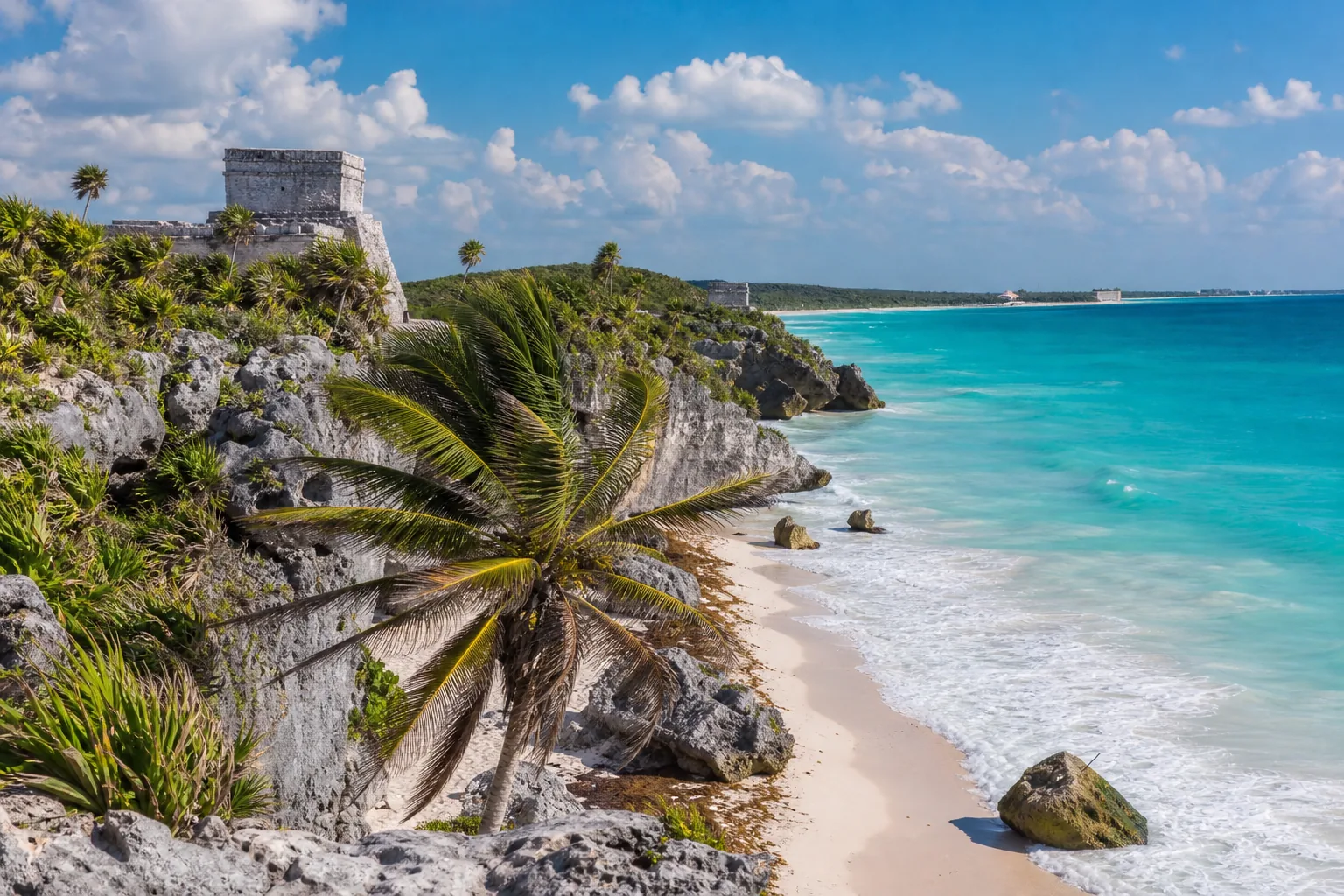
The Tulum archaeological zone is one of the most dramatically situated ruins in the world. Perched on a cliff above a turquoise bay, the walled city was once a major Mayan trading port. The ruins themselves are not the largest or most complex you’ll find in Mexico, but the setting is extraordinary. Arrive early — ideally right at opening — to beat the heat and the crowds. Many day trip itineraries from Cancun include a stop here, making it accessible even if you’re not basing yourself in Tulum.
Chichen Itza
Chichen Itza is accessible as a day trip from both Cancun and Tulum, though it requires an early start and a few hours of travel each way. The site is one of the most visited archaeological sites in the Americas, and for good reason — the scale and precision of the construction is genuinely staggering. Go with a guide if you can; the history and astronomical significance of the structures become much more vivid when someone explains what you’re looking at. Popular day trip itineraries from Cancun regularly include Chichen Itza alongside cenote visits, which makes for a full and satisfying day.
Cobá
If you want a ruins experience that feels less curated and more adventurous, Cobá is worth the detour. Located inland from Tulum, Cobá sits within a dense jungle and includes one of the tallest Mayan pyramids in the region. The site spreads across a wide area, and you can rent a bicycle or hire a cycle taxi to move between structures. It’s a more physical, exploratory experience than Tulum or Chichen Itza, and it attracts a noticeably smaller crowd.
Cenotes: Swimming in Something Ancient
Cenotes are one of the defining experiences of the Yucatán Peninsula, and no Cancun to Tulum travel guide would be complete without giving them proper attention. These natural sinkholes — formed when limestone bedrock collapses to reveal underground rivers and pools below — were sacred to the ancient Maya and are now some of the most extraordinary swimming spots on Earth.
→ Read also: The Yucatán Peninsula Moves: Getting Around Cancun, Tulum & Isla Mujeres (2026)
They come in different forms. Open cenotes are essentially circular pools open to the sky, often fringed with jungle vegetation and lit by shafts of sunlight. Semi-open cenotes have partial cave ceilings with dramatic light effects. Fully enclosed cave cenotes are darker, cooler, and more atmospheric — some require headlamps and feel genuinely otherworldly.
The area between Cancun and Tulum has a high concentration of cenotes, many of which are accessible by car, colectivo, or as part of organised tours. Some are well-known and can get busy during peak hours; others require a short walk through private land and feel almost completely undiscovered. Asking locally — at your hostel, guesthouse, or from other travellers — is often the best way to find the ones worth visiting. A few general tips: arrive early, bring biodegradable sunscreen (or none at all, since many cenotes require it), and be prepared for cool water regardless of the air temperature outside.
Many cenotes also offer snorkelling and even scuba diving for those who want to explore the underground river systems that connect them. The visibility underwater is remarkable — sometimes stretching for dozens of metres through crystal-clear fresh water.
Eating Well Without Spending a Fortune
Mexican food along this coast is exceptional, and you don’t need to eat at a hotel restaurant to experience it. In fact, some of the most memorable meals happen at the smallest, most unassuming spots.
In Cancun, step away from the hotel zone and explore the city’s residential neighbourhoods, where taquerías and local lunch spots serve cochinita pibil — slow-roasted pork marinated in citrus and achiote — alongside fresh tortillas and habanero salsa. Markets are another goldmine. Look for the local mercado in any town you pass through; the food stalls inside are typically run by families who’ve been cooking the same recipes for generations.
In Tulum, the food scene has evolved significantly and now spans everything from simple street food to more considered, ingredient-driven restaurants. But even here, the best value and often the most authentic experience comes from eating where the workers eat — the spots near the bus station, the lunch counters tucked off the main tourist drag, the places without English menus.
Seafood is a constant along the coast. Fresh fish, shrimp, and octopus appear in ceviches, tacos, and grilled preparations. If you’re near the water, you’re near something worth eating. Pair it with a cold agua fresca — a fresh fruit drink made with hibiscus, tamarind, or whatever’s in season — and you’ve got a meal that costs very little and tastes like the place itself.
Practical Tips for the Full Route
- Best time to visit: November through April offers the most reliable dry weather and comfortable temperatures. The summer months bring more humidity and the occasional tropical storm, but also fewer crowds and lower prices.
- Where to base yourself: Cancun works well as a starting point and transport hub. Playa del Carmen is a good central base if you want easy access to both Cancun and Tulum. Tulum itself rewards a longer stay — the town has its own rhythm that takes a day or two to settle into.
- Safety: Exercise the same awareness you would in any busy tourist destination. Stick to well-travelled routes, use reputable transport, and keep valuables secure. The main tourist corridor is generally well-visited and monitored.
- Cash and connectivity: Carry a mix of cash and cards. Many smaller establishments, market stalls, and colectivos only accept cash. ATMs are widely available in Cancun, Playa del Carmen, and Tulum, but less so in smaller towns along the route.
- Language: Spanish goes a long way, even if you only know the basics. In heavily touristed areas, English is widely spoken, but making the effort in Spanish — even imperfectly — tends to open doors and warm interactions.
- Packing: Light, breathable clothing, reef-safe sunscreen, a reusable water bottle, and good walking shoes will cover most situations. If you’re planning cave cenote visits or jungle treks, a small daypack and a headlamp are worth bringing.
Beyond the Tourist Trail
The most memorable moments on this route often happen when you put the map away for a while. Wander into a town during a local festival. Strike up a conversation with someone at a market. Take the colectivo instead of the tour bus and see where you end up. The Yucatán Peninsula rewards curiosity — there’s always something unexpected just off the main road, whether it’s a roadside shrine covered in flowers, a family-run restaurant with no sign out front, or a cenote that doesn’t appear on any list.
This is a route that works equally well as a structured itinerary and as a loose, spontaneous journey. You can plan every detail in advance or arrive in Cancun with a rough idea and figure the rest out as you go. Either way, the coast will meet you where you are.
The Cancun to Tulum travel guide you actually need isn’t a rigid schedule — it’s permission to slow down, look around, and let the place surprise you. From the ferry crossing to Isla Mujeres to the cool silence of a cave cenote, from a plate of cochinita pibil at a market stall to the sun rising over Tulum’s clifftop ruins, this stretch of Mexico has a way of turning a holiday into something that stays with you long after the tan fades. Start planning, stay curious, and leave room for the unexpected.
This article was produced with AI assistance and reviewed editorially.


From Cancun to Tulum: Your Guide to Mexico’s Caribbean Coast and Why Isla Mujeres Should Be Your Next Day Trip

Teaching English in Peru: What It’s Really Like to Work and Travel


