
Egypt
Egypt in 2026: What’s Actually Different (And What Myths You Can Finally Forget)
Discover what Egypt travel in 2026 actually looks like. Honest guide to safety, the Grand Egyptian Museum, visa updates, and what’s genuinely changed.

If you’ve been putting off Egypt because of half-remembered headlines or a friend’s horror story from a decade ago, this guide is for you. Egypt travel in 2026 looks genuinely different from the country that earned its mixed reputation among backpackers and first-timers — and understanding what’s actually changed, versus what’s stayed the same, is the difference between a trip that surprises you and one that overwhelms you. This is the honest, unfiltered version.
Why Egypt Still Stops People in Their Tracks
There’s a reason Egypt keeps appearing on bucket lists generation after generation. It’s not just the pyramids — though standing in front of them for the first time does something to you that no photograph can prepare you for. It’s the sheer density of history. You can walk through a neighbourhood in Luxor and casually pass a temple that’s been standing for three thousand years. You can dive into the Red Sea and share the water with coral reefs that rival anything in Southeast Asia, often at a fraction of the cost.
Egypt isn’t one destination. It’s several, layered on top of each other. There’s monumental Egypt — the Giza Plateau, Saqqara, the great temples. There’s the Nile Valley, where Luxor and Aswan hold a concentration of archaeological wealth that honestly feels unfair to the rest of the world. There’s coastal Egypt along the Red Sea, built for divers and sun-seekers. And then there’s desert Egypt — Siwa, Faiyum — for the genuinely curious traveller who wants to go somewhere most people skip entirely. Knowing which version of Egypt you’re after makes planning the whole trip click into place.
What Egypt Travel in 2026 Actually Looks Like on the Ground
Let’s start with the practical stuff, because that’s where a lot of the anxiety lives. The biggest logistical update worth knowing: Egypt modernised its visa on arrival system on 1 August 2026, replacing the old physical visa sticker with a digital QR code system. It was initially piloted at Cairo International Airport across all arrival terminals, which is where most international travellers land anyway. In practice, this means a smoother, faster process at the border — less fumbling with paper stickers, cleaner record-keeping, and a more streamlined welcome into the country.
If you’re arriving at Cairo Airport, you’ll go through the new QR code process. It’s worth checking the latest requirements for your specific nationality before you travel, since rollout details can evolve, but the direction of travel is clearly toward a more modern, accessible entry system. That’s a meaningful shift for a country that has sometimes struggled with first-impression logistics.
Beyond the visa update, Cairo itself rewards travellers who arrive with open eyes rather than fixed expectations. The city is enormous, chaotic in the best sense, and full of neighbourhoods that each feel like their own world. Islamic Cairo — the medieval quarter around Al-Muizz Street — is one of the most atmospheric urban environments you’ll find anywhere. The Khan el-Khalili bazaar nearby is touristy, yes, but wander even a few streets beyond it and you’re in a living, working city that hasn’t been polished for visitors. That contrast is exactly what makes Cairo worth exploring slowly.
The Grand Egyptian Museum: The Reason to Visit Cairo Right Now
If there’s one thing that defines Egypt travel in 2026 as distinct from any previous era, it’s the Grand Egyptian Museum. This is the major draw pulling travellers to the Giza area right now, and for good reason. The museum sits near the pyramids and houses one of the most significant collections of ancient artefacts on earth — including treasures from Tutankhamun’s tomb that were previously scattered across older, less adequate display spaces.
The scale of the place is genuinely hard to comprehend until you’re inside it. Plan for more time than you think you’ll need. Serious history enthusiasts could spend an entire day here and still feel like they’ve only scratched the surface. For everyone else, even a half-day visit leaves you walking out with a completely different understanding of what ancient Egypt actually was — not just a collection of monuments, but a civilisation with extraordinary sophistication in art, science, medicine, and administration.
→ Read also: Egypt in 2026: Cairo's New Museum, Giza Without the Crowds & What's Actually Changed
The Grand Egyptian Museum is now included in most serious tour itineraries through the Cairo and Giza area, sitting alongside visits to the Giza Plateau itself, Saqqara, and the Step Pyramid of Djoser — one of the oldest large-scale stone structures ever built, and somehow still underrated compared to its more famous neighbours. If you’re building your own itinerary, treat these three together as a single multi-day experience rather than a quick tick-box exercise.
The Pyramids: Separating the Myth from the Modern Reality
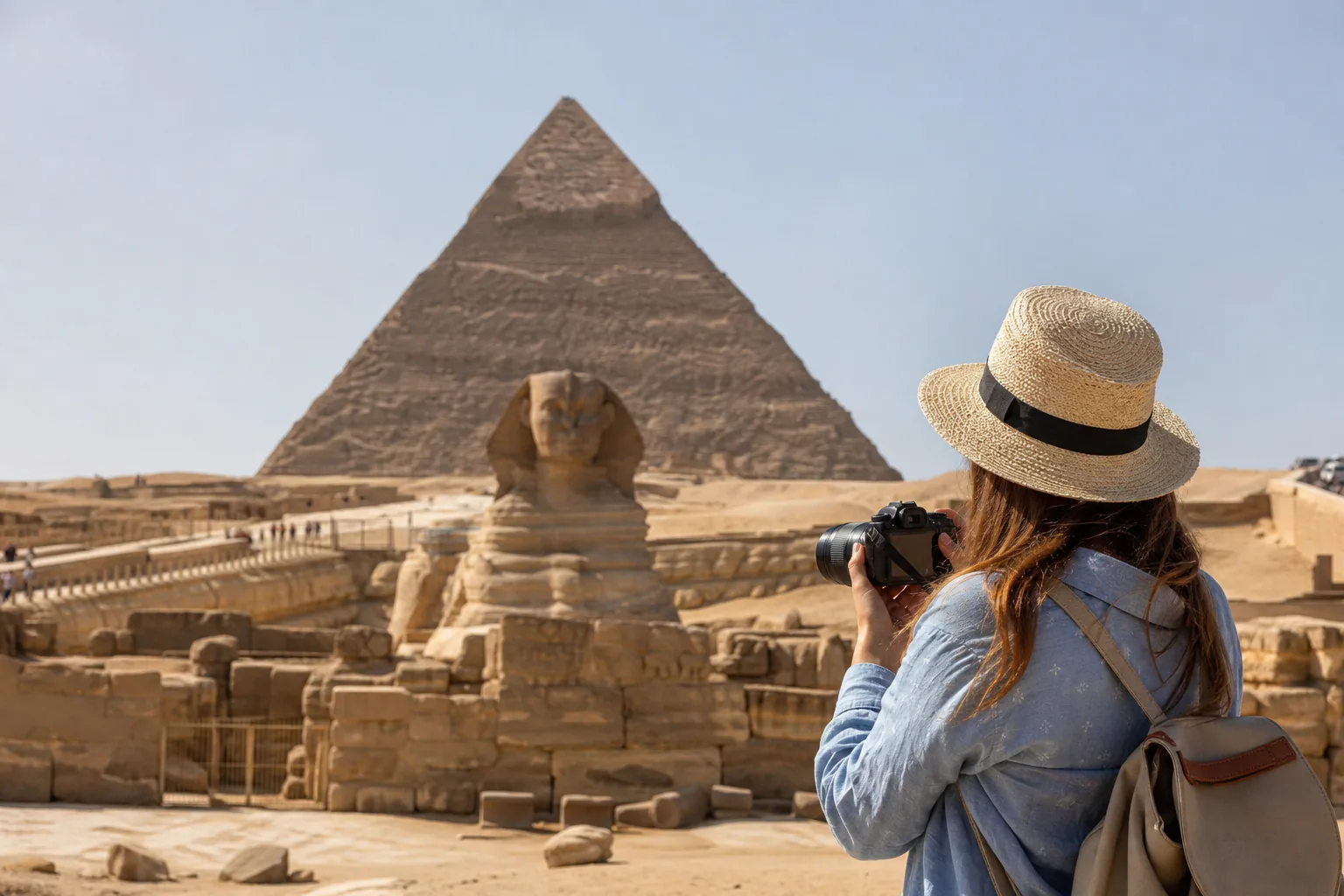
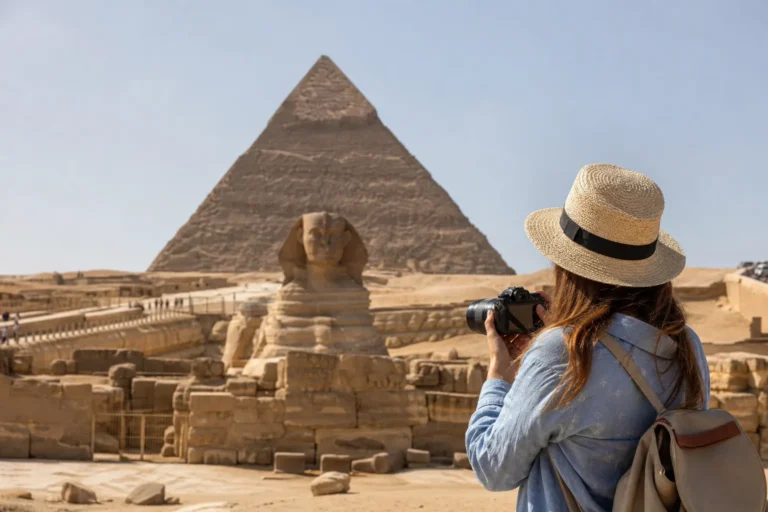
The Giza Plateau — three pyramids and a limestone sphinx — remains one of the most visited sites on earth, and it carries a reputation that sometimes puts travellers off. The stories usually involve aggressive touts, persistent sellers, and a general atmosphere that makes it hard to actually connect with what you’re looking at. Here’s the honest update: the visitor experience at Giza has genuinely improved. The level of harassment from sellers and touts is notably reduced compared to the historical reputation that scared so many people away.
That doesn’t mean it’s a serene, crowd-free experience — it isn’t, and anyone who tells you otherwise is setting you up for disappointment. The pyramids are popular for obvious reasons, and you’ll be sharing the experience with a lot of other people. But the atmosphere is more manageable now, and arriving early in the morning gives you a version of the site that’s genuinely quieter and more atmospheric. The light at sunrise over the plateau is the kind of thing you’ll still be thinking about years later.
A few practical notes worth keeping in mind: wear comfortable shoes, bring sun protection, and carry water. The plateau is exposed and the Egyptian sun is not subtle. If you want to go inside one of the pyramids, be prepared for tight, low passages — it’s claustrophobic for some people, but the experience of standing inside a structure built over four thousand years ago is unlike anything else.
The Nile Valley: Luxor, Aswan, and Why the South Rewards Slow Travel
Cairo gets the attention, but many travellers find that the Nile Valley is where Egypt really gets under their skin. Luxor and Aswan hold a concentration of archaeological wealth that’s almost absurd — more significant ancient sites per square kilometre than almost anywhere else on earth. The Valley of the Kings, Karnak, Luxor Temple, the Mortuary Temple of Hatshepsut, the Colossi of Memnon — these are all within reach of Luxor, and each one deserves genuine time rather than a rushed walk-through.
The Valley of the Kings in particular is one of those places where context changes everything. If you arrive knowing something about the pharaohs buried there, the painted walls of the tombs become a conversation across millennia. If you arrive knowing nothing, it’s still visually extraordinary — but read a little beforehand and the whole experience deepens considerably.
Aswan has a different energy from Luxor — slower, more relaxed, with a strong Nubian cultural presence that gives it a distinct character. The area around Aswan is also where you’ll find Abu Simbel, the twin rock temples that were famously relocated in the 1960s to save them from rising floodwaters. Getting there requires an early start, but few travellers regret making the effort.
A Nile cruise between Luxor and Aswan remains one of the classic ways to experience this stretch of the country, and it works well if you want a structured, comfortable journey between sites. But it’s not the only option. Travelling independently by train or bus between the two cities gives you more flexibility and a more authentic feel for how Egyptians actually move through their country.
The Red Sea Coast: An Underrated Reason to Stay Longer
A lot of travellers treat the Red Sea coast as a bolt-on — a few days of beach time after the serious historical touring is done. That’s a reasonable approach, but it undersells what’s actually available here. Red Sea diving genuinely rivals Southeast Asia in terms of marine biodiversity and reef quality, and it does so at a cost that makes it accessible even on a tight budget. Whether you’re a certified diver or someone considering their first open water course, this is one of the best places in the world to be underwater.
→ Read also: Cairo & Giza in 2026: What's Actually Changed
Hurghada is the most accessible Red Sea destination from Cairo and caters heavily to package tourists, which makes it convenient but not particularly atmospheric. For travellers who want something with more character, the Sinai Peninsula town of Dahab offers a noticeably different vibe — a relaxed, slightly bohemian coastal community that’s been attracting divers, windsurfers, and travellers who want to slow down for longer than a weekend. It’s the kind of place where a planned three-day stop turns into a week without you quite noticing how it happened.
One important note on the Sinai: Sharm El-Sheikh and Dahab are considered safe destinations within the main tourist zones. However, northern Sinai remains off-limits for travellers, and that’s a boundary worth respecting. Stick to the southern Sinai coast and you’re in well-established, well-visited territory.
Safety, Honestly Assessed
Safety is the question that hovers over Egypt for a lot of first-time visitors, and it deserves a direct answer. Egypt is safe to visit in 2026 for most travellers who stay within the main tourist destinations — Cairo, Luxor, Aswan, Alexandria, Hurghada, and Sharm El-Sheikh are all considered safe for international visitors. The country has invested significantly in tourism infrastructure and security in these areas, and millions of people visit each year without incident.
The areas to avoid are specific and clearly defined: northern Sinai and the zones near the Libyan border remain off-limits, and no serious travel resource recommends going there. This isn’t vague caution — it’s a specific geographic restriction that doesn’t affect the vast majority of tourist itineraries.
Petty hassle — persistent vendors, aggressive offers of “help” at tourist sites, occasional overcharging — is more of a reality in Egypt than in some other destinations, and it’s worth being mentally prepared for it. It’s rarely threatening, but it can be exhausting if you’re not expecting it. A calm, polite but firm response works better than frustration. Learning a few words of Arabic, even just a genuine greeting, shifts the dynamic noticeably and tends to be appreciated.
Solo female travellers do navigate additional challenges in Egypt — unwanted attention and street harassment are more common here than in many other destinations, and it’s worth reading accounts from other women who’ve travelled here recently to go in with realistic expectations and practical strategies. That said, many women travel Egypt solo every year and find it a deeply rewarding experience when approached with awareness.
Building Your Itinerary: What to Prioritise
Egypt rewards travellers who resist the urge to see everything. A well-paced week-long itinerary might look something like this: arrive in Cairo, spend two days exploring the city and the Islamic quarter, dedicate a full day to the Grand Egyptian Museum and Giza Plateau, then fly south to Luxor for two or three days across the Valley of the Kings and the East Bank temples, before finishing in Aswan. Add the Red Sea if you have more time.
Domestic flights between Cairo, Luxor, and Aswan are affordable and save significant time compared to overland travel. Trains are a good option too — the overnight train between Cairo and Luxor is a classic experience and genuinely practical. For travellers who want to check current practical tips from independent travellers who know Egypt well, that kind of community knowledge is invaluable for filling in the gaps that guidebooks miss.
The most important thing you can bring to Egypt isn’t a particular piece of gear or a perfectly optimised itinerary. It’s curiosity — a genuine willingness to be surprised by a country that has been misrepresented for long enough. The Egypt waiting for you in 2026 is more accessible, more rewarding, and more ready to be explored than the version that lives in outdated travel warnings and half-remembered myths. Go with open eyes, and it’ll give you back far more than you expect.
This article was produced with AI assistance and reviewed editorially.


Skip the Tourist Traps: Where Barcelona Locals Actually Eat

Egypt in 2026: What’s Actually Different (And What Myths You Can Finally Forget)


