
Asia
Southeast Asia on a Shoestring: How to Cross Borders, Save Money, and Actually Live Like a Local
Learn how to navigate budget travel in Southeast Asia with visa requirements, border crossings, transport options, and real itineraries covering 7 countries for under $23

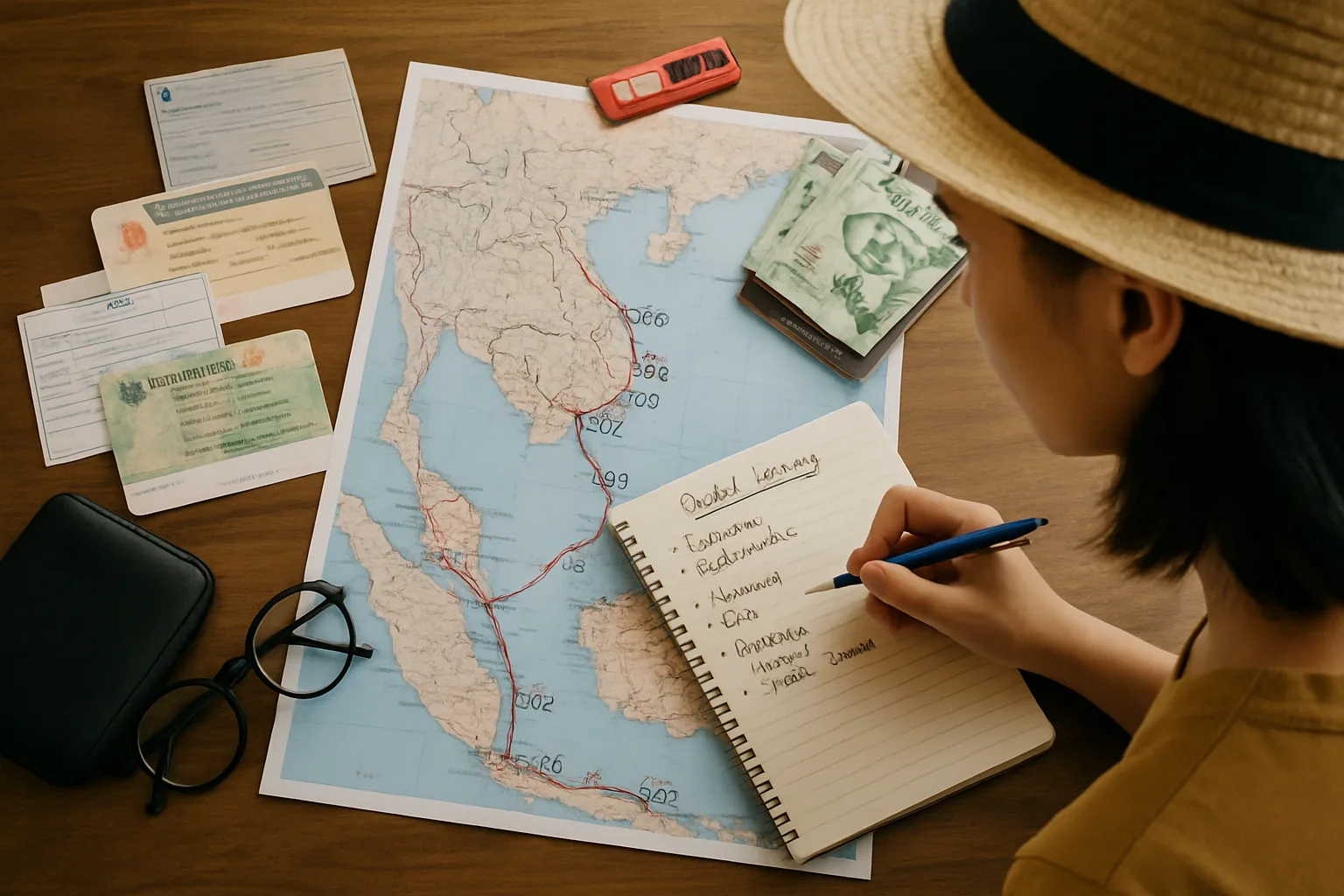
Southeast Asia has long been the dream destination for young travelers who want to stretch every dollar without sacrificing the experience — and for good reason. From the chaotic energy of Bangkok’s street markets to the still, green silence of a Mekong riverboat, budget travel in Southeast Asia genuinely delivers the kind of adventures that stay with you. But moving between countries here involves real logistics: visas, border crossings, ferries, overnight buses, and the occasional creative detour. This guide is here to help you figure out how to actually do it — not just dream about it.
Why Southeast Asia Still Wins for Budget Travelers
Let’s start with the numbers, because they matter. Most backpackers spend around $35 a day across the region — and that’s a comfortable average. Go deeper into Cambodia, Laos, or rural Vietnam, and you can survive and thrive on significantly less. Hostel dorms in Cambodia can run as low as $5 a night, street food in Thailand costs next to nothing, and local buses connect most major cities for a few dollars at most.
To put it in perspective: one documented backpacking trip covering 7 countries — Thailand, Cambodia, Laos, Vietnam, the Philippines, Malaysia, and Singapore — across 138 days and 47 cities came in at just $3,081.30 per person, which works out to roughly $22.32 per day. That’s not roughing it in a tent — that’s moving through an entire continent’s worth of culture, food, and landscape for less than a coffee subscription back home.
Of course, not every country is equally affordable. Singapore sits at the expensive end of the spectrum, with accommodation costs that can shock a budget traveler who’s just come from a $5 hostel bed in Phnom Penh. The trick is to factor Singapore in as a short stopover or a splurge moment rather than a base, and let the cheaper countries balance things out.
Understanding the Lay of the Land Before You Cross Any Borders
Southeast Asia isn’t one country — it’s a mosaic of nations, each with its own entry rules, currency, transport culture, and pace. Before you plan any multi-country route, you need to understand a few fundamental realities.
Visa requirements vary significantly depending on your passport. Many nationalities receive visa-on-arrival or visa-free access to countries like Thailand, Vietnam, Cambodia, and Indonesia, but the rules change, the durations differ, and some countries require advance applications. Always check the official immigration website of each country you’re entering before you travel — requirements can and do shift with little warning.
The general rule of thumb: do your research 2–4 weeks before crossing any border, not the night before. If you’re on a longer trip covering five or six countries, stagger your research so you’re not overwhelmed at the start but also not scrambling at the last minute.
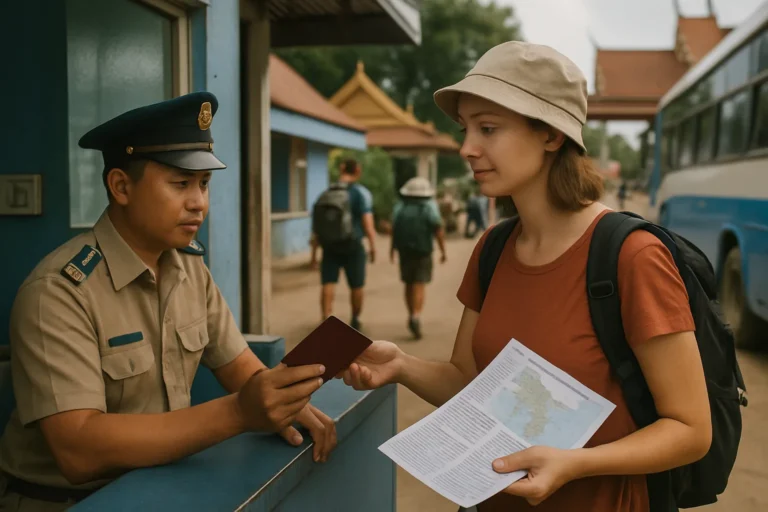
Border crossings in Southeast Asia range from smooth and modern to genuinely chaotic. Land crossings between Thailand and Cambodia, or between Vietnam and Laos, are well-traveled routes that thousands of backpackers use every month — but they still require patience, correct documentation, and ideally some local currency on hand. Unofficial fees and small “processing charges” are a known reality at some crossings. Stay calm, know what you should officially be paying, and don’t hand over more than you have to.
How to Actually Move Between Countries
This is the question most guides skip over too quickly: how do you physically get from one country to the next? The answer depends on where you’re going, how much time you have, and how much comfort you’re willing to trade for savings.
→ Read also: Southeast Asia on a Shoestring: Budget Travel Guide to Border Crossings & Regional Itineraries
Overland by Bus or Minivan
The classic backpacker move. Overnight buses between major cities — Bangkok to Chiang Mai, Ho Chi Minh City to Hanoi, Phnom Penh to Siem Reap — are cheap, practical, and part of the experience. Cross-border bus routes exist between Thailand and Cambodia, Thailand and Laos, Vietnam and Cambodia, and several other pairs. You’ll often need to disembark, go through immigration on both sides, and reboard. It’s slow, but it’s affordable and lets you see the landscape shift as you travel.
Minivan services are faster but more cramped. They’re popular for shorter cross-border hops and often run direct from guesthouse to guesthouse in tourist areas. Book through your accommodation or a reputable local agency rather than random street touts.
Ferries and Island Hops
Southeast Asia’s geography means water is often part of the journey. Ferries connect the Thai islands to the mainland, link parts of Indonesia, and carry travelers between Malaysia and Indonesia. The southern Thailand to Malaysia route via ferry and train is a classic, passing through some genuinely beautiful coastal scenery. Indonesia’s island chain — from Bali to Lombok to the Gili Islands — is almost entirely ferry-dependent, and the boats range from modern fast ferries to slower, more rustic options.
Always check ferry safety reviews before booking, particularly in Indonesia and the Philippines. Choose established operators, and if the weather looks rough, wait a day. No itinerary is worth a dangerous crossing.
Budget Flights
The region has a strong low-cost carrier network. Airlines operating across Southeast Asia connect cities that would otherwise require days of overland travel. Flying from Hanoi to Bali, or Kuala Lumpur to Manila, can cost surprisingly little if you book in advance and travel light. Keeping your luggage to a carry-on is one of the most effective budget hacks in the region — checked baggage fees on budget carriers add up fast.
Use flight comparison tools, set price alerts, and be flexible with your dates. Flying midweek and avoiding school holiday periods makes a real difference.
Planning a Multi-Country Route: Where to Start
The beauty of Southeast Asia is that it works for almost any trip length. Itineraries exist for everything from two weeks to six months or more, and the region genuinely rewards both the quick visitor and the slow traveler.
If you have two to three weeks, focus on one country or a tight two-country combination. Thailand alone can fill three weeks without feeling rushed — Bangkok, Chiang Mai, and the southern islands are a complete journey. Alternatively, pair Vietnam’s north with a quick hop into Cambodia to see Angkor Wat, which is one of the most visited and genuinely awe-inspiring sites in all of Asia.
With four to six weeks, you can do a proper multi-country loop. A classic route runs through Thailand, Cambodia, and Vietnam — or you could head south through Malaysia and end in Singapore. The Philippines deserves its own dedicated trip given that it’s an archipelago of over 7,000 islands, making it logistically separate from the mainland Southeast Asia circuit.
For two months or more, the whole region opens up. You can cover Thailand, Laos, Cambodia, Vietnam, and then fly into the Philippines or Indonesia for a completely different vibe. Some travelers spend months in just one country — Vietnam alone, from Hanoi down to Ho Chi Minh City, with stops in Hoi An, Hue, and the northern highlands, is a rich and varied journey.
→ Read also: Crossing Southeast Asia on a Budget: Your Guide to Visas, Borders, and Smart Routes
Breaking Down Costs by Country
Understanding where your money goes helps you plan smarter. Here’s a realistic picture of what to expect, based on a backpacker-level budget:
- Thailand: One of the more developed tourist infrastructures in the region. Accommodation ranges from cheap dorms in Chiang Mai to pricier beach bungalows. Street food is exceptional and affordable — you can eat well for very little. Budget around $30–45 per day for a comfortable experience.
- Cambodia: Among the most affordable countries in the region. Siem Reap and Phnom Penh both have excellent cheap accommodation, and the food is good value. Budget travelers can comfortably live on $20–30 per day.
- Vietnam: Costs vary by region. The north tends to be cheaper than the south, and the cities are more expensive than rural areas. A reasonable daily budget is $25–40, with room to go lower if you travel slowly and eat local.
- Laos: Quieter and slower-paced than its neighbors. Transport between cities can be expensive relative to the distances, but accommodation and food are cheap. Budget $25–35 per day.
- Indonesia (Bali and beyond): Bali has a wide price range — tourist areas like Seminyak skew expensive, while Ubud and the east of the island offer better value. Lombok is generally cheaper than Bali and significantly less crowded. Budget $30–50 per day in Bali, less in Lombok.
- Philippines: Inter-island transport (flights and ferries) is the biggest cost. Accommodation and food are affordable, but getting around the archipelago adds up. Budget $30–45 per day including transport.
- Malaysia: More developed and slightly pricier than Cambodia or Laos, but still very affordable by global standards. Kuala Lumpur is a great value city with excellent food. Budget $30–45 per day.
- Singapore: A different category entirely. Budget $80–120 per day minimum, and even that requires careful choices. Use it as a short stop rather than a base.
The Philippines: A 30-Day Island Adventure
The Philippines deserves special attention because it operates differently from the rest of Southeast Asia. There are no land borders — every move between islands requires a flight or a ferry. That changes how you plan and how you budget.
A 30-day loop might look something like this: arrive in Manila, spend a couple of days getting oriented, then head north to the rice terraces of the Cordillera highlands for a few days of hiking and village life. Fly south to Palawan — one of the most visually stunning island groups in the world — and spend a week exploring the underground river, island-hopping around El Nido, and relaxing in Coron. From there, fly to the Visayas region to explore Cebu, Bohol (home to the famous Chocolate Hills and tarsiers), and the surf town of Siargao if the season is right.
The key to keeping costs down in the Philippines is booking domestic flights early. Budget carriers offer genuinely low fares when purchased in advance, but last-minute prices spike. Ferry travel between closer islands is cheaper but slower — factor that into your timeline.
Bali and Lombok: Two Islands, Two Vibes
Many travelers treat Bali as a destination in itself and never make it to Lombok — which is a shame, because the two islands offer genuinely different experiences that complement each other well.
Bali is lush, spiritually rich, and well-developed for tourism. You can spend days wandering rice terraces in Ubud, watching traditional dance performances, surfing beginner waves in Kuta, or exploring the quieter temple-dotted roads of the east. The infrastructure is excellent, the food scene is diverse, and there’s a strong community of long-term travelers and digital nomads.
Lombok is rawer. The beaches are less crowded, the pace is slower, and the local culture — predominantly Sasak rather than Balinese Hindu — is distinct. The Gili Islands sit just off Lombok’s northwest coast and are famous for their clear water, coral reefs, and car-free atmosphere. Climbing Mount Rinjani, one of Indonesia’s most dramatic volcanoes, is a serious multi-day trek that rewards those who take it on.
The fast ferry between Bali and Lombok takes around two hours and runs multiple times daily. It’s an easy addition to any Indonesia itinerary and well worth the crossing.
Smart Habits That Make Budget Travel Work
Beyond the numbers and the routes, budget travel in Southeast Asia is really about a mindset. The travelers who spend the least and enjoy the most tend to share a few habits.
- Eat where locals eat. The best food in Southeast Asia is almost never in tourist restaurants. Follow the crowds of locals, look for places with plastic stools and no English menu, and point at what looks good. You’ll eat better and spend a fraction of the price.
- Travel slowly. Moving every two days is expensive and exhausting. Staying in one place for a week means you can negotiate better rates on accommodation, find the hidden spots that take time to discover, and actually feel what a place is like rather than just passing through it.
- Use local transport. Tuk-tuks, songthaews, motorbike taxis, and local buses are all part of the experience — and they’re a fraction of the cost of private transfers or tourist shuttles.
- Book accommodation flexibly. Having a plan for your first night in a new city is smart; locking in every night weeks in advance isn’t. Flexibility lets you stay longer somewhere you love and leave somewhere that doesn’t click.
- Carry some cash in USD. US dollars are widely accepted at border crossings and in some countries as an informal second currency. Having a small amount of USD on hand smooths over a lot of logistical wrinkles.
Southeast Asia is one of those rare places where budget travel in Southeast Asia doesn’t feel like a compromise — it feels like the right way to do it. The best meals are the cheapest ones, the best transport is the local bus with the open windows, and the best accommodation is often the small family-run guesthouse where the owner tells you about a waterfall that isn’t in any guidebook. You don’t need a big budget to have a big adventure here. You need curiosity, a little planning, and the willingness to figure things out as you go. That’s the whole point.
This article was produced with AI assistance and reviewed editorially.


Southeast Asia on a Shoestring: How to Cross Borders, Save Money, and Actually Live Like a Local

15 Essential Apps Every Backpacker Needs Before Leaving Home


