
Asia
Southeast Asia on a Shoestring: Budget Travel Guide to Border Crossings & Regional Itineraries
Explore budget travel Southeast Asia with a practical 30-day Philippines itinerary, Sri Lanka backpacking route, and visa/transport guides. Average $22/day.

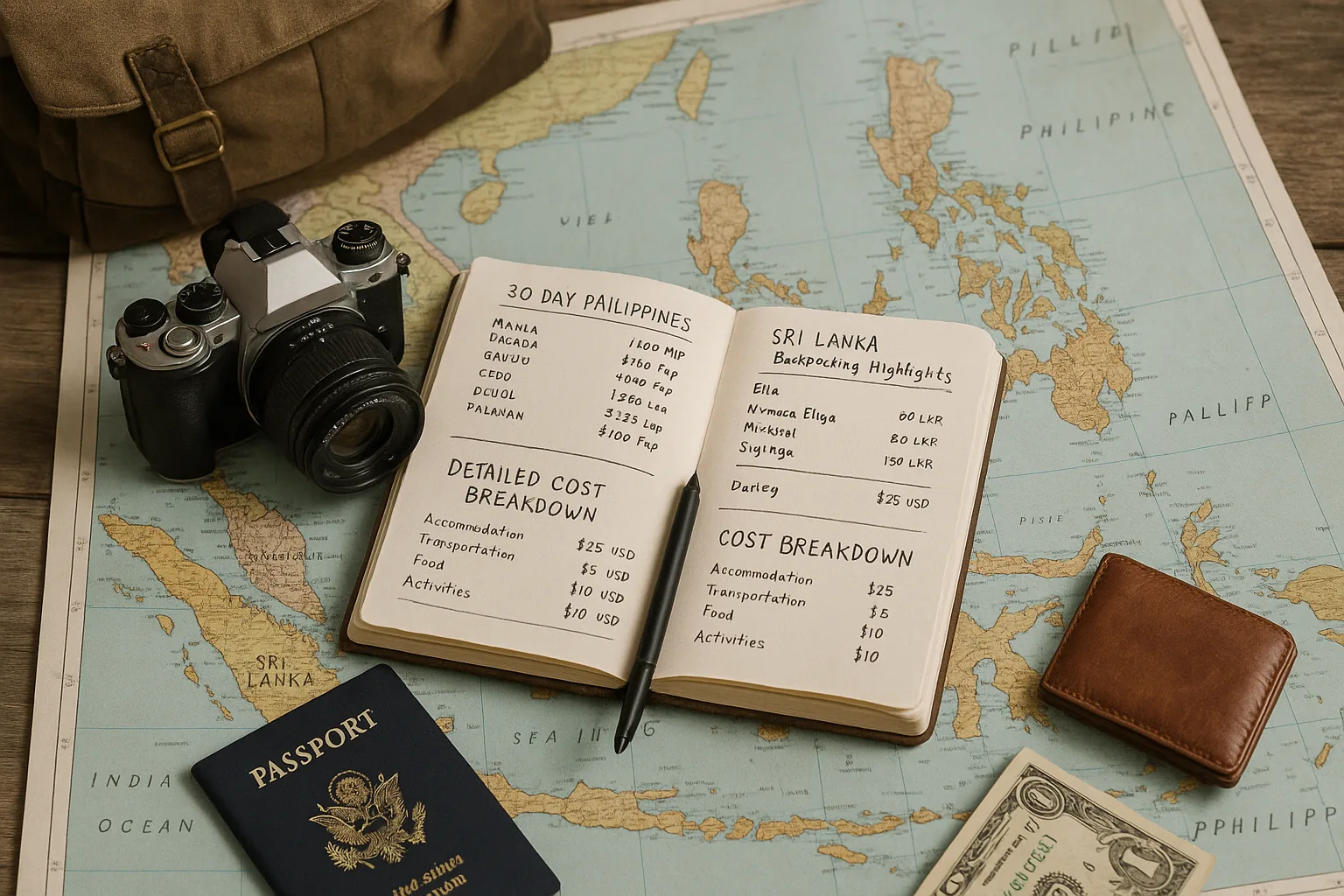
Southeast Asia has long been the go-to playground for young travelers chasing adventure without draining their bank accounts. Whether you’re daydreaming about temple-hopping through ancient ruins, island-hopping across turquoise waters, or navigating your first land border crossing on a sleeper bus, budget travel in Southeast Asia is not only possible — it’s one of the most rewarding ways to see the world. This guide breaks down how to move through the region smartly, covers a practical 30-day Philippines itinerary, dips into the backpacker trail through Sri Lanka, and gives you a real, honest look at border crossings, visas, and transport between countries.
Why Southeast Asia Still Wins for Budget Travelers
There’s a reason so many young travelers start their big adventure here. Southeast Asia delivers an extraordinary range of experiences — ancient temples, lush jungles, volcanic mountains, tropical rainforests, and some of the most beautiful islands on the planet — at a price that actually makes sense on a student budget. You can eat well, sleep comfortably, and move around without constantly watching the numbers spiral.
One of the most well-documented budget backpacking trips through the region — covering seven countries including Thailand, Cambodia, Laos, Vietnam, the Philippines, Malaysia, and Singapore across 47 cities — came in at around $3,081 per person over 138 days, averaging roughly $22 per day. That figure puts things in perspective. You’re not roughing it on a dollar a day, but you’re also not spending anywhere near what you would in Europe or North America. With a little planning and a flexible mindset, budget travel in Southeast Asia remains genuinely accessible.
The key is knowing where your money goes furthest, how to move between countries efficiently, and which experiences are worth splurging on versus which ones you can skip entirely.
30 Days in the Philippines: An Island-Hopper’s Itinerary
The Philippines is a different kind of Southeast Asian adventure. Unlike its mainland neighbors, it doesn’t share land borders with any other country in the region — so you’re flying in and out, and getting around means embracing ferries, bangkas (traditional outrigger boats), and the occasional puddle-jumper flight. That adds a layer of spontaneity that makes the Philippines feel truly like its own world.
A well-paced 30-day itinerary lets you experience the country’s incredible diversity without rushing. Here’s how to structure it:
Week One: Manila and the North
Start in Manila. Give it two or three days — enough to explore the walled city of Intramuros, eat your way through street food in Binondo (one of the world’s oldest Chinatowns), and get your bearings. Manila is chaotic and layered, and it rewards curiosity. From there, head north to Vigan, a UNESCO-listed colonial town with cobblestone streets and heritage houses that feel frozen in another century. A few days here sets a beautiful contrast to the capital’s energy.
Week Two: The Cordillera Highlands
Make your way inland to Sagada, a mountain town surrounded by pine forests, hanging coffins, and cave systems. It’s the kind of place that feels genuinely off the beaten path. Then descend to Banaue to see the famous rice terraces — carved into the mountains by the Ifugao people over two thousand years ago, they’re one of the most striking landscapes you’ll encounter anywhere in Asia. Budget accommodations here are simple but comfortable, and the food is hearty and cheap.
Week Three: The Visayas
Fly south to Cebu City, your gateway to the central islands. Use it as a base to explore the surrounding area — whale sharks in Oslob, canyoneering in Moalboal, the Kawasan Falls. Then take a ferry to Bohol, where the Chocolate Hills, tarsier sanctuaries, and quiet beaches make for a few genuinely memorable days. Budget travelers do well here — guesthouses are affordable, and the local food scene is excellent.
Week Four: Palawan
Save your final week for Palawan, consistently ranked among the most beautiful islands in the world — and for good reason. Fly into Puerto Princesa, visit the underground river, then make your way north to El Nido. The island-hopping tours here are the highlight of many travelers’ entire trips: limestone karsts rising from impossibly clear water, hidden lagoons, and beaches that feel like they belong on a postcard. It’s not the cheapest part of the Philippines, but it’s worth every peso.
👉 Read also: Budget Backpacking Southeast Asia: Sri Lanka, Laos & Beyond
Budget tip: Book inter-island flights in advance through local carriers for the best prices, and always check ferry schedules — they’re often more affordable than flying and give you a completely different perspective on the archipelago.
Backpacking Sri Lanka: A Route Worth Taking
Technically not part of Southeast Asia, Sri Lanka sits just off the southern tip of India — but it has found its way onto the radar of many young travelers doing extended trips through the broader region, and it absolutely deserves the attention. It’s compact enough to explore meaningfully in two to three weeks, culturally rich in ways that will genuinely surprise you, and still affordable by global standards.
A classic backpacker route starts in Colombo, the bustling capital, before heading to the Cultural Triangle in the center of the island. This area is home to Sigiriya — an ancient rock fortress rising dramatically from the surrounding jungle — as well as the cave temples of Dambulla and the sacred city of Anuradhapura. These are not tourist traps. They’re living, breathing places of cultural and spiritual significance, and visiting them feels like a privilege.
From the Cultural Triangle, most travelers head to Kandy, home of the Temple of the Tooth and surrounded by tea-covered hills. The train journey from Kandy into the Hill Country — through Ella, past waterfalls and tea estates — is one of the most scenic rail routes in all of Asia. Slow down here. Hike to Little Adam’s Peak at sunrise, eat at small local restaurants, and let the pace of the mountains do its thing.
The final stretch takes you south to the coastal towns — Mirissa for whale watching and beach time, Galle for the atmospheric Dutch fort and vibrant café scene, and Unawatuna for a more relaxed end to the journey. Budget accommodations are widely available along the south coast, and the local food — rice and curry, hoppers, kottu — is both delicious and very easy on the wallet.
Sri Lanka rewards travelers who slow down. Don’t try to see everything. Pick a rhythm and follow it.
Navigating Border Crossings Across Southeast Asia
One of the most exciting — and occasionally nerve-wracking — parts of budget travel in Southeast Asia is crossing land borders between countries. Do it right and it becomes one of your best travel stories. Do it unprepared and it can eat up time, money, and energy you’d rather spend elsewhere.
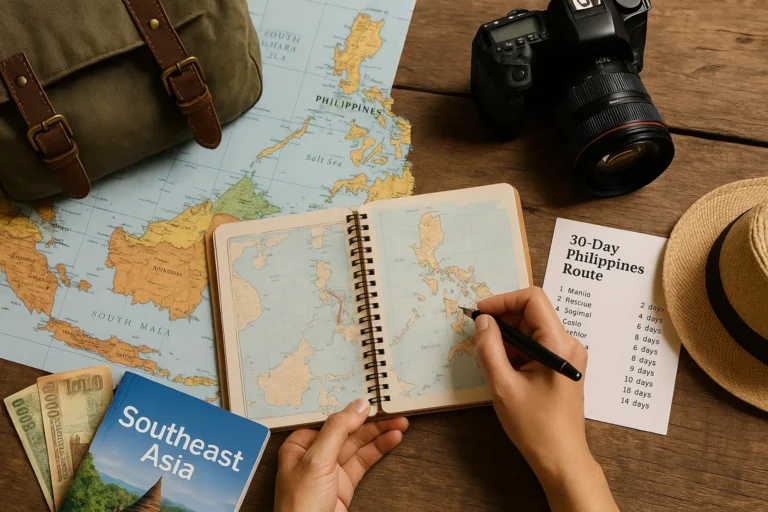
The good news is that overland travel between mainland Southeast Asian countries is well-established and genuinely manageable. Sleeper buses, for instance, are a popular and affordable option for longer routes. The crossing between Bangkok and Vientiane (Laos) and onward from Vientiane to Phnom Penh (Cambodia) are among the most documented sleeper bus routes in the region — they’re used by thousands of backpackers every year and are a legitimate way to save on both transport and accommodation costs by traveling overnight.
What You Need to Know Before You Cross
Every border crossing in Southeast Asia comes with its own personality. Some are smooth and modern; others are chaotic and crowded. A few things apply almost universally:
- Carry passport photos. Some border crossings require them for visa-on-arrival applications, and having extras saves time and stress.
- Have US dollars available. Many border crossings across the region accept or even prefer USD for visa fees, regardless of which currencies the neighboring countries use.
- Check visa requirements in advance. Requirements change, and what applied to a friend’s trip two years ago may not apply to yours today. The Seven Corners guide to Southeast Asia visa requirements is a useful starting point, but always verify with official embassy sources before you travel.
- Arrive early. Border crossings can get crowded, particularly on weekends and around public holidays. An early start gives you more flexibility if things take longer than expected.
- Watch out for unofficial “fees.” Some crossings have a reputation for unofficial charges or confusing paperwork. Stay calm, ask questions, and don’t hand over money unless you know exactly what it’s for.
Island Nations and Air Connections
It’s worth noting that the Philippines and Singapore cannot be reached by land — both are island nations with no overland connections to the rest of Southeast Asia. Budget airlines fill this gap efficiently, and if you book ahead, flights between major Southeast Asian hubs and Manila or Singapore can be surprisingly affordable. Factor flight costs into your overall budget early, especially if the Philippines is part of your itinerary.
👉 Read also: Budget Travel in Southeast Asia: Visas, Border Crossings & Real Costs in 2026
Budget Strategies That Actually Work
Knowing the region is one thing. Knowing how to stretch your money without sacrificing the experiences that matter is another. Here are the strategies that consistently work for budget travelers across Southeast Asia:
Eat Where Locals Eat
This is the single most effective way to reduce your food costs without compromising on quality — or flavor. Street food stalls, local markets, and small family-run restaurants consistently offer better food at a fraction of the price of tourist-facing spots. In most of Southeast Asia, a full, satisfying meal from a street vendor costs less than a coffee in most Western cities. Follow the crowds of locals. That’s always the right direction.
Travel Overnight When You Can
Overnight buses, trains, and ferries serve a double purpose: they move you between destinations and eliminate the cost of one night’s accommodation. On longer routes — like the sleeper buses used for certain border crossings — this can represent real savings. You wake up somewhere new, slightly rumpled but richer in both experience and budget.
Be Flexible with Timing
Peak season prices for accommodation and tours can be significantly higher than shoulder season rates. Traveling slightly outside the most popular windows — even by a few weeks — can make a meaningful difference to your overall costs. It also means fewer crowds at the places you actually want to experience.
Use Guesthouses and Hostels Strategically
Hostels are the backbone of budget travel in Southeast Asia, and the quality has improved dramatically over the years. Many now offer private rooms at prices comparable to basic guesthouses, alongside the social infrastructure — common areas, organized activities, local knowledge from staff — that makes them genuinely useful. Don’t dismiss them as purely for party travelers; the best hostels in the region are community hubs that can completely shape how you experience a destination.
Book Transport in Advance for Island Destinations
For places like Palawan in the Philippines, where flights and ferries have limited capacity, booking ahead is not just about saving money — it’s about actually getting there when you want to. Last-minute options exist, but they come with both higher prices and higher stress. A bit of planning goes a long way.
Combining Destinations: Building a Multi-Country Route
One of the great joys of budget travel in Southeast Asia is the sheer variety you can pack into a single trip. A well-structured multi-country route might look something like this: fly into Bangkok, spend a week in Thailand, cross overland into Laos or Cambodia, continue into Vietnam, then fly to the Philippines for island time before looping back through Malaysia or Singapore on the way home. Each leg feels distinct — different food, different language, different pace — and yet they connect into something coherent.
The key to making a multi-country route work on a budget is avoiding the temptation to backtrack. Every unnecessary return journey costs time and money. Plan a rough loop rather than an out-and-back route, and leave enough flexibility to stay longer in places that capture you. Some of the best travel experiences in Southeast Asia happen when you slow down and let a place reveal itself over several days rather than rushing through in 24 hours.
Sri Lanka fits naturally into a longer Asia itinerary — it pairs well with a trip through India, or as a standalone extension before or after a Southeast Asia circuit. Its compact size means you can see a meaningful amount in two to three weeks without feeling rushed, and the transition between the island’s very different landscapes — coast, highlands, jungle, ancient ruins — keeps things fresh throughout.
Southeast Asia, in all its layered, chaotic, beautiful complexity, has a way of getting under your skin. You arrive thinking you’ll spend a few weeks, and suddenly months have passed. The region rewards the curious, the flexible, and the open-hearted — and it does so without demanding a fortune. Whether you’re crossing a land border on a sleeper bus for the first time, watching the sun rise over rice terraces in the Philippines, or sipping tea on a hilltop in Sri Lanka, these are the kinds of moments that stay with you long after you’ve unpacked your bag and gone home. Start planning, stay curious, and trust that the journey will take care of the rest.
This article was produced with AI assistance and reviewed editorially.


Southeast Asia on a Shoestring: Budget Travel Guide to Border Crossings & Regional Itineraries

London Beyond the Eye: 8 Walks from Landmarks to Hidden Neighborhoods (2026)


