
Asia
Budget Travel in Southeast Asia: Visas, Border Crossings & Real Costs in 2026
Stretch your money across Southeast Asia in 2026. Learn visa requirements, border crossing routes, transport costs, and daily budgets for Thailand, Vietnam, Cambodia, Lao

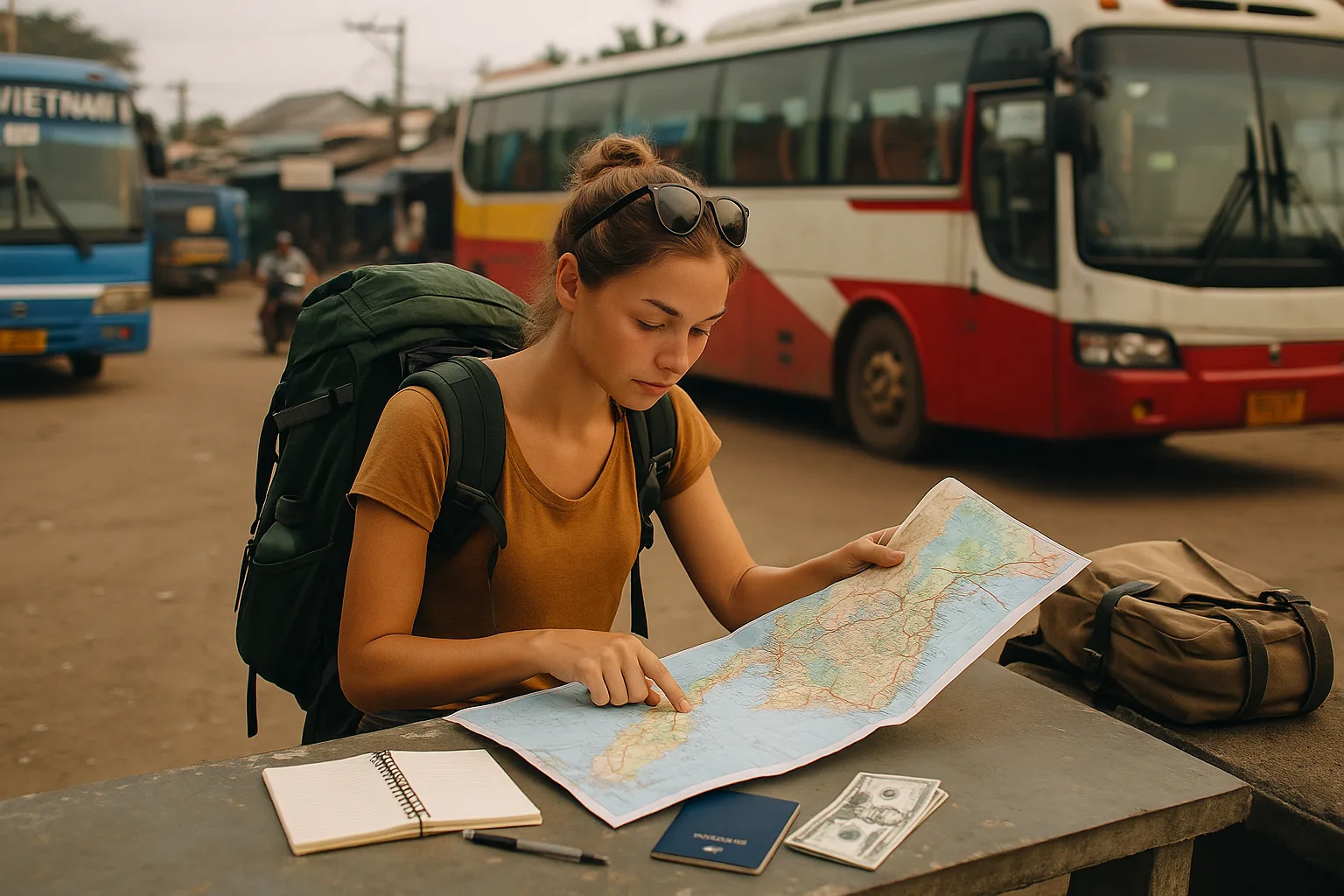
If you’ve been dreaming about stretching your money across temples, night markets, jungle treks, and white-sand beaches, budget travel in Southeast Asia remains one of the smartest moves a young traveler can make in 2026. The region consistently delivers extraordinary value — not just cheap accommodation, but a richness of culture, food, and landscape that would cost three or four times as much almost anywhere else. Whether you’re planning two weeks or two months, understanding how visas, border crossings, transport, and daily costs actually work will make the difference between a stressful scramble and a genuinely unforgettable journey.
Why Southeast Asia Still Wins for Budget Travelers
Some regions promise budget travel and then quietly disappoint you at every turn. Southeast Asia is different. It’s widely considered one of the best-value travel regions in the world, and that reputation holds up in 2026. Affordable accommodation, extraordinarily cheap street food, efficient transport networks, and landscapes that range from terraced rice fields to coral-fringed islands — all of this exists at a price point that genuinely works for travelers in their twenties.
To give you a concrete sense of the numbers: a two-week trip costs roughly $700 to $1,200 per person for backpackers, covering land costs only and excluding international flights. Mid-range travelers spending more on comfort can expect $1,800 to $3,500 for the same duration. Luxury clocks in at $6,000 and above. For most young travelers reading this, the backpacker range is the target — and it’s entirely achievable without sacrificing quality of experience.
The variation between countries matters enormously. Vietnam and Indonesia sit at the cheaper end, where a comfortable, active day of travel, food, and accommodation runs roughly $25 to $40. Singapore sits at the other extreme — even on a careful budget, expect $80 to $120 per day. A two-week trip focused on Vietnam and Indonesia can come in under $900 for land costs, while mixing in Singapore or the Philippine islands can nearly double that figure. Knowing this before you build your route is half the battle.
Building Your Route: Which Countries to Prioritize
Southeast Asia isn’t a single destination — it’s a collection of distinct countries, each with its own rhythm, costs, and entry requirements. The classic overland route through the mainland (Thailand, Laos, Cambodia, Vietnam) remains one of the most rewarding journeys you can take as a young traveler, and it’s designed almost perfectly for budget exploration. Island-hopping through Indonesia or the Philippines adds a completely different dimension: slower, more remote, and increasingly magical the further off the beaten path you go.
When planning your route, think about logical geography rather than jumping between countries at random. Flying into Bangkok and working your way through northern Thailand, across into Laos, down through Cambodia, and into Vietnam is a natural arc that minimizes backtracking and keeps transport costs manageable. Alternatively, flying into Hanoi and traveling south toward Ho Chi Minh City before crossing into Cambodia gives you a different perspective on the same region.
Malaysia is often underrated on the budget circuit. Kuala Lumpur offers a genuinely cosmopolitan experience at prices far below what you’d pay in Singapore, and the country connects easily to Thailand in the north and Indonesia via ferry in the south. If your budget is tight and your time is limited, prioritizing mainland Southeast Asia over island-heavy itineraries will stretch your money further — though the islands are absolutely worth it if you can afford a few extra days.
Visa Realities in 2026
Visa requirements across Southeast Asia shift regularly, so checking the official immigration website of each country before you travel is non-negotiable. That said, the general landscape in 2026 is relatively traveler-friendly. Many countries in the region offer visa-on-arrival or e-visa options for a wide range of nationalities, meaning you don’t always need to arrange paperwork weeks in advance.
Thailand, for instance, has historically offered generous visa-free periods for many Western passport holders, though the exact duration and conditions can change. Vietnam has expanded its e-visa system significantly in recent years, making pre-arrival applications straightforward. Cambodia offers visa-on-arrival at major entry points, including land borders, though applying online before you arrive saves time and avoids queues. Laos similarly offers visa-on-arrival at international crossings.
👉 Read also: Southeast Asia on a Shoestring: Rookie Mistakes, Budget Hacks, and Real Costs
The key habit to develop: always check current requirements at least two weeks before crossing any border. Policies update, fees change, and some crossings that are open to tourists one year may have different rules the next. The Southeast Asia Travel first-timer’s guide is a solid starting point, but always cross-reference with official government immigration sources for the countries you’re visiting.
Overland Border Crossings: What to Actually Expect
Crossing borders overland is one of the defining experiences of a Southeast Asia backpacking trip. It’s also where first-timers sometimes feel most uncertain. The reality is that the major crossing points between Thailand, Laos, Cambodia, and Vietnam are well-traveled, reasonably organized, and manageable with a bit of preparation — but they come with quirks you should know about.
The Thailand-Cambodia crossing at Poipet is one of the busiest and most infamous. It’s functional, but it’s loud, chaotic, and lined with touts offering services you probably don’t need. Keep your documents organized, ignore anyone aggressively offering to “help” you for a fee, and follow the official queue. On the other side, buses connect to Siem Reap relatively quickly. The crossing itself typically takes between one and three hours depending on crowd levels.
The Thailand-Laos crossing at the Friendship Bridge near Nong Khai is considerably more relaxed. A short tuk-tuk or bus ride takes you across the Mekong River, and the process on both sides is orderly. From Vientiane, you can continue north by bus or slow boat toward Luang Prabang — the slow boat journey down the Mekong is one of those experiences that sounds like it might be boring but turns out to be one of the most memorable days of the trip.
Vietnam’s land borders with both Laos and Cambodia are also popular with overland travelers. The Moc Bai crossing between Cambodia and southern Vietnam is commonly used by travelers heading between Phnom Penh and Ho Chi Minh City. Buses that cross the border directly are available and represent the easiest option for most travelers. Budget roughly half a day for any overland border crossing, and don’t plan tight connections on the other side.
Avoiding Common Border Scams
The most common issues at Southeast Asian land borders aren’t dangerous — they’re just annoying and occasionally expensive if you’re not paying attention. Unofficial “processing fees” are sometimes requested by officials or by touts posing as officials. In most cases, the correct fee for a visa-on-arrival is clearly listed; paying anything above that is optional at best. Keep small bills in local currency and USD for border fees, as card readers are rarely available at land crossings.
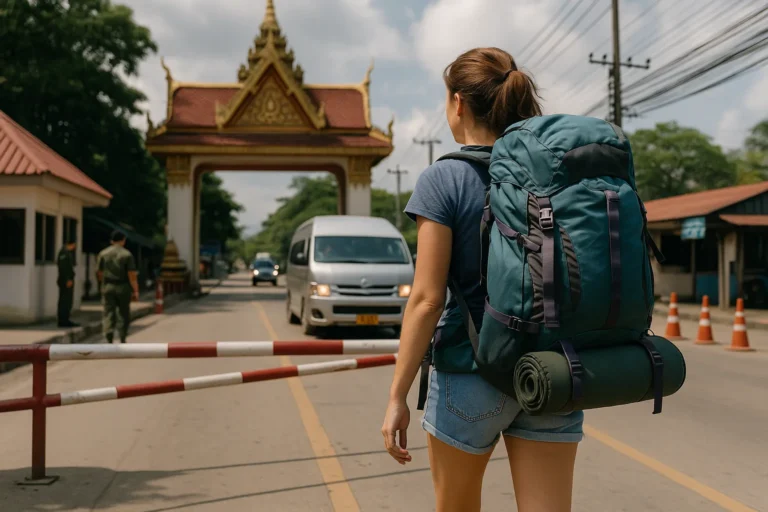
Be cautious of “direct bus” services that promise seamless border crossings and then change buses multiple times, adding hours to your journey. They’re not always scams — sometimes they’re just disorganized — but reading recent traveler reviews for specific routes before booking helps set realistic expectations.
Getting Around: Transport Options and Real Costs
Transport is often where budget travel in Southeast Asia either holds together or falls apart. The good news is that the region offers an extraordinary range of options at every price point, and knowing which to use when makes a real difference to both your wallet and your experience.
Night buses and night trains are the budget traveler’s best friend. You cover distance while you sleep, saving both time and the cost of a night’s accommodation. The overnight train between Bangkok and Chiang Mai, for example, is comfortable, scenic, and considerably cheaper than flying. Vietnam’s north-south railway is another highlight — the Reunification Express runs the full length of the country, and breaking the journey into segments lets you stop at places like Da Nang or Hoi An without backtracking.
👉 Read also: Budget Backpacking Southeast Asia: Sri Lanka, Laos & Beyond
Budget airlines operate extensively across the region. Carriers connecting major hubs like Bangkok, Kuala Lumpur, Singapore, and Ho Chi Minh City often offer fares that, when booked in advance, rival bus prices once you factor in journey time. The catch is baggage fees — traveling with only a carry-on keeps flight costs dramatically lower and removes the stress of checked luggage at busy airports.
Within cities and for shorter distances, motorbike taxis and tuk-tuks are the norm. Ride-hailing apps have transformed urban transport across much of Southeast Asia, offering transparent pricing that removes the need to negotiate. In most major cities, a short ride costs less than a dollar. Renting a scooter is popular for exploring areas like northern Vietnam or Bali, though it comes with real safety considerations — wear a helmet, check your travel insurance covers motorbike use, and don’t ride beyond your skill level.
Daily Costs by Country: A Practical Breakdown
Understanding the cost landscape country by country lets you plan your budget realistically rather than guessing. Here’s what a genuine backpacker budget looks like across the main destinations:
- Vietnam: One of the cheapest countries in the region. Street food meals cost next to nothing, guesthouses in most cities are affordable, and local transport is inexpensive. Budget travelers consistently report daily costs in the $25–$35 range, including accommodation, food, and local transport.
- Thailand: Slightly more expensive than Vietnam, particularly in Bangkok and the southern islands. The north — Chiang Mai, Pai, Chiang Rai — remains excellent value. Expect $35–$50 per day on a genuine budget, though island accommodation during high season pushes costs higher.
- Cambodia: Very affordable, especially outside Siem Reap and Phnom Penh. Angkor Wat entrance fees represent the biggest single expense for most visitors, but daily costs including food and accommodation can stay well under $40.
- Laos: Slower-paced and genuinely off the beaten path in many areas. Costs are comparable to Cambodia, though transport between destinations can add up due to longer distances and fewer options.
- Indonesia: Highly variable. Bali can be surprisingly affordable if you stay away from the tourist-heavy areas of Seminyak and Kuta. The outer islands — Lombok, the Gili Islands, Flores — offer extraordinary experiences at lower prices than Bali’s tourist center.
- Malaysia: A middle ground. Kuala Lumpur has excellent budget accommodation and extraordinarily diverse, cheap food. Penang’s street food scene is legendary and costs almost nothing.
- Singapore: Budget here means something different. Even staying in dormitory hostels and eating at hawker centres — the city’s brilliant open-air food courts — daily costs rarely dip below $80. Factor this into your route planning accordingly.
Food, Accommodation, and the Art of Spending Smart
Food in Southeast Asia is one of the great joys of the trip, and eating well on a budget isn’t just possible — it’s basically inevitable if you eat where locals eat. Street stalls, market vendors, and small family-run restaurants consistently outperform tourist-facing restaurants on both quality and price. A bowl of pho in Vietnam, a plate of pad thai from a Bangkok street cart, or a Cambodian amok curry at a local spot will cost a fraction of what you’d pay at a restaurant with English menus and cushioned seating.
Accommodation follows a similar logic. Hostels remain the social backbone of budget travel in Southeast Asia, and the quality has genuinely improved across the board in recent years. Many offer private rooms at prices that compete with budget guesthouses, along with the added benefit of a built-in community of fellow travelers. Booking a few nights in advance for your first night in each city is wise — arriving without a plan is fine once you know the area, but landing somewhere new late at night without accommodation sorted is unnecessarily stressful.
The single most effective way to control your budget is to track your spending daily, even roughly. It doesn’t need to be a spreadsheet — a simple note on your phone works. Travelers who do this consistently find they make small adjustments that add up significantly over a two-month trip. One documented example of this approach: a traveler tracked actual spending across 61 days and four countries with bank statement receipts, publishing the results in early 2026 — the kind of real-world data that’s far more useful than theoretical daily budgets.
Connectivity, SIM Cards, and Staying in Touch
Staying connected in Southeast Asia is easy and cheap. Local SIM cards are available at airports, convenience stores, and phone shops in every major city, and data plans are remarkably affordable compared to European or North American standards. Buying a local SIM in each country as you arrive is usually the most cost-effective approach, though eSIM options have expanded significantly and work well if your phone supports them.
Free Wi-Fi is available in virtually every hostel, café, and restaurant across the region. For navigation, downloading offline maps before you arrive in each country saves data and works even in areas with patchy signal — essential when you’re navigating a border crossing or a rural bus route.
Southeast Asia rewards curiosity, patience, and a willingness to go slightly off-script. The best meals you’ll eat won’t be in restaurants with TripAdvisor stickers. The most memorable border crossing might be the chaotic one where everything took twice as long as expected. The connections you make — with fellow travelers in hostel common rooms, with locals at market stalls, with the family running the guesthouse — are what you’ll actually remember when you’re back home. Plan your budget carefully, understand the logistics, and then leave enough space in your itinerary for the unexpected. That’s where the real journey happens.
This article was produced with AI assistance and reviewed editorially.


Southeast Asia on a Shoestring: Budget Travel Guide to Border Crossings & Regional Itineraries

London Beyond the Eye: 8 Walks from Landmarks to Hidden Neighborhoods (2026)


