
Egypt
Beyond the Nile: Discover Egypt’s Hidden Side—Dahab, Cairo’s Authentic Streets & What Most Travelers Miss
Discover authentic Egypt beyond cruise ships. Explore Dahab’s Red Sea coast, Cairo’s local neighborhoods, and travel like locals do in 2026.

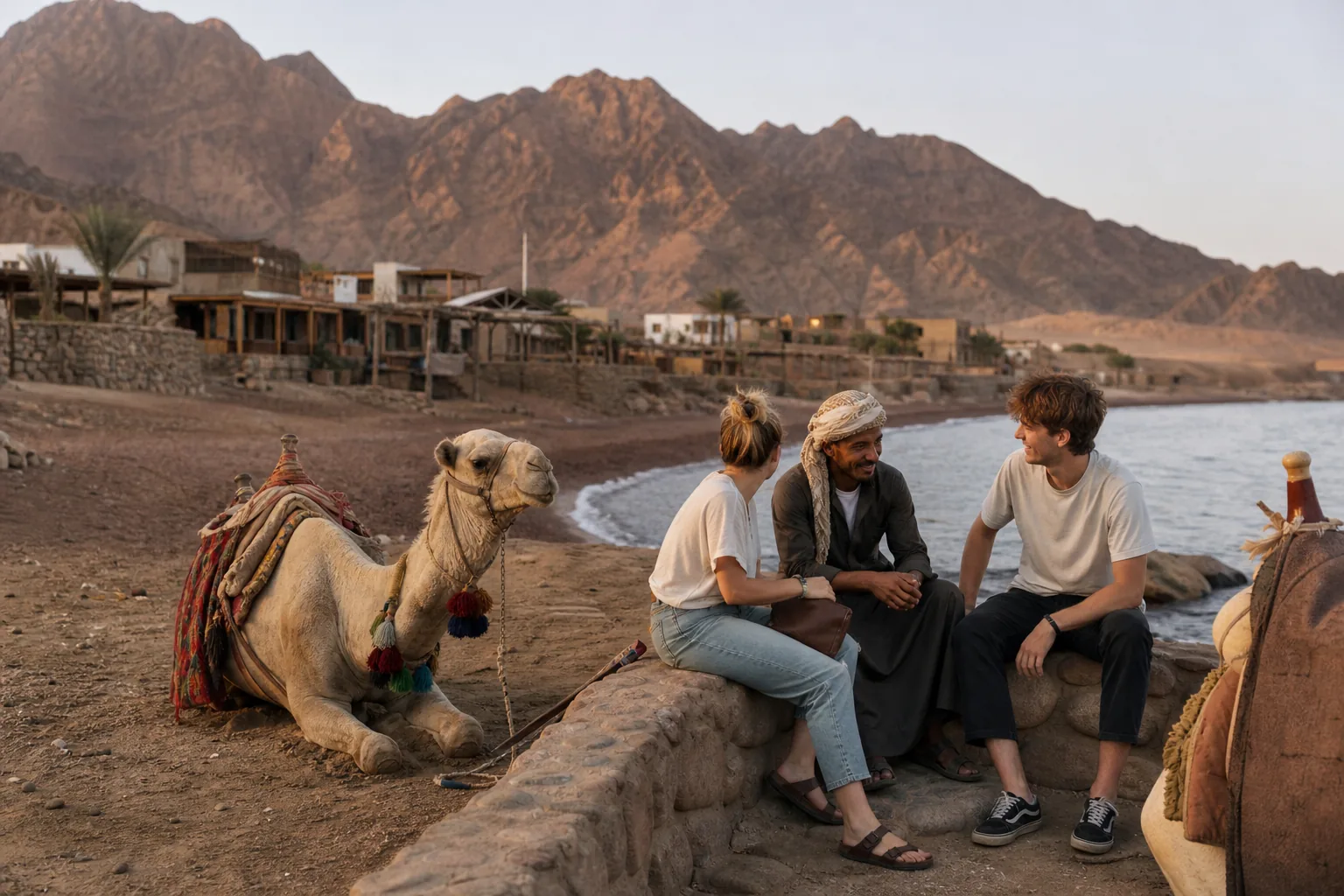
Egypt has a way of pulling you in deeper than you expected. Most people arrive with a checklist — the pyramids, the Nile, maybe a guided tour through Luxor — and leave feeling like they’ve seen the country through glass. But if you’re willing to step sideways from the tourist trail, off the beaten path Egypt travel opens up something far more interesting: a country that’s chaotic, generous, ancient, and completely alive. This guide is for the traveler who wants to eat where locals eat, sleep somewhere that doesn’t have a gift shop attached, and come home with stories that don’t start with “so we were on the cruise…”
Why Egypt Is More Than the Pyramids and Nile Cruises
There’s nothing wrong with seeing the pyramids. They’re extraordinary, and you should absolutely go. But mainstream Egypt tourism has built a very specific pipeline: fly into Cairo, tick the big monuments, board a cruise ship, float down the Nile, done. It’s efficient. It’s also a little hollow if you’re someone who travels to actually feel a place.
The cruise-ship version of Egypt keeps you at a comfortable distance from Egyptian life. You see the monuments, but you don’t see the neighborhood behind them. You eat in hotel restaurants, but you don’t sit on a plastic chair in an alley drinking koshary with office workers on their lunch break. You’re in Egypt without really being of it.
Independent travel here requires a bit more effort and a slightly higher tolerance for sensory overload. But the payoff is enormous. Egypt is one of the most culturally layered, historically dense, and genuinely welcoming countries you can visit — if you know where to look and how to move through it.
Dahab: The South Sinai Town That Quietly Does Its Own Thing
Tucked along the Gulf of Aqaba on the South Sinai coast, Dahab is the kind of place that doesn’t try to impress you. It just exists, unhurried and a little sun-bleached, and somehow that’s exactly what makes it so compelling. While most travelers gravitating toward Egypt’s Red Sea coast head straight for Hurghada or Sharm el-Sheikh — with their all-inclusive resorts and party strips — Dahab sits quietly off to the side, doing something completely different.
Described by nearly every traveler who’s spent time there as laid-back, bohemian, and deeply shaped by Bedouin culture, Dahab has become a genuine meeting point for a very specific kind of traveler. Digital nomads working from rooftop cafés. Backpackers who came for a week and stayed for a month. Divers obsessed with the underwater world. Yogis looking for somewhere to breathe. Kitesurfers chasing the wind. The town has a way of collecting people who were heading somewhere else and decided to stop.
What makes it work is the pace. Dahab doesn’t rush. The corniche — the seafront promenade — is lined with cushioned seating areas, restaurants, and dive shops, and the whole thing feels more like a village gathering point than a tourist strip. Locals and travelers mix easily. Conversations happen. You end up sharing a meal with someone you met an hour ago.
Diving the Blue Hole and Beyond
If you’ve spent any time in diving communities, you’ve heard of the Blue Hole. Located just north of Dahab, it’s one of the most famous dive sites on the planet — a vertical underwater sinkhole dropping deep into the Red Sea, surrounded by vivid coral and extraordinary marine life. It’s genuinely spectacular, and you don’t need to be an advanced diver to experience it. Snorkelers can appreciate the outer edges, and there are plenty of dive operators in town offering courses for beginners.
→ Read also: Dahab and Egypt's Red Sea Coast: Where Real Adventure Meets the Water
But the Blue Hole is just the headline act. The reefs around Dahab are rich and varied, and the diving community here is serious without being elitist. You’ll find small local dive shops run by people who know these waters intimately, and the instruction tends to be personal rather than factory-line. If you’ve been thinking about getting your open water certification, Dahab is one of the best places in the world to do it — affordable, unhurried, and with genuinely beautiful conditions.
What Else Dahab Offers
Beyond the water, Dahab is a base for real adventure. Mount Sinai — one of the most historically significant mountains in the world — is accessible from here, and the pre-dawn hike to the summit for sunrise is the kind of experience that stays with you. The surrounding desert landscape is dramatic and largely unexplored by casual tourists.
Kitesurfing has also become a major draw, with consistent winds making the area ideal for beginners and experienced riders alike. Rock climbing communities have quietly established themselves in the desert around town. And if you want to do absolutely nothing except read, eat well, and watch the light change over the Gulf of Aqaba, Dahab is completely fine with that too.
A few practical things worth knowing before you go: Dahab is significantly more relaxed in atmosphere than other Egyptian beach destinations, but it’s still Egypt — dress respectfully when you’re away from the beach, learn a few words of Arabic (it goes a long way), and be prepared for slower service than you might expect. That’s not a flaw. It’s the whole point. For off the beaten path Egypt travel, Dahab delivers something rare: a place with genuine character that hasn’t been smoothed out for easy consumption.
Cairo’s Real Streets: The City Behind the Tourist Map
Cairo is enormous, overwhelming, and one of the most fascinating cities on Earth. Most visitors see a very small slice of it: the Egyptian Museum, the Giza plateau, maybe Khan el-Khalili bazaar. All worth seeing. But Cairo’s real texture lives in its neighborhoods, its side streets, its heritage cafés, and the everyday rhythms of a city of tens of millions of people going about their lives.
The authentic experiences that make Cairo memorable — hidden rooftops, local tea houses, street food corners that don’t appear in any guidebook — are all there. You just have to be willing to walk away from the main drag. Wander into a residential neighborhood and you’ll find bakeries producing feteer since before you were born, coffee shops where old men play tawla (backgammon) all afternoon, and streets that feel entirely removed from the tourist circuit.
Eating Like You Actually Live There
Cairo’s street food scene is one of the city’s great pleasures, and it’s almost entirely invisible to anyone following a standard tour itinerary. Koshary — a layered dish of rice, lentils, pasta, and spiced tomato sauce — is the city’s unofficial staple, cheap and deeply satisfying. You’ll find it at no-frills spots where the menu is essentially one item and the turnover is constant. Ful medames, slow-cooked fava beans with olive oil and spices, is another essential — eaten for breakfast by much of the city and available from street carts from early morning.
The key to eating well in Cairo on a budget is to follow foot traffic. If a place is packed with office workers at noon, it’s almost certainly good. If it has an English menu displayed prominently outside and photos of every dish, it’s probably aimed at tourists. Both can be fine, but only one will feel like the real city.
→ Read also: Dahab, Egypt: The Hidden Red Sea Town You Didn't Know Existed
Neighborhoods Worth Exploring
Cairo rewards walkers who are willing to get slightly lost. Islamic Cairo — the medieval heart of the city — is dense with mosques, madrasas, and alleyways that open unexpectedly into quiet courtyards. It’s a UNESCO World Heritage area, but large parts of it feel completely unlisted and unvisited. You can spend a full day here without seeing another tourist.
Other neighborhoods offer completely different atmospheres. Some areas have developed vibrant arts and café scenes, popular with young Egyptians and creative communities. Others are known for specific crafts or trades that have occupied the same streets for generations. The point isn’t to follow a fixed list — it’s to move slowly, look up, and let the city reveal itself. Cairo doesn’t perform for visitors. It just gets on with things, and that’s exactly what makes it worth exploring.
Practical Realities: Traveling Egypt Independently in 2026
Independent travel in Egypt is absolutely doable, and for the right kind of traveler, it’s the only way to go. But it helps to go in with clear eyes about what to expect.
- Transport between cities is generally affordable and functional. Trains connect Cairo to Luxor and Aswan, and long-distance buses cover most major routes. Getting to Dahab typically involves flying into Sharm el-Sheikh and taking a bus, or traveling overland through the Sinai Peninsula.
- Accommodation ranges from budget guesthouses and hostels to mid-range hotels, and in Dahab especially, you’ll find plenty of options aimed at backpackers and slow travelers. Booking a few nights in advance during busier seasons is sensible, but Egypt isn’t so overrun that you’ll be stuck without options.
- Safety is a genuine consideration, and it’s worth checking current travel advisories from your government before you go. The UK Foreign Travel Advice for Egypt offers regularly updated, practical guidance. The Sinai Peninsula has historically had areas with specific advisories, so check the latest information for the specific routes you’re planning.
- Dress and cultural awareness matter. Egypt is a predominantly Muslim country, and while Dahab is notably relaxed compared to other parts of the country, dressing respectfully outside beach areas is both courteous and practical. Women travelers in particular will find that modest dress attracts far less unwanted attention.
- Bargaining is part of the culture in markets and with some transport. Don’t be aggressive about it, but don’t feel awkward either — it’s expected, and it’s usually a friendly exchange.
- Cash remains important in many parts of Egypt, especially outside major tourist hubs. Have local currency on hand, particularly in smaller towns and street food situations.
An Alternative to the Nile Cruise: Building Your Own Route
The classic Nile cruise isn’t going anywhere, and for some travelers it’s genuinely the right choice. But if you’re reading this, you’re probably not that traveler. The good news is that everything a Nile cruise offers — access to Luxor, Karnak, the Valley of the Kings, Aswan, Abu Simbel — is also available to independent travelers using trains, local boats, and budget guesthouses.
Traveling this route independently means you set the pace. You can spend three days in Luxor if the temples pull you in. You can take a felucca — a traditional Egyptian sailing boat — for a few hours on the Nile without being on a scheduled itinerary. You can eat dinner at a place your guesthouse owner recommends rather than a buffet designed for forty people.
The combination that works particularly well for off the beaten path Egypt travel is pairing the southern Nile corridor with time in Dahab and a few days exploring Cairo’s less-visited corners. It gives you historical depth, natural beauty, and genuine urban life — three completely different versions of Egypt that together add up to something much richer than any single-track itinerary.
Connecting With Egypt on Its Own Terms
One of the things that surprises travelers who go beyond the standard Egypt circuit is how warm and genuinely curious Egyptians tend to be toward visitors who make an effort. Learning a few phrases in Arabic — shukran (thank you), min fadlak (please), ahlan (hello) — signals respect, and it’s met with real appreciation. Accepting a cup of tea when it’s offered, even when you don’t particularly want one, is a social gesture that opens doors.
Egypt’s history gets most of the attention, and understandably so — the scale of what was built here thousands of years ago is genuinely hard to process. But the living culture is just as rich. Sitting in a café in an old Cairo neighborhood, listening to music drifting from somewhere nearby, watching the city move around you — that’s not a footnote to the pyramid experience. For a lot of travelers, it becomes the whole point.
Egypt rewards the curious traveler who’s willing to move a little slower, ask questions, and resist the urge to stay inside the comfortable bubble that mainstream tourism creates. Whether you end up spending weeks in Dahab watching the Gulf of Aqaba shift colors at sunset, or getting genuinely lost in Cairo’s medieval streets and finding something you can’t quite name, this country has a way of getting under your skin. The version of Egypt that most people miss is the one you’ll still be thinking about years later — and it’s right there, waiting, just a few steps off the main road.
This article was produced with AI assistance and reviewed editorially.


Where to Stay in Portugal: Lisbon, Porto, Madeira & Azores Compared

Beyond the Nile: Discover Egypt’s Hidden Side—Dahab, Cairo’s Authentic Streets & What Most Travelers Miss


