
Egypt
Dahab, Egypt: The Hidden Red Sea Town You Didn’t Know Existed
Discover Dahab, Egypt’s hidden Red Sea coastal town. Explore world-class diving at the Blue Hole, authentic Bedouin culture, and budget travel tips for 2026.

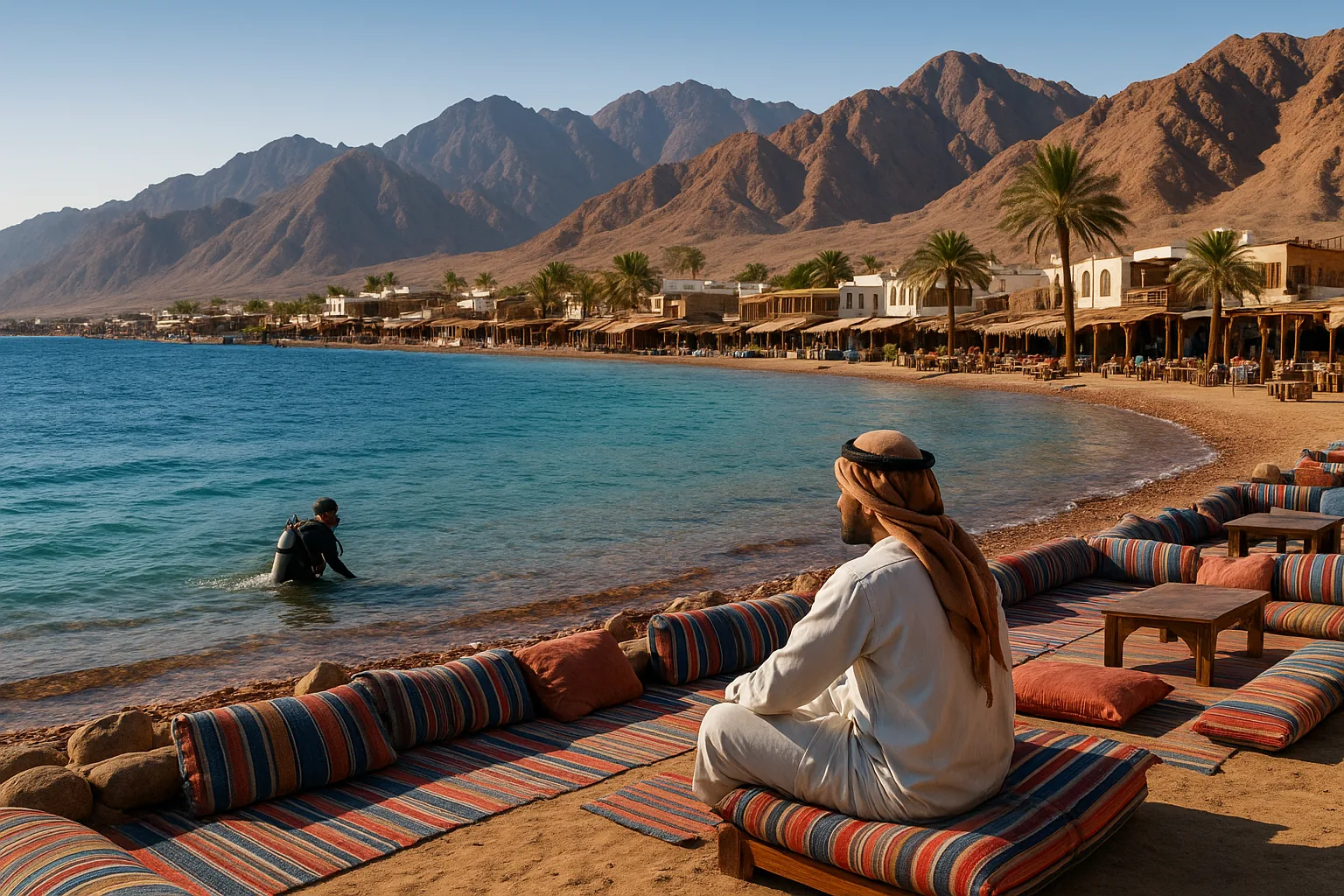
If your idea of Egypt stops at the Pyramids of Giza and the crowded resort strips of Sharm el-Sheikh, you’re only seeing a fraction of what this country has to offer. Dahab, Egypt is one of those places that quietly earns its way onto your permanent travel list — a small coastal town on the South Sinai peninsula where the desert mountains meet the Gulf of Aqaba, and where the pace of life feels like someone pressed a gentle, welcome pause button on the rest of the world.
Why Dahab Deserves a Spot on Your Radar
Most travelers passing through Egypt follow a well-worn path: Cairo for the history, Hurghada or Sharm el-Sheikh for the beach resort experience. And those places have their appeal — nobody’s denying it. But Dahab sits in a different category entirely. It’s the kind of destination that attracts people who’ve done the tourist circuit and are hungry for something more real, more spontaneous, more alive.
Wedged between dramatic Sinai Desert mountains and the crystalline waters of the Red Sea, Dahab has built its identity around three things: world-class diving, an authentic Bedouin cultural heartbeat, and a bohemian atmosphere that makes it almost impossible to leave on schedule. It’s been quietly drawing in backpackers, divers, kitesurfers, and free spirits for decades — yet it still manages to feel like a discovery rather than a destination.
What makes it genuinely special is that it hasn’t been swallowed up by mass tourism in the way that many comparable coastal towns have. Yes, there are guesthouses, cafés, and dive schools. But the town’s character — its soul — remains intact. Walk the waterfront promenade in the early evening and you’ll find locals sharing tea, travelers comparing dive stories, and the kind of unhurried energy that most people spend years chasing.
Getting to Dahab, Egypt
Reaching Dahab takes a little more effort than booking a package holiday to a mainstream resort, and honestly, that’s part of the appeal. The journey itself filters out the crowds and rewards the curious. From Cairo, the most common route involves traveling to the Sinai Peninsula — typically by crossing the Suez Canal and heading south through the Sinai. Buses connect Cairo to Dahab and the journey, while long, passes through genuinely striking desert landscape that sets the tone for what awaits.
If you’re coming from Sharm el-Sheikh, which has an international airport with connections across Europe and the Middle East, Dahab is a relatively short drive north along the coast. Many travelers use Sharm as their entry point and then make their way up to Dahab by shared taxi or minibus — a practical option that also lets you ease into the Sinai landscape gradually.
From Hurghada, on the other side of the Red Sea, the journey is longer and involves either a ferry crossing or a longer overland route. It’s doable, but most travelers heading specifically to Dahab will find it easier to fly into Sharm el-Sheikh and travel from there.
One important note: entry requirements, visa regulations, and travel advisories for the Sinai Peninsula can shift, so always check your government’s current travel guidance before you go. The region has its own specific entry rules that differ from mainland Egypt in some cases, and staying informed is just good travel practice.
Diving and Snorkeling: Where the Real Magic Happens
If there’s one reason Dahab has earned a permanent place on serious divers’ bucket lists, it’s the Blue Hole. Widely considered one of the most famous — and most challenging — dive sites on the planet, the Blue Hole is a vertical underwater sinkhole that plunges deep into the reef just north of town. Even if you’re not a diver, you can snorkel around the rim and peer into that extraordinary, electric-blue abyss. The colours alone are worth the trip.
👉 Read also: Egypt in 2026: Cairo, Giza & Dahab — Debunking Myths & What Solo Travelers Actually Experience
But the Blue Hole is just the headline act. Dahab’s surrounding reefs offer an exceptional range of dive experiences for every level, from absolute beginners doing their first open-water certification to experienced technical divers pushing their limits. The visibility in the Gulf of Aqaba is frequently outstanding, and the marine life — coral gardens, reef fish, rays, the occasional shark — is genuinely diverse.
The town is home to a thriving scuba diving community, and you’ll find dive centres dotted along the waterfront offering everything from introductory dives to advanced courses. Learning to dive in Dahab is a popular choice for young travelers because the conditions are generally good for beginners, the instruction is accessible, and the cost of getting certified here tends to be considerably lower than in many Western countries. If you’ve been putting off getting your PADI or SSI certification, Dahab might be the place where you finally do it.
For those who prefer to stay on the surface, kitesurfing has also become a major draw. The consistent winds and flat water in certain areas around Dahab create near-ideal conditions, and the kitesurfing community here is welcoming and enthusiastic. There are schools offering lessons for complete beginners, so you don’t need any prior experience to give it a go.
Rock climbing is another activity that’s found a passionate following here, thanks to the dramatic Sinai mountain backdrop that rises directly behind the town. The combination of sea and desert adventure in one compact location is genuinely rare, and it’s a big part of what makes Dahab, Egypt so compelling for active travelers.
Bedouin Culture and Local Experiences
Dahab’s identity isn’t just built on adventure sports. The town has deep roots in Bedouin culture, and that heritage shapes everyday life in ways you’ll notice if you pay attention. The Bedouin people of the Sinai have lived in this landscape for centuries, and their traditions — hospitality, storytelling, a profound connection to the desert — are woven into the fabric of Dahab’s character.
Many of the camps and guesthouses along the waterfront are Bedouin-owned, and staying in one of them is a genuinely different experience from a standard hotel. Think simple, comfortable accommodation right on the water, open-air seating areas draped with cushions and rugs, and the kind of relaxed hospitality that makes you feel like a guest rather than a customer. Meals are often shared communally, and conversations tend to flow easily.
If you want to go deeper into the Bedouin experience, desert excursions into the Sinai interior are a remarkable option. Guided trips into the mountains — sometimes on camelback, sometimes on foot — offer a completely different perspective on this landscape. Camping overnight in the desert, eating a meal cooked over an open fire, and sleeping under a sky full of stars is the kind of experience that doesn’t need a filter or a caption. It speaks for itself.
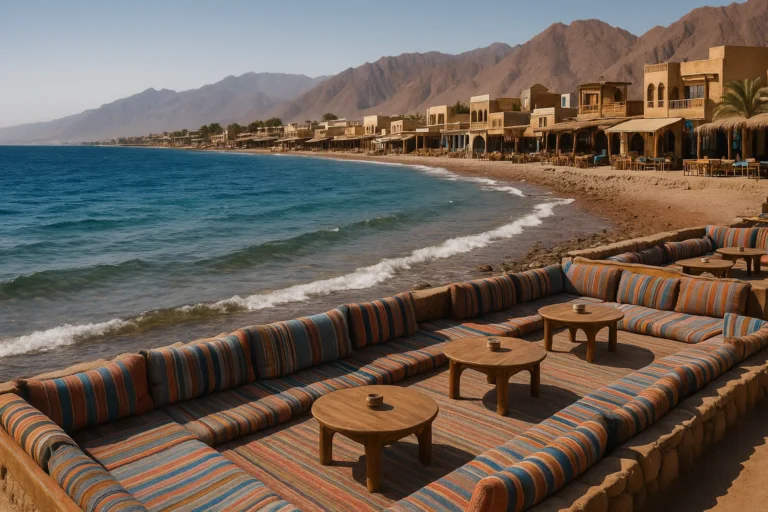
The local food scene in Dahab reflects this cultural blend beautifully. Along the waterfront, you’ll find small restaurants and cafés serving fresh seafood, mezze spreads, grilled meats, and strong Egyptian tea. Eating here is one of life’s simple pleasures — grab a cushioned seat facing the water, order more food than you planned to, and let the afternoon stretch out. Nobody’s in a hurry, and after a day or two, you won’t be either.
Where to Stay and How Much to Budget
Dahab has long had a reputation as one of the more budget-friendly destinations in the region, and that reputation is generally well-deserved — though as with any travel destination, costs can shift with exchange rates, seasonal demand, and broader economic conditions. Always check current prices closer to your travel date, as the figures that circulate online can become outdated quickly.
What the town does offer across most budget levels is genuine value. At the lower end, you’ll find Bedouin-style beach camps and simple guesthouses where accommodation is basic but the location — often right on the waterfront — more than compensates. Mid-range options offer more comfort without straying too far from the town’s laid-back character. There are also a handful of more polished hotels for those who want a bit more comfort after a day of diving.
👉 Read also: Hidden Gems in Southeast Asia: Vung Tau, Hat Yai & Thailand's Underrated South
When it comes to food, eating at local spots rather than tourist-facing restaurants will stretch your budget considerably further. Fresh bread, ful medames (a hearty Egyptian bean dish), grilled fish, and fresh juice are all widely available at prices that make eating well feel effortless. Dive courses and equipment rental vary by provider, so it’s worth getting a few quotes before committing — and checking that any dive centre you use holds proper certification and maintains solid safety standards.
For a useful overview of what to expect before you arrive, the Indie Traveller Dahab guide covers practical logistics and atmosphere in solid detail.
The Vibe: Who Dahab Is Really For
Dahab attracts a specific kind of traveler — and that’s not a gatekeeping statement, it’s just an honest observation. If you’re looking for a pumping nightlife scene, a luxury all-inclusive, or a beach packed with sun loungers and pool bars, you’ll probably find Sharm el-Sheikh or Hurghada more suited to those expectations.
But if you’re the kind of person who wants to actually connect with a place — to learn something new, meet people from all over the world who share a love of the sea and the outdoors, eat good food in unpretentious surroundings, and feel genuinely rested at the end of it — Dahab will feel like exactly where you were supposed to end up.
The community here is wonderfully mixed. Long-term expats who came for a dive course and never quite left. Backpackers on extended trips through North Africa and the Middle East. Young professionals using their annual leave to get their diving certification. Solo travelers who arrived alone and quickly found their people. The town has a way of pulling people together without trying too hard.
Practical Things Worth Knowing Before You Go
A few things that will make your trip smoother:
- Dress codes and cultural sensitivity: Dahab is relatively relaxed compared to many parts of Egypt, but it’s still a predominantly Muslim community. Dressing modestly away from the beach — covering shoulders and knees in town — is a small gesture of respect that goes a long way.
- Cash is king: While payment methods are evolving, many smaller guesthouses, local restaurants, and market stalls still prefer cash. Carry enough Egyptian pounds for day-to-day spending and don’t rely on card payments being available everywhere.
- Sun and heat: The Sinai sun is serious, especially between late spring and early autumn. Sunscreen, a hat, and staying hydrated aren’t optional — they’re essential. The heat can sneak up on you when you’re excited and distracted.
- Respect the Blue Hole: It’s one of the most beautiful dive sites in the world, and also one that demands respect. Follow your dive guide’s instructions, know your limits, and don’t let peer pressure push you beyond your certification level. The reef will be there for future dives.
- Slow down: This might be the most important piece of advice. Dahab rewards the traveler who isn’t rushing. Give yourself more time than you think you need. The best moments here tend to be the unplanned ones.
The Best Time to Visit Dahab, Egypt
Dahab is a year-round destination, but the experience shifts significantly depending on when you arrive. Spring and autumn — roughly March through May and September through November — offer the most comfortable conditions for both land and water activities. Temperatures are warm without being overwhelming, the sea is inviting, and the town has a lively but not overcrowded energy.
Summer brings intense heat that can make daytime activities challenging, though the water remains excellent and the sunsets are spectacular. Winter is cooler and quieter, which appeals to travelers who prefer a more peaceful atmosphere — and the diving remains good year-round thanks to the Red Sea’s generally stable conditions.
Kitesurfers often have their own preferred windows based on wind patterns, so if that’s your primary reason for visiting, it’s worth researching the seasonal conditions specific to that activity before you book.
Dahab isn’t the kind of place that announces itself loudly. It doesn’t need to. It sits quietly on its stretch of South Sinai coastline, doing exactly what it’s always done — offering clear water, open desert, genuine culture, and the rare feeling that you’ve found somewhere that still belongs to the people who love it rather than the crowds who haven’t discovered it yet. Go while that’s still true.
This article was produced with AI assistance and reviewed editorially.


Mountain Towns in the US Rockies: Where to Stay in Vail, Telluride & Glacier National Park

Japan & Turkey for Budget Backpackers: Fukuoka & Bodrum Neighborhood Guides


