
Asia
Thailand Without a Rental Car: Getting Around Like a Local
Skip the rental hassle and explore Thailand using buses, trains, taxis, and ride-sharing apps. A practical guide to navigating like a local.

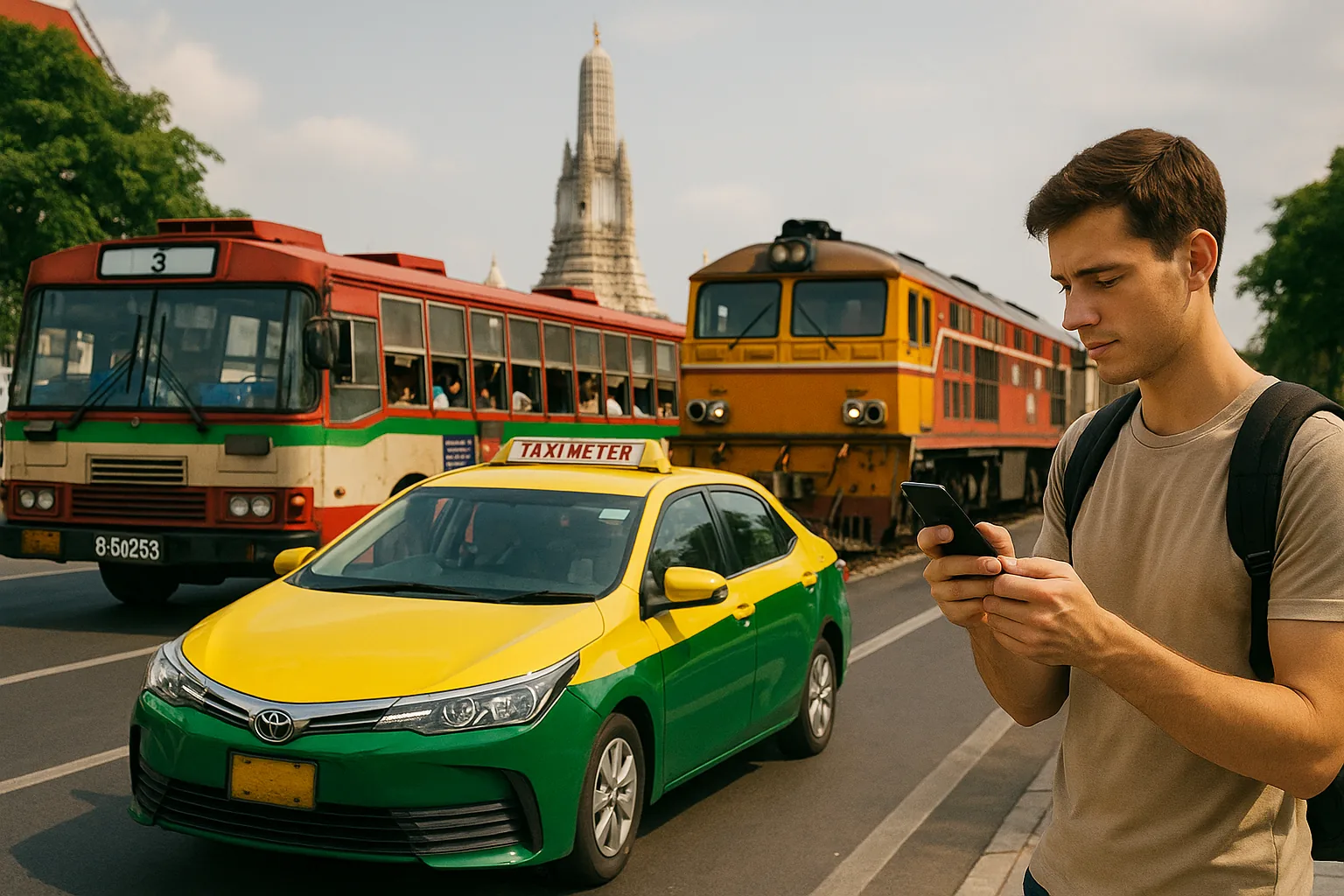
Thailand has a way of pulling you in from the moment you land — the chaos, the color, the heat, the smell of street food drifting through the air. And here’s the thing: getting around Thailand without a car isn’t just possible, it’s genuinely one of the best ways to experience the country. You’ll move through cities the way locals do, stumble into conversations you never would have had from behind a steering wheel, and spend a fraction of what you’d drop on a rental. Whether you’re island-hopping in the south or making your way north toward misty mountains, Thailand’s transport network is ready for you — and so is this guide.
Why Skipping the Rental Car Makes Sense in Thailand
Let’s be honest: driving in Thailand is not for the faint-hearted. Bangkok and Chiang Mai are notorious for congested streets that can turn a short journey into an hours-long ordeal. Add in unfamiliar road signs, unpredictable traffic patterns, and some genuinely questionable roads in more rural parts of the country, and the idea of renting a car starts to feel a lot less appealing.
Then there’s the practical side. Parking in major cities is a headache. Navigating rural roads without local knowledge can get stressful fast. And if something goes wrong with the vehicle, you’re dealing with insurance, language barriers, and logistics that eat into your travel time. Thailand is one of the most popular backpacker destinations in Southeast Asia precisely because it’s so easy to move around without your own wheels. The infrastructure is built for it. The locals use it every day. And the alternatives are often faster, cheaper, and far more interesting.
So let’s break down what’s actually available to you — and how to make the most of it.
Buses: Fast, Cheap, and Surprisingly Comfortable
If there’s one mode of transport that holds Thailand’s travel network together, it’s the bus. Buses in Thailand are fast, cheap, and frequent — and on longer routes, they can be surprisingly luxurious. Think reclining seats, air conditioning, and sometimes even snacks included. The gap between a basic bus and a VIP overnight coach is significant, and it’s worth paying a little extra for the comfort on longer journeys.
For long-distance travel — say, Bangkok to Chiang Mai, or Bangkok to the southern coast — overnight buses are a popular choice. You board in the evening, sleep through the journey, and wake up at your destination. It’s efficient, and it saves you a night of accommodation costs. Just make sure you bring a light jacket or a small blanket, because the air conditioning on Thai buses can be aggressively cold.
Within cities, local buses are incredibly affordable but can be harder to navigate if you don’t read Thai. That said, with a bit of patience and the help of Google Maps or a friendly local, you can absolutely figure it out. Many travelers find that the slight learning curve is worth it for the authentic, ground-level experience you get.
Tips for Bus Travel in Thailand
- Book overnight buses in advance during peak season — they fill up fast.
- Opt for VIP or first-class coaches on long routes for significantly more comfort.
- Keep your valuables close, especially in luggage compartments on overnight services.
- Arrive at the bus station a little early to confirm your platform and departure time.
- Download an offline map before you go — useful when Wi-Fi is patchy.
Trains: Slower, Scenic, and Worth Every Minute
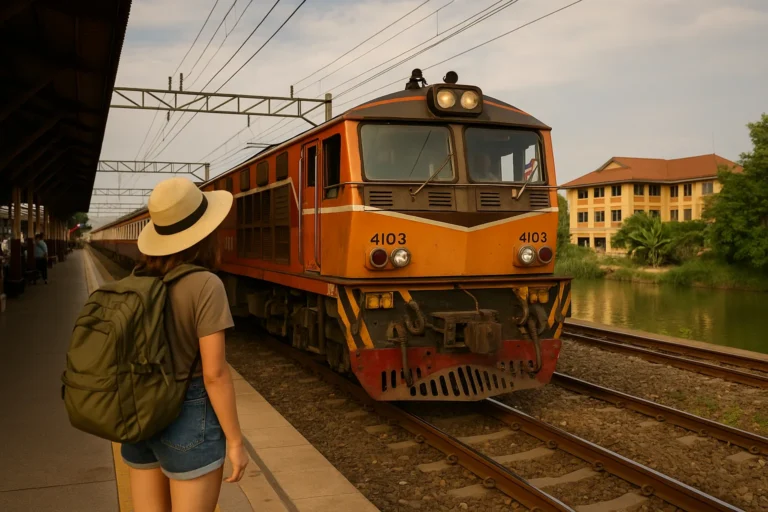
Thailand’s rail network won’t win any speed records, but that’s almost beside the point. Trains are slower than buses but safer, and they offer something buses simply can’t: a window seat with a view that actually changes. Rail routes in Thailand tend to be more scenic than their road equivalents, cutting through jungle, rice paddies, and mountain landscapes that you’d miss entirely on a highway.
For overnight journeys, trains are genuinely one of the best options. Sleeping berths — both upper and lower — let you stretch out properly, which is a luxury compared to cramped bus seats. The gentle rhythm of the train, the scenery rolling past, and the mix of travelers and locals sharing the carriage creates an atmosphere that’s hard to replicate. It’s the kind of journey that becomes a story in itself.
👉 Read also: Southeast Asia Without a Car: Getting Around Thailand, Vietnam & Cambodia Like a Local
The main rail hub is Bangkok’s Hua Lamphong Station (though the newer Bang Sue Grand Station now handles many routes), with lines running north to Chiang Mai, northeast toward the Laos border, and south toward the Malaysian border. Booking tickets in advance — especially for sleeper berths — is strongly recommended, particularly during Thai public holidays and peak travel seasons.
One thing to keep in mind: if you’re traveling on a tight schedule, trains might not be your best bet for every leg. But if you have a day or two of flexibility, the experience is absolutely worth building into your itinerary.
Ferries and Island Hopping Without the Stress
Ferries provide easy access to all major islands in Thailand, making them essential for anyone planning to explore the south. Whether you’re heading to Koh Samui, Koh Phangan, Koh Tao, Koh Lanta, or the islands around Krabi, there’s a ferry route that’ll get you there. The network is well-established and runs regularly, with services ranging from basic wooden boats to large, modern catamarans.
Combination tickets — where a bus or train gets you to the coast and a ferry takes you the rest of the way — are widely available and make island-hopping remarkably straightforward. Travel agencies and guesthouses throughout Thailand can help you book these, or you can sort them out through various online platforms before you arrive.
The ferry journey itself is often one of the highlights. Watching the coastline emerge from the sea, the water shifting from murky green to deep turquoise as you move further out — it’s one of those moments that reminds you why you came here in the first place.
Getting Around Thailand Without a Car in the City: Tuk-Tuks, Songthaews, and Motorbike Taxis
For shorter urban journeys, Thailand offers a wonderfully chaotic mix of options that make city navigation genuinely fun. Tuk-tuks — those iconic three-wheeled vehicles that dart through traffic with cheerful recklessness — are a quintessential Thai experience. They’re best used for short hops in tourist areas, and you should always agree on a price before you get in. They’re not always the cheapest option, but as an experience, they’re hard to beat.
Songthaews (essentially converted pickup trucks used as shared minibuses) are a local staple, especially in cities like Chiang Mai. You flag one down, hop in the back with whoever else is heading in the same direction, and pay a small flat fare when you get off. It’s cheap, social, and genuinely practical once you get the hang of the routes.
Then there are motorcycle taxis — riders in colored vests who weave through traffic with remarkable confidence. They’re particularly popular in Bangkok and Chiang Mai because they can squeeze into spaces that cars and tuk-tuks simply cannot, making them ideal when the streets are gridlocked. For a short journey during rush hour, a motorbike taxi can get you there in a fraction of the time. Just hold on, trust the driver, and enjoy the ride.
In Bangkok specifically, the BTS Skytrain and MRT subway are game-changers. They’re clean, air-conditioned, and run on time — a welcome contrast to the street-level chaos below. If you’re spending any significant time in Bangkok, learning the Skytrain lines will save you hours and a lot of frustration.
👉 Read also: Do You Actually Need to Rent a Car in Thailand? A Practical Breakdown
Ride-Sharing Apps and Digital Tools
Navigating Thailand has become significantly easier in recent years thanks to ride-sharing apps. Grab is the dominant platform across Southeast Asia and works reliably in Thailand’s major cities. It functions similarly to Uber — you request a ride through the app, see the price upfront, and track your driver in real time. For travelers who want the convenience of a taxi without the negotiation, it’s a straightforward solution.
Beyond ride-sharing, apps like Google Maps work well in Thailand’s urban areas, though coverage can be spottier in rural regions. Offline maps — downloaded before you leave your accommodation’s Wi-Fi — are a smart backup. Some travelers also swear by Maps.me for more detailed offline navigation in less-connected areas.
The combination of a reliable ride-sharing app for city travel and a good offline map for everything else covers most situations you’ll encounter. It’s a simple setup that gives you a lot of freedom without the overhead of managing a rental vehicle.
Domestic Flights: When Distance Calls for Speed
Thailand is a long country. If you’re trying to get from Bangkok to Chiang Mai and back, or from the capital down to the southern islands, a domestic flight can save you a full day of travel. Several airlines operate routes between Thailand’s major cities and tourist hubs, and fares can be genuinely affordable — especially if you book in advance and travel light.
The main airports you’ll likely pass through include Suvarnabhumi and Don Mueang in Bangkok (note that budget carriers often use Don Mueang), as well as airports in Chiang Mai, Phuket, Krabi, and Koh Samui. Checking both airports for Bangkok departures is worth the extra minute of research — the price difference can be significant.
For a route like Bangkok to Chiang Mai, a flight takes roughly an hour compared to twelve or more by train or bus. Sometimes the time saving is worth it, especially if you’re working with a tight itinerary. That said, factor in airport transfer time on both ends, check-in queues, and the fact that you’ll miss the scenery in between. The overnight train to Chiang Mai, for instance, is a beloved experience for a reason.
Practical Advice for Moving Between Regions
Thailand divides naturally into distinct regions — the north, the central plains, the northeast (Isan), and the south — and each has its own transport rhythm. Here’s a quick orientation:
- Bangkok to Chiang Mai: Overnight train or VIP bus are popular choices; flights are faster but miss the scenery.
- Bangkok to the southern islands: Combination bus/ferry tickets work well; flights to Phuket or Krabi are worth considering for longer distances.
- Within Chiang Mai: Songthaews and ride-sharing apps cover most needs; the city is also very walkable in the old town area.
- Island to island: Ferries connect most of the major islands, with speedboats available for shorter crossings.
- Rural and off-the-beaten-path areas: Local buses and songthaews reach most villages; flexibility and patience are your best tools here.
One general principle: travel in Thailand is inexpensive and efficient, but long-distance journeys on basic services — hard seats, no air conditioning — can be genuinely arduous. Upgrading where it matters (overnight sleepers, air-conditioned coaches) makes a real difference to how you feel when you arrive.
You can find official route information and transport tips through the Tourism Authority of Thailand, which is a useful starting point for planning before you land.
The beauty of getting around Thailand without a car is that every journey becomes part of the experience. You’re not just moving from A to B — you’re sharing a songthaew with a monk and a market vendor, watching the countryside scroll past from a train window, or arriving at an island as the sun hits the water just right. That’s the kind of travel that stays with you. And honestly? It’s a lot more interesting than a rental car.
This article was produced with AI assistance and reviewed editorially.


Quito, Ecuador: From Stopover to 10-Day Adventure in the Andes

Ecuador & South America’s Gateway: Quito as a Base for Adventure


