
Asia
Do You Actually Need to Rent a Car in Thailand? A Practical Breakdown
Explore whether car rental in Thailand suits your trip. Compare costs, requirements, and driving conditions against buses, trains, and taxis to decide what works best.

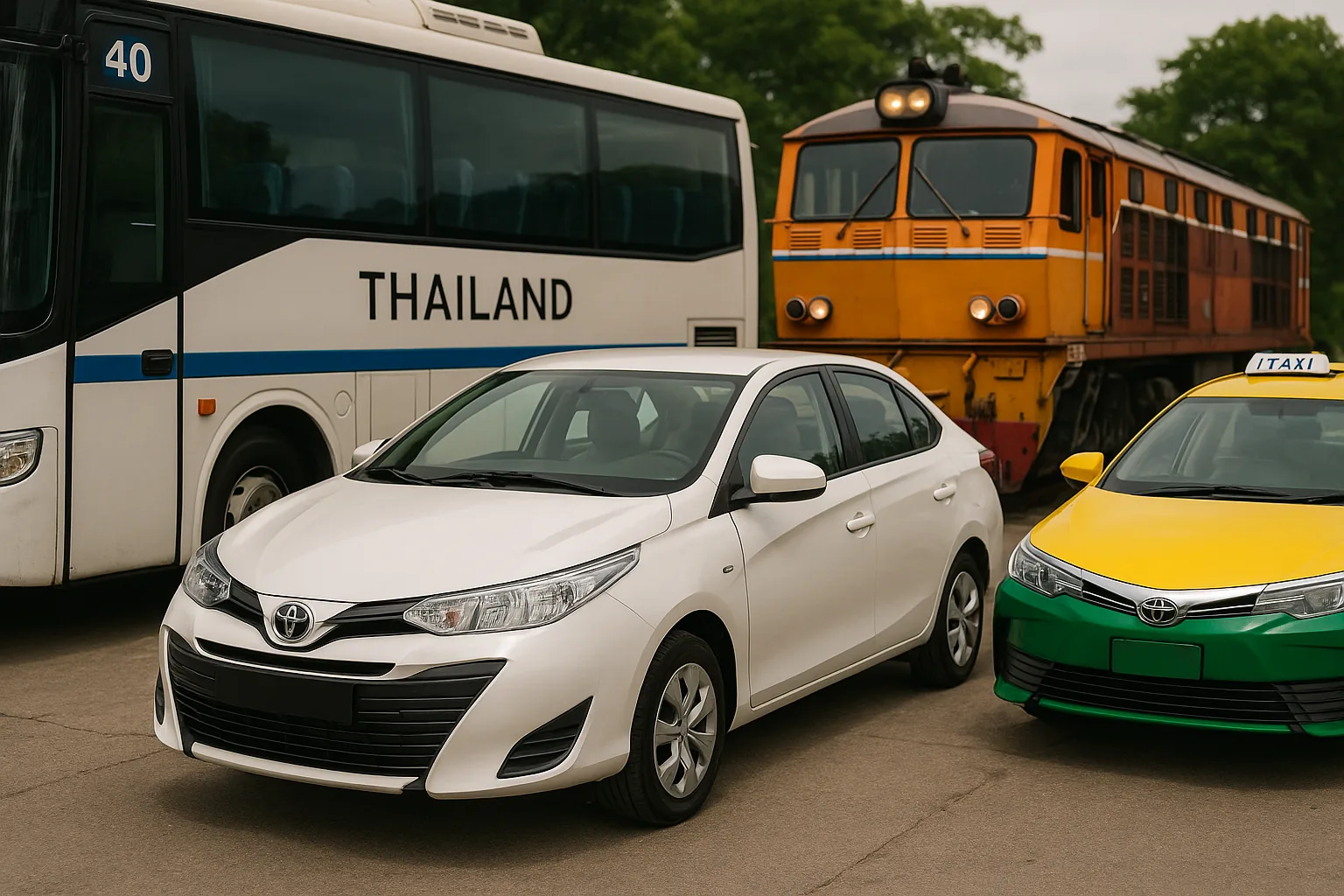
Thailand has a way of pulling you in every direction at once — ancient temples tucked into jungle hills, coastal roads that wind past turquoise bays, night markets that only come alive after dark. Getting between all of it is half the adventure, but it’s also one of the biggest questions first-time visitors wrestle with. Should you rely on car rental in Thailand, or is the country’s public transport network good enough to handle your whole trip? The honest answer is: it depends entirely on where you’re going and how you like to travel.
Thailand’s Transport Network Is Better Than You Think
Before you even consider picking up a set of keys, it’s worth understanding just how solid Thailand’s public transport system actually is. Thailand has an excellent public transport network that can get you practically anywhere in the country — and for many travelers, especially those sticking to well-trodden routes, it’s more than enough.
In Bangkok, the infrastructure is genuinely impressive. The BTS Skytrain and MRT metro lines cut through the city efficiently, connecting major neighborhoods, shopping districts, and tourist areas. You can get from a riverside guesthouse to Chatuchak Weekend Market without ever touching a taxi. The system is air-conditioned, easy to navigate even without speaking Thai, and runs frequently throughout the day.
Beyond the capital, the options keep expanding. Overnight sleeper trains connect Bangkok to Chiang Mai in the north and to the southern peninsula, giving you a budget-friendly way to cover long distances while you sleep. Songthaews — the iconic red pickup trucks with bench seating in the back — operate as shared taxis across cities like Chiang Mai and throughout rural areas. They’re cheap, they’re local, and they’ll take you places a tour bus never would.
Island-hopping? Ferry services link the Gulf of Thailand and Andaman coast islands reliably, and low-cost domestic flights can shrink a twelve-hour bus journey into an hour in the air. For a lot of itineraries, especially those built around major destinations, you genuinely don’t need a car.
What Car Rental in Thailand Actually Involves
That said, foreign visitors can rent cars in Thailand — and for certain types of trips, doing so opens up experiences that public transport simply can’t match. Understanding what the process involves helps you decide whether it’s the right move for you.
The first thing to know is the age requirement. The minimum age to rent a car in Thailand typically ranges from 21 to 25 years old, depending on which rental company you use. If you’re on the younger end of that range, it’s worth checking directly with your chosen provider before you book, since policies vary. Some companies may also charge a young driver surcharge for renters under a certain age.
Documentation is straightforward but important. You’ll generally need a valid passport, a credit card in your name, and an International Driving Permit (IDP) alongside your home country’s driving license. The IDP isn’t optional — it’s a standard requirement that translates your license into a format Thai authorities recognize. Getting one before you leave home is simple and usually inexpensive through your national motoring association.
👉 Read also: Southeast Asia Without a Car: Getting Around Thailand, Vietnam & Cambodia Like a Local
Rental companies range from international chains operating at airports to smaller local outfits in tourist towns. Booking in advance — especially during peak travel periods — tends to give you better availability and often better rates. Reading the insurance terms carefully matters here. Basic coverage is usually included, but the excess amounts can be significant, so upgrading to a more comprehensive policy is often a smart call.
Driving in Thailand: What to Expect on the Road
Renting a car is one thing. Actually driving it is another conversation entirely. Thailand drives on the left side of the road, which is immediately comfortable if you’re from the UK, Australia, or Japan — and a mental adjustment if you’re from North America or continental Europe. Most travelers adapt quickly, but give yourself a few easy drives before tackling anything complex.
Road quality varies significantly by region. Major highways and routes between large cities are generally well-maintained and clearly signposted, often in both Thai and English. Once you venture into rural areas or mountain roads — say, the winding routes through the hills of northern Thailand — conditions can become more challenging. Narrow lanes, steep gradients, and the occasional unpaved stretch are part of the picture.
Traffic in Bangkok is famously dense. Driving in the capital is an experience most travelers are better off skipping entirely. The metro system handles city movement far more efficiently than any car could, and parking adds another layer of stress. Where a car genuinely earns its keep is outside the major urban centers — on scenic coastal roads, through national park entrances, or across regions where public transport runs infrequently.
One thing worth noting: road culture in Thailand has its own rhythms. Motorcycles are everywhere, overtaking can feel aggressive by Western standards, and intersections in smaller towns operate on a kind of informal negotiation. Staying calm, giving way generously, and avoiding night driving on unfamiliar rural roads are practical habits that will serve you well.
Ride-Hailing Apps and Taxis: The Middle Ground
For travelers who want flexibility without the responsibility of being behind the wheel, ride-hailing apps have transformed getting around Thailand. Grab is the dominant platform across Southeast Asia and works reliably in Bangkok, Chiang Mai, Phuket, and other major tourist areas. You get upfront pricing, a tracked route, and payment through the app — no language barrier, no meter disputes.
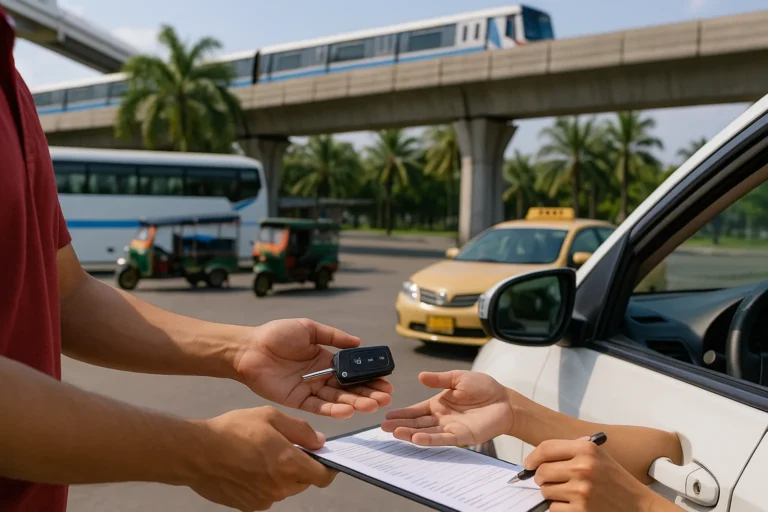
Traditional metered taxis are still widely available in Bangkok and other cities. They’re generally affordable by international standards, though it’s worth insisting on the meter rather than agreeing to a flat rate upfront, which tends to work against you. Tuk-tuks — the three-wheeled motorized vehicles — are iconic and fun for short hops, but they’re more of an experience than a practical transport solution for longer journeys.
For island exploration or day trips from a base town, hiring a driver for the day is an option that sits comfortably between full car rental and pure public transport. You get the flexibility of a private vehicle, local knowledge about the route, and none of the stress of navigating unfamiliar roads yourself. It’s worth asking at your accommodation — guesthouses and hostels often have trusted drivers they recommend.
When Renting a Car Actually Makes Sense
Now for the real question: when does car rental in Thailand actually add value to your trip rather than complication?
👉 Read also: Budget Travel in Southeast Asia: Sri Lanka, Laos & Thailand Itineraries
The clearest case is northern Thailand. The region around Chiang Mai, Chiang Rai, and Pai is full of mountain roads, hill tribe villages, waterfalls, and temples that sit well off any bus route. Renting a car — or even a scooter for more experienced riders — gives you the freedom to pull over at a misty viewpoint, take a detour down an unmarked track, or arrive at a guesthouse before the last songthaew of the day has gone. This is exactly the kind of travel where renting a car in Thailand provides the freedom to discover destinations in your own time without depending on fixed schedules.
Similarly, the quieter parts of the Isan region in the northeast — where Khmer ruins, silk-weaving villages, and national parks sit far from tourist infrastructure — reward travelers who have their own transport. Public buses exist, but connections can be slow and infrequent. A car turns a two-day logistical puzzle into a single, satisfying road trip.
Traveling as a group also shifts the equation. When you split a rental cost between three or four people, it often becomes competitive with — or cheaper than — buying individual bus or train tickets, especially for routes that involve multiple transfers. And you gain the added convenience of traveling together on your own schedule.
When Public Transport Is the Smarter Choice
There are equally clear scenarios where skipping the rental is the right call. If your itinerary centers on Bangkok, a car is genuinely more hindrance than help. The metro network is fast, parking is scarce and expensive, and the city’s traffic can swallow hours of your day. Use the BTS, the MRT, and Grab, and spend your energy on the city itself.
Heading to the southern islands — Koh Samui, Koh Phangan, Koh Tao, Koh Lanta, or the Krabi area? Ferries and minivans handle island-to-island movement well, and once you’re on a smaller island, a scooter rental covers far more ground than a car ever could on narrow coastal roads. Bringing a rental car onto a ferry adds cost and complexity without much practical return.
If you’re not a confident driver in unfamiliar environments, that’s also a perfectly valid reason to lean on public transport. Thailand’s roads require alertness and adaptability. There’s no shame in deciding that the freedom of a car isn’t worth the mental overhead — especially when the alternatives are this good. For a comprehensive overview of Thailand’s transport landscape, the Thailand transportation guide at The Traveler Rocks breaks down options across regions in helpful detail.
Practical Tips Before You Decide
- Check the age requirement early. If you’re between 21 and 25, confirm with your chosen rental company before assuming you qualify.
- Get your International Driving Permit before you leave home. You can’t easily obtain one abroad, and driving without it creates real legal exposure.
- Read the insurance terms carefully. Understand what the excess is and whether full coverage is worth the upgrade for your peace of mind.
- Plan your route honestly. If more than half your time is in Bangkok or on islands, a car probably isn’t the right tool for the whole trip.
- Consider a hybrid approach. Rent a car for a specific leg of your journey — say, a week exploring the north — and rely on trains and flights for the rest.
- Download Grab before you land. It’s useful from the moment you clear the airport, regardless of whether you’re also renting a car.
- Avoid driving at night in unfamiliar rural areas. Roads can be poorly lit and signage less reliable after dark.
Matching Transport to Your Travel Style
The real secret to getting around Thailand well is matching your transport choices to the kind of traveler you actually are — not the kind you think you should be. If you love spontaneity, early starts, and discovering places that don’t appear on any itinerary, car rental in Thailand can genuinely transform your experience in the right regions. The feeling of turning off a main road because something caught your eye, parking under a tree, and wandering into a village market that wasn’t in any guidebook — that’s hard to replicate on a bus schedule.
But if you’re happiest moving between cities on an overnight train, arriving somewhere new with a coffee in hand and a full day ahead, Thailand’s public transport will take you further than you might expect. The country has spent decades building infrastructure that serves both locals and visitors, and it shows.
Most travelers end up doing a bit of both — and that’s probably the most honest answer to the original question. You don’t need to choose one approach for your entire trip. Thailand is big enough, and varied enough, to reward different modes of travel in different corners. Figure out where you want to go, think honestly about how you like to move through a place, and let that guide the decision. The journey itself will take care of the rest.
This article was produced with AI assistance and reviewed editorially.


Almaty & Tashkent: Central Asia’s Modern Cities Beyond the Silk Road Clichés

Stay Smart in Asia: Budget Accommodation in Osaka, Kyoto & Kuala Lumpur 2026


