
Greece
Milos, Greece: Why This Island Has Everything (Beaches, Caves, Zero Crowds)
Discover Milos, Greece — a volcanic Cycladic island with 70+ beaches, dramatic sea caves, and authentic villages without the Santorini crowds.

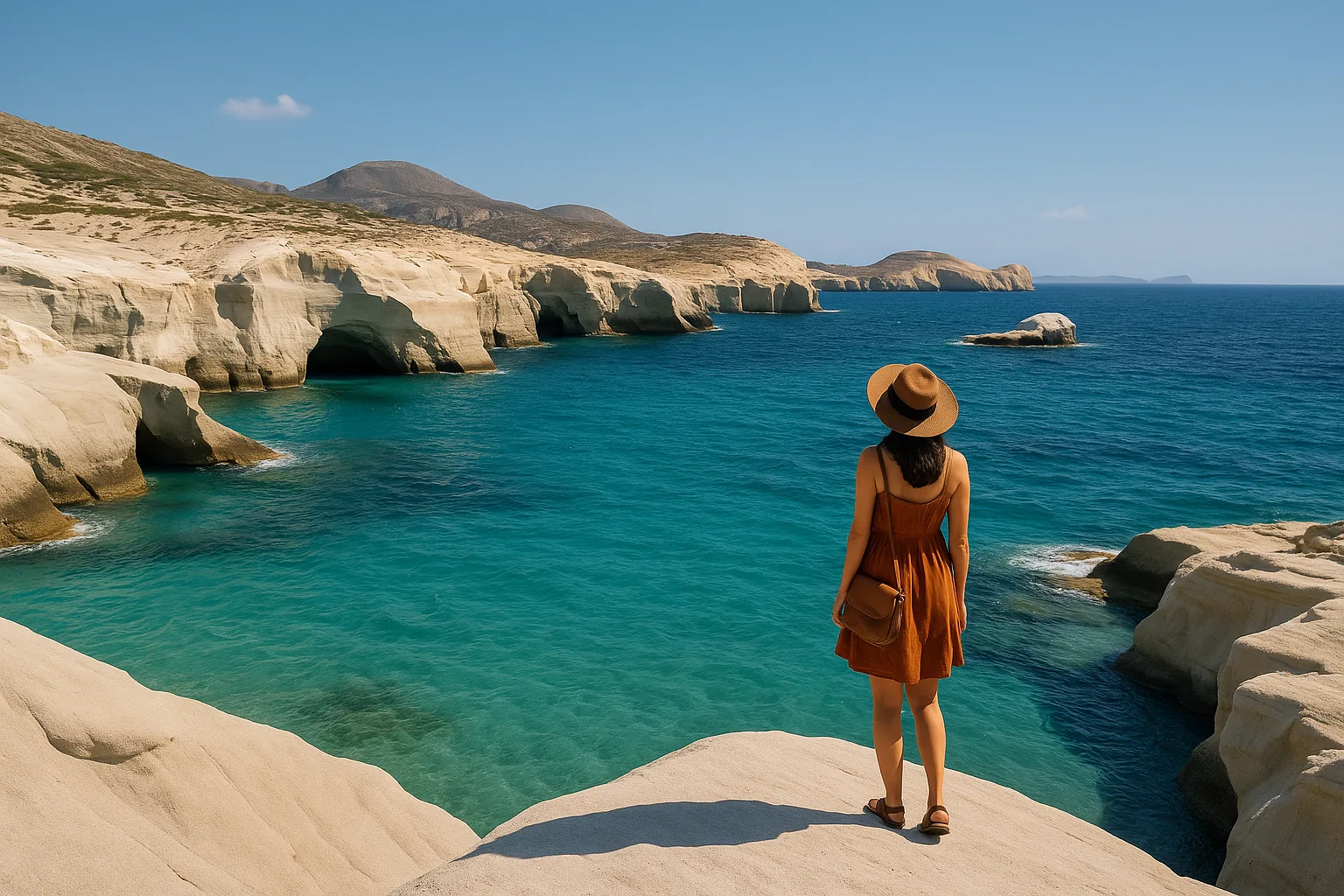
If you’ve been scrolling through photos of Greek islands and feeling like every option is either overrun with tourists or impossible to afford, let us introduce you to Milos, Greece — a volcanic island in the Cyclades that somehow manages to deliver everything you’d want from a Greek island trip without the chaos that comes with it. Think dramatic white rock formations, sea caves you can swim into, fishing villages where time moves slowly, and more than 70 beaches scattered around a coastline so varied it almost doesn’t seem real. This is the kind of place that makes you wonder why you ever bothered with the crowded ones.
A Volcanic Island Unlike Anything Else in the Cyclades
Milos isn’t just another pretty island. Its character comes from deep underground — literally. The island was forged by volcanic eruptions that took place in the Aegean Sea from roughly 2 to 3 million years ago until about 90,000 years ago. That geological backstory is written all over the landscape. You’ll see it in the chalky white cliffs, the strange lunar rock formations, the steaming coastal vents, and the rainbow of colors in the soil as you drive around.
This volcanic origin is what makes Milos feel so different from its Cycladic neighbors. Where other islands offer the classic whitewashed cube houses against a blue sea, Milos gives you something wilder. The coastline shifts constantly — from smooth white pumice to red and orange cliffs, to hidden coves with water so clear it looks edited. Every corner of this island has a different mood, and that variety is exactly what keeps you exploring.
The island also carries serious historical weight. In 1820, a local farmer unearthed a marble statue in a field on the island. That statue turned out to be the Venus de Milo — known to the Greeks as Aphrodite — and it’s now one of the most famous sculptures in the world, displayed at the Louvre in Paris. Not bad for a quiet Aegean island.
The Beaches: More Than 70 Reasons to Stay Longer
With over 70 sand and pebble beaches considered among the best in the Aegean, Milos is essentially a beach lover’s dream that hasn’t been discovered by the masses yet. You won’t find beach clubs blasting music at every turn. What you will find is a rotating cast of stunning spots, each with its own personality.
Sarakiniko Beach is probably the most photographed spot on the island, and for good reason. The beach itself is less of a traditional sandy shore and more of a lunar landscape — smooth white volcanic rock sculpted by wind and sea into curves and hollows that almost look artificial. You can dive off the rocks, squeeze through narrow channels, and find little pools to float in. It’s genuinely unlike anything else you’ll see in Greece.
Pollonia Beach, on the northeastern tip of the island, has a completely different energy. It’s a working fishing village with a sandy beach, tavernas right on the waterfront, and a relaxed pace that feels authentically local. It’s also one of the best places to catch a short boat transfer to the nearby island of Kimolos if you want a spontaneous day trip.
Beyond these well-known spots, the island rewards those willing to explore. Many of Milos’s beaches are only accessible by boat or down rough dirt tracks — which is exactly why they stay quiet. Renting a car or scooter and following unpaved roads to see where they lead is one of the best ways to spend a day here. You might find a small cove entirely to yourself, with turquoise water and not another person in sight. That’s not a fantasy — it’s just a Tuesday on Milos.
Some beaches are pebbly, some have fine golden sand, some are sheltered in narrow inlets, and others open out to wide bays with views across the Aegean. The variety means you can keep discovering new favorites every single day of your trip.
👉 Read also: Milos, Greece: 14 Things to Do Beyond the Crowds—Beaches, Caves & Hidden Gems
Kleftiko and the Sea Caves: The Boat Trip You Can’t Skip
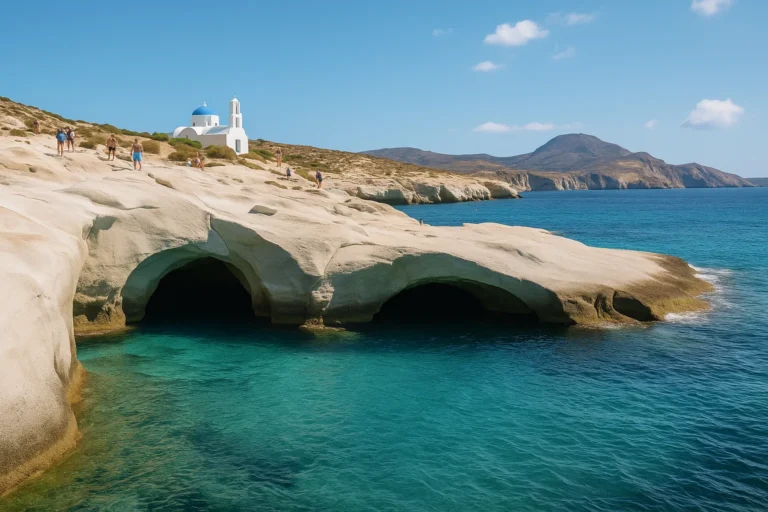
If there’s one experience that defines a trip to Milos, it’s exploring the sea caves along the southwestern coastline. The most famous cluster of these is Kleftiko — a dramatic area of white volcanic rock formations, sea arches, and interconnected caves that you can only reach by boat.
The name Kleftiko translates roughly to “place of thieves,” and legend has it that pirates once used these hidden caves as shelter. Whether that’s entirely true or not, the atmosphere certainly supports the story. Towering white cliffs rise out of the water, tunnels cut through the rock, and the sea inside the caves glows in impossible shades of blue and green depending on the light.
The best way to visit is by joining one of the boat tours that depart from the main port of Adamas — the island’s central harbor. These trips typically combine Kleftiko with stops at several other sea caves and remote beaches around the island that you simply can’t reach any other way. Morning departures tend to catch the best light inside the caves, and calmer sea conditions early in the day make swimming more enjoyable. Half-day and full-day options are usually available, and the full-day tours are worth it — you’ll cover far more ground and get to swim in spots that most visitors never reach.
If you prefer more independence, smaller private boat rentals are also an option, though you’ll want some experience on the water or to hire a skipper. Either way, don’t leave Milos without getting out on the water.
Villages Worth Wandering: Plaka, Mandrakia, and Beyond
The beaches get most of the attention, but the villages of Milos are where you start to understand what the island is really about. Plaka, the island’s hilltop capital, is the kind of place you wander into and then forget to leave. Narrow lanes wind between whitewashed houses, bougainvillea spills over walls, and the views from the Venetian castle at the top stretch across the entire island and out to sea. It’s best in the late afternoon, when the light turns golden and the day-trippers have mostly gone.
Plaka has a handful of small restaurants and cafés tucked into its lanes — the kind of places with handwritten menus and a few tables outside. Order whatever the kitchen is making that day. Fresh fish, slow-cooked lamb, tzatziki made with local ingredients — this is Greek food at its most honest, without the tourist markup you’d find somewhere like Mykonos.
Mandrakia is a tiny fishing settlement on the northern coast that barely registers on most travel itineraries. It’s worth going out of your way for. The village is built around a narrow inlet, with colorful syrmata — the traditional boat garages unique to Milos — carved directly into the cliffs. These brightly painted storage caves, used by local fishermen, are one of the island’s most distinctive sights. Walk along the waterfront, watch the boats bob, and if you’re lucky, you’ll find a local taverna serving whatever came in that morning.
The port town of Adamas is where most visitors base themselves, and it has a lively evening atmosphere with restaurants and bars along the waterfront. It’s practical and enjoyable, but make time to get beyond it. The smaller villages are where Milos reveals its real personality.
Getting to Milos, Greece: Ferries and Flights
Getting to Milos takes a bit of planning, but it’s straightforward once you know your options. The most common route is by ferry from Athens — specifically from the port of Piraeus. Ferry services run regularly, with both conventional ferries and high-speed options available. The conventional ferry takes longer but costs less and is a great way to ease into island mode, especially if you grab a deck seat and watch the Cyclades appear on the horizon one by one. High-speed ferries cut the journey time significantly and are worth considering if you’re short on time.
You can also reach Milos by ferry from other Cycladic islands, making it easy to combine with a multi-island itinerary. Ferries connect Milos with islands like Santorini, Naxos, Paros, and Sifnos, so you can build a route that works for your schedule without backtracking to Athens every time.
👉 Read also: Milos, Greece: Hidden Beaches, Sea Caves & Beyond the Typical Greek Island (2026)
There’s also a small airport on the island with domestic flights from Athens. The flight is short, and if you can find a reasonable fare, it’s a convenient option — especially at the start or end of your trip. Check schedules in advance during peak summer months, as both ferries and flights fill up faster than you’d expect for a relatively under-the-radar destination.
When to Go and What to Expect Each Season
The sweet spot for visiting Milos is late spring and early autumn — roughly May through June and September through October. During these months, the weather is warm and reliably sunny, the sea is swimmable, and the island is busy enough to feel alive without being overwhelmed. Accommodation is also more affordable and easier to find than in the height of summer.
July and August are peak season. The beaches fill up, prices rise, and the ferries get crowded. That said, even at its busiest, Milos remains noticeably quieter than Santorini or Mykonos — the island’s size and relative obscurity keep the crowds manageable. If you’re visiting in summer, book accommodation well in advance and try to hit the more popular beaches early in the morning before the day-trippers arrive.
Spring is particularly beautiful on Milos. The landscape is green, wildflowers cover the hillsides, and the light is soft and clear. Autumn brings warm sea temperatures from months of summer sun and a more relaxed pace as the season winds down. Winter is quiet and some businesses close, but if you’re after solitude and a genuine off-season experience, it’s possible — just plan accordingly.
Budget and Where to Stay
Milos is not the cheapest Greek island, but it’s significantly more affordable than the big names. Accommodation ranges from budget-friendly rooms in local guesthouses to boutique hotels with sea views. Adamas is the most practical base — central, well-connected to the rest of the island by local bus, and with the widest range of accommodation options. Pollonia is a quieter alternative with a lovely beach-village feel, while staying in or near Plaka gives you easy access to the hilltop views and the island’s most atmospheric village.
For getting around, renting a car or scooter is highly recommended. The local bus service covers the main routes, but Milos rewards spontaneous exploration, and having your own wheels means you can follow dirt tracks to empty beaches without worrying about timetables. Boat tours are an additional cost but genuinely worth budgeting for — the sea caves and remote coastline are a core part of the Milos experience.
Eating well doesn’t have to be expensive. Stick to tavernas away from the main tourist strips, order the daily specials, and try local specialties like pitarakia — small fried cheese pies that are a Milos staple — and fresh grilled fish. A meal at a good local taverna will leave you full and satisfied without emptying your wallet. Self-catering is also easy if you’re watching your budget, with a well-stocked supermarket in Adamas.
Why Milos Delivers the Greek Island Experience Without the Hype
There’s a reason people who visit Milos, Greece tend to come back. It’s not just the beaches or the caves or the food — it’s the feeling that you’ve found something real. The island hasn’t been packaged and sold. The fishing villages are still fishing villages. The tavernas are run by families who’ve been cooking the same recipes for generations. The beaches are wild and varied and genuinely beautiful, not manicured for Instagram.
That’s increasingly rare in the Greek islands. The most famous destinations have become victims of their own success — beautiful, yes, but also crowded, expensive, and sometimes exhausting. Milos sits in a different category. It’s authentically what people are looking for when they imagine a Greek island escape, without the performance that surrounds the more famous alternatives.
You’ll still get the whitewashed architecture, the deep blue Aegean, the fresh seafood, and the slow evenings that make Greek island life so appealing. But you’ll also get volcanic landscapes that feel otherworldly, sea caves that take your breath away, and the genuine sense that you’re somewhere worth discovering. That combination is rarer than it should be — and it’s exactly why Milos deserves a spot on your travel list before the rest of the world catches on.
This article was produced with AI assistance and reviewed editorially.


Almaty & Tashkent: Central Asia’s Modern Cities Beyond the Silk Road Clichés

Stay Smart in Asia: Budget Accommodation in Osaka, Kyoto & Kuala Lumpur 2026


