
Asia
Southeast Asia Month-by-Month: Your Guide to Chiang Mai, Bali, and Beyond
Plan your Southeast Asia trip with confidence. Learn ideal seasons for each destination, avoid monsoons and Chiang Mai’s burning season, and find the best months to visit

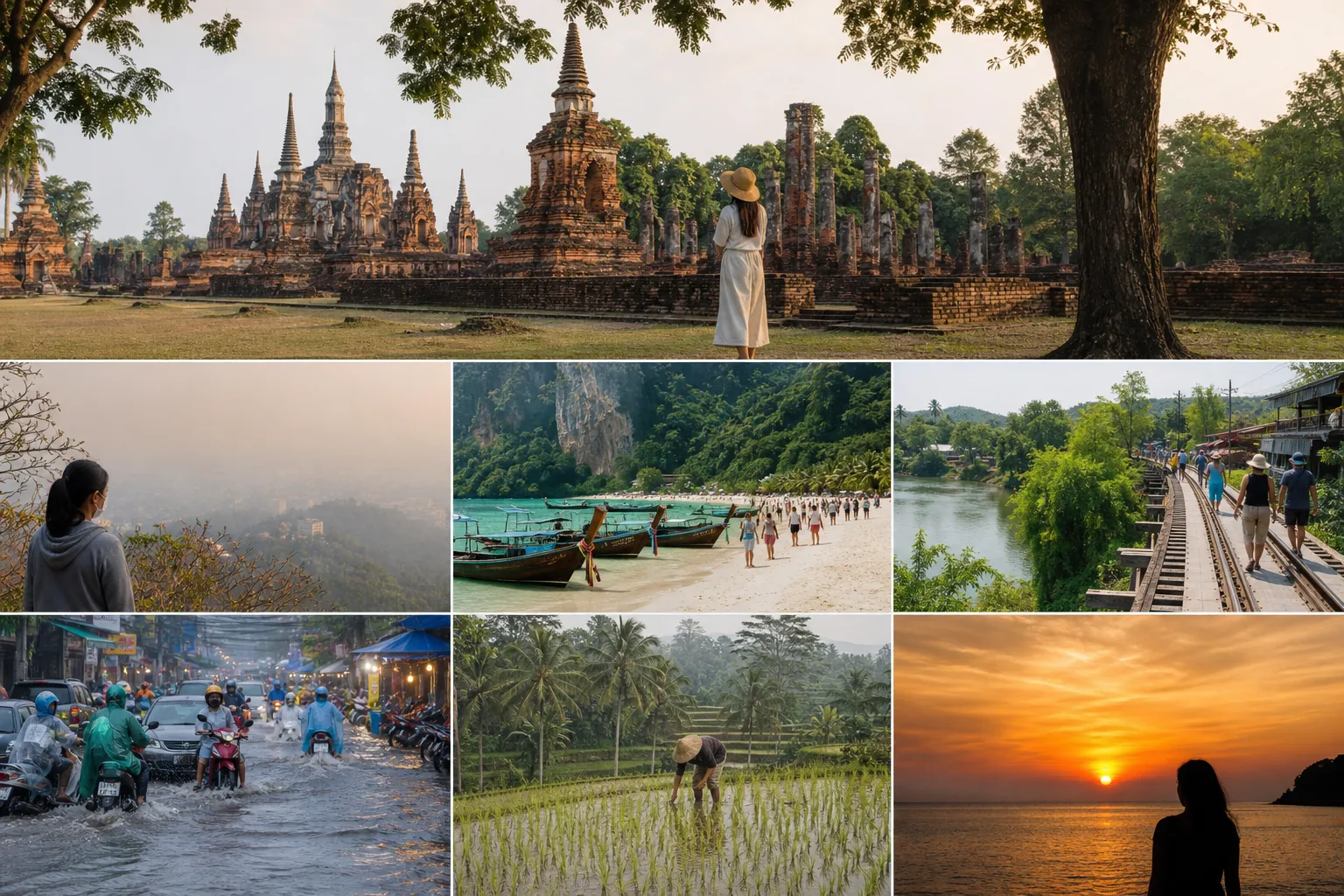
If you’ve ever tried to plan a trip to Southeast Asia, you already know the struggle: the region is enormous, the weather varies wildly from country to country, and the difference between arriving at the right time versus the wrong time can completely change your experience. Knowing the best time to visit Southeast Asia isn’t just about avoiding rain — it’s about understanding how seasons shape the vibe, the crowds, the prices, and even the air quality in places like Chiang Mai. This guide breaks it all down, destination by destination, month by month, so you can plan a trip that actually works for you.
Why Southeast Asia Doesn’t Have One “Perfect” Season
Southeast Asia stretches across a massive geographic area, from the mountainous north of Thailand and Vietnam all the way down to the tropical islands of Indonesia. That means there’s no single answer to when you should go. What’s dry and sunny in Bali might be stormy in the Philippines, and what’s peak season in Bangkok might be shoulder season in Lombok.
The region is largely governed by two monsoon systems: the southwest monsoon, which brings heavy rain to most of mainland Southeast Asia and the west coasts of islands from roughly May to October, and the northeast monsoon, which affects the Gulf of Thailand coast and parts of Vietnam from November through February. Understanding which monsoon hits where — and when — is the foundation of smart trip planning.
That said, “rainy season” doesn’t mean you can’t travel. In many destinations, rain comes in short, intense afternoon bursts rather than all-day downpours. You can still have an incredible trip in the wet season if you know what to expect and plan accordingly.
The Best Time to Visit Southeast Asia: November to February
If you want one general answer, November through February is widely considered the sweet spot for most of Southeast Asia (with some exceptions we’ll get into). The skies are clearer, the heat is more manageable, and the landscape is lush from the rains that just passed. January and February in particular offer some of the most comfortable conditions across Thailand, Vietnam, Cambodia, Laos, and Myanmar.
The tradeoff? You’re traveling during peak tourist season. Popular spots like Angkor Wat, Hội An, and the Thai islands fill up fast. Accommodation prices rise, and the most famous viewpoints get crowded early in the morning. If that bothers you, book well in advance or lean into the shoulder months — October and March can offer a solid middle ground between good weather and manageable crowds.
October, in particular, is an interesting transitional month. In cities like Bangkok and Chiang Mai, October marks the shift from the rainy season to the dry season. You’ll catch fewer tourists than in December or January, and the landscape is still beautifully green. It’s one of those months that experienced travelers tend to love precisely because it flies under the radar.
Chiang Mai: Timing Around the Burning Season
Chiang Mai is one of the most-loved cities in all of Southeast Asia, and for good reason. It’s got ancient temples, incredible food, a thriving arts scene, and easy access to jungle trekking and hill tribe villages. But timing your visit here matters more than almost anywhere else in the region — and not just because of the weather.
The cool season, roughly November through February, is the most popular time to visit. Temperatures drop to genuinely pleasant levels, the skies are clear, and the city feels alive with festivals and outdoor activity. This is also when you can explore the surrounding mountains and forests most comfortably.
March through May brings what locals and travelers call the burning season — and it’s something you need to know about before you go. During this period, agricultural burning in the region sends smoke and haze across the valleys of northern Thailand. Air quality in Chiang Mai can deteriorate significantly, sometimes reaching levels that are uncomfortable or even harmful for people with respiratory conditions. If you’re sensitive to air pollution, have asthma, or simply want to enjoy the city’s outdoor attractions without a haze overhead, it’s worth avoiding this window.
→ Read also: Chiang Mai Beyond the Burning Season: What to Expect & Safety Tips (2026)
If you do find yourself in Chiang Mai during the burning season — whether by choice or circumstance — keep an eye on real-time air quality indexes through apps or websites that track PM2.5 levels. On high-pollution days, limit time outdoors, wear a well-fitting mask when you’re outside, and take advantage of indoor spaces like museums, cooking classes, and cafés. The city’s famous Songkran water festival falls in April, right in the middle of this period, and it’s a genuinely wild and joyful celebration — so some travelers decide the trade-off is worth it.
For jungle trekking and exploring the surrounding national parks, the summer months of June through August are surprisingly underrated. Yes, there’s rain, but the forests are extraordinarily green, the waterfalls are at their most dramatic, and the crowds thin out considerably. Just pack a light rain jacket and embrace it.
Bali vs. Lombok: Choosing Your Island Based on the Season
Bali and Lombok sit close together on the map, but they attract different kinds of travelers — and the seasonal dynamics between them are worth understanding before you decide which to prioritize.
Bali’s dry season runs from approximately May to September, with July and August being the busiest and most expensive months. The surf is strong on the west coast during this period, the rice terraces are lush, and the island’s famous sunsets are at their most photogenic. If you’re visiting Bali for the first time and want reliable weather, this window makes sense — just know that you’ll be sharing it with a lot of other people. Ubud and Seminyak can feel genuinely packed in peak season.
The wet season, from October through April, brings daily rain — often heavy — but also brings lower prices, emptier temples, and a different, quieter version of the island. Many experienced Bali travelers actually prefer the wet season for its atmosphere. The rain usually comes in the afternoon, leaving mornings free for exploring.
Lombok, Bali’s quieter neighbor to the east, follows a broadly similar seasonal pattern but remains far less crowded year-round. The beaches around the Gili Islands and the southern coast are stunning, and the approach to Gunung Rinjani — one of the most rewarding volcano treks in the region — is best attempted during the dry season when the trails are safe and the summit views are clear. If you’re torn between the two islands, consider combining them: fly into Bali, spend time there, then take a short boat or ferry crossing to Lombok for a more off-the-beaten-path experience. The contrast is striking.
Vietnam, Cambodia, and Laos: Reading the Regional Map
These three countries sit close together but experience weather patterns that can differ significantly depending on where you are and what time of year it is. That’s what makes backpacking through them so interesting — and occasionally confusing.
Vietnam is long and narrow, which means the north, center, and south are often in completely different seasons at the same time. Hanoi and the north are best visited from October to April, when it’s cooler and drier. The central coast — including the beloved town of Hội An — gets hit by typhoons and heavy rain between October and December, so plan around that window if you can. Ho Chi Minh City and the south are drier from December through April.
The practical upshot? You can almost always find a part of Vietnam that’s in good weather, regardless of when you travel. Start in the south during the wet season up north, or head north in winter when the south gets humid and hot.
Cambodia is best visited during the cool, dry season from November to February. Angkor Wat at sunrise in December, with mist rising over the moat and relatively manageable crowds, is one of those experiences that stays with you. The wet season from May to October turns the surrounding landscape green and fills the Tonlé Sap lake dramatically — which actually makes for fascinating boat trips — but the heat and humidity can be intense.
→ Read also: Chiang Mai Beyond the Burning Season: What to Expect and How to Stay Safe
Laos tends to follow a similar dry season pattern, with November through February being the most comfortable months to explore Luang Prabang, the Mekong, and the remote northern provinces. The shoulder months of March and October offer quieter conditions and are increasingly popular with travelers who want to avoid the peak-season rush.
Sri Lanka: A Seasonal Guide Worth Planning Around
Sri Lanka sits just off the southern tip of India and, while not technically part of Southeast Asia, it’s a destination that frequently appears on the same backpacking circuit — and its seasonal complexity deserves proper attention.
The island is uniquely affected by two separate monsoon systems, which means that when one coast is wet, the other is often dry. This gives Sri Lanka something rare: year-round travelability, as long as you know which coast to head to.
The southwest coast — home to popular spots like Mirissa, Galle, and Unawatuna — is at its best from November through April. This is when the beaches are calm, the whale watching season peaks, and the surf conditions on the south coast are ideal for beginners and intermediates. The ancient cultural triangle in the interior, including Sigiriya and Kandy, is accessible and enjoyable throughout the year, though the cooler months between December and March are particularly pleasant.
The east coast of Sri Lanka — including Arugam Bay, one of the top surf destinations in Asia — flips the script entirely. Its dry season runs from May through September, making it the perfect complement to the southwest. Savvy travelers time a Sri Lanka trip to catch both coasts by moving east as the southwest monsoon arrives.
October is a transitional month in Sri Lanka and can be unpredictable. The southwest monsoon is winding down, the northeast monsoon hasn’t fully established itself, and inter-monsoon rains can affect multiple parts of the island simultaneously. It’s not the worst time to visit — and prices are lower, crowds thinner — but go in with realistic expectations and build some flexibility into your itinerary. If you’re planning to surf Arugam Bay, the season is typically wrapping up by October, so aim for earlier in the summer for the best conditions.
Practical Tips for Planning Around Seasons
Beyond the month-by-month breakdown, there are a few broader principles that’ll help you get the most out of any Southeast Asia trip, regardless of when you go.
- Book accommodation early for peak season. November through February fills up fast across the region. If you’re traveling over Christmas or New Year, plan months in advance.
- Embrace shoulder season. October and March–April (outside Chiang Mai’s burning season) often offer the best balance of decent weather, lower prices, and thinner crowds.
- Pack light, breathable layers. Even in the “cool” season, Southeast Asia is warm. A light rain jacket is more useful than an umbrella in most situations.
- Check local festival calendars. Events like Songkran in Thailand, Tết in Vietnam, and the Boun Ok Phansa boat racing festival in Laos can either be highlights or logistical challenges, depending on how you plan.
- Don’t fear the rain. A wet season trip done right — with the right mindset and a flexible schedule — can be more memorable than a peak-season trip done wrong.
- Monitor air quality in northern Thailand. If you’re heading to Chiang Mai between March and May, download a reliable air quality app before you arrive and check it regularly.
For deeper regional planning, The Broke Backpacker’s Southeast Asia seasonal guide is a solid resource worth bookmarking.
Making the Most of Whatever Season You’re In
Here’s the honest truth: there’s no single best time to visit Southeast Asia that works for everyone. The “right” time depends on where you’re going, what you want to do, how you handle heat and rain, and how much you care about sharing a sunset with fifty other tourists.
What matters more than chasing perfect weather is going in informed. Know that Chiang Mai’s burning season is a real consideration. Understand that Bali’s peak season is genuinely crowded. Appreciate that Sri Lanka’s two coastlines give you options most destinations don’t. And remember that even the “wrong” season in Southeast Asia tends to produce some of the most spontaneous, unexpected, and genuinely memorable travel moments you’ll ever have.
The region rewards curiosity and flexibility above all else. Whether you’re watching the mist lift over Angkor Wat in January, trekking through Chiang Mai’s jungle in a summer drizzle, or catching a last-minute ferry to Lombok because the plan changed — Southeast Asia has a way of delivering exactly what you need, even when it doesn’t go exactly as planned. Start with the seasons, but leave room for the unexpected. That’s where the real stories happen.
This article was produced with AI assistance and reviewed editorially.


Southeast Asia Month-by-Month: Your Guide to Chiang Mai, Bali, and Beyond

Island-Hopping in Greece: Skip Santorini and Find Your Own Adventure


