
Egypt
Dahab and Egypt’s Red Sea Coast: Where Real Adventure Meets the Water
Discover Dahab, Egypt’s laid-back Red Sea alternative to Cairo crowds. Explore diving, snorkeling, and authentic beach town life in South Sinai.

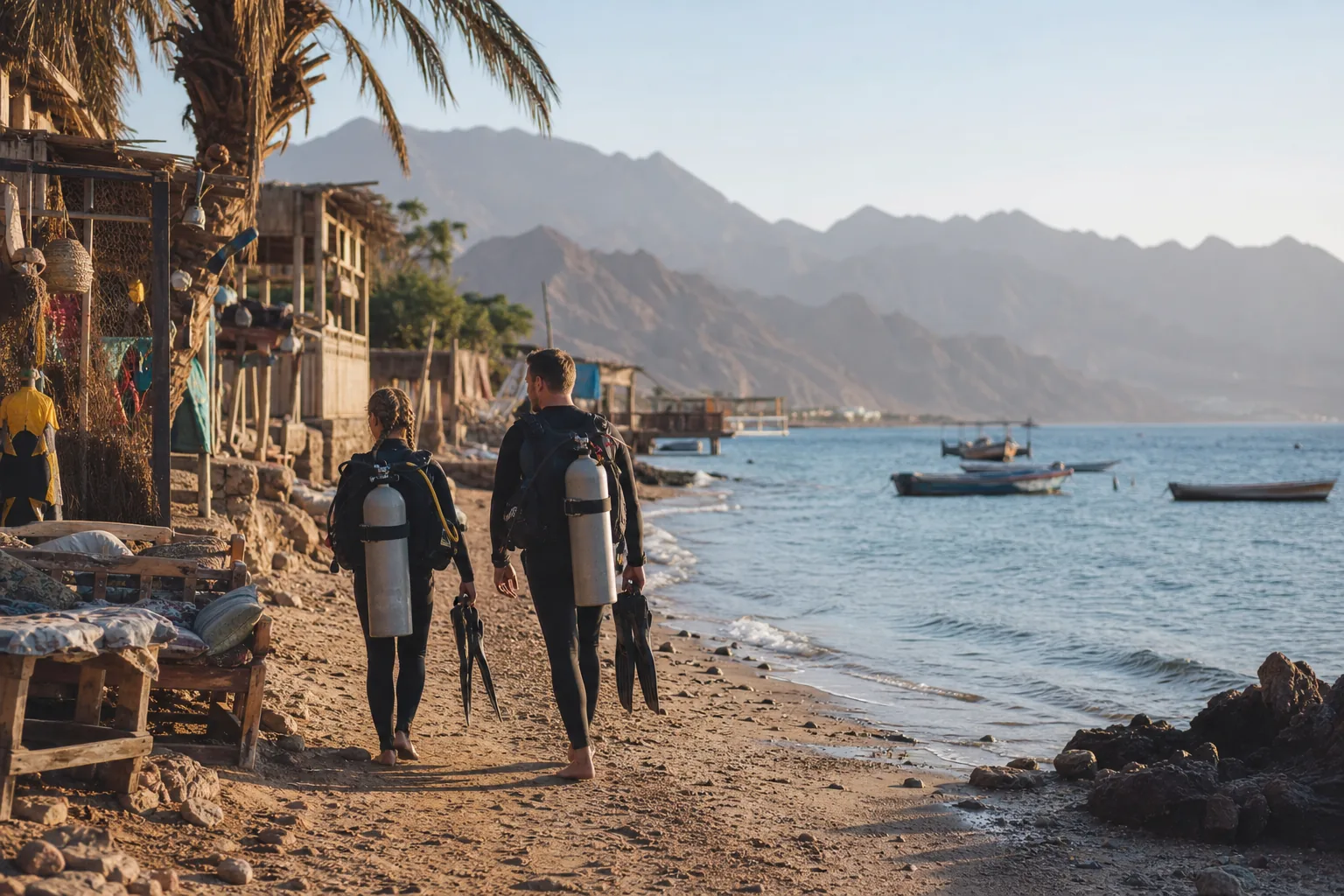
If your vision of Egypt is all pyramids, pharaohs, and crowded cruise decks on the Nile, you’re only seeing one side of an extraordinarily layered country. This Dahab Egypt travel guide is here to show you the other side — the one where you wake up to turquoise water, eat fresh fish at a waterfront café, and spend your afternoons drifting above coral reefs. Dahab, located in South Sinai on Egypt’s Red Sea coast, is the kind of place that gets under your skin quietly, without fanfare or tourist scripts. It’s not the Egypt most people plan for — and that’s exactly why you should go.
Why the Red Sea Coast Deserves a Place on Your Egypt Itinerary
Egypt’s most famous exports to the tourism world are ancient: the Giza plateau, the Valley of the Kings, the temples at Luxor. These are genuinely extraordinary, and nobody’s saying skip them. But the country stretches far beyond those monuments, and its Red Sea coastline offers a completely different kind of travel experience — one built around water, light, and a pace of life that feels almost defiant in its slowness.
The Red Sea region delivers diving, water activities, and beach experiences that rival some of the best in the world. The water here is warm, clear, and home to thriving coral ecosystems. Whether you’re a certified diver, a curious snorkeler, or someone who just wants to float in the sun with a cold drink nearby, this coastline has something real to offer.
What makes it especially compelling for young travelers is the contrast. You can spend two days in Cairo, feel the full weight of history pressing down on you at every corner, and then board a short flight or take a bus across the Sinai Peninsula to find yourself in a completely different Egypt — one that moves at your pace, not a tour operator’s schedule.
Getting to Know Dahab: Egypt’s Laid-Back Beach Town
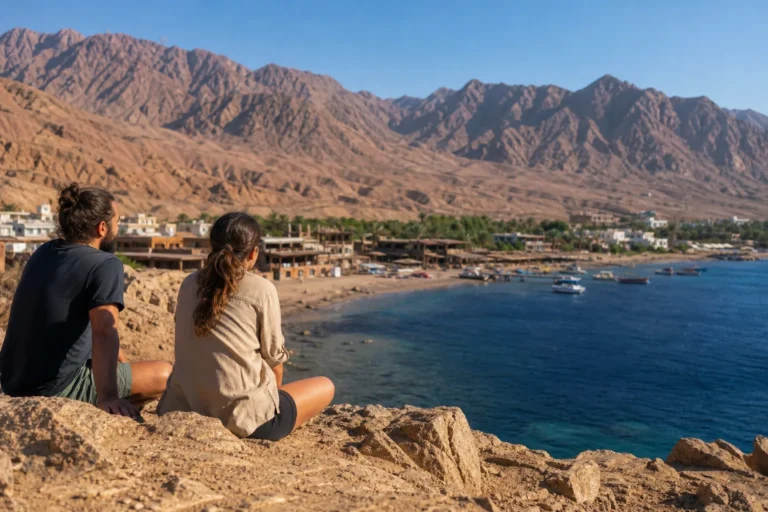
Dahab sits on the Gulf of Aqaba, the northeastern arm of the Red Sea, cradled between the desert mountains of the Sinai Peninsula and some of the most biodiverse water in the region. It’s described, rightly, as Egypt’s beach town destination — and while that label might sound simple, the reality is more interesting than a few sun loungers and cocktail menus.
The town has a distinct character. Its waterfront promenade, known locally as the corniche, is lined with open-air restaurants and dive shops. Cats wander between tables. The call to prayer drifts over the water at dusk. Backpackers share meals with local families, and the conversation at any given café might cover dive sites, desert hikes, or the best place to rent a windsurfer. It’s the kind of place where plans dissolve naturally and afternoons stretch longer than expected.
That unhurried quality is part of Dahab’s appeal. Unlike Sharm el-Sheikh — the large, resort-heavy Red Sea destination further south along the coast — Dahab has maintained a more grounded, community-focused atmosphere. Sharm el-Sheikh is polished and package-holiday friendly, and it has its place. But if you’re the type of traveler who prefers local restaurants over hotel buffets and conversation over itinerary-checking, Dahab is your kind of town.
What to Do in and Around Dahab
Diving and Snorkeling
This is where Dahab earns its reputation. Snorkeling is available directly from Dahab Beach, and the accessibility of the reef is genuinely remarkable — in some spots, you can wade in from the shore and be surrounded by coral and fish within minutes. No boat required, no group tour necessary.
For certified divers, the sites around Dahab are legendary in the diving community. The variety is impressive: shallow reef dives ideal for beginners, drift dives for those with more experience, and deeper technical sites for advanced divers. The water visibility is typically excellent, and the marine life — parrotfish, moray eels, sea turtles, rays — rewards patience and slow movement.
If you’re not yet certified, Dahab is one of the more affordable and relaxed places in the world to get your Open Water certification. Several dive centers along the waterfront offer courses, and the calm, clear conditions make it an ideal learning environment. Many travelers who arrive in Dahab with no diving experience leave as certified divers — and immediately start planning their next dive trip.
→ Read also: Dahab, Egypt: The Hidden Red Sea Town You Didn't Know Existed
Glass-Bottom Boat Trips
Glass-bottom boat trips are available from Dahab for those who want to see the underwater world without getting wet. These are a great option if you’re traveling with someone who isn’t comfortable in the water, or if you simply want a different perspective on the reef. The boats glide over coral gardens and you can watch the fish below without needing any equipment or experience.
Desert Adventures
Dahab’s location at the edge of the Sinai Peninsula means the desert is literally on your doorstep. The mountains behind the town are dramatic and accessible, and several trails lead into the interior. A pre-dawn hike to catch the sunrise from a high point in the Sinai is one of those experiences that stays with you — the silence, the scale of the landscape, the colors shifting from deep blue to gold.
Camel treks into the desert are also available, ranging from short afternoon rides to multi-day journeys through the peninsula’s interior. For something more structured, guided jeep tours cover a wider range of terrain and can be combined with visits to Bedouin communities, where you might share tea and hear stories about life in the desert.
Windsurfing and Kitesurfing
The winds along this stretch of the Red Sea are consistent and strong enough to attract serious windsurfers and kitesurfers from across the world. Dahab has a growing scene for both sports, with rental equipment and lessons available along the beach. Even if you’ve never tried either, a beginner lesson on a calm morning is worth the attempt — and the backdrop of desert mountains meeting turquoise water makes it one of the more visually spectacular places to learn.
Comparing Dahab to the Classic Nile Cruise Experience
It’s worth being honest about the comparison here, because both experiences are genuinely valuable — they’re just very different. Multi-day Nile River cruises, with stops at ancient temples in Luxor, Edfu, and beyond, offer something that Dahab simply cannot: direct access to some of the most significant archaeological sites in human history. Floating down the Nile while the landscape changes around you and ancient temples appear on the riverbanks is an experience with few equivalents anywhere in the world.
But Nile cruises — especially the higher-end options — come with a significant price tag. A 12-day luxury cruise from Cairo to Cairo with a premium operator can start at $6,999 per person, a figure that puts it firmly out of reach for most young independent travelers. Even mid-range cruise options tend to be structured around group tours, fixed schedules, and a level of formality that doesn’t always suit a spontaneous travel style.
Dahab, by contrast, rewards independent travel. You can arrive without a booking, find accommodation ranging from simple guesthouses to comfortable beachside hotels, and build your days around whatever feels right. Meals are affordable. Dive courses are competitively priced. The town is small enough to navigate on foot. For travelers who want to feel like they’re actually in a place rather than being transported through it, Dahab offers something the Nile cruise circuit rarely does: genuine unscheduled time.
The smartest approach, if your budget and timeline allow, is to combine both. Spend a few days in Cairo and at the major historical sites, then make your way to the Red Sea coast for a completely different chapter of the same trip. The contrast makes both experiences richer.
Practical Things to Know Before You Go
Getting There
Dahab is accessible by road from Sharm el-Sheikh, which has an international airport with connections to major European cities and Cairo. The drive from Sharm to Dahab takes roughly an hour along a coastal road that offers some genuinely dramatic scenery. Shared minibuses and private taxis make the transfer straightforward, and many travelers arrange the connection on arrival at the airport without any pre-booking.
From Cairo, there are also direct bus services to Dahab, though the journey is long — typically around eight to nine hours including the ferry crossing at the Suez Canal or the Ahmed Hamdi Tunnel. Some travelers find the overnight bus a reasonable option, arriving in Dahab in the early morning ready to explore.
→ Read also: Egypt in 2026: Cairo, Giza & Dahab — Debunking Myths & What Solo Travelers Actually Experience
When to Visit
The Red Sea coast has a genuinely favorable climate for most of the year. October through April tends to offer the most comfortable conditions for outdoor activities — warm enough to swim and dive comfortably, but without the intense heat of the summer months. The water temperature in the Red Sea remains warm enough for comfortable diving year-round, which is one of the reasons the region attracts divers in every season.
Summer months bring higher temperatures and humidity, but also fewer tourists and lower prices. If you’re heat-tolerant and budget-conscious, the off-peak summer window can work well — just plan outdoor activities for early morning or late afternoon.
Navigating as an Independent Traveler
Egypt requires some preparation for independent travel, but it’s more manageable than its reputation sometimes suggests. Visa requirements vary by nationality, and it’s worth checking the current situation before you book anything — Egypt offers visas on arrival for many nationalities, and an e-visa system is available online in advance. Sorting this before you fly is always the smoother option.
Currency is straightforward: carry Egyptian pounds for day-to-day expenses. ATMs are available in Dahab, though not as numerous as in Cairo or Sharm el-Sheikh, so it’s worth withdrawing enough to cover a few days when you have the opportunity. Many dive shops and guesthouses accept card payments, but smaller restaurants and market stalls will expect cash.
Dress codes are worth being thoughtful about. Dahab is more relaxed than many parts of Egypt, and the beach culture means swimwear is entirely normal near the water. Away from the beach, covering shoulders and knees is a respectful approach and tends to be appreciated by local residents. The town has a long history of welcoming international travelers, and the atmosphere is genuinely open and friendly.
Safety and Practical Awareness
South Sinai has been a tourist destination for decades, and Dahab itself has a well-established infrastructure for international visitors. As with any destination, it’s sensible to stay informed about current travel advisories from your home country’s foreign affairs department and to use common sense in unfamiliar situations. Lonely Planet’s Red Sea coast coverage is a useful starting point for getting a broader picture of the region before you go.
Eating, Staying, and Living in Dahab
One of the genuine pleasures of Dahab is the food. The waterfront restaurants serve fresh fish and seafood at prices that feel almost unreasonably reasonable — grilled fish caught that morning, mezze spreads, kushari (Egypt’s beloved street food of rice, lentils, pasta, and spiced tomato sauce), and fresh juices made to order. Eating well in Dahab doesn’t require a budget upgrade; it just requires wandering until something smells right.
Accommodation covers a wide range. There are simple guesthouses where you can get a clean, comfortable room for very little, mid-range hotels with sea views and proper amenities, and a handful of more upscale options for those who want comfort without the full resort experience. Most travelers find that staying somewhere within walking distance of the waterfront makes the most sense — the town is compact, and the beach is where the day begins and ends.
The social scene in Dahab tends to form naturally around the dive centers and waterfront cafés. It’s one of those places where solo travelers rarely feel alone for long — a shared table at dinner, a conversation at the dive shop, a group forming for a morning snorkel session. The community of travelers passing through tends to be curious, independent-minded, and genuinely interested in the place they’re in, which makes for good company.
Egypt has more to offer than any single trip can hold. The pyramids are real, the Nile is real, and the weight of ancient history pressing down on you in Cairo is something no photograph fully captures. But so is the feeling of floating above a coral reef in the Red Sea, watching a sea turtle move slowly through clear water while the Sinai mountains rise behind you on the shore. This Dahab Egypt travel guide exists because that second experience deserves to be part of the conversation — not as a replacement for the iconic Egypt, but as a reminder that the country is bigger, stranger, and more rewarding than any single itinerary can contain. Go to Cairo, stand at the foot of the pyramids, feel appropriately small. Then make your way to the coast, slow down, and discover what Egypt feels like when nobody’s rushing you.
This article was produced with AI assistance and reviewed editorially.


Dahab and Egypt’s Red Sea Coast: Where Real Adventure Meets the Water

Southeast Asia on a Shoestring: How to Cross Borders, Save Money, and Actually Live Like a Local


