
United Kingdom
London Beyond the Eye: 8 Walks from Landmarks to Hidden Neighborhoods (2026)
Discover authentic London walking tours that blend iconic landmarks with hidden neighborhoods. Explore 8 distinct routes from South Bank to Shoreditch with local food sto

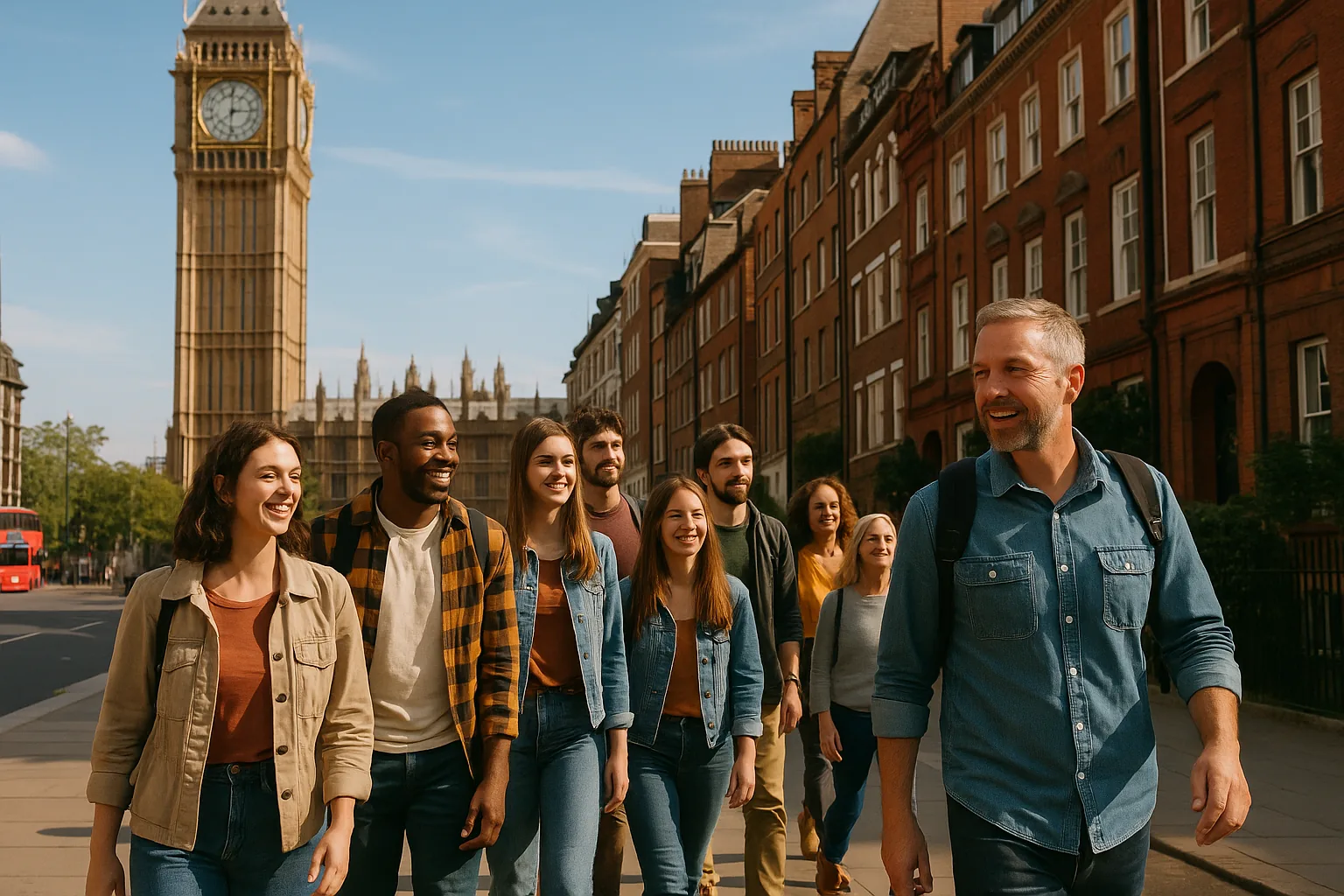
London is one of those cities that reveals itself slowly, layer by layer, street by street. You could spend a week hopping between the London Eye, Buckingham Palace, and the Tower of London and still feel like you’ve only scratched the surface. The real magic happens when you put your phone in your pocket, lace up your trainers, and start walking — because that’s when the city stops being a checklist and starts becoming a story. London walking tours, whether self-guided or led by a local, are genuinely one of the best ways to understand a place this complex, this layered, and this alive. This guide gives you eight distinct walks that blend the iconic with the unexpected, the historic with the hyper-local, and the tourist trail with the kind of streets only regulars know about.
Why London Rewards You for Walking It
London wasn’t designed like Paris or Barcelona — it grew organically over centuries, absorbing villages, markets, and communities that each developed their own identity. That’s why a ten-minute walk can take you from a Georgian square to a Vietnamese street food market to a Victorian pub with original tiling on the walls. No bus route or Tube line can replicate that. When you walk, you notice the details: the blue plaques on buildings, the hidden courtyards tucked behind main roads, the corner shops and coffee spots where the same people come every morning.
There’s also a practical case for walking. London’s public transport is excellent but expensive. On foot, you cover distances that feel far on the map but are surprisingly short in reality — many of the city’s most interesting neighborhoods sit within a mile or two of each other. Wear comfortable shoes, grab an Oyster card for when you genuinely need it, and give yourself permission to get slightly lost. That’s when the best discoveries happen.
Walk 1: South Bank to Borough Market
Start at Waterloo Station and head straight for the river. The South Bank is one of London’s great public spaces — wide, walkable, and full of life at almost any hour. Pass the Tate Modern, cross the Millennium Bridge for views of St Paul’s Cathedral reflected in the Thames, and then double back along the river towards Southwark. The streets behind the main drag here get quieter and more interesting fast.
Your destination is Borough Market, one of London’s oldest and most vibrant food markets. Arrive on a Thursday, Friday, or Saturday morning for the full experience — traders selling everything from sourdough bread to Ethiopian spices to aged cheese. Grab a coffee, eat something you’ve never tried before, and take your time. From here, cross London Bridge and look back at the city skyline. It’s one of those views that earns its reputation.
Walk 2: Shoreditch and the East End’s Creative Soul
Shoreditch is the kind of neighborhood that has reinvented itself multiple times and somehow keeps getting more interesting. Start at Old Street and walk south through the backstreets, where independent galleries, vintage clothing stores, and coffee shops occupy spaces that were once warehouses. The street art here changes constantly — entire walls become canvases, and walking through feels like moving through a living exhibition.
Head towards Brick Lane, which cuts through the heart of the East End and carries centuries of immigrant history in its architecture and food culture. The Sunday market here is chaotic in the best possible way. Grab a bagel from one of the all-night bakeries that have been on this street for generations. Continue north towards Columbia Road Flower Market on a Sunday morning, where the narrow street transforms into a tunnel of colour and noise that’s completely unlike anything else in the city.
👉 Read also: London Beyond the Eye: Walking Routes, Hidden Neighborhoods, and Authentic Experiences
Practical tip for this walk
Sunday morning is the best time to combine Brick Lane market with Columbia Road. Both are at their peak between 9am and 1pm. Arrive early if you want to actually move through the streets rather than shuffle along with the crowd.
Walk 3: Notting Hill and Portobello Road
Notting Hill has a reputation that slightly overshadows its reality — yes, it’s affluent and photogenic, but it’s also genuinely worth walking through. Start at Ladbroke Grove and walk down towards Portobello Road, one of London’s most famous market streets. On Saturdays, antique dealers line the northern end of the road, and the further south you walk, the more the character shifts — from vintage furniture to street food to fresh produce.
The side streets off Portobello are where the neighborhood reveals its quieter self: pastel-painted terraces, independent bookshops, and small cafés where you can sit at a window table and watch the city go by. Walk west towards Holland Park, a green space that feels almost secretive compared to the more famous royal parks. The Japanese-style Kyoto Garden inside the park is a genuinely peaceful spot — especially on a weekday when it’s not crowded.
Walk 4: The City of London — Ancient Streets Inside the Square Mile
The City of London — the original square mile at the heart of the modern metropolis — is one of the most historically dense areas in Europe. On a weekday, it hums with financial energy. On a weekend, it’s almost eerily quiet, and that’s when you should visit. The contrast lets you actually see the buildings rather than navigate around commuters.
Walk from St Paul’s Cathedral east through the medieval street grid that survived the Great Fire of 1666 only in fragments. Look for Leadenhall Market, a Victorian covered market with a soaring painted ceiling that feels like stepping into another century. Continue to the Barbican, a brutalist residential and arts complex that divides opinion but demands attention. It’s one of the most ambitious urban projects in London’s postwar history, and wandering through its elevated walkways and water gardens is a genuinely strange and fascinating experience.
Walk 5: Covent Garden to Seven Dials and Beyond
Covent Garden is usually packed, but it earns its popularity. The piazza, the street performers, the covered market — it’s theatrical in a way that feels earned rather than manufactured. Start here and then move quickly into the surrounding streets, which are far less crowded and far more interesting for longer exploration.
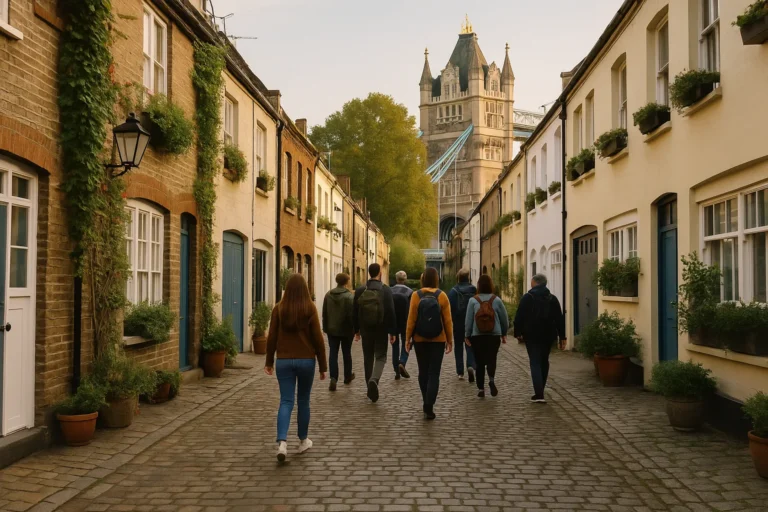
Seven Dials, just a short walk northwest, is a junction of seven streets radiating from a central column, lined with independent shops, small theatres, and restaurants that cater more to locals than tourists. From here, push north into Bloomsbury, the neighbourhood of writers, academics, and the British Museum. The museum itself is free to enter and genuinely one of the great cultural institutions on earth — even if you only have an hour, walk through the Great Court and spend time in two or three galleries rather than trying to see everything.
Food and drink along this route
- Look for independent cafés along Neal’s Yard, a hidden courtyard off Shorts Gardens in Covent Garden — colourful, calm, and easy to miss if you don’t know it’s there.
- Bloomsbury has several good independent coffee shops near the museum that fill up with students and researchers — a good sign for quality and price.
- The pubs in this area range from tourist-facing to genuinely local; walk one street back from the main drag and the atmosphere changes immediately.
Walk 6: Greenwich and the River’s Eastern Edge
Take the DLR or the Thames Clipper to Greenwich and you’ll feel like you’ve arrived somewhere distinct from the rest of London — because in many ways, you have. Greenwich has its own pace, its own identity, and a concentration of history that’s hard to match anywhere else in the city.
👉 Read also: London for Explorers: Walking Routes, Hidden Neighborhoods & Beyond the Eye
Walk up through Greenwich Park to the Royal Observatory, where you can stand on the Prime Meridian — the line that divides east from west — and look out over one of the most dramatic views of the London skyline available from ground level. The Cutty Sark, a preserved 19th-century tea clipper, sits near the riverfront and is worth at least a walk around the exterior even if you don’t go inside. The Greenwich Market runs most days and mixes food stalls with crafts and vintage finds in a covered Victorian space. This walk pairs well with an afternoon — arrive around noon, eat at the market, explore the park, and catch the clipper back along the Thames as the light changes.
Walk 7: Hackney and the Neighbourhoods London Doesn’t Put on Postcards
If you want to understand what London actually feels like for the people who live here, Hackney is one of the most honest places to walk through. It’s not polished for visitors, and that’s exactly the point. Start at London Fields, a large park that fills with locals on any warm afternoon — people reading, playing football, cooking on the park’s public barbecues. The surrounding streets are full of the kind of independent restaurants and coffee shops that end up in food guides a year or two after the locals discover them.
Walk north through Broadway Market on a Saturday, when the street becomes a long, slow-moving celebration of food, community, and local life. Continue into London Fields Lido territory if the weather cooperates — it’s a heated outdoor pool that’s been a neighbourhood institution for decades. Push further into Hackney Wick, where former industrial buildings now house artist studios, independent breweries, and music venues. The canal towpath here connects you to the broader Lee Navigation network, and walking along the water gives you a completely different perspective on east London.
Walk 8: Hampstead Heath and London’s Green Escape
Every city needs a place where you can genuinely feel like you’ve left it behind for a few hours. In London, that place is Hampstead Heath. Nearly 800 acres of ancient woodland, open meadows, ponds, and hills sit just a few miles from central London — and on a clear day, the view from Parliament Hill takes in the entire city skyline from south to north.
Start at Hampstead station and walk through the village — one of London’s most preserved historic neighbourhoods, with independent shops and old pubs that have barely changed in decades. Enter the Heath and let yourself wander without a fixed route. There are swimming ponds open to the public for much of the year, quiet woodland paths that feel genuinely remote, and open hilltops where you can sit and watch the city exist at a comfortable distance. This is the walk for the day when you need to breathe, reset, and remember that London is a place people actually live — not just a collection of monuments.
Making the Most of Self-Guided London Walking Tours
The beauty of exploring London on foot is that you don’t need a fixed itinerary to have a great experience. That said, a few practical points make the whole thing work better. Download an offline map before you head out — mobile data can be unpredictable in dense urban areas, and you don’t want to be stranded mid-route. Wear layers, because London’s weather shifts quickly and dramatically. Most importantly, build in time to stop — for food, for a coffee, for sitting on a bench and watching the street for ten minutes.
If you want a more structured experience, free walking tours are widely available across the city through platforms like Guruwalk, which lists dozens of options covering everything from classic landmarks to neighbourhood deep-dives. These tours run on a pay-what-you-feel model and are led by local guides who genuinely know their area. They’re a great way to get oriented in a new part of the city before you start exploring independently.
- Start early — most London neighbourhoods are calmer and more photogenic before 10am, and you’ll beat the crowds at popular spots.
- Use the river as your compass — the Thames runs roughly east-west and is visible or signposted from most central areas, making it a reliable landmark when you lose your bearings.
- Mix transport with walking — take the Tube or bus to a starting point and walk back, rather than trying to walk the full distance both ways.
- Keep cash — most places are card-only now, but some market stalls and older pubs still prefer it.
- Follow the blue plaques — the small circular plaques on buildings across the city mark where notable people lived and worked. They’re a free, self-guided history lesson embedded in the walls of the city.
London doesn’t give itself up easily, and that’s part of what makes it worth the effort. The more you walk it, the more it opens up — a new street here, an unexpected courtyard there, a pub that’s been in the same spot since the 1700s tucked behind a modern office block. These eight walks are starting points, not complete maps. Follow them loosely, take the detours that look interesting, and trust that the best version of any London day is the one where something unplanned happens. That’s when the city stops being a destination and starts being an experience you’ll carry with you long after you’ve left.
This article was produced with AI assistance and reviewed editorially.


Southeast Asia on a Shoestring: Budget Travel Guide to Border Crossings & Regional Itineraries

London Beyond the Eye: 8 Walks from Landmarks to Hidden Neighborhoods (2026)


