
United Kingdom
Cornwall’s Best Beaches & Coastal Towns: A Week-Long Coastal Escape Through England’s Gem
Discover Cornwall’s best beaches and coastal towns across a full week. Explore dramatic north coast surf spots, sheltered southern harbors, fishing villages, and hidden c

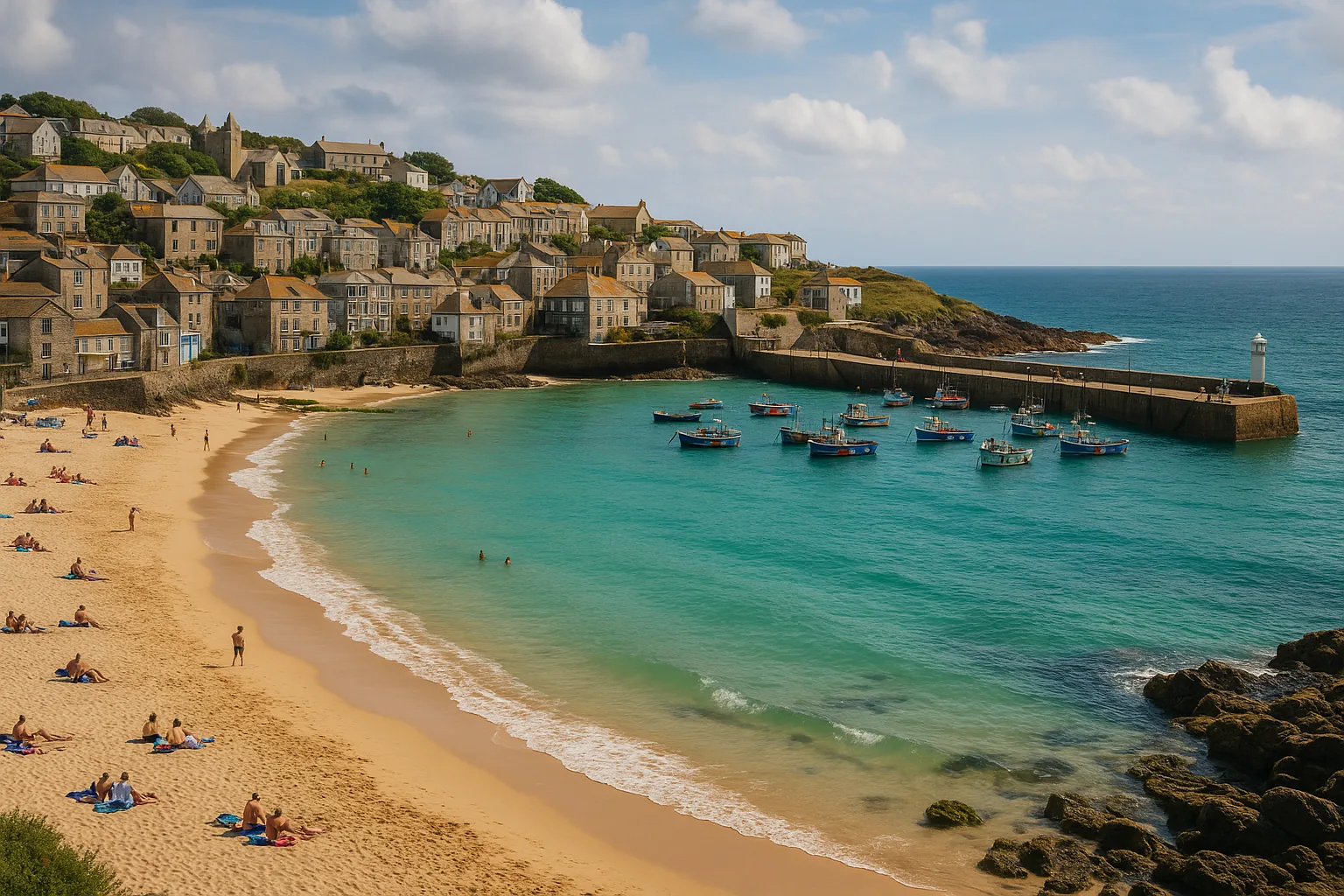
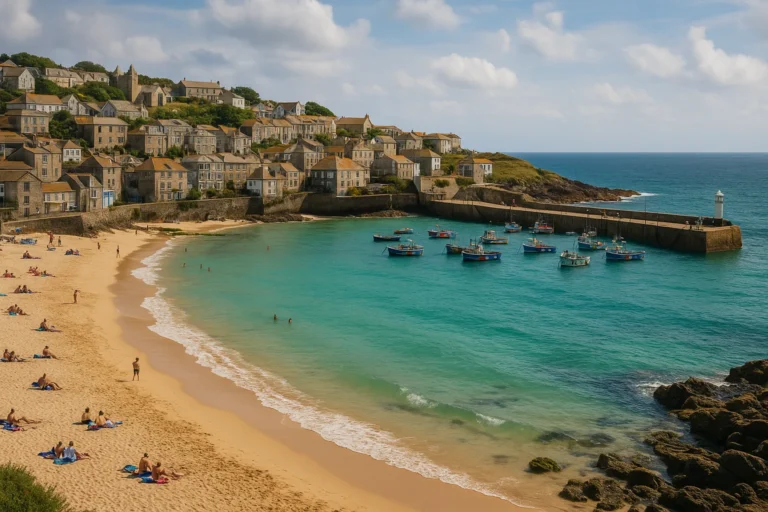
If you’ve been dreaming of rugged cliffs, hidden coves, and the kind of seaside towns that feel like they’ve barely changed in a century, then exploring Cornwall’s beaches and coastal towns should be near the top of your travel list. Tucked into the far southwest tip of England, Cornwall is one of those places that surprises you — it’s wilder, more beautiful, and more interesting than you expect, and a full week here barely scratches the surface.
Why Cornwall Deserves More Than a Weekend
A lot of travelers make the mistake of treating Cornwall like a quick detour. They drive down for a couple of days, see one or two beaches, and head back. That approach misses the point entirely. Cornwall’s magic lives in the details — the way the light hits the water at low tide, the smell of fresh fish at a harbor-side stall, the moment you round a coastal path bend and find a cove you weren’t expecting.
The county stretches across two distinct coastlines: the Atlantic-facing north coast, which is dramatic, wave-battered, and beloved by surfers, and the calmer, warmer south coast, known for sheltered harbors and quieter swimming beaches. To really experience Cornwall, you want both. That’s why a week — ideally spent road-tripping between spots — gives you the space to slow down, explore, and actually feel the rhythm of the place rather than just photograph it.
The good news? You don’t need a huge budget. Cornwall rewards walkers, campers, and anyone willing to buy their lunch from a harbor stall rather than a restaurant with a view tax. The experiences here are generous, and the landscape does most of the heavy lifting.
The North Cornwall Coast: Surf, Sand, and Open Skies
Start your week on the north coast, where the Atlantic rolls in without apology. This is where Cornwall’s surf culture lives, and even if you’ve never stood on a board in your life, the energy is infectious.
Newquay is the obvious entry point — often called the California of the UK, and for good reason. It’s Cornwall’s surf capital, a town built around the ocean, with a buzzy atmosphere that draws young travelers from across Europe. It’s lively, social, and genuinely fun. Stay here for a night or two if you want to meet people, take a surf lesson, or simply watch the pros at work from the clifftop above the bay.
Just outside Newquay, Watergate Bay stretches out as one of the most expansive beaches on the entire coastline. It’s the kind of beach where you can walk for twenty minutes in either direction and still feel like you have space to breathe. The waves here are consistent, the sand is wide and pale, and the backdrop of low cliffs gives it a satisfying sense of scale.
A short drive away, Fistral Beach is Cornwall’s most iconic surfing beach, with big waves and a lively coastal atmosphere that makes it worth visiting even if you’re just watching. Surf competitions happen here regularly, and the vibe is always energetic. Rent a board, book a lesson, or just sit on the sand with a coffee and watch the action unfold.
Further along the north coast, Perranporth offers something a little different — a family-friendly beach with an ocean pool, which makes it a brilliant spot for swimming when the surf is too rough for open-water comfort. The town itself is low-key and unpretentious, and the beach is genuinely beautiful at low tide when the sand seems to go on forever.
👉 Read also: England's Coastal Escapes: Cornwall, Scilly Isles, and Isle of Man for Adventure Seekers
Don’t overlook Polzeath and Crantock Beach either. Polzeath is a favorite among surfers and has a wonderful laid-back energy, while Crantock — tucked behind sand dunes near the Gannel estuary — feels almost secret compared to its more famous neighbors. The Seven Bays area of north Cornwall is worth exploring slowly, hopping between coves and headlands as the mood takes you.
The South Coast: Hidden Coves and Fishing Village Charm
When you cross Cornwall from north to south, the landscape shifts. The Atlantic wildness gives way to something quieter and more sheltered. The water is calmer, the harbors are older, and the fishing villages feel like they exist slightly outside of time.
Kynance Cove is arguably the most photographed spot in the entire county — and it earns every frame. Famous for its white sand, turquoise sea, and dramatic serpentine rock formations, it looks more like the Mediterranean than England. Visit at low tide if you can, when the full sweep of the cove is revealed and you can explore the sea caves and rock arches. It’s genuinely one of those places that makes you stop mid-sentence and just stare.
Nearby, Cadgwith is the kind of fishing village you’d draw if someone asked you to sketch a postcard-perfect Cornish scene. Thatched cottages, fishing boats pulled up on the shingle, lobster pots stacked against stone walls. It’s tiny, it’s unhurried, and it’s completely authentic. Grab something freshly caught from a local stall and eat it on the beach. That’s the whole plan, and it’s a good one.
The south coast is also where you’ll find some of Cornwall’s best walking along the South West Coast Path, a long-distance trail that hugs the clifftops and connects village after village. Even a short section — an hour or two between two coves — gives you a perspective on the landscape that you simply can’t get from a car.
St Ives and the Towns Worth Lingering In
No guide to Cornwall’s beaches and coastal towns would be complete without spending proper time in St Ives. Widely described as the prettiest seaside town in Cornwall, it’s a place that earns the label without trying too hard. The narrow cobbled streets tumble down toward a harbor ringed by golden sand, the light here has attracted artists for over a century, and the whole town has a creative, easy-going energy that makes it easy to lose a full day without noticing.
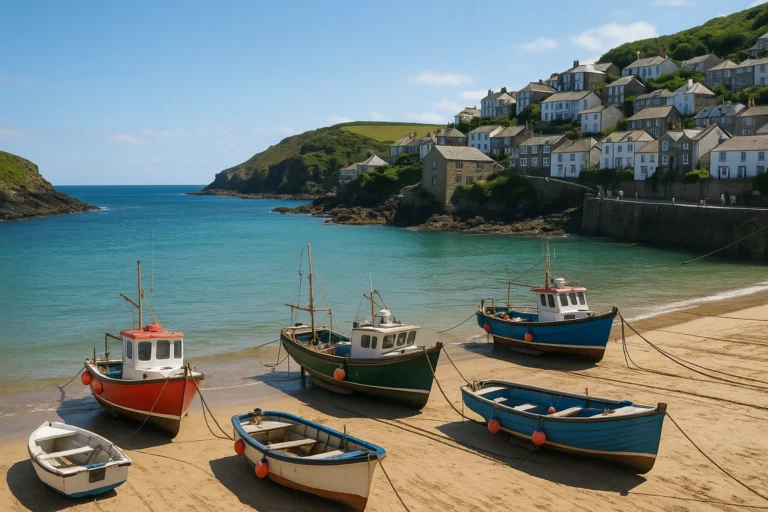
There are actually several beaches within St Ives itself — the harbor beach, Porthminster, and Porthmeor among them — each with a slightly different character. Porthminster is sheltered and calm, ideal for swimming. Porthmeor faces the Atlantic and picks up more swell, making it popular with surfers. Between beaches, explore the maze of streets, pop into independent galleries, and eat well. St Ives has a strong food scene built around local seafood, and even the most casual spots tend to serve something worth remembering.
Further along the coast, St Michael’s Mount is one of Cornwall’s most dramatic landmarks — a medieval castle rising from a tidal island just off the village of Marazion. At low tide, you can walk across the causeway to reach it. At high tide, a small boat takes you across. Either way, standing at the base and looking up at the castle against the sky is one of those moments that makes the whole trip feel worthwhile. It’s genuinely historic, visually striking, and unlike anything else on the coastline.
Other towns worth slowing down in include Padstow on the north coast, a harbor town with a strong food culture and a beautiful estuary setting, and Fowey on the south, a quieter, literary town perched above a river mouth that flows into the sea. Both reward wandering without a plan.
👉 Read also: UK Adventures Beyond London: Cornwall Beaches, Isles of Scilly & Theme Parks (2026)
A Practical Week-Long Shape for Your Cornwall Trip
You don’t need a rigid day-by-day schedule to enjoy Cornwall’s beaches and coastal towns, but having a loose structure helps you cover both coastlines without spending all your time driving. A week works well when you think of it in three broad phases.
- Days one and two — North Cornwall: Base yourself near Newquay and use it as a hub for Fistral, Watergate Bay, and Perranporth. Take a surf lesson, walk the coastal path between bays, and spend at least one evening watching the sunset from the clifftops.
- Days three and four — The far west: Move toward St Ives and the Penwith Peninsula. Spend a full day in St Ives itself, then dedicate time to the surrounding coastline — the dramatic headlands, the quiet coves, and the crossing to St Michael’s Mount from Marazion.
- Days five and six — The south coast: Head east along the south coast, stopping at Kynance Cove and Cadgwith on the Lizard Peninsula before continuing toward Fowey or Looe. Walk sections of the coast path, eat well, and resist the urge to rush.
- Day seven — A slow farewell: Use your final day to revisit a favorite spot or discover one you missed. Cornwall rewards the unplanned detour more than almost anywhere else.
Getting around Cornwall is easiest with a car, especially if you want to reach the more remote coves and villages. Public transport exists between the larger towns, but the most interesting places are often down narrow lanes that buses don’t reach. If you’re traveling without a car, focus your itinerary on the towns with good rail or bus connections — St Ives, Newquay, and Penzance are all accessible — and use them as bases for day walks along the coast path.
Accommodation ranges from campsites with clifftop views to surf hostels in Newquay, self-catering cottages in fishing villages, and guesthouses in the market towns. Booking ahead is wise in summer, when Cornwall draws visitors from across the UK and beyond. Shoulder season — late spring or early autumn — is genuinely one of the best times to visit: the crowds thin out, the light turns golden, and the sea is still warm enough to swim in.
Eating, Drinking, and Living Like a Local
Cornwall has a food culture that punches well above its size. The county’s fishing heritage means that seafood is fresh, local, and often sold straight from the boat. Crab sandwiches from a harbor stall, grilled mackerel at a clifftop café, fish and chips eaten on a sea wall with the wind in your hair — these are the meals you’ll actually remember.
Cornish pasties are, of course, a staple — and when they’re made well, with properly seasoned beef and vegetables in a thick, golden crust, they’re genuinely excellent. Buy them from a local bakery rather than a tourist shop, and eat them warm. The difference is significant.
The county also has a growing number of independent breweries, farm shops, and market stalls worth seeking out. Farmers’ markets in towns like Truro and Penzance are great places to stock up on local produce if you’re self-catering. And if you’re camping or staying somewhere with a kitchen, cooking with ingredients you’ve picked up from a harbor fishmonger or a roadside farm shop is one of the most satisfying ways to experience a place.
For more practical planning — including information on the South West Coast Path and access to Cornwall’s beaches — Visit Cornwall’s official tourism site is a reliable starting point.
What Makes Cornwall Different From Other Coastal Destinations
There are plenty of beautiful coastlines in Europe, and you could make a case for many of them. But Cornwall’s beaches and coastal towns offer something that’s genuinely hard to replicate: a combination of wild natural beauty, deep history, and a sense of place that feels earned rather than manufactured.
The county has its own identity — its own language, its own traditions, its own way of doing things — and that distinctiveness comes through in every fishing village, every stretch of cliff path, every harbor where the boats still go out in the early morning. It doesn’t feel like a theme park version of coastal England. It feels like the real thing.
The surf culture of the north coast coexists with the artistic heritage of St Ives, the ancient mystery of the Lizard Peninsula, and the quiet domesticity of the south coast villages. All of it is accessible, all of it is worth your time, and none of it requires a large budget to experience properly. You just need a week, a willingness to follow a coastal path without knowing exactly where it leads, and the good sense to stop when something catches your eye. Cornwall will take care of the rest.
This article was produced with AI assistance and reviewed editorially.


Cornwall’s Best Beaches & Coastal Towns: A Week-Long Coastal Escape Through England’s Gem

Luxury Train Travel for Young Adventurers: The Eastern & Oriental Express Experience


