
Tips & Tricks
The Solo Travel Confidence Guide: How to Travel Alone Without the Anxiety
Learn to build solo travel confidence by addressing common fears and discovering why traveling alone leads to authentic connections and personal growth.

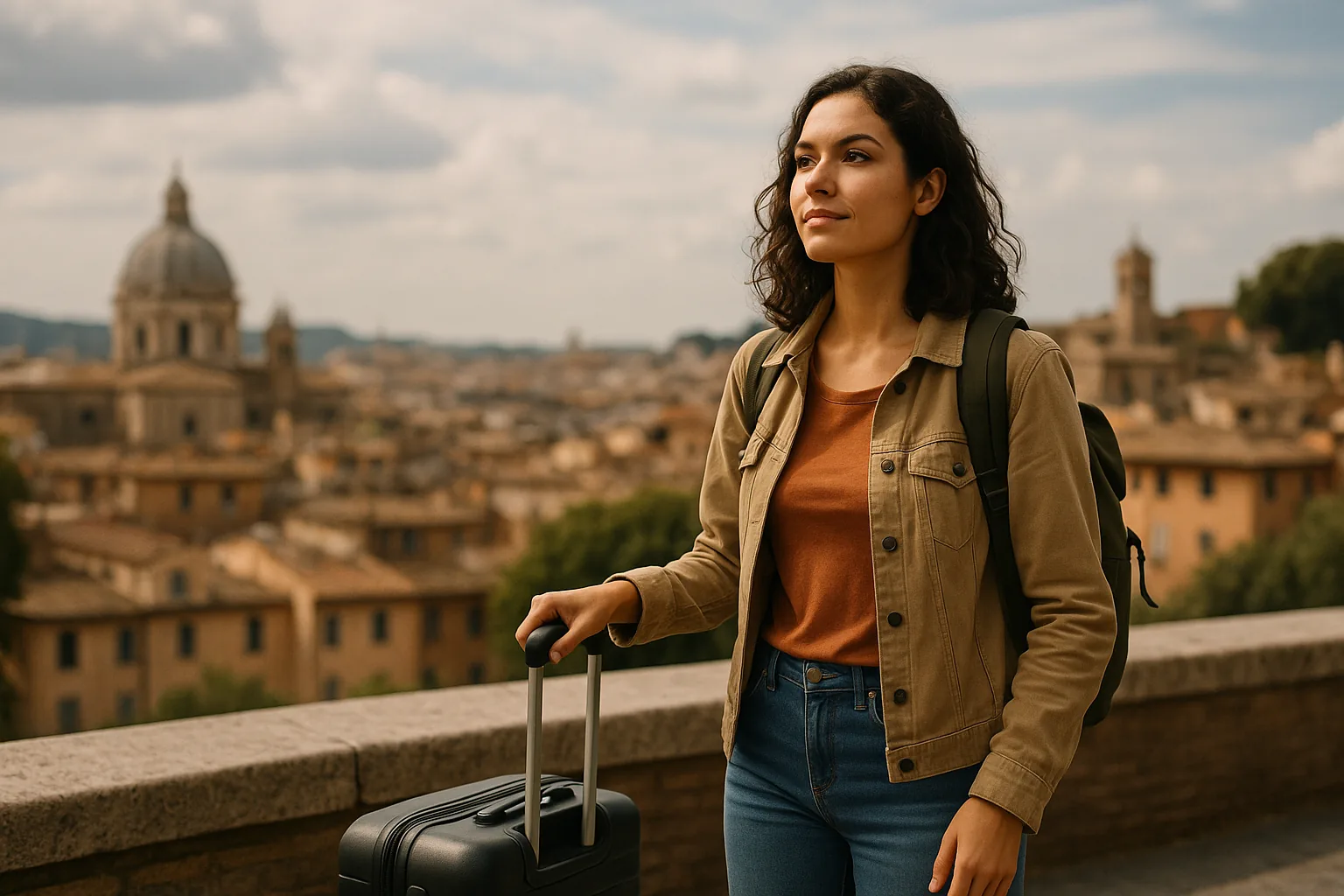
There’s a moment every solo traveler knows — standing in a new city with a bag on your back, no one to check in with, and the whole day wide open. It can feel thrilling and terrifying at exactly the same time. Building solo travel confidence isn’t about eliminating that feeling; it’s about learning to move forward anyway, and discovering that the world is a lot more welcoming than your anxiety wants you to believe.
Why Solo Travel Feels Scary — And Why That’s Completely Normal
Let’s be honest: the fear of traveling alone is real, and it deserves to be acknowledged rather than dismissed. Before your first solo trip, your brain will run through every possible worst-case scenario. What if I get lost? What if I don’t speak the language? What if something goes wrong and there’s nobody there to help?
These fears aren’t signs that you’re not cut out for solo travel. They’re signs that you’re human. The anticipation of being alone in an unfamiliar place activates a very natural protective instinct. The problem is that this instinct tends to dramatically overestimate the danger and underestimate your own capability.
The truth is, most of what makes solo travel feel intimidating exists almost entirely in the planning phase. Once you’re actually out there — navigating a metro system, ordering food in a language you barely speak, figuring out which bus to take — you’re too busy doing to be afraid. The anxiety lives in the “what if.” The confidence grows in the “what is.”
Solo travel confidence is as much about attitude as it is about travel smarts — a point made well by Janice Waugh, who has written extensively about solo travel safety and capability. You can have every guidebook memorized and still feel paralyzed by doubt, or you can step off the plane with zero experience and find your footing within hours. Mindset matters enormously.
Start Small: The Case for Your First Solo Adventure Being a Short One
One of the most practical pieces of advice for building solo travel confidence is also one of the simplest: start small. A short trip to a destination close to home is widely recommended as the ideal way to ease into solo travel without feeling overwhelmed.
Think of it like training for a long-distance run. You don’t start with a marathon. You start with a 5K, then a 10K, gradually building the mental and physical stamina you need. Solo travel works the same way. A weekend trip to a city a few hours away gives you the chance to practice all the core skills — navigating alone, eating alone, making decisions alone — without the high stakes of being on the other side of the world.
Here’s what a “small start” might look like in practice:
- A two-night trip to a nearby city you’ve never properly explored
- A solo day trip somewhere new, using public transport
- Booking yourself into a hostel for one night, even domestically
- Attending a local event, festival, or guided tour on your own
Each of these experiences builds a reference point your brain can return to. Next time the anxiety creeps in, you’ll have proof — your own proof — that you’ve done this before and you were fine. That evidence is incredibly powerful.
Practical Preparation That Actually Builds Confidence
There’s a difference between over-preparing out of fear and preparing strategically to feel capable. The goal isn’t to eliminate all uncertainty — that’s impossible, and honestly, it would take all the adventure out of the experience. The goal is to reduce unnecessary stress so you can focus on actually enjoying where you are.
Know the basics before you go
Research your destination enough to feel oriented, not enough to feel like you’ve already been there. Know how to get from the airport to your accommodation. Understand the local currency and whether cards are widely accepted. Identify one or two neighborhoods worth exploring. That’s genuinely enough to start.
👉 Read also: Solo Travel in Your 20s: How to Build Confidence and Stay Safe
Share your itinerary with someone you trust
This is one of the simplest safety habits you can build. Before any solo trip, let a friend or family member know where you’re staying, your rough plans, and how to reach you. It doesn’t have to be a detailed minute-by-minute schedule — just enough that someone knows where you are in the world. This single habit reduces anxiety dramatically, both yours and theirs.
Have offline access to what you need
Download maps, translation apps, and your accommodation details so they’re accessible without a data connection. Getting lost is part of solo travel — getting completely lost with a dead phone and no backup plan is the part you want to avoid. A small amount of preparation here goes a long way.
Learn a few words of the local language
You don’t need to be fluent. But knowing how to say “hello,” “thank you,” “excuse me,” and “where is the bathroom?” in the local language signals respect and often opens doors. Locals notice when visitors make even a small effort, and that effort frequently turns a transactional exchange into a genuine moment of connection.
Managing Solo Travel Anxiety in the Moment
Even the most experienced solo travelers have moments of doubt on the road. A hostel that looks nothing like the photos. A missed connection. A day when the loneliness hits harder than expected. These moments are real, and they’re worth preparing for mentally as much as logistically.
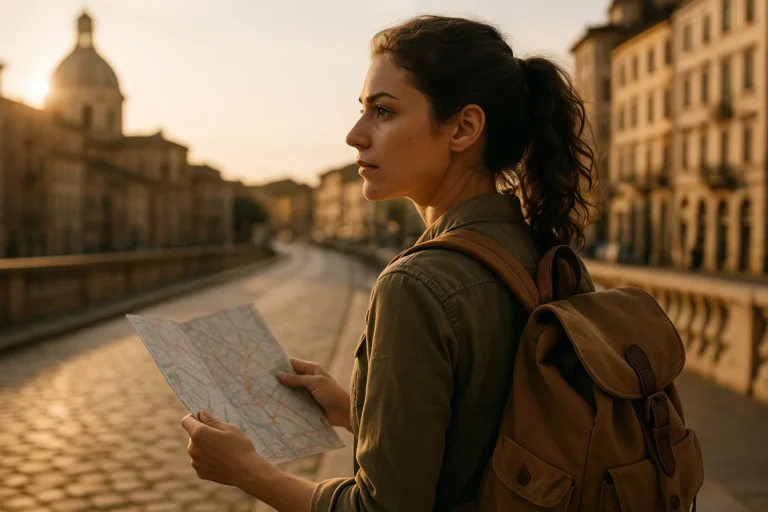
Calming breathing exercises and positive visualization are two tools that travel writers and mental health advocates frequently recommend for managing solo travel anxiety — and they work precisely because they bring you back to the present moment rather than letting your mind spiral into hypothetical disasters.
A simple breathing technique: inhale slowly for four counts, hold for four, exhale for four. Repeat a few times. It sounds almost too simple, but it genuinely interrupts the physiological stress response and gives your nervous system a moment to reset.
Positive visualization is slightly more involved. Before a trip — or during a particularly anxious moment — take a few minutes to picture yourself navigating the situation successfully. See yourself finding the right platform, ordering the meal, arriving safely. Your brain doesn’t fully distinguish between vividly imagined experiences and real ones. You can literally rehearse confidence.
And then there’s journaling — a tool recommended by the Solo Travel Society and others for building and sustaining confidence on the road. Writing down what you did, how you felt, and what surprised you creates a running record of your own capability. On hard days, you can flip back through it and remember: you’ve already done harder things than this.
The Social Side of Solo Travel: Connection Without a Travel Companion
One of the biggest misconceptions about solo travel is that it means being alone all the time. It doesn’t. In fact, many solo travelers find that they connect with more people — and more meaningfully — than they ever did when traveling in a group.
When you’re part of a pair or a group, you’re a self-contained social unit. Other travelers and locals are less likely to approach you, and you’re less likely to seek them out. When you’re solo, you become naturally more open. You sit at the bar instead of a corner table. You say yes to the hostel common room. You ask the person next to you on the train what’s worth seeing at the next stop.
Some of the most memorable travel experiences come from these unplanned exchanges. A local who invites you to join their family’s Sunday lunch. A fellow traveler you meet at a viewpoint who becomes a friend you’re still messaging years later. A street musician who teaches you three chords on a guitar in a town square.
👉 Read also: Planning Your First Solo Trip: A Step-by-Step Blueprint for Unforgettable Travel
None of these things happen on a schedule. They happen because you were open, present, and alone enough to notice them.
If you want to create more opportunities for connection, consider:
- Staying in hostels with active common areas, even if you book a private room
- Joining free walking tours, which are natural social environments for travelers
- Taking a cooking class, language lesson, or craft workshop — any activity with a group element
- Using apps and communities designed for solo travelers to find meetups or travel companions for a day
- Eating at the bar or counter of local restaurants rather than at an isolated table
Building a Confident Traveler Mindset Over Time
Amy-Jo Lynch, PhD, a wellbeing and mental health advocate, has written about solo travel in a way that treats it as an act of genuine self-care — a practice that builds not just travel skills but a broader sense of personal capability. That framing is worth holding onto.
Every solo trip you take deposits something into your confidence account. The first time you navigate a foreign transport system alone, it’s stressful. The fifth time, it’s just Tuesday. The first time you eat at a restaurant alone, you might feel self-conscious. A few trips later, you’ll realize that solo dining is actually one of the quiet pleasures of traveling — full attention on the food, the room, the people around you, without the obligation to hold a conversation.
This accumulation of experience is what real solo travel confidence looks like. It’s not a personality trait you either have or don’t. It’s a skill you build, trip by trip, decision by decision.
Some habits that support that long-term growth:
- Debrief after every trip — even a short one. What went well? What would you do differently? What surprised you about yourself?
- Stay curious rather than certain. Confidence doesn’t mean having all the answers; it means trusting yourself to find them.
- Celebrate small wins. Successfully ordering a meal in a new language is worth acknowledging. These micro-victories compound.
- Connect with a community of solo travelers. Knowing that others have faced the same fears — and kept going — is genuinely motivating. Resources like Solo Traveler World offer practical guidance alongside a sense of community.
Safety Without Paranoia: Finding the Right Balance
Solo travel confidence and solo travel safety aren’t in opposition — they reinforce each other. When you feel safe, you feel confident. When you feel confident, you make better decisions that keep you safe. The goal is awareness, not fear.
Practical safety habits for solo travelers don’t require you to be on guard every second. They just require you to be present and thoughtful. Trust your instincts — if a situation feels off, it probably is, and there’s no social obligation to stay. Keep copies of important documents in a separate location from the originals. Know the local emergency number for wherever you’re traveling. Stay aware of your surroundings, especially in crowded tourist areas where pickpocketing is more common.
None of this should feel oppressive. Think of it as the same kind of awareness you’d apply in any unfamiliar environment at home. The world is not a uniquely dangerous place for solo travelers — it’s just a place that rewards a little common sense and a lot of curiosity.
The most important thing to remember is this: fear is not the same as danger. Fear is a feeling. Danger is a fact. Learning to distinguish between them — to acknowledge the fear without letting it make decisions for you — is one of the most valuable things solo travel will ever teach you.
Start with one small trip. Pack your bag, download your maps, take a breath, and go. The confidence you’re looking for isn’t waiting for you at home — it’s out there, one journey at a time, ready to be discovered.
This article was produced with AI assistance and reviewed editorially.


Japan for First-Timers: A 2-Week Itinerary Beyond the Guidebook

The Solo Travel Confidence Guide: How to Travel Alone Without the Anxiety


