
Italy
Where to Stay in Italy’s Coastal Towns: Cinque Terre, Genoa & Beyond
Find the best accommodation in Cinque Terre’s five UNESCO villages. Compare Monterosso, Vernazzo, Corniglia and more with local tips and Airbnb recommendations.

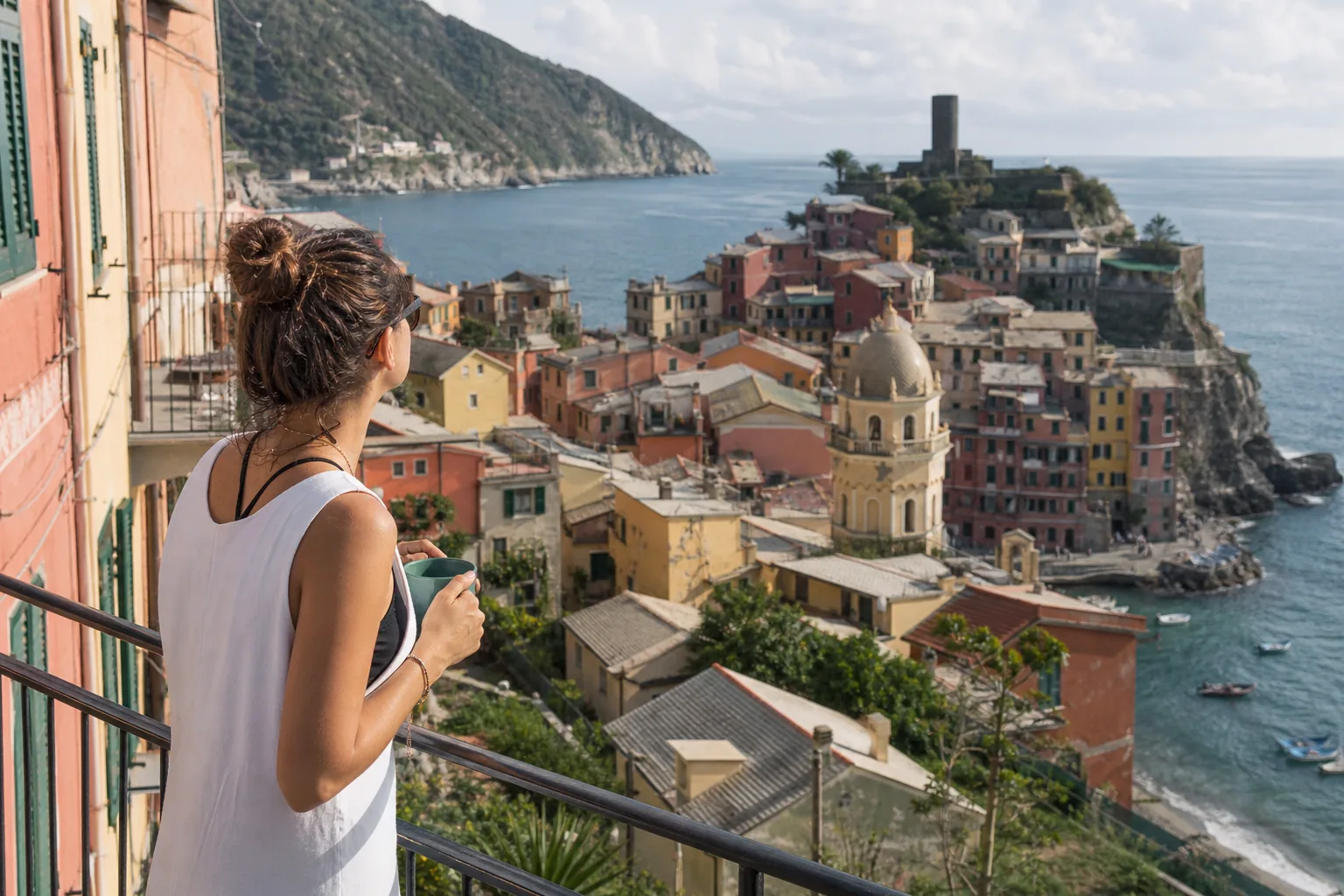
Standing on a narrow terrace somewhere between sea and sky, looking out at pastel-coloured houses stacked against a cliff face, you’ll understand immediately why Italy’s Ligurian coast draws travellers from every corner of the world. But understanding where to stay in Cinque Terre — and whether the famous five villages are even the right base for your trip — takes a little more thought than booking the first place that looks good on a photo. This guide is here to help you figure that out, village by village, neighbourhood by neighbourhood, with honest advice on Genoa too.
What Makes Cinque Terre So Special (and So Complicated)
Cinque Terre is a UNESCO World Heritage Site made up of five villages — Monterosso al Mare, Vernazza, Corniglia, Manarola, and Riomaggiore — all perched on steep hills and cliffs that tumble dramatically into the Ligurian Sea. There is genuinely nowhere else in Italy quite like it. The colours, the hiking trails, the seafood, the way the light hits the water at golden hour — it all adds up to something that stays with you long after you’ve gone home.
Here’s the honest part, though: Cinque Terre is crowded, especially during peak season. The villages are small, the streets are narrow, and in summer the sheer volume of visitors can make it feel less like a hidden gem and more like a very scenic queue. That doesn’t mean you shouldn’t go — it absolutely means you should plan carefully. Where you sleep changes everything about how you experience this place.
The good news is that getting between all five villages is genuinely easy. A regional train connects all the towns, and the journey between any two of them takes just a few minutes. So you don’t need to stay in the most popular village to enjoy the whole area — you can base yourself in a quieter spot and still explore freely.
Breaking Down the Five Villages: Where to Stay in Cinque Terre
Monterosso al Mare — The Most Accessible Village
Monterosso al Mare is the largest of the five villages and the one with the most conventional tourist infrastructure. It has a proper sandy beach — something the other villages largely lack — along with a wider range of accommodation options, restaurants, and shops. If you’re travelling with family or with someone who values a little more comfort and space, Monterosso is widely recommended as the best base. It’s also the easiest village to reach by train from La Spezia or Genoa, making it a practical first stop.
The village splits into two parts: the old town (il paese vecchio) and the newer section near the beach. Staying in the old town puts you right in the middle of the atmosphere — winding lanes, local bars, the smell of focaccia drifting out of bakeries in the morning. The newer part is more relaxed and better for beach access. Both are walkable and connected by a tunnel through the headland.
For accommodation, you’ll find everything from small guesthouses to private room rentals through platforms like Airbnb. Look for places in the old town for the most authentic feel, or opt for something closer to the beach if you want to wake up and walk straight to the water. Book well in advance — availability disappears fast, especially between June and September.
Vernazza — The Postcard Village
If Cinque Terre has a flagship image, it’s probably Vernazza. The small natural harbour, the coloured houses, the medieval watchtower — it’s the kind of place that makes you stop mid-sentence and just stare. Staying here means waking up inside that image, which is a genuinely special experience.
The trade-off is that Vernazza is tiny, and accommodation options are limited. Most places to stay are private rooms or apartments rented directly by local families or through short-term rental platforms. They tend to be atmospheric and personal — you might be staying in a centuries-old building with thick stone walls and a terrace overlooking the water. Prices reflect the demand. If you find something available at a reasonable rate, don’t hesitate too long.
→ Read also: Skip the Tourist Trail: Where to Stay in Italy's Best-Kept Secrets
The village gets very busy during the day when day-trippers arrive by train, but evenings are calmer and genuinely lovely. Staying overnight means you get to experience Vernazza when it belongs to the people who actually live there — and that’s worth a lot.
Corniglia — The Quiet One
Corniglia sits higher than the other villages and doesn’t have direct sea access — you reach the water via a steep path down the cliff. It also doesn’t have a train station at sea level; you arrive at a station below and climb a long staircase (or take a shuttle bus) to reach the village proper. That combination keeps the crowds thinner here than anywhere else in Cinque Terre.
If you’re the kind of traveller who values peace over convenience, Corniglia might be your favourite. It’s small, genuinely local-feeling, and the views from the village are extraordinary. Accommodation options are the most limited of all five villages, but what exists tends to be charming and well-priced relative to Vernazza or Monterosso.
Manarola — Romantic and Photogenic
Manarola is perhaps the most photographed village in Cinque Terre, and for good reason. The cluster of coloured houses above the rocky inlet, the fishing boats, the vineyard terraces — it’s visually stunning in a way that feels almost unreal. It’s a popular spot for couples, and the atmosphere in the evenings, when the day visitors have gone, is warm and relaxed.
Staying here means navigating very steep, narrow streets to reach most accommodation. That’s part of the charm, but it’s worth knowing before you arrive with a large suitcase. Many local hosts rent rooms or apartments directly, and the personal touches — a glass of local sciacchetrà wine left out for you, a handwritten note about the best spots to watch the sunset — are exactly the kind of thing that makes a trip memorable.
Riomaggiore — The Southern Gateway
Riomaggiore is the southernmost village and often the first one travellers reach when arriving from La Spezia. It has a lively, slightly more urban energy compared to the other villages, with a good mix of bars, restaurants, and accommodation. The main street runs steeply down to a small harbour, and the views back up toward the village from the water are striking.
It tends to attract a younger crowd and has a bit more of a social atmosphere at night. If you want to meet other travellers without sacrificing the Cinque Terre experience, Riomaggiore is a solid choice. Accommodation ranges from hostel-style rooms to private apartments, and prices are generally slightly lower than Vernazza or Manarola.
Thinking About Timing and Budget
Wherever you decide to stay, timing matters enormously in Cinque Terre. The summer months — roughly late June through August — are the busiest and most expensive period. Accommodation books out months in advance, prices are at their peak, and the villages can feel genuinely overwhelming during the middle of the day. If you can visit in May, early June, or September, you’ll find a noticeably different experience: fewer crowds, lower prices, and the same extraordinary scenery.
Late autumn and winter are quieter still, and some accommodation closes during the off-season, but what remains open is often significantly cheaper. The hiking trails can be muddy and some sections close for maintenance, but the villages themselves are peaceful in a way that’s hard to find in summer. If you’re flexible, this is worth considering.
Budget-wise, Cinque Terre is not the cheapest part of Italy. Private room rentals and Airbnb-style accommodation tend to offer better value than hotels, and staying in Corniglia or Riomaggiore rather than Vernazza can make a meaningful difference to your costs. Cooking some of your own meals — easy if you rent a place with a kitchen — also helps stretch your budget without missing out on the experience.
→ Read also: Beyond Capri: How to Experience Greek Islands & Italian Coastlines Without the Crowds (2026)
Genoa: A Different Kind of Coastal Experience
Genoa doesn’t always make it onto the Cinque Terre itinerary, but it absolutely deserves your attention. This is a city with a deep, layered history rooted in seafaring, Mediterranean trade, and centuries of maritime power. Walking through the caruggi — the ancient narrow alleyways of the old city — feels like stepping into something genuinely historic rather than something preserved for tourists.
The city is home to the Aquarium of Genoa, which was the second largest aquarium in the world at the time of its inauguration — a remarkable attraction that’s especially worth visiting if you’re travelling with others who want variety beyond coastal villages. But the aquarium is just one piece of a much larger picture. Genoa has world-class art, a vibrant street food scene (the city is the birthplace of pesto genovese), and a port area that’s been beautifully redeveloped into a lively cultural hub.
From a practical standpoint, Genoa is well-connected by train to the Cinque Terre villages, making it a viable base if you want more space, more accommodation options, and lower prices than you’d find in the villages themselves. It’s also an interesting destination in its own right — not just a gateway. Staying a night or two in Genoa before or after your time in Cinque Terre adds real depth to a Ligurian trip.
Neighbourhood Picks in Genoa
Genoa’s historic centre — one of the largest medieval old towns in Europe — is the most atmospheric place to stay. The caruggi can feel intense and labyrinthine, but that’s part of what makes them fascinating. Look for accommodation near Via Garibaldi, a UNESCO-listed street lined with Renaissance palaces, for a combination of history and convenience.
The Porto Antico area, around the old port, is more open and modern, with good restaurants, the aquarium, and easy access to the waterfront. It’s a good choice if you want a cleaner, more spacious feel without straying too far from the city’s character. Short-term rental apartments in both areas are widely available and tend to offer good value compared to the Cinque Terre villages.
If you’re on a tighter budget, the neighbourhoods slightly further from the centre — areas like Marassi or near the Brignole train station — offer cheaper options with easy metro and bus connections into the heart of the city. Genoa has a functioning public transport network that makes it genuinely easy to get around without spending much.
Making the Most of the Italian Riviera Beyond the Famous Names
The Ligurian coast stretches well beyond Cinque Terre and Genoa, and there are smaller towns along the Italian Riviera worth considering as bases — particularly if you want to avoid the most crowded spots while still being close enough to visit them on day trips. Towns like Levanto (just north of Cinque Terre on the same train line) or La Spezia (the main city just to the south) offer more accommodation options, lower prices, and a more everyday Italian atmosphere, while keeping the villages within easy reach.
Levanto in particular has a decent beach, a relaxed pace, and a small but genuine local community. It’s a good option if you want to feel like you’re living in a place rather than visiting it — picking up groceries at the market, eating at places where menus aren’t translated into six languages, sitting in a square where locals actually sit. That kind of experience is harder to find when you’re staying inside the Cinque Terre villages themselves.
You can explore the official Cinque Terre official tourism site for up-to-date information on trail conditions, transport passes, and any access restrictions that apply to the area — it’s worth checking before you go, especially if you’re planning to hike.
Wherever you end up sleeping on this stretch of coastline, the Ligurian experience has a way of getting under your skin. The food is exceptional, the scenery is genuinely extraordinary, and the combination of history, sea, and mountain landscape is unlike anywhere else in Europe. Plan carefully, book early, stay curious — and let the place surprise you in ways no photograph ever quite manages to capture.
This article was produced with AI assistance and reviewed editorially.


Where to Stay in Italy’s Coastal Towns: Cinque Terre, Genoa & Beyond

Skip the Tourist Traps: Where Young Travelers Actually Stay in Toledo, Málaga & Salamanca


