
Itineraries
Japan for First-Timers: A 2-Week Itinerary Beyond the Guidebook
Plan your first two weeks in Japan with a practical itinerary that goes beyond guidebook basics. Discover Tokyo, Kyoto, and regional gems with real tips for authentic tra

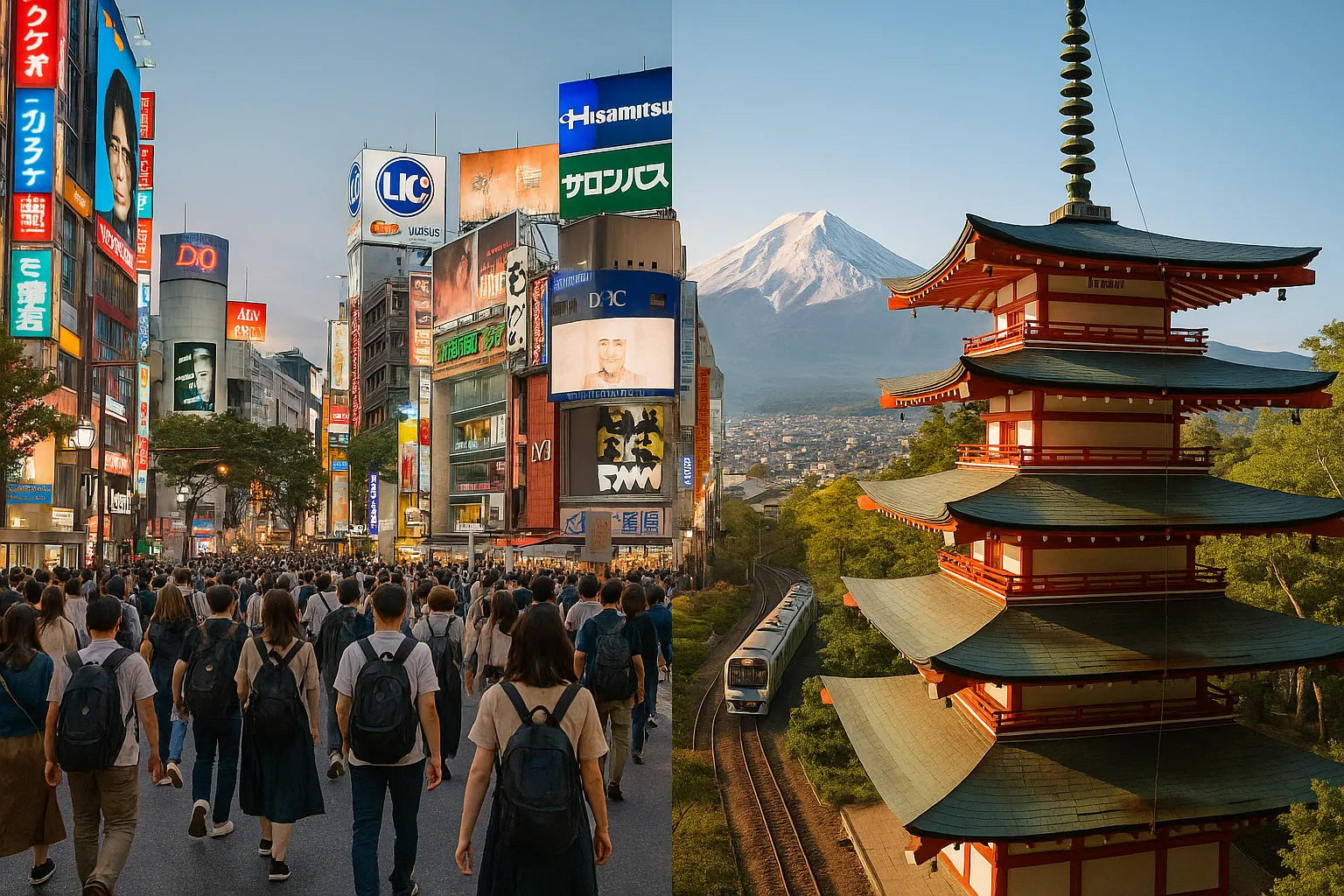
Planning a japan two week itinerary for the first time can feel like trying to read a map written in a language you don’t speak yet — exciting, a little overwhelming, and full of possibilities you haven’t even imagined. Japan is currently one of the world’s fastest-growing travel destinations, and it’s easy to see why: ancient temples sit next to neon-lit convenience stores, bullet trains slice through mountain scenery, and every city has its own personality. Two weeks is genuinely enough time to get a real feel for this country — not just the highlights reel, but the rhythm of it. This guide is here to help you structure those 14 days in a way that goes beyond ticking boxes.
Why Two Weeks Is the Sweet Spot for Japan
A long weekend in Japan would leave you jet-lagged and barely scratching the surface. A month would be ideal, but two weeks? That’s the sweet spot. You have enough time to move between cities, slow down in a few places, and actually absorb what you’re experiencing rather than just photographing it and moving on.
Experienced travelers who have spent years exploring Japan consistently point to 14 days as the ideal starting point for first-timers. It gives you space to spend four nights in Tokyo without feeling rushed, linger in Kyoto long enough to discover streets that aren’t on any map, and still fit in a few day trips that will become the stories you tell when you get home.
The other reason two weeks works so well is that Japan rewards a slower pace. The country has a culture of detail — in its food, its architecture, its hospitality — and you only notice those details when you’re not sprinting from one landmark to the next. Give yourself permission to sit in a coffee shop for an hour, wander without a destination, and get slightly lost in a neighborhood you didn’t plan to visit.
A Practical Two-Week Structure That Actually Works
There are several well-tested ways to structure a japan two week itinerary, and the best ones share a common logic: start in Tokyo, move southwest along the main island of Honshu, and end in Osaka before flying home. This route follows the shinkansen (bullet train) network naturally and avoids unnecessary backtracking.
One solid framework looks like this:
- Days 1–4: Tokyo — your entry point and sensory introduction to Japan
- Days 4–5: Hakone or Kawaguchiko — mountain scenery, hot springs, and views of Mount Fuji
- Days 6–9: Kyoto and Nara — temples, bamboo groves, and deer that walk right up to you
- Days 10–11: Osaka — street food, nightlife, and a completely different energy
- Days 12–13: Himeji and Hiroshima — history, reflection, and the island of Miyajima
- Day 14: Return to Tokyo for your flight home
An alternative route, especially popular among travelers who want more variety in landscape and culture, replaces the Hakone leg with a stop in Kanazawa (one night) and Takayama (two nights), then loops through Kyoto, Hiroshima, and Osaka. Takayama in particular is one of those places that surprises people — a beautifully preserved mountain town that feels like stepping into a different century, especially in the early morning before the day-trippers arrive.
Both structures work. The key is choosing one and committing to it rather than trying to squeeze in every possible destination. Japan will still be there for a second trip.
Tokyo: Embrace the Overload, Then Find Your Rhythm
Tokyo will hit you like a wave. Even if you’ve traveled extensively, there’s nothing quite like arriving in a city of this scale and density for the first time. The subway map looks like a plate of spaghetti. The streets are immaculate. A convenience store snack at 2am is genuinely one of the best meals you’ll have. Lean into all of it.
👉 Read also: Budget Stays in Japan: Capsule Hotels, Airbnbs & Guesthouses Across Tokyo, Kyoto & Mt. Fuji
Give yourself at least four nights in Tokyo and resist the urge to plan every hour. Some of the best Tokyo experiences happen when you follow a street that looks interesting, end up in a quiet residential neighborhood, and find a tiny ramen shop with eight seats and a line out the door.
That said, a few areas are worth seeking out deliberately. Shinjuku at night is a full sensory experience — the neon, the crowds, the narrow alleyways of Golden Gai packed with tiny bars that each hold maybe ten people. Yanaka, by contrast, is one of Tokyo’s older neighborhoods, where the pace slows down and you can browse independent shops and old temples without feeling like you’re in the middle of a tourist attraction. Harajuku and Shibuya offer the fashion and pop culture side of the city, while Asakusa gives you a taste of old Tokyo with the Senso-ji temple and its surrounding market streets.
One practical tip: buy a Suica or Pasmo card at the airport. It’s a rechargeable IC card that works on almost every train, subway, and bus in Japan, and you can even use it at convenience stores and vending machines. It will save you from fumbling with coins and figuring out ticket machines every time you need to move.
Getting Out of the Cities: Where Japan Surprises You Most
The cities are extraordinary, but Japan’s countryside and smaller towns are where many travelers say the trip really clicked for them. The contrast between urban Japan and rural Japan is striking, and experiencing both is what makes a two-week itinerary feel genuinely complete.
Hakone, about an hour and a half from Tokyo by train, offers volcanic landscapes, open-air museums, and the kind of views of Mount Fuji that make you understand why the mountain has been a subject of art for centuries. If the weather cooperates, waking up early for a clear view across the lake is one of those moments that stays with you. The area is also known for its onsen (hot spring baths) — and if you haven’t experienced soaking in a traditional Japanese hot spring after a day of walking, you’re missing one of the great pleasures of traveling in this country.
Takayama, tucked into the Japanese Alps, is a different kind of discovery. The old town area, Sanmachi Suji, is lined with traditional merchant houses, sake breweries, and craft shops. The morning markets are small and genuine, selling local produce and handmade goods to both locals and visitors. It’s the kind of place where you slow down without even trying to.
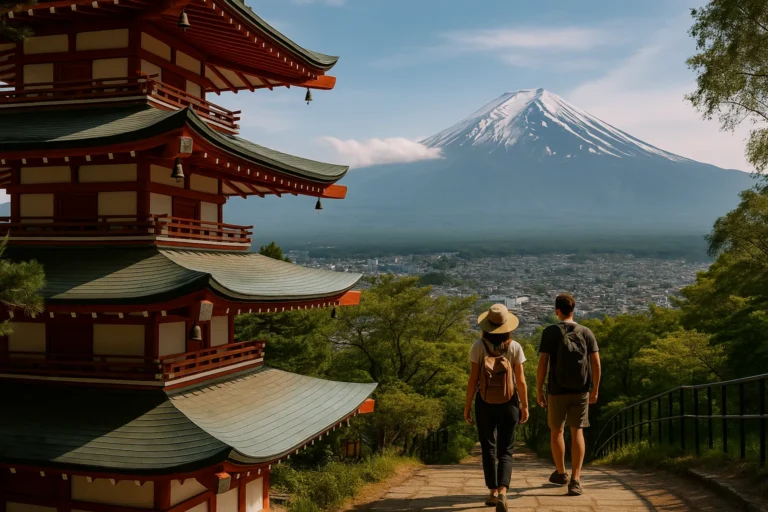
Shirakawa-go is a short bus ride from Takayama and worth every minute of the journey. The village is famous for its gasshō-zukuri farmhouses — steep thatched-roof structures designed to withstand heavy mountain snowfall — and the whole place feels almost impossibly preserved. Go early, before the tour buses arrive, and you’ll have the misty mountain scenery largely to yourself.
Kyoto: More Than Temples and Tourists
Kyoto is the city most people picture when they think of Japan — torii gates, geisha districts, bamboo groves, ancient temples. And yes, all of that is real and worth experiencing. But Kyoto also has a quieter, less photographed side that rewards the travelers who look for it.
Plan to spend at least four nights in Kyoto, and spread your visits to the major sites across different times of day. The Fushimi Inari shrine, with its thousands of orange torii gates climbing up the mountain, is genuinely one of the most striking places in Japan — but it’s also one of the most crowded. Go at dawn or in the late evening and you’ll experience something completely different from the midday rush.
The Gion district, Kyoto’s historic geisha quarter, is best explored on foot in the early morning or after dark. The narrow stone-paved lanes of Hanamikōji feel like they belong to another era. You might catch a glimpse of a maiko (apprentice geisha) heading to an appointment — a moment that feels genuinely rare rather than staged.
👉 Read also: First Trip Abroad: The Complete Checklist for Young Travelers (Without the Overwhelm)
From Kyoto, a day trip to Nara is easy and memorable. The deer in Nara’s park are famously unafraid of humans — they’ll approach you directly, nudge your bag, and occasionally steal your snacks. It sounds like a novelty, but there’s something quietly wonderful about walking among hundreds of deer in a landscape of ancient shrines and cedar trees.
Osaka, Hiroshima, and the Southern Stretch
After Kyoto’s cultural intensity, Osaka arrives like a breath of fresh air. The city has a reputation for being louder, friendlier, and more food-obsessed than anywhere else in Japan — and that reputation is well-earned. Takoyaki (octopus balls), okonomiyaki (savory pancakes), and kushikatsu (deep-fried skewers) are all local specialties, and the best versions are found in small, unpretentious places where the cook is also the owner.
The Dōtonbori area is the visual heart of Osaka — neon signs, canal-side restaurants, and an energy that peaks well after midnight. But wander a few streets away and you’ll find quieter neighborhoods with covered shopping arcades, local izakayas, and a pace that feels more lived-in and less performative.
Hiroshima is a city that asks something of you emotionally. The Peace Memorial Museum and the Atomic Bomb Dome are sobering and important — the kind of places that shift your perspective in a way that no Instagram post can really capture. Give yourself time to sit with what you experience there rather than rushing through. The city itself has rebuilt into something vibrant and welcoming, and that contrast — between its history and its present — is part of what makes it one of the most meaningful stops on any Japan itinerary.
From Hiroshima, a short ferry ride takes you to Miyajima Island, home to the famous torii gate that appears to float on the water at high tide. It’s one of those images you’ve seen a hundred times, but standing in front of it in person is still genuinely affecting. Stay past the day-trip crowds if you can — the island at dusk, with the deer wandering the quiet streets and the lanterns lighting up, is a different experience entirely.
Navigating Japan as a First-Timer: What to Know Before You Go
Japan has a well-earned reputation for being one of the most traveler-friendly countries in the world, but it still has its own logic that takes a little time to understand. Here are some practical things that will make your japan two week itinerary run more smoothly.
- Get a Japan Rail Pass before you leave home. If you’re planning to travel between multiple cities on the shinkansen, a JR Pass will almost certainly save you money. It must be purchased outside Japan.
- Cash still matters. Japan is gradually becoming more card-friendly, but many smaller restaurants, temples, and rural businesses are still cash-only. Keep yen on you, especially outside major cities.
- Pocket Wi-Fi or a local SIM card is worth every yen. Navigation, translation apps, and real-time train schedules will be your lifeline.
- Download Google Translate and use the camera function for menus and signs. It’s not perfect, but it’s genuinely useful.
- Convenience stores are your friends. Japanese konbini — 7-Eleven, FamilyMart, Lawson — are a world apart from their equivalents elsewhere. Fresh food, ATMs that reliably accept foreign cards, phone charging, and a surprisingly good selection of snacks and meals.
- Book accommodation in advance, particularly in Kyoto. The city has high demand year-round, and good-value places fill up fast.
- Learn a few basic phrases in Japanese. Arigatō gozaimasu (thank you), sumimasen (excuse me), and eigo ga hanasemasu ka? (do you speak English?) will go a long way. People genuinely appreciate the effort.
- Respect the unwritten rules. Don’t eat while walking (outside of festival stalls), speak quietly on trains, and always remove your shoes when entering a traditional space. These aren’t rigid rules enforced by anyone — they’re just part of how the culture works, and following them makes you a more considerate traveler.
Budget-wise, a reasonable estimate for two weeks in Japan — covering accommodation, food, transport within the country, and entrance fees — sits around ¥263,000 (roughly $1,750 USD) per person, not including international flights. You can spend less by staying in hostels and eating mostly from convenience stores and cheap noodle shops, or more if you want to try a traditional ryokan (inn) and a high-end omakase meal. Both are worth it if you can swing it. For official entry requirements and visa information, the Japan Tourism Agency’s official travel site is the most reliable and up-to-date source.
The Mindset That Makes All the Difference
The travelers who get the most out of Japan are the ones who arrive with curiosity rather than a checklist. Yes, you should see Fushimi Inari and the Shibuya Crossing and the deer in Nara. These things are famous for a reason. But the moments that will stay with you longest are usually the unplanned ones — a conversation with a local who speaks almost no English but insists on walking you to the right bus stop, a tiny restaurant where you order by pointing at a plastic display and end up eating the best meal of your trip, a mountain path that you almost didn’t take because it wasn’t on any list.
Japan rewards the traveler who pays attention. The details are everywhere — in the way food is presented, in the seasonal decorations outside a neighborhood shrine, in the quiet efficiency of a train that arrives at the exact second it was scheduled. Part of what makes a well-planned japan two week itinerary work is leaving enough space in it for the country to surprise you.
Come with an open schedule, a charged phone, a sense of humor about getting slightly lost, and a genuine willingness to step into experiences you didn’t plan. Japan will take care of the rest — and you’ll leave with stories you’ll still be telling years from now.
This article was produced with AI assistance and reviewed editorially.


Japan for First-Timers: A 2-Week Itinerary Beyond the Guidebook

The Solo Travel Confidence Guide: How to Travel Alone Without the Anxiety


