
Asia
Budget Stays in Japan: Capsule Hotels, Airbnbs & Guesthouses Across Tokyo, Kyoto & Mt. Fuji
Find affordable places to stay across Japan with our guide to capsule hotels in Tokyo, Airbnb neighborhoods in Kyoto, and budget lodging near Mt. Fuji.

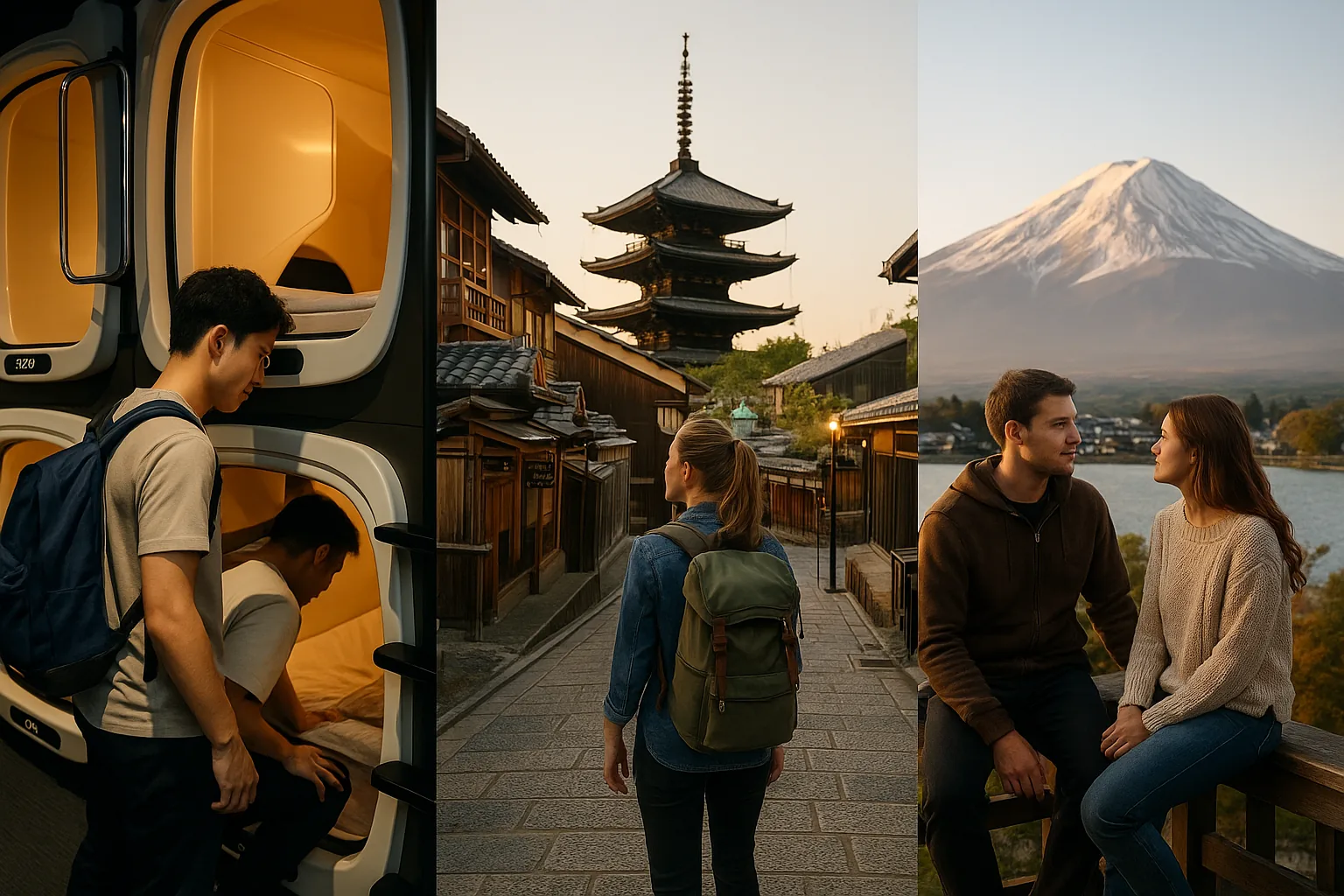
Japan has a way of making you feel like you’ve stepped into another world — vending machines on every corner, train systems that run to the second, and streets that somehow manage to be both electric and peaceful at the same time. The good news is that experiencing all of this doesn’t have to drain your bank account. Budget accommodation in Japan is genuinely excellent, and in many ways, staying in a capsule hotel or a local guesthouse gives you a more authentic slice of Japanese life than any luxury hotel ever could. Whether you’re navigating the neon chaos of Tokyo, wandering the temple-lined streets of Kyoto, or chasing the silhouette of Mt. Fuji at dawn, there’s a smart, affordable place to rest your head — you just need to know where to look.
Why Budget Accommodation in Japan Punches Above Its Weight
Let’s get one thing straight: affordable doesn’t mean uncomfortable in Japan. The country has a deeply ingrained culture of hospitality — known as omotenashi — and that philosophy extends even to the most wallet-friendly places to stay. Cleanliness is non-negotiable. Service is attentive. And the level of thoughtfulness you’ll find in a modest guesthouse or a well-run capsule hotel would put many mid-range hotels in other countries to shame.
Japan offers a genuinely wide spectrum of budget-friendly options. You’ll find hostels, dormitories, inexpensive business hotels, capsule hotels, manga cafes, and 24-hour bath facilities — all designed to give travelers somewhere comfortable and affordable to stay. Each option has its own personality, and choosing the right one depends on what kind of experience you’re after.
One practical thing to keep in mind: timing matters enormously when it comes to prices. Hotel rates across Japan spike significantly from mid-March through mid-May (cherry blossom season), throughout August, and around New Year. October and November also see higher prices, especially in places like Kyoto where the autumn leaf colours draw huge crowds. If you have flexibility, traveling in December through February, June, or September will reward you with noticeably lower rates. That’s when your budget stretches furthest.
The Capsule Hotel Experience: Tokyo’s Most Iconic Budget Stay
If there’s one type of accommodation that perfectly captures the ingenuity of Japanese culture, it’s the capsule hotel. The concept is simple: instead of a traditional room, you sleep in a compact, pod-like space — roughly the size of a large bunk — stacked alongside others in a long row. It sounds minimal, and it is, but the execution is anything but basic.
A typical capsule comes equipped with a TV, Wi-Fi, and either a privacy curtain or a sliding door to give you your own little world. Shared bathrooms, lockers for your belongings, and communal lounges are standard. Many capsule hotels also feature onsen-style baths or hot tubs, which transforms the whole experience from simply “cheap sleep” to something genuinely worth seeking out.
Capsule hotels typically charge between 3,000 and 5,000 yen per night — roughly the equivalent of a mid-range meal in many European cities. For that price, you get a clean, tech-equipped sleeping space in some of the most central locations imaginable, since capsule hotels are usually clustered around major train stations in large cities. In Tokyo, that means places like Shinjuku, Akihabara, and Asakusa — neighbourhoods that put you right in the heart of the action.
Shinjuku is a particularly good base for first-time visitors to Tokyo. It’s one of the city’s main transport hubs, meaning you can reach virtually any neighbourhood quickly and without hassle. Staying near Shinjuku Station also means you’re within walking distance of Kabukicho, Golden Gai, Omoide Yokocho (Memory Lane), and some of the city’s most vibrant night markets. A capsule hotel here isn’t just a place to sleep — it’s a launchpad.
Premium and themed capsule hotels have also become increasingly popular around Tokyo, Kyoto, and Osaka, with slightly higher prices but a noticeably elevated experience. Think mood lighting, designer interiors, and curated common spaces that feel more like boutique hotels than budget accommodation. They’re worth considering if you want the capsule experience with a little extra style.
👉 Read also: Where Young Travelers Stay: 15 Hidden Gem Destinations Across Europe, Asia & Beyond (2026)
Capsule Hotel Etiquette: What You Need to Know Before You Go
Stepping into a capsule hotel for the first time can feel slightly overwhelming, especially if you’re not sure what to expect. A few basics will make the whole experience feel natural almost immediately.
Capsule hotels traditionally catered to business travellers — specifically men who’d missed the last train and needed somewhere close to the station to crash. That history is still reflected in how many places operate today. Many capsule hotels offer gender-segregated sleeping floors or entirely separate buildings for female guests, and the number of places welcoming women has grown significantly in recent years. Always check the gender policy before booking, and look for hotels that specifically advertise female-friendly facilities if that’s relevant to you.
- Shoes off at the entrance. This is non-negotiable in Japan, and capsule hotels are no exception. You’ll be given slippers or directed to a locker for your footwear.
- Noise awareness. The sleeping areas are shared spaces. Keep conversations to a minimum near the pods, and use headphones if you’re watching something on your phone.
- Respect the lockers. Your valuables go in a locker — don’t bring large luggage into the sleeping area. Most capsule hotels have size restrictions on what you can bring to your pod.
- Shared bathrooms are communal. Be mindful of time, especially during peak morning hours when everyone’s getting ready at once.
- Tattoos and onsen facilities. If your capsule hotel has a shared bath, be aware that some places in Japan still maintain policies around visible tattoos. Check in advance if this applies to you.
Once you get the hang of it, the capsule hotel rhythm becomes oddly satisfying. There’s something freeing about having exactly what you need and nothing more.
Staying in Kyoto on a Budget: Guesthouses and Local Neighbourhoods
Kyoto operates at a different pace to Tokyo. The streets are quieter, the history is heavier, and the whole city seems to exhale slowly. Your accommodation here should match that energy — and fortunately, Kyoto has some of Japan’s best guesthouses and machiya (traditional townhouse) stays for travellers who want something with real character.
Guesthouses in Kyoto tend to occupy older buildings, often in residential neighbourhoods away from the main tourist drag. That’s actually a feature, not a bug. Waking up in a quiet alley, cycling to a temple before the crowds arrive, and grabbing breakfast from a local bakery rather than a hotel buffet — that’s the Kyoto experience worth having.
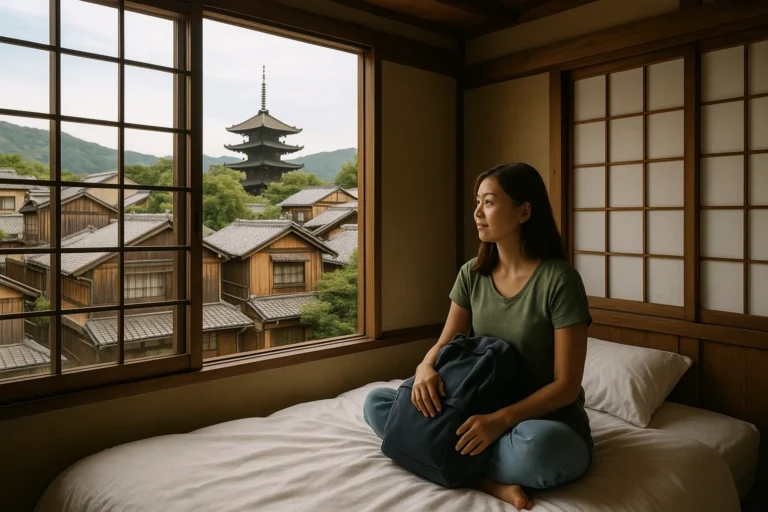
When choosing where to stay in Kyoto, think about what you want to be close to. The Gion and Higashiyama areas put you near the city’s most iconic sights — traditional wooden streets, geisha districts, and the path to Fushimi Inari. These areas tend to be pricier, but budget guesthouses do exist if you book early. Neighbourhoods further from the tourist centre, like areas around Nishiki Market or the Kyoto Station precinct, offer more affordable options with excellent transport links.
Airbnb-style rentals have also become a popular choice for budget travellers in Kyoto, particularly for small groups or anyone wanting a self-catering setup. Renting a traditional townhouse — even a small one — for a few nights gives you a completely different perspective on the city. You’re not just visiting Kyoto; you’re briefly living in it. That shift in experience is hard to put a price on.
Bear in mind that Kyoto is one of Japan’s most popular autumn destinations, which means October and November prices rise sharply. If you’re visiting for the maple leaves, book your accommodation months in advance and be prepared to pay a little more. The off-season, particularly late January through February, offers a quieter and more affordable Kyoto that most tourists never see.
Budget Accommodation Near Mt. Fuji: Worth Every Yen
Mt. Fuji doesn’t just appear in photographs — it looms. Standing at the base of Japan’s most iconic mountain, watching clouds drift around its peak, is one of those travel moments that stays with you long after you’ve gone home. And the good news is that the area around Mt. Fuji has a solid range of budget-friendly accommodation options for travellers who want to experience it properly.
👉 Read also: Where to Stay in 15 Underrated Destinations Across Asia, Europe & Latin America (2026 Guide)
The Fuji Five Lakes region — particularly around Lake Kawaguchiko — is the most popular base for budget travellers. This area offers hostels, guesthouses, and small family-run inns that sit right on the lake with unobstructed views of the mountain on clear days. Waking up to that view costs far less than you’d expect.
For those planning to actually climb Mt. Fuji, the official climbing season runs through the summer months, and mountain huts on the trails offer basic overnight accommodation. These aren’t luxury stays — you’re essentially sleeping in a communal bunk space — but they give you the chance to time your ascent for sunrise from the summit, which is an experience in a completely different category. Book mountain huts well in advance; they fill up quickly during the climbing season.
Hostels in the Fuji area tend to be social, outdoors-oriented places where you’ll meet other travellers doing similar things. Many offer bike rentals, hiking gear, and organised excursions. It’s the kind of place where you arrive as a solo traveller and leave with plans to meet people in the next city.
If you’re not climbing but just want to take in the scenery, a two-night stay around the lakes gives you enough time to explore, catch Mt. Fuji at different times of day (early morning light is something else), and visit some of the quieter spots in the region that most day-trippers miss entirely.
Practical Tips for Booking Budget Accommodation Across Japan
Finding great budget accommodation in Japan is easier than ever, but a few smart habits will save you both money and stress.
- Book early for peak seasons. Cherry blossom (mid-March to mid-May), summer (August), and autumn foliage (October–November) periods fill up fast. The best budget options go first.
- Use the off-season to your advantage. December through February, June, and September offer lower rates across the board. You’ll also deal with fewer crowds at major sights.
- Consider location over price. A slightly more expensive place near a major train station can save you significant money in transport costs over a multi-day stay.
- Read recent reviews carefully. Japan’s accommodation standards are generally high, but reviews will tell you things that listings won’t — like whether the Wi-Fi is reliable or how the shared bathroom situation actually works.
- Check cancellation policies. Japan’s travel landscape can shift, and flexible booking options are worth a small premium, especially if you’re traveling spontaneously.
- Look at official tourism resources. Japan Guide’s accommodation overview is a reliable, regularly updated resource for understanding your options across different regions and budget levels.
One more thing: don’t overlook manga cafes and 24-hour bath facilities as genuine accommodation options in a pinch. They’re not glamorous, but they’re part of Japan’s budget travel ecosystem and can be surprisingly comfortable for a night — especially if you’ve arrived late and need somewhere close to the station before moving on the next morning.
The Real Value of Staying Local
There’s a version of Japan that exists behind the tourist sites — in the side streets, the neighbourhood konbini at midnight, the quiet temple courtyards before the tour groups arrive. Budget accommodation puts you closer to that version of the country. When you’re staying in a guesthouse run by a local family, or sharing a common room with travellers from six different countries, or lying in your capsule pod listening to the city hum outside — that’s when Japan starts to feel real.
Spending less on your accommodation also means spending more on the things that actually make a trip memorable: a bowl of ramen at a counter with ten seats, a day trip to somewhere not in the guidebook, a train ticket to a city you added at the last minute. Budget accommodation in Japan isn’t a compromise — it’s a choice that opens doors rather than closing them.
Japan rewards the curious traveller who’s willing to look beyond the obvious. Your capsule hotel in Shinjuku, your guesthouse in a Kyoto alley, your lakeside hostel with a view of Fuji — these aren’t just places to sleep. They’re part of the story you’ll be telling when you get home.
This article was produced with AI assistance and reviewed editorially.


Ecuador’s Mountain Capital: Quito as a Base for Jungle, Amazon & Galápagos Adventures

Budget Stays in Japan: Capsule Hotels, Airbnbs & Guesthouses Across Tokyo, Kyoto & Mt. Fuji


