
Asia
Backpacking Sri Lanka: Hidden Spots Beyond the Tourist Trail
Discover authentic backpacking Sri Lanka experiences in lesser-known regions like Knuckles Mountain Range and Sinharaja Forest, with insider tips for independent traveler

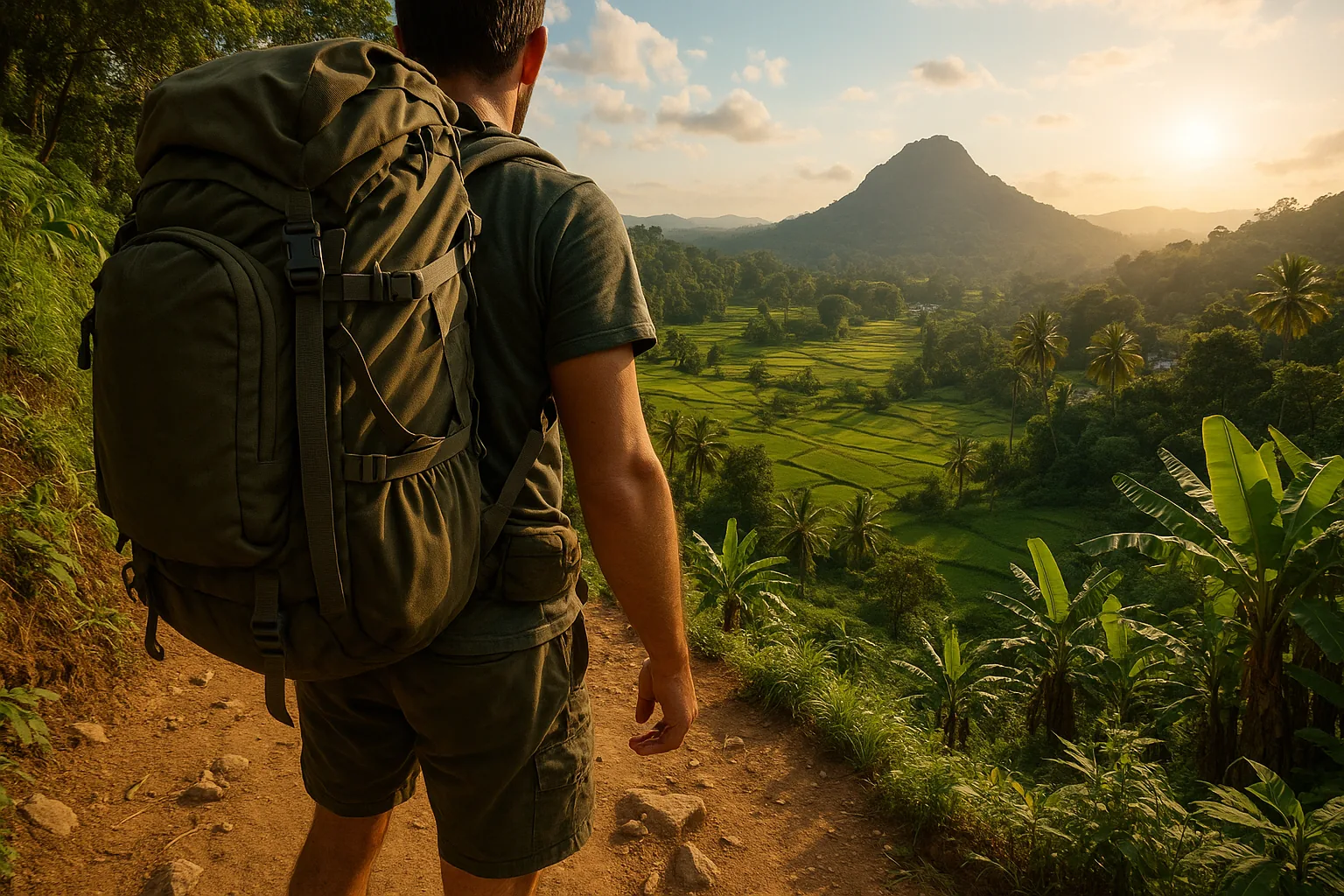
Sri Lanka is one of those places that gets under your skin fast. You arrive, you smell the spices in the air, you spot a painted bus rattling past a colonial-era clock tower, and you think — yes, this is it. For anyone serious about backpacking Sri Lanka, the island delivers almost everything at once: ancient ruins, misty highlands, golden beaches, thick rainforest, and a food culture that will genuinely rearrange your priorities. The challenge isn’t finding something to love. It’s resisting the pull of the well-worn tourist circuit long enough to discover what most visitors completely miss.
Why the Standard Route Is Only Half the Story
Ask any backpacker who’s done Sri Lanka and you’ll hear the same list of stops: Ella, Sigiriya, Mirissa, and Galle. And honestly? Those places are popular for good reason. The train ride through the tea country is genuinely stunning. The rock fortress at Sigiriya is worth every step of the climb. Galle Fort has a kind of lived-in elegance that’s hard to fake. Mirissa delivers that perfect beach-town energy when you need to slow down.
But here’s the thing — if you follow that exact loop and nothing else, you’re sharing every viewpoint, every guesthouse corridor, and every sunset with a crowd of people who booked the same three-week itinerary from the same travel blog. That’s fine if community is what you’re after. But if you came to Sri Lanka for something more spontaneous, something that feels genuinely discovered rather than scheduled, you’ll need to wander a little further from the map everyone else is using.
The good news is that Sri Lanka is compact enough to make detours easy and rewarding. Distances that look intimidating on paper often turn into fascinating half-day journeys by local bus or tuk-tuk. The infrastructure for independent travelers is solid, and the warmth of local communities makes getting off track feel less like a logistical challenge and more like an invitation.
Regions Worth Your Time That Most Backpackers Skip
The Knuckles Mountain Range
While everyone floods into the hill country around Ella, the Knuckles Mountain Range sits quietly to the north, offering landscapes that are equally dramatic and far less crowded. Named for the way the ridgeline resembles a set of knuckles when viewed from a distance, this area is a UNESCO-listed biodiversity zone with cloud forest, waterfalls, and hiking trails that you might have almost entirely to yourself.
The villages scattered through the Knuckles are small and genuinely off the tourist radar. Locals here aren’t performing hospitality for visitors — they’re just living, and if you show up with curiosity and patience, you’ll find conversations and experiences that no organized tour could replicate. Accommodation in the area is basic but comfortable enough, and the cool mountain air after weeks of coastal heat feels like a reward in itself.
Sinharaja Forest Reserve
Sri Lanka’s last remaining stretch of primary tropical rainforest, Sinharaja, is one of those places that feels genuinely ancient. The biodiversity here is extraordinary — endemic birds, rare amphibians, massive trees draped in moss — and the atmosphere is something between a nature documentary and a dream sequence. Guided walks are the best way to explore it, and local guides from surrounding villages bring a depth of knowledge about the ecosystem that’s hard to match anywhere else.
Most backpackers either don’t know Sinharaja exists or assume it’s too difficult to reach. In reality, it’s accessible from the south and can be combined with a visit to the coast, making it a natural addition to a flexible itinerary. Stay in one of the small guesthouses near the reserve entrance, wake up to birdsong before dawn, and you’ll understand why this place deserves far more attention than it gets.
Rekawa Beach and the South Coast Beyond Mirissa
Mirissa is lovely, but the south coast keeps going. Rekawa Beach is one of Sri Lanka’s most important sea turtle nesting sites, and visiting here — especially at night during nesting season — is one of those quiet, profound experiences that stays with you. There are no beach bars, no crowds, no Instagram setups. Just dark sand, the sound of the ocean, and if you’re lucky, a sea turtle making her slow journey up the beach.
The wider stretch of coastline beyond the main tourist hubs has a rawer, more local feel. Small fishing communities, quiet lagoons, and stretches of beach where you might be the only person in sight. It’s the kind of place where you end up staying three days longer than you planned, simply because nothing is pushing you to leave.
👉 Read also: Backpacking Sri Lanka on a Budget: Hidden Temples, Train Rides & Local Eats
Polonnaruwa: Ancient History Without the Crowds
Everyone goes to Sigiriya. Far fewer make it to Polonnaruwa, the medieval capital of Sri Lanka and one of the best-preserved ancient cities in all of South Asia. The ruins here are genuinely spectacular — enormous stone Buddhas, royal palace complexes, intricately carved temples — and the site is large enough that even on a busy day it doesn’t feel overwhelmed.
Renting a bicycle to explore Polonnaruwa is one of the great simple pleasures of backpacking Sri Lanka. You move at your own pace, stop when something catches your eye, and spend the afternoon cycling through a landscape that feels like it belongs to another era entirely. Wild monkeys are a constant, enthusiastic presence. The light in the late afternoon turns everything golden. It’s the kind of afternoon you’ll describe to people for years.
Eating Like a Local: Sri Lanka’s Food Culture
Sri Lankan food is spectacular, and one of the genuine pleasures of independent travel here is that eating well and eating cheaply are basically the same thing. The further you get from tourist-heavy areas, the more your meals will look like what local families actually eat — and that’s almost always the better option.
Rice and curry is the foundation of Sri Lankan food culture, but describing it that way is like saying Italian food is “pasta.” A proper Sri Lankan rice and curry spread might involve six or eight different preparations: dhal, coconut sambol, jackfruit curry, a fish preparation, a green vegetable cooked with mustard seeds, a small portion of something pickled. It arrives at once, eaten together, and the combination of flavors is genuinely complex.
Look for kottu roti being made at street stalls — the rhythmic clanging of metal blades chopping roti on a hot griddle is one of the most recognizable sounds in Sri Lanka, and the result is a satisfying, filling meal that costs very little. String hoppers, hoppers (bowl-shaped fermented rice pancakes), and pol sambol (fresh coconut relish) make up a classic breakfast that you’ll find yourself craving long after you’ve left the island.
Eat at small local restaurants rather than places with menus translated into four languages. Sit where the tuk-tuk drivers sit. Order what the person next to you is having if you’re not sure. Sri Lankan hospitality means you’ll rarely feel lost or unwelcome, and the food will almost always be better.
Practical Backpacking Wisdom for Sri Lanka
Getting Around
Sri Lanka’s public transport network is genuinely useful for budget travelers. Trains are the most scenic option — particularly the routes through the hill country — and booking in advance for the most popular routes is worth doing to secure a seat. Second-class seats are perfectly comfortable and offer the same views as first class at a fraction of the cost.
Local buses go almost everywhere and are extremely affordable. They’re also an experience in themselves: loud, colorful, sometimes packed beyond what seems physically possible, and full of people willing to help you figure out where you’re going. Tuk-tuks fill the gaps, and negotiating a fair price before you get in is standard practice — not confrontational, just expected.
Where to Sleep
Guesthouses run by local families are the backbone of budget accommodation in Sri Lanka, and they’re genuinely one of the best parts of the experience. You’re not just renting a room — you’re often getting breakfast cooked by the owner, travel advice from someone who actually knows the area, and a window into everyday Sri Lankan life. These places exist across the country, from beach towns to highland villages to ancient city outskirts.
Hostel culture exists in the main tourist hubs if you’re looking to meet other travelers, but don’t limit yourself to those. Some of the most memorable nights of a Sri Lanka trip happen in small family guesthouses in places that don’t appear in any hostel booking app. Ask around when you arrive somewhere new. Word of mouth works well here.
👉 Read also: Sri Lanka Solo: Backpacking Routes, Hostels & Local Spots Worth Your Time
Timing Your Visit
Sri Lanka’s weather is shaped by two monsoon seasons, which means the best time to visit depends heavily on which part of the island you’re planning to explore. The southwest coast and hill country tend to be drier from roughly December through March, while the east coast comes into its own between April and September. The north is generally drier from January through September.
This dual-monsoon pattern is actually useful for backpackers with flexible itineraries — it means you can essentially follow the good weather around the island, moving between regions as conditions shift. It also means that traveling during the “off season” for a particular region often rewards you with emptier beaches, lower prices, and a more local atmosphere.
Connecting with Local Communities
One of the most powerful things about backpacking Sri Lanka slowly and independently is the space it creates for genuine human connection. Sri Lankans are, as a general rule, extraordinarily hospitable — curious about where you’re from, happy to share food or conversation, and generous in a way that doesn’t feel transactional.
Slowing down is the key. If you’re racing between highlights, you’ll miss the conversations that happen when you’re waiting for a bus, sitting in a local tea shop, or wandering through a market with no particular agenda. Those unplanned moments are where the real memories get made.
Consider spending time in smaller towns where the tourist economy is less dominant. In places like that, you’re not a customer first — you’re a visitor, and the distinction matters. People ask where you’re going, share opinions on the best route, invite you to see something interesting nearby. It’s the kind of travel that reminds you why you started doing this in the first place.
If you want to dig deeper into responsible and community-focused travel in Sri Lanka, Horizon Guides’ Sri Lanka off-the-beaten-path resource is a solid starting point for planning a more thoughtful itinerary.
What to Keep in Mind Before You Go
Sri Lanka is a predominantly Buddhist country with a rich Hindu, Muslim, and Christian heritage as well. Dress modestly when visiting temples and religious sites — covering your shoulders and knees is the baseline, and removing shoes before entering is standard. These aren’t onerous rules; they’re just basic respect for spaces that matter deeply to the people who use them every day.
Learn a few words of Sinhala or Tamil. Even a basic greeting — ayubowan in Sinhala, meaning “may you live long” — goes a long way. People notice the effort, and it opens doors that staying behind the language barrier keeps closed.
Carry cash in smaller denominations when you’re traveling in rural areas. ATMs exist in most towns of any size, but small guesthouses and local food stalls operate on cash, and having the right change makes transactions smoother for everyone.
Finally, go slow. Sri Lanka rewards patience. The best version of this trip isn’t the one where you hit every landmark on a tight schedule — it’s the one where you miss a bus, end up in a village you’d never heard of, and discover something that wasn’t in any guide. That’s what backpacking Sri Lanka is really about: not the itinerary you planned, but the one that actually happened.
This article was produced with AI assistance and reviewed editorially.


Ecuador’s Mountain Capital: Quito as a Base for Jungle, Amazon & Galápagos Adventures

Budget Stays in Japan: Capsule Hotels, Airbnbs & Guesthouses Across Tokyo, Kyoto & Mt. Fuji


