
Tips & Tricks
The Real Cost of Budget Travel: Testing 7 Money-Saving Tools & Strategies in 2026
Discover which budget travel tools actually work. We tested RatePunk, SafetyWing, and Interrail passes to show you real savings for 2026.



Traveling on a tight budget doesn’t mean settling for less — it means being smarter about where your money actually goes. With the average vacation cost for one person sitting somewhere between $1,991 and $2,275 per week in the United States, depending on your destination and travel style, the pressure to stretch every dollar is real. That’s exactly why having the right budget travel tools in your corner can make the difference between a trip that drains your savings and one that fills your memory card without emptying your bank account. Here’s what actually works, what’s worth your time, and how to travel more — without spending more.
Why Most Budget Travel Advice Misses the Point
There’s a lot of budget travel content out there. Most of it tells you the same things: book early, travel off-season, eat street food. And honestly? That advice isn’t wrong. But it skips over the part that matters most — how you think about travel spending in the first place.
The biggest mistake young travelers make isn’t overspending on flights or hotels. It’s not having a plan at all. You book a cheap flight, land in a city with no idea what things cost, and suddenly you’re eating at tourist traps and paying for taxis you could have avoided. The money disappears fast, and you’re not entirely sure where it went.
Real budget travel starts with a mindset shift. You’re not trying to travel as cheaply as possible. You’re trying to spend intentionally — cutting costs where they don’t affect your experience, and investing where they genuinely do. That’s the philosophy that separates travelers who stretch $1,000 across three weeks from those who burn through it in five days.
Before you even look at tools or apps, ask yourself: What kind of trip do I actually want? That question shapes everything else. A backpacking route through Eastern Europe looks completely different from a week in Japan, and your budget strategy needs to reflect that difference.
Building a Travel Budget That Doesn’t Fall Apart on Day Two
The foundation of any smart trip is a realistic budget — one built before you book anything. This sounds obvious, but most travelers skip it or do it wrong. They calculate flights and accommodation, then forget to account for the other half of their spending: food, transport within the destination, activities, SIM cards, visas, and those small daily costs that quietly add up.
A solid pre-trip budget should cover at least five categories: transport (flights, trains, buses, local transit), accommodation, food and drink, activities and experiences, and a buffer for unexpected costs. That last one is non-negotiable. Something always comes up — a missed connection, an entrance fee you didn’t know about, a spontaneous boat trip you absolutely cannot skip.
Research is your best tool here. Look up the average daily cost for backpackers in your destination. Check what a meal costs at a local restaurant versus a tourist area. Find out whether public transport is reliable or whether you’ll need to budget for taxis. This groundwork takes a couple of hours, but it can save you hundreds of dollars over the course of a trip.
One underrated strategy: build a dedicated travel fund months before your trip. Even setting aside a small fixed amount each week adds up faster than you’d expect. Pair that with a cashback credit card used responsibly, and you’re essentially earning money back on everyday spending that goes straight toward your next adventure.
Finding Cheaper Flights: The Tools Worth Using
Flights are usually the biggest single expense in any trip, which makes them the highest-leverage place to save money. The good news is that the tools available to help you find better prices have genuinely improved. The bad news is that not all of them are as useful as they claim to be.
👉 Read also: Budget Travel Hacks That Actually Work (Without Feeling Broke the Whole Time)
The most consistently effective approach combines flexible date searching with price alert tools. If you can fly on a Tuesday or Wednesday instead of Friday, you’ll almost always find lower fares. If you can shift your departure by even a week, the price difference can be dramatic. Platforms that let you view a full month of prices at once — rather than locking you into specific dates — are worth learning to use well.
Price alert tools are particularly powerful for travelers who plan a few months out. Set an alert for your route, check in occasionally, and book when the price drops to your target. This requires patience, but it rewards you consistently. The key is knowing your baseline — what a realistic price looks like for your route — so you recognize a genuine deal when you see one rather than jumping at the first price that appears.
RatePunk is one of the newer platforms in this space, positioning itself as a browser extension that compares flight and hotel prices across multiple sites simultaneously. The concept is solid: rather than checking five different booking sites manually, you get a side-by-side comparison in one place. Whether it consistently surfaces the best available price depends on your route and timing, but as a time-saving tool for comparison shopping, it represents the kind of budget travel tool that fits naturally into a research workflow. Use it alongside a couple of other search methods rather than relying on it exclusively.
One thing worth knowing: budget airlines often don’t appear on aggregator platforms at all. Always check low-cost carriers directly for routes where they operate. That extra five minutes of manual searching can save you a significant amount.
Travel Insurance: What You Actually Need and Why It Matters
Travel insurance is the budget travel tool that young travelers most often skip — and most often regret skipping. The logic seems reasonable: you’re healthy, you’re careful, and insurance feels like money spent on something that probably won’t happen. But one medical emergency, one missed connection that cascades into rebooking fees, or one lost bag containing your laptop can cost more than an entire trip.
SafetyWing has built a reputation among backpackers and digital nomads as an accessible, relatively affordable option — particularly for longer trips and for travelers who move between multiple countries. Their model works on a subscription basis, which suits people who don’t have a fixed return date and want coverage that travels with them. The claims process, like most insurance, works best when you document everything carefully: keep receipts, get written confirmation from hospitals or airlines, and report incidents promptly.
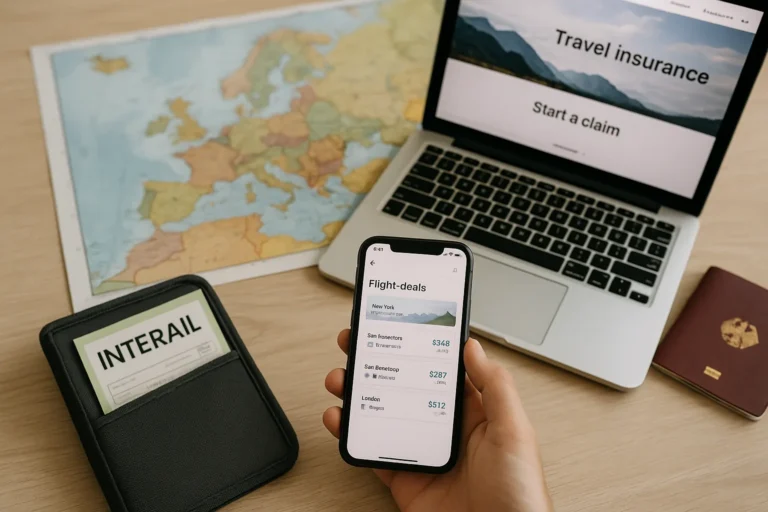
Before choosing any travel insurance, read what’s actually covered. Look specifically at medical evacuation limits, coverage for adventure activities (many standard policies exclude hiking, skiing, or water sports), and what happens if you need to cancel before departure. A policy that looks cheap upfront can be expensive in practice if it excludes the things you’re most likely to need.
For shorter trips, single-trip policies from established insurers often make more sense. For longer journeys — think a gap year, a multi-month backpacking route, or a digital nomad stint — a subscription-style policy like SafetyWing’s tends to offer better value. The point isn’t to find the cheapest possible option. It’s to find coverage that actually protects you for the kind of travel you’re doing.
Rail Passes and Regional Travel: Making Them Work for You
If you’re exploring Europe, the Interrail Pass sits at the center of almost every budget conversation. The premise is appealing: one pass, unlimited train travel across dozens of countries. The reality is more nuanced, and whether it saves you money depends entirely on how you travel.
An Interrail Pass makes strong financial sense if you’re covering significant distances across multiple countries over a relatively short period. A route that takes you from Lisbon to Berlin with stops in Madrid, Barcelona, Lyon, and Paris, for example, would cost considerably more in individual point-to-point tickets — particularly if you book at short notice. The pass gives you flexibility to be spontaneous, which has a value beyond the pure cost calculation.
👉 Read also: Budget Travel Hacks That Actually Work (No Clickbait)
Where passes tend to underdeliver is on shorter, regional trips or when you’re staying in one country for most of your journey. If you’re spending three weeks in Italy, a point-to-point ticket strategy — booking in advance on the national rail network — will almost certainly be cheaper. Budget airlines within Europe also compete directly with train travel on many routes, so always compare both before assuming the pass is the better deal.
The 2026 Interrail pricing structure continues to offer youth discounts for travelers under 28, which makes it one of the most genuinely age-targeted budget travel tools available. If you qualify, factor that discount into your comparison. And remember: the pass covers the train, but not always reservation fees on high-speed or overnight services — those add up and need to be included in your calculations.
Free and Low-Cost Experiences: Where Budget Travel Gets Good
Here’s the thing about budget travel that nobody really talks about enough: some of the best experiences you’ll have cost almost nothing. Not because you’re compromising, but because the most memorable moments rarely happen inside paid attractions.
Walking a city for an entire day — getting deliberately lost, following a street that looks interesting, stumbling into a neighborhood market — costs nothing and often reveals more than any guided tour. Most major museums have free entry days or free permanent collections alongside paid temporary exhibitions. Public beaches, hiking trails, city parks, street festivals, local religious celebrations, neighborhood food markets — these are the places where you experience a destination rather than just visit it.
The practical approach: research one or two paid experiences per destination that are genuinely worth it to you personally, and let the rest of your time be unstructured. You’ll spend less, and you’ll likely remember those unplanned moments more vividly than anything you booked in advance.
Food is another area where spending smart doesn’t mean eating badly. Eating where locals eat — away from the main tourist squares, in residential neighborhoods, at market stalls — is almost always cheaper and almost always better. Ask your accommodation host where they’d go for lunch. That question alone has led to some of the most authentic meals imaginable.
Putting It All Together: A Realistic Budget Travel Strategy
The most effective approach to budget travel isn’t a single tool or a single trick. It’s a layered strategy where each decision reinforces the others. You start with a realistic budget built on actual research. You use budget travel tools — flight comparison platforms, price alerts, rail passes, travel insurance — as specific instruments for specific problems, not as magic solutions. You invest in experiences that matter to you and cut spending where it genuinely doesn’t affect your enjoyment.
Think about it this way: if you save $200 on flights by being flexible with your dates, that’s two or three extra nights of accommodation, or a cooking class, or a day trip you wouldn’t otherwise have been able to afford. Every smart decision compounds. The traveler who plans well doesn’t just spend less — they get more from every dollar they do spend.
Some of the tools mentioned here — RatePunk for price comparison, SafetyWing for flexible insurance, Interrail for European rail travel — are worth exploring and testing against your own itinerary. None of them will work perfectly for every traveler or every trip. That’s why the most important budget travel tool you have is your own judgment: the ability to research, compare, and decide what genuinely serves your journey rather than just what sounds good in a list.
Travel isn’t about spending the least. It’s about spending wisely enough that you can keep going — next month, next year, for as long as the world keeps pulling you forward. The stories you collect along the way? Those are worth every bit of the planning it takes to make them happen.
This article was produced with AI assistance and reviewed editorially.


Cornwall’s Best Beaches & Coastal Towns: A Week-Long Coastal Escape Through England’s Gem

Luxury Train Travel for Young Adventurers: The Eastern & Oriental Express Experience


