
Colombia
Colombia or Peru: Which South American Adventure Should You Experience First
Compare Colombia and Peru for your first South American trip. Explore culture, safety, budget, landscapes, and find which country matches your travel style.

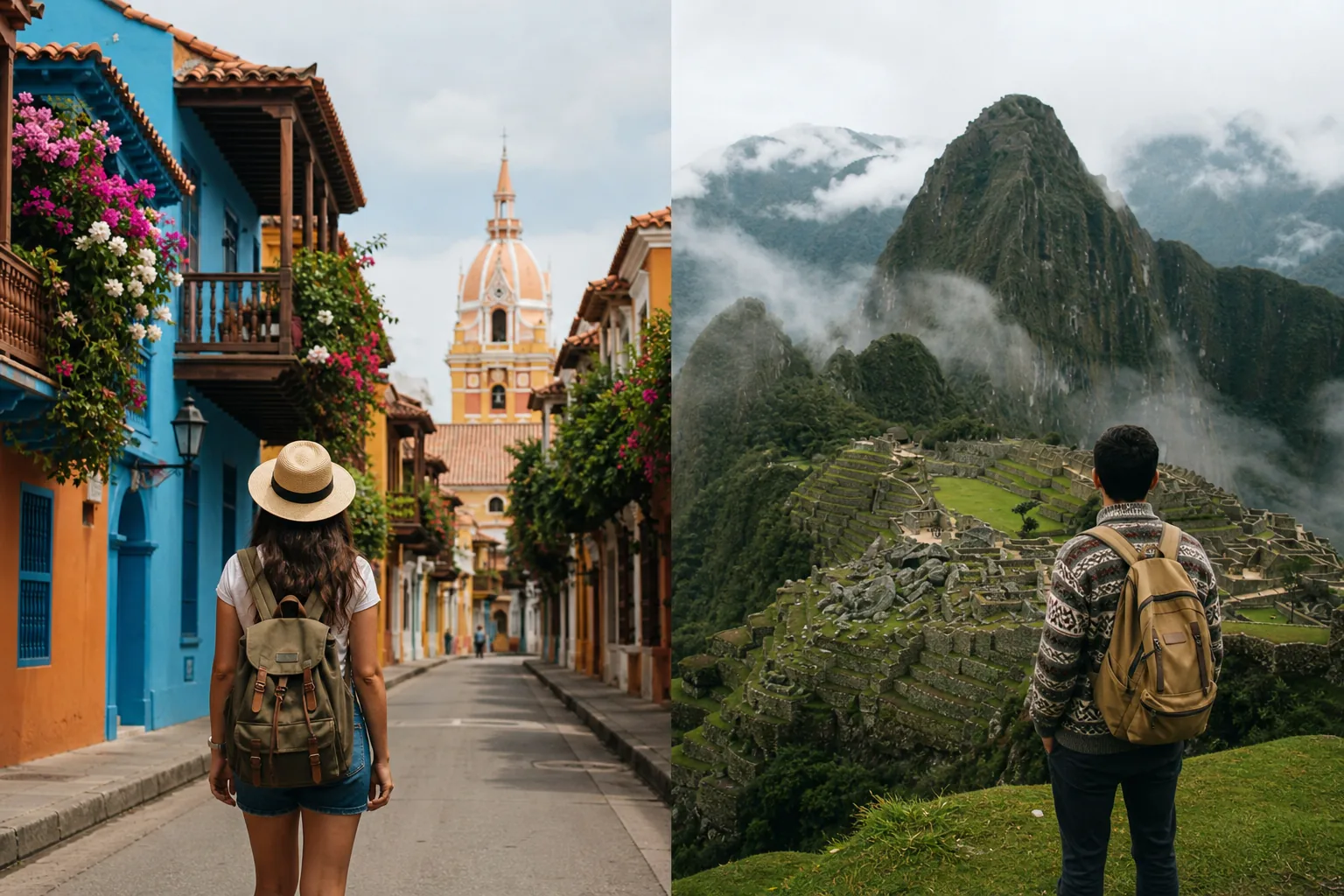
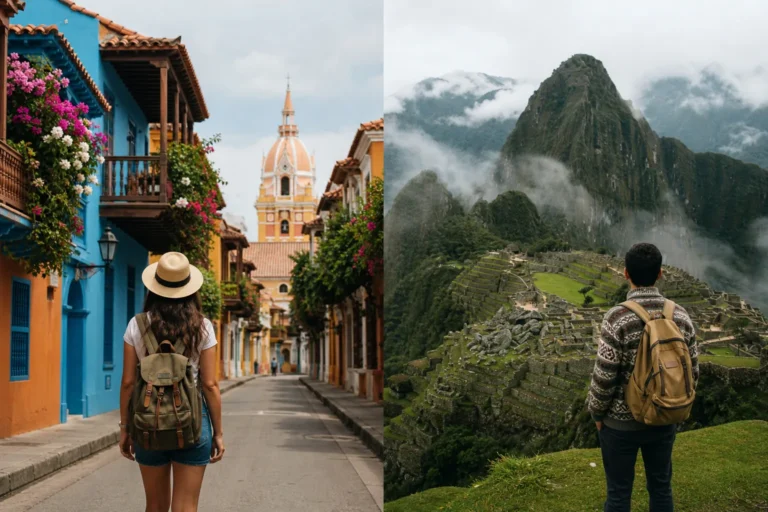
Choosing between Colombia and Peru for your first South American adventure is genuinely one of those decisions that can keep you up at night — both countries are extraordinary, both will challenge and inspire you, and both will leave you wondering why you waited so long to visit. When it comes to colombia vs peru travel, there’s no objectively wrong answer, but there’s almost certainly a right answer for you — and that’s exactly what this guide is here to help you figure out. Whether you’re drawn to colonial cities buzzing with salsa music or ancient ruins rising from mountain mist, South America is ready to deliver.
Two Countries, Two Completely Different Energies
Colombia and Peru share a continent but feel like different worlds the moment you land. Colombia hits you immediately — it’s loud, colorful, social, and warm in the most human sense of the word. The people are famously welcoming, the cities pulse with life well into the early hours, and the landscapes shift dramatically from Caribbean coastline to coffee-covered hillsides to dense jungle.
Peru has a different kind of pull. It’s older, quieter in spirit, and layered with thousands of years of history that you can almost feel pressing through the soil. The Inca Trail and Machu Picchu are legendary for a reason — they represent one of the most awe-inspiring archaeological achievements on the planet. But Peru is far more than that single icon. It’s the Amazon basin stretching endlessly to the east, the high-altitude drama of the Andes, and a food culture that’s earned the country a serious reputation among travelers who care deeply about what they eat.
Both destinations reward curious, open-minded travelers. The key is knowing which kind of experience you’re actually craving right now.
Colombia: Culture, Energy, and Accessibility
If you want a destination that pulls you into the present moment — into street life, music, conversation, and movement — Colombia is hard to beat. Medellín has undergone one of the most remarkable urban transformations in recent memory, evolving from a city defined by its troubled past into a hub of innovation, street art, and nightlife that draws travelers from all over the world. The comunas, the outdoor escalators connecting hillside neighborhoods, the botanical garden, the metro — it’s a city that rewards wandering.
Cartagena offers something different: a walled colonial city on the Caribbean coast where the architecture is painted in every shade of yellow, pink, and blue, and where the heat slows everything down to a pleasantly languid pace. Spend a morning exploring the old town, eat a fresh arepa from a street vendor, and end the afternoon on a boat heading toward the Islas del Rosario. It’s the kind of day that doesn’t require a plan.
Then there’s the Coffee Region — the Eje Cafetero — where you can stay on a working coffee farm, hike through valleys filled with wax palms, and drink some of the finest coffee you’ll ever taste. For travelers who want variety without covering enormous distances, Colombia’s geography is genuinely generous.
Colombia is also widely noted as being more budget-friendly, particularly for those who want to stretch their money without sacrificing experience. Accommodation, food, and local transport are generally accessible at a range of price points, making it a strong choice for younger travelers or those on a tighter budget.
→ Read also: Colombia vs. Peru: Which South American Adventure Fits Your Budget (and Your Soul)
Peru: History, Trekking, and the Depth of Ancient Civilizations
There are places in the world that make you feel genuinely small — not in a bad way, but in that rare, humbling way that reminds you how vast human history really is. Machu Picchu is one of those places. Arriving at the Sun Gate after days on the Inca Trail, or stepping out of a bus at dawn to see the citadel emerge from the clouds, is an experience that stays with you for years. This is what draws millions of travelers to Peru every year — and it earns every bit of that attention.
But Peru is genuinely rich beyond its most famous landmark. Cusco is a city where Inca stonework sits beneath Spanish colonial architecture, creating a layered, visually fascinating urban environment that you could spend days exploring. The Sacred Valley offers markets, ruins, and villages that feel far removed from tourist infrastructure. And if you head south, Lake Titicaca — the highest navigable lake in the world — delivers a completely different kind of wonder.
For travelers who love trekking, Peru is exceptional. The Inca Trail is the most famous route, but it’s far from the only one. The Salkantay Trek is a demanding, visually spectacular alternative that takes you through high mountain passes and cloud forest. Even without the big treks, the landscape demands physical engagement — altitude is real here, and acclimatizing properly in Cusco before heading higher is something every traveler should take seriously.
Peru is also increasingly celebrated for its food scene. The cuisine draws on indigenous, Spanish, Japanese, and Chinese influences to create something genuinely distinctive. Ceviche, lomo saltado, causa, and anticuchos are just the beginning. Eating in Peru — whether at a market stall or a restaurant in Lima — is consistently one of the highlights travelers mention when they come back.
What Kind of Traveler Are You?
This is really the heart of the colombia vs peru travel debate. Not which country is objectively better, but which one matches where you are right now as a traveler.
Choose Colombia if:
- You thrive in social environments and want to meet other travelers easily
- You love nightlife, music, and the energy of vibrant cities
- You want a mix of beach, mountains, and urban culture without covering huge distances
- You’re traveling on a tighter budget and want your money to go further
- You’re a first-time solo traveler who wants a destination that feels welcoming and navigable
- You want a destination that rewards spontaneity — where you can change your plans and still have a great time
Choose Peru if:
- You’re driven by history, archaeology, and ancient civilizations
- Trekking and physical adventure are central to your travel identity
- You want a destination with a clear iconic experience — something you’ve been dreaming about for years
- Food is a major part of how you experience a place
- You’re comfortable with more logistical planning — booking the Inca Trail, managing altitude, navigating longer distances between destinations
- You want to feel like you’ve traveled somewhere genuinely ancient
It’s worth noting that neither country is a simple destination. Both have complex histories, ongoing social realities, and neighborhoods or regions that require more awareness than others. Doing your research before you go — checking current travel advisories, connecting with other travelers in forums and communities, and staying flexible — is always part of responsible, smart travel.
Rough Budget Expectations and Getting Around
While specific numbers shift with exchange rates and travel styles, some general patterns hold true. Colombia tends to be more accessible for budget travelers, particularly in terms of accommodation and local food. Hostels in Medellín and Bogotá are plentiful and well-run, street food is cheap and delicious, and domestic flights between major cities are often surprisingly affordable. Long-distance buses connect most destinations, though journey times can be significant given the mountainous terrain.
→ Read also: Peru's Hidden Valleys: Sacred Valley, Lima & Mountain Towns Beyond the Tourist Trail
Peru can be done on a budget, but certain experiences — particularly the Inca Trail, which requires a permit and a licensed guide — come with fixed costs that can’t easily be reduced. Lima, as a capital city with a sophisticated food scene, can be more expensive than you might expect. That said, outside the major tourist corridors, Peru remains very affordable. Local markets, menú del día lunches, and shared transport options keep costs manageable for travelers who know how to navigate them.
For a two to three week trip, both countries offer enough to fill every day without feeling rushed. In Colombia, a classic route might move from Bogotá to the Coffee Region to Medellín to Cartagena, with optional detours to Santa Marta and Tayrona National Park. In Peru, the natural flow tends to move from Lima to Cusco (with acclimatization time), through the Sacred Valley, to Machu Picchu, and then perhaps south to Lake Titicaca or north toward Huaraz for more trekking.
Timing Your Trip
Both Colombia and Peru have diverse climates shaped by altitude and geography, which means “best time to visit” varies depending on where you’re going within each country. In general, doing some research on the specific regions you plan to visit is more useful than applying a single seasonal rule to the whole country.
For Peru, the dry season in the highlands tends to be the most popular time for trekking — trails are more accessible, skies are clearer, and the iconic views are more reliably spectacular. The tradeoff is that this period draws larger crowds, particularly around Machu Picchu, so booking permits and accommodation well in advance is essential. The official Peru tourism site offers updated guidance on permit availability and regional conditions.
For Colombia, the Caribbean coast has its own rhythm, the Andes their own, and the Amazon another entirely. The good news is that Colombia tends to be more forgiving of year-round visits, with most regions offering pleasant conditions across much of the year. A little flexibility goes a long way.
Why Not Both?
If you have the time — and you’re already committing to the flight across the Atlantic or Pacific — it’s worth at least considering whether a combined trip makes sense. Some travelers split a month between both countries, using the colombia vs peru travel comparison not as an either/or decision but as a routing question: which do I start with, and which do I save for last?
Many travelers find that starting in Colombia — where the energy is social and the logistics are relatively forgiving — gives them a great foundation before heading to Peru for a more structured, historically focused experience. Others prefer the reverse, arriving in Peru with fresh eyes for the ancient world before unwinding on Colombia’s coast.
There’s no single right answer, and that’s honestly one of the most exciting things about planning a South American journey. The continent is vast, generous, and endlessly surprising. Both Colombia and Peru will give you stories you’ll be telling for years — the kind that start with “so there I was” and end with everyone at the table leaning in.
Whatever you decide, go. The planning is part of the adventure, but it’s not the point. The point is standing somewhere extraordinary, realizing you made it, and already wondering where you’ll go next.
This article was produced with AI assistance and reviewed editorially.


Colombia or Peru: Which South American Adventure Should You Experience First

Where to Stay in Portugal: Lisbon, Porto, Madeira & Azores Compared


