
Luxury and Trendy
Epic Train Journeys: Experiencing the Eastern & Oriental Express & Other Legendary Routes
Discover legendary luxury train journeys like the Eastern & Oriental Express. Experience slow travel through Southeast Asia and Europe’s most romantic rail routes.

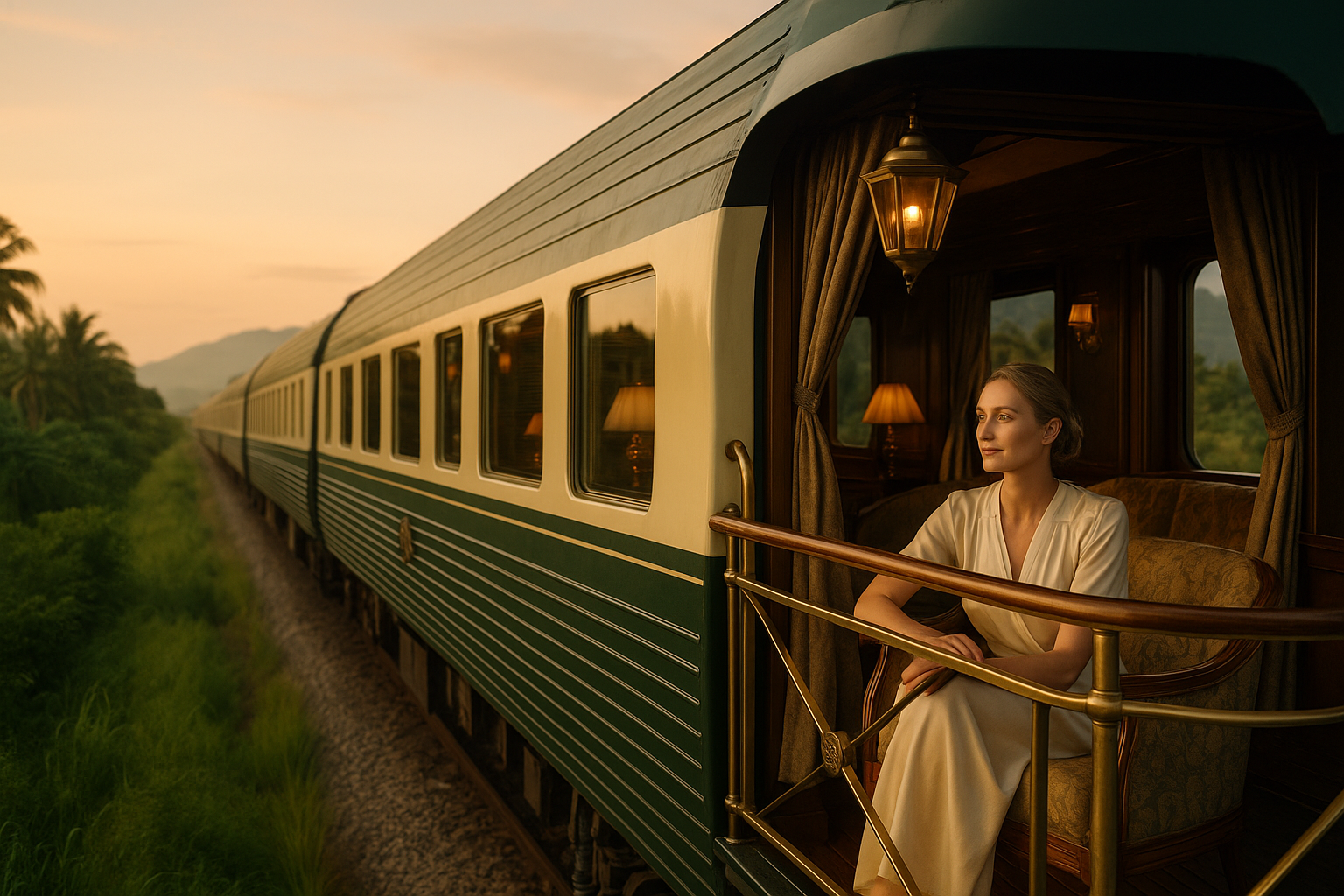
Why Luxury Train Journeys Are the Ultimate Way to Slow Down and See the World
There’s a moment, somewhere between two cities, when the train rounds a bend and the landscape opens up in front of you — mountains, rice paddies, coastline, jungle — and you realize the journey itself is the destination. That’s the magic of luxury train journeys. They’re not about getting somewhere fast. They’re about being fully present in the in-between, watching the world roll by from a velvet seat with a drink in your hand and nowhere else you need to be.
For young travelers who’ve grown up in an age of budget flights and overnight buses, the idea of a luxury train might sound like something from another era. But that’s exactly what makes it so compelling. In a world of constant acceleration, choosing to slow down is its own kind of adventure. And these legendary routes deliver experiences that no airport ever could.
The Eastern & Oriental Express: Southeast Asia’s Most Iconic Rail Journey
If there’s one train that captures the romance of rail travel in Asia, it’s the Eastern & Oriental Express. Operated by Belmond, one of the world’s most respected names in experiential travel, this train winds through the lush landscapes of Southeast Asia, connecting Singapore and Malaysia on a route that feels like stepping into a different century.
Picture waking up to the sound of the train moving gently through the Malaysian highlands, green hills stretching as far as you can see, morning mist hanging low over the jungle canopy. You grab a coffee in the observation car and watch the world wake up around you. There’s no WiFi to distract you, no traffic to stress about. Just the rhythm of the rails and the slow unfolding of a landscape that feels genuinely wild.
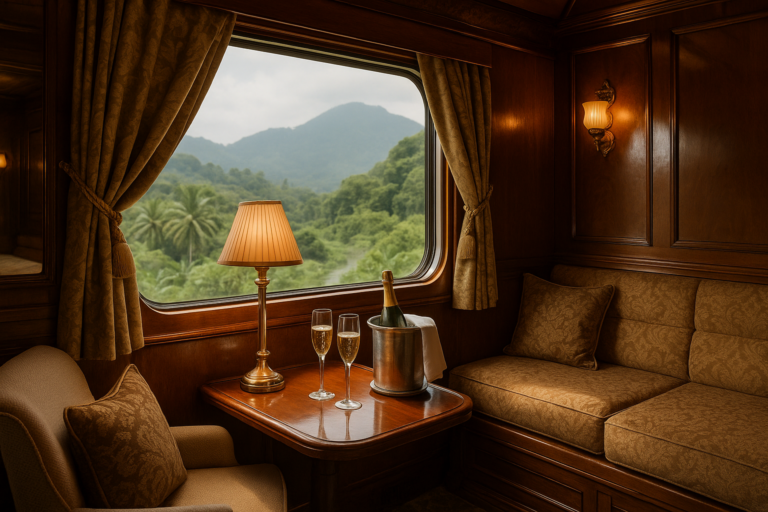
The Eastern & Oriental Express isn’t just transport — it’s a curated experience. The cabins are beautifully designed, blending colonial-era elegance with the textures and tones of Southeast Asia. Meals are served in a proper dining car, where the food reflects the cultures the train passes through. You eat well, sleep soundly, and arrive somewhere new feeling rested rather than wrecked.
For a younger traveler, this kind of journey might feel like a splurge — and honestly, it is. But it’s the kind of splurge that pays off in memories. You’re not just visiting Singapore or Malaysia; you’re experiencing the space between them, and that’s something most travelers never take the time to do.
What Makes the Eastern & Oriental Express Worth It
- The observation car at the rear of the train offers unobstructed views of the passing landscape — especially stunning at dusk.
- Onboard experiences often include local cultural demonstrations, connecting you to the regions you’re passing through.
- The dining experience celebrates Southeast Asian cuisine with genuine care and craft.
- The pace is deliberately slow, giving you time to actually absorb where you are.
- Stops along the route allow you to step off and explore towns that most tourists never reach.
The Original Orient Express: A Route That Defined an Era
No conversation about legendary rail journeys is complete without the Orient Express. The original route traveled from Paris to Istanbul, and when it came into service in 1883, it was unlike anything the world had seen — a moving palace crossing the heart of Europe, carrying diplomats, artists, writers, and adventurers through landscapes that felt almost impossibly varied.
The Orient Express ran for over a century before its retirement in 2009, and in that time it became one of the most mythologized journeys in travel history. It inspired novels, films, and a kind of romantic imagination around train travel that still shapes how people think about it today. Paris to Istanbul: crossing France, Switzerland, Austria, Hungary, Romania, Bulgaria. Every border a new culture, every morning a different city outside your window.
The route itself is a reminder of just how much ground you can cover by rail — and how much you’d miss by flying over it. The Alps at dawn. The Danube winding through Budapest. The minarets of Istanbul emerging from the morning haze. These are the moments that stay with you, and they only happen if you’re on the ground, moving through the world at a human pace.
Today, various operators run journeys inspired by this legendary route, and the spirit of that original crossing lives on for travelers willing to seek it out. If you’re planning a European adventure, consider building a rail segment into your itinerary that echoes this classic path — even partially. You don’t need to do the full crossing to feel the magic of it.
Other Legendary Routes Worth Knowing About
The Eastern & Oriental Express and the Orient Express are the headline acts, but the world of iconic rail travel is far richer than two routes. Condé Nast Traveler’s roundup of train journeys worth slowing down for makes a compelling case that every continent has its own version of this experience — routes where the journey is as meaningful as the destination.
The Trans-Siberian Railway
Running from Moscow to the Russian Far East, the Trans-Siberian is the longest railway line in the world. It crosses eight time zones, passes through Siberian taiga, skirts the edge of Lake Baikal, and delivers you to landscapes so vast they recalibrate your sense of scale. This is a journey for the genuinely curious — it’s not glamorous in the way the Eastern & Oriental Express is, but it’s profoundly immersive. You’ll share compartments with locals, eat from the platform vendors at each stop, and watch Russia unfold over the course of a week. It’s one of those experiences that’s difficult to explain until you’ve done it.
The Glacier Express, Switzerland
Running between Zermatt and St. Moritz, the Glacier Express earns its reputation as one of Europe’s most scenic rail journeys. The route crosses nearly 300 bridges and passes through dozens of tunnels as it winds through the Swiss Alps. The panoramic windows are enormous by design — the whole point is the view. It’s a relatively short journey compared to the Trans-Siberian or the Orient Express, which makes it a realistic option for a weekend adventure rather than a major expedition. If you’re traveling through Switzerland, this is the kind of detour that transforms a trip.
The Rovos Rail, Southern Africa
Africa has its own answer to luxury train journeys, and Rovos Rail is it. Operating through Southern Africa — with routes connecting cities like Cape Town, Pretoria, and Victoria Falls — this train moves through landscapes that feel genuinely untouched. Game reserves, the Karoo desert, the Zimbabwean bush. The train itself is beautifully restored, with open-air observation decks that let you feel the African air as the savanna rolls past. It’s an unusual way to experience a continent that most travelers explore by jeep or small plane, and that contrast makes it memorable.
The Rocky Mountaineer, Canada
Canada’s Rocky Mountaineer runs through British Columbia and Alberta, threading through valleys and mountain passes that are genuinely jaw-dropping. The train travels only in daylight hours — deliberately, so you don’t miss a single view. Snow-capped peaks, glacial rivers, dense forests, and the occasional wildlife sighting make this a journey that feels more like a nature documentary than a commute. For travelers who love the outdoors, this route hits differently.
How to Make a Luxury Train Journey Work for a Younger Traveler
Here’s the honest truth: most luxury train journeys aren’t cheap. But that doesn’t mean they’re out of reach, especially if you plan thoughtfully and treat it as a centerpiece experience rather than a daily mode of transport.
- Book in advance. Iconic routes fill up quickly, especially during peak seasons. Planning ahead often unlocks better pricing and more cabin choices.
- Choose your route strategically. Some legendary journeys — like the Glacier Express — are accessible at a fraction of the cost of ultra-premium options. You don’t have to go full Orient Express to have a meaningful rail experience.
- Use it as a highlight, not a habit. Build one extraordinary train journey into a longer trip. Fly or bus for the practical legs, then splurge on the one route that genuinely deserves it.
- Travel in a smaller cabin. Most luxury trains offer tiered accommodation. A standard cabin on a legendary route still delivers the full experience of the journey — the views, the dining car, the atmosphere — at a lower price point than the premium suites.
- Look for shoulder season pricing. Traveling outside peak periods can significantly reduce costs while still offering excellent conditions on most routes.
For deeper inspiration, the book Epic Train Journeys by Monisha Rajesh and published by gestalten is worth exploring. It documents extraordinary rail routes from across the globe with the kind of vivid, experiential writing that makes you want to pack a bag immediately.
What Train Travel Teaches You That Flying Never Can
There’s something that happens when you travel slowly. You start noticing the gradual shift in landscapes, the way architecture changes as you cross a border, the way the quality of light is different in the mountains than it is on the coast. Flying compresses all of that into nothing — you’re in one city, then you’re in another, and the space between them simply doesn’t exist for you.
Train travel gives you the in-between. And the in-between is often where the most interesting things happen. You meet people in the dining car who are on completely different journeys. You have conversations that wouldn’t happen in an airport lounge. You arrive somewhere not just physically, but mentally — having had the time to transition, to prepare, to actually arrive.
For young travelers especially, luxury train journeys offer something that’s increasingly rare: enforced slowness. You can’t rush it. You can’t skip ahead. The train moves at its own pace, and your job is simply to be present for the ride. That’s not a limitation — it’s the whole point.
Planning Your First Iconic Train Journey
If you’re ready to turn a journey into an experience, start by identifying which route speaks to you. Are you drawn to the tropical landscapes of Southeast Asia and the elegance of the Eastern & Oriental Express? The mythological pull of the original Orient Express corridor across Europe? The raw scale of Siberia? The mountain drama of the Swiss Alps or the Canadian Rockies?
Once you’ve chosen your route, do your research through reliable sources. Sites like Railbookers offer a useful overview of what’s available across different regions and price points, and can help you understand what each journey actually involves before you commit.
Think about timing, cabin type, and what you want to get out of the experience. Some travelers want the full immersive luxury — the suites, the fine dining, the white-glove service. Others just want the route, the views, and the freedom of moving through the world without rushing. Both are valid. Both are unforgettable.
The world is full of ways to get from one place to another. But some journeys are worth taking not because they’re the fastest or the cheapest, but because they remind you why you started traveling in the first place — to see the world, feel it, and come home with stories that no highlight reel can fully capture. Luxury train journeys do exactly that. And once you’ve experienced one, you’ll understand why travelers keep coming back to the rails.
This article was produced with AI assistance and reviewed editorially.


Southeast Asia on a Shoestring: Budget Routes Across Thailand, Vietnam & Cambodia

Southeast Asia Decoded: Hanoi 3-Day Itinerary + Vietnam Misconceptions Debunked


