
United Kingdom
London Walks for Every Traveler: 8 Routes from Landmarks to Hidden Streets (2026)
Explore London on foot with 8 curated walking routes. Discover iconic landmarks and hidden neighborhoods with practical tips and detailed route guidance.

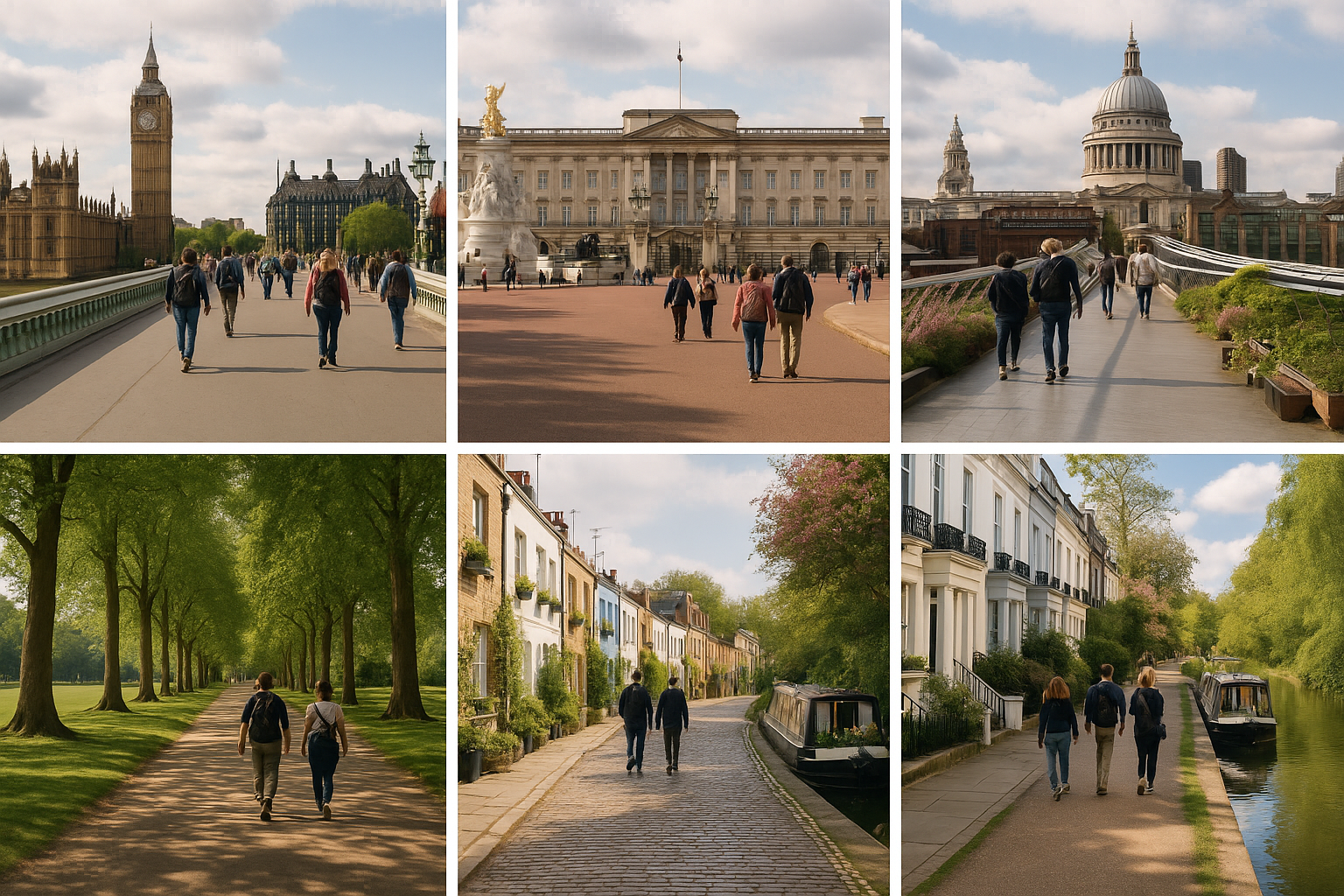
Why Walking Is the Best Way to Discover London
London rewards the curious. It’s one of those cities where the best moments happen between the landmarks — down a cobbled alley you almost walked past, or across a bridge you stopped on just to watch the river. If you want to actually feel a city, you walk it. And when it comes to london walking routes, this city gives you more options than almost anywhere else on earth.
Whether you’re arriving for the first time with a list of must-sees, or you’ve been here before and want to dig deeper, there’s a route for you. Some paths take you through the grand, historic heart of the city. Others slip into quiet neighborhoods where the locals actually live. All of them are worth your time.
This guide lays out eight distinct walks — some iconic, some unexpected — with enough detail to get you moving confidently. Lace up your most comfortable shoes. London is waiting.
Before You Go: Practical Things Worth Knowing
London is a huge city, but it’s surprisingly walkable once you stop thinking of it as a whole and start thinking of it as a collection of villages. Each neighborhood has its own personality, its own pace, its own story. That’s exactly what makes these london walking routes so satisfying — each one feels like a different city.
- Wear comfortable shoes. Cobblestones, uneven pavements, and long distances will punish anything stylish but impractical.
- Download an offline map. Google Maps or Maps.me work well. Don’t rely on data in underground tunnels or quiet areas.
- Start early. Most central London streets are quieter before 9am. You’ll get better photos and a more peaceful experience.
- Carry a reusable water bottle. London tap water is perfectly safe to drink, and you’ll find refill points across the city.
- Use the Tube strategically. Walking between neighborhoods is the goal, but the Underground is there when your legs need a break.
Resources like My London Walks offer well-structured self-guided tours if you want a more curated experience with detailed route notes. For guided options with a local leading the way, Guruwalk’s free walking tours in London are a genuinely good starting point — their City of London tours typically run around two hours and work on a pay-what-you-feel basis, which suits any budget.
Route 1: Westminster and St James’s — The Classic Starting Point
If this is your first time in London, start here. Westminster is where the city puts its best formal face forward — Parliament, Big Ben, Westminster Abbey, Buckingham Palace. It’s iconic for a reason. But don’t just tick the sights and move on. Walk slowly. Read the plaques. Watch the guards. Let the scale of it sink in.
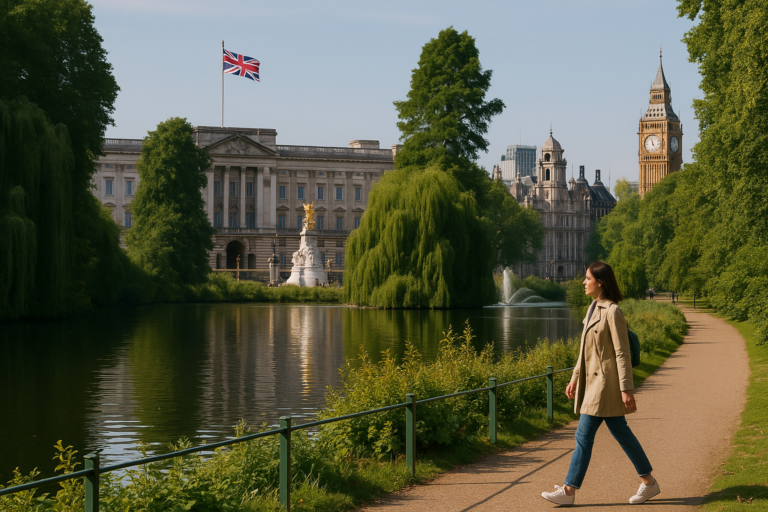
From Westminster Bridge, head west along the South Bank briefly to get that famous skyline view, then cross back and walk through St James’s Park. It’s one of London’s oldest royal parks, and on a clear morning it’s genuinely beautiful — ducks on the lake, pelicans if you’re lucky, and the palace in the distance. From the park, you can loop through St James’s itself, a neighborhood of old gentlemen’s clubs, art galleries, and wine merchants that feels like it hasn’t changed in a century.
Allow around two to three hours for a relaxed version of this route. It covers a lot of ground but nothing feels rushed if you pace yourself.
Route 2: The South Bank — Art, Food, and the River
The South Bank is one of London’s most energetic stretches. Walk it from Waterloo Bridge all the way to Tower Bridge and you’ll pass the Tate Modern, the Globe Theatre, Borough Market, and some of the best views of the Thames you’ll find anywhere. This is a walk where you stop constantly — for street food, for buskers, for the view.
Borough Market deserves a proper visit on its own, but even if you’re just passing through, grab something to eat and take it to the riverbank. The stretch between Southwark Bridge and London Bridge is particularly atmospheric, with old warehouses converted into restaurants and bars lining the water’s edge.
This route works at almost any time of day, but late afternoon into early evening is especially good. The light on the river turns golden, the city starts to buzz, and everything feels a little more alive.
Route 3: Holborn to the City — History Layered on History
This is a walk for people who love discovering that something ancient is hiding behind something modern. The route from Holborn through the old legal district and into the City of London takes you past the Inns of Court — quiet, cloistered squares where barristers have worked for centuries — and through narrow lanes that follow the same paths as medieval streets.
Look for the Temple Church, tucked behind Fleet Street. Walk down Chancery Lane. Find Dr Johnson’s House. These aren’t places that shout for your attention, which is exactly what makes them worth finding. My London Walks covers this area well in their self-guided route options, and it’s one of the most historically layered london walking routes you can do without leaving the center.
Plan for about two hours, more if you stop to explore the courtyards and alleyways properly.
Route 4: Tower Hill to Wapping — Where London Meets the River’s Edge
Start at the Tower of London, one of the city’s most visited landmarks, and then do something most visitors don’t — keep walking east. The route from Tower Hill down to Wapping takes you along the riverbank into an area that was once the beating heart of London’s docklands. Today it’s quieter, residential, and full of character.
Wapping High Street runs along old warehouse conversions with the Thames visible between the buildings. There are riverside pubs here that have been serving sailors and locals for centuries. Sit outside one of them with a drink and watch the boats go by. It’s one of those moments where London feels genuinely timeless.
This eastern stretch is less covered in most tourist guides, which makes it one of the more rewarding london walking routes for anyone who’s already done the standard circuit.
Route 5: Paddington to Camden — North London’s Creative Corridor
This route heads north, connecting two very different neighborhoods through a surprisingly green and interesting corridor. From Paddington, you can pick up the towpath along Regent’s Canal — a flat, peaceful walk through Little Venice, past narrowboats painted in bright colors, and through Regent’s Park before arriving in Camden.
The contrast is part of the appeal. Little Venice is calm and residential. Camden is loud, creative, and full of market stalls, street food, and music. Walking between the two along the canal gives you time to appreciate both without feeling like you’ve been dropped into the deep end of either.
Camden Market is worth spending real time in, not just walking through. The food hall alone could keep you busy for an hour. My London Walks includes a Paddington to Camden Market route among their self-guided options, and it’s one of the most enjoyable half-day walks in the city.
Route 6: Farringdon to Clerkenwell and Islington — The Creative North
Farringdon sits on the edge of the old City and the newer creative districts to the north. Walk through Clerkenwell — once a hub for watchmakers and printers, now home to design studios, independent restaurants, and some of the most interesting architecture in London — and continue up into Islington.
Islington is one of those neighborhoods that rewards slow exploration. Upper Street is the main artery, lined with independent shops and restaurants, but the real character is in the side streets. Look for the antique shops around Camden Passage (not to be confused with Camden Market), the quiet garden squares, and the Victorian terraces that line the residential streets behind the main drag.
This is a walk that feels genuinely local. You’re not following a tourist trail here — you’re moving through a neighborhood where people actually live, work, and spend their weekends.
Route 7: Hidden London Underground — A Different Kind of Walk
This one is different from the others. The London Transport Museum’s Hidden London programme offers guided tours of disused Underground stations, wartime shelters, and filming locations that most people never get to see. These aren’t self-guided walks — they’re led by knowledgeable guides who take you into parts of the city that are genuinely off-limits to the public otherwise.
If you’re curious about the layers beneath London’s streets — the history, the engineering, the stories of people who sheltered in tunnels during wartime — this is an extraordinary experience. It’s not cheap, and you’ll need to book in advance, but it’s the kind of thing you’ll be talking about for years.
Think of it as a walking route that goes underground. London has always been as interesting beneath the surface as it is above it.
Route 8: Notting Hill to Portobello — Color, Culture, and Community
End your London walking adventures in Notting Hill, one of the city’s most visually striking neighborhoods. The pastel-colored houses, the independent bookshops, the garden squares — it all adds up to somewhere that feels curated but still genuinely lived-in.
Walk down Portobello Road on a Saturday and you’ll find one of London’s most famous markets in full swing — antiques at the top, vintage clothing in the middle, street food and fresh produce further down. It’s busy, colorful, and full of energy. Even if you’re not buying anything, it’s worth the walk just to absorb the atmosphere.
From Portobello, you can continue south toward Holland Park, one of London’s quieter and more beautiful green spaces, where peacocks wander freely and the Japanese-inspired Kyoto Garden offers a genuinely peaceful corner in the middle of the city. It’s the kind of unexpected discovery that makes london walking routes so endlessly satisfying.
How to Make the Most of Walking London
Combine Routes Strategically
Several of these routes connect naturally. The South Bank walk ends near Tower Bridge, which puts you at the start of the Tower Hill to Wapping route. The Holborn walk flows into Farringdon. Think of them as building blocks rather than isolated trips, and you can design full-day itineraries that cover a huge amount of ground without ever feeling rushed.
Use Guided Tours as a Foundation
If you’re new to London or want more context for what you’re seeing, consider starting with a guided walk before going self-guided. Platforms like GetYourGuide list hundreds of walking tours across every neighborhood and interest, from architecture to street art to food. A good guided tour gives you a mental map of an area that makes your own explorations much richer afterward.
Give Yourself Permission to Get Lost
The best moments in London often happen when you put the map away for ten minutes and just walk. Turn down a street because it looks interesting. Follow the sound of music. Sit in a square you didn’t plan to visit. London is dense with stories, and the city rewards the people who slow down enough to find them.
London Is Best Experienced on Foot
There’s a version of London you see from a tour bus, and there’s a version you discover when you’re walking its streets at your own pace, stopping when something catches your eye, doubling back when a lane looks interesting, sitting on a bench by the river and watching the city move around you. These london walking routes are designed to get you to that second version — the one that feels real, personal, and genuinely yours. Whether you spend a weekend or a week here, walk as much as you can. The city will give you more than you expect, every single time.
This article was produced with AI assistance and reviewed editorially.


Southeast Asia on a Shoestring: Budget Routes Across Thailand, Vietnam & Cambodia

Southeast Asia Decoded: Hanoi 3-Day Itinerary + Vietnam Misconceptions Debunked


