
Portugal
7 Days in the Azores: Volcanic Landscapes, Local Food & Island Hopping (2026)
Plan your week in Portugal’s Azores with this practical 7-day itinerary covering volcanic landscapes, local food, and island-hopping between São Miguel, Pico, and Terceir

Why the Azores Should Be on Every Young Traveler’s Radar
Floating in the middle of the Atlantic Ocean, roughly halfway between Boston and Lisbon, the Azores are one of Europe’s most underrated destinations — and one of its most spectacular. Nine volcanic islands, each with its own personality, rising out of deep blue water. Crater lakes, hot springs, whale-watching trips, and vineyards carved into black lava rock. If you’ve been looking for somewhere that feels genuinely wild and unhurried, this is it.
Planning an Azores 7 day itinerary gives you just enough time to fall in love with the archipelago without rushing. A week lets you explore the biggest island, São Miguel, in real depth — then hop across to one or two more islands to get a sense of how different each one feels. It’s the kind of trip where you’ll wake up not quite believing the view from your window is real.
This guide walks you through how to spend seven days in the Azores in a way that balances adventure, culture, and those slow, memorable moments that make a trip worth talking about for years.
Getting Oriented: Understanding the Azores Archipelago
The Azores archipelago is made up of nine islands, and São Miguel is the largest of them all. Most travelers fly into Ponta Delgada, São Miguel’s main city, which serves as a natural base for the first part of any Azores trip. From there, inter-island flights and ferry connections make it possible to explore the wider archipelago without too much logistical stress.
Each island has a distinct character. São Miguel is lush, dramatic, and geologically active — the kind of place where you can cook food in geothermal ground and swim in volcanic lakes. Pico is quieter, dominated by Portugal’s highest mountain and UNESCO-listed vineyards. Terceira has a more urban, historic feel, with the beautifully preserved city of Angra do Heroísmo and underground volcanic caves to explore.
Understanding this variety is key to building a great itinerary. Don’t try to visit all nine islands in a week — you’ll spend more time in airports than in nature. Instead, pick two or three islands and actually experience them. Quality over quantity, always.
A Practical Azores 7 Day Itinerary: Day by Day
Days 1–2: Arrive in Ponta Delgada and Explore São Miguel’s West
Fly into Ponta Delgada and give yourself the afternoon to settle in and walk the city’s seafront. Ponta Delgada is a genuinely pleasant base — compact enough to navigate on foot, with a lively café culture and a harbor that looks especially good at golden hour. Pick up a pastel de nata, wander the old town streets, and let yourself adjust to island time.
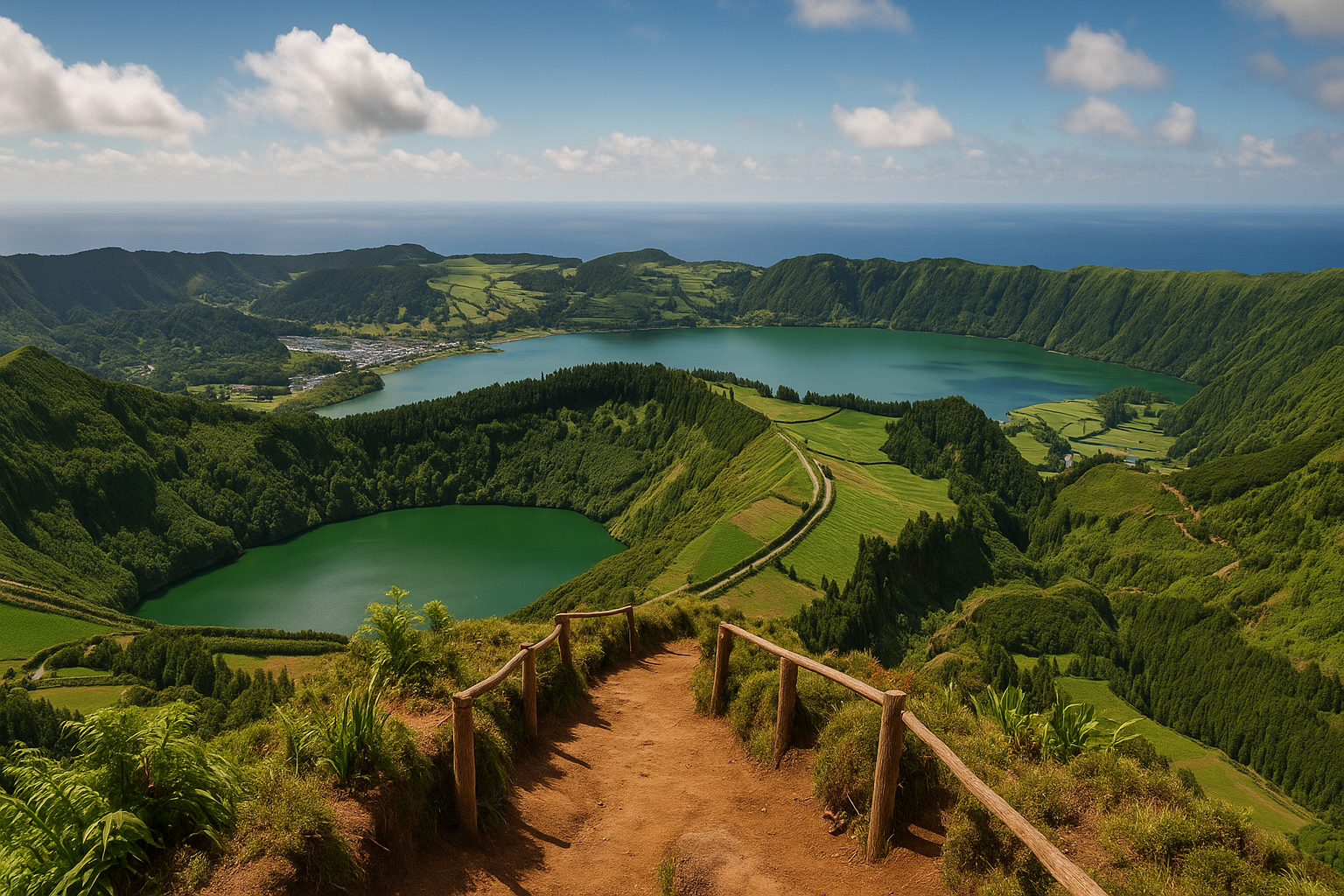
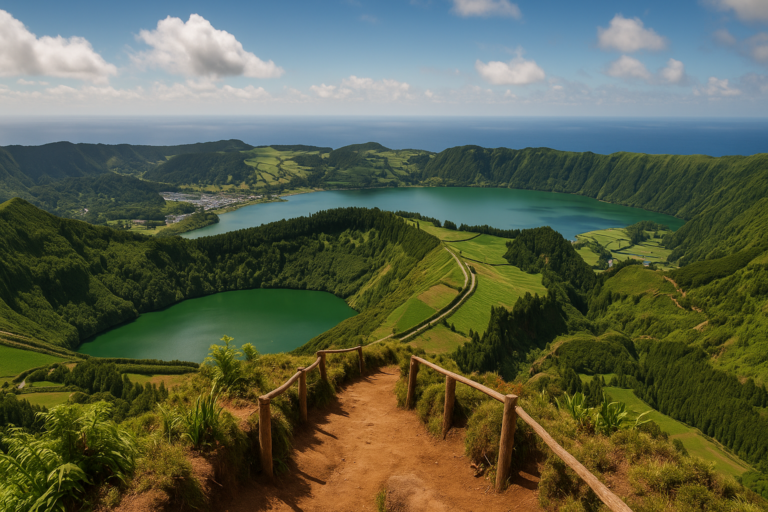
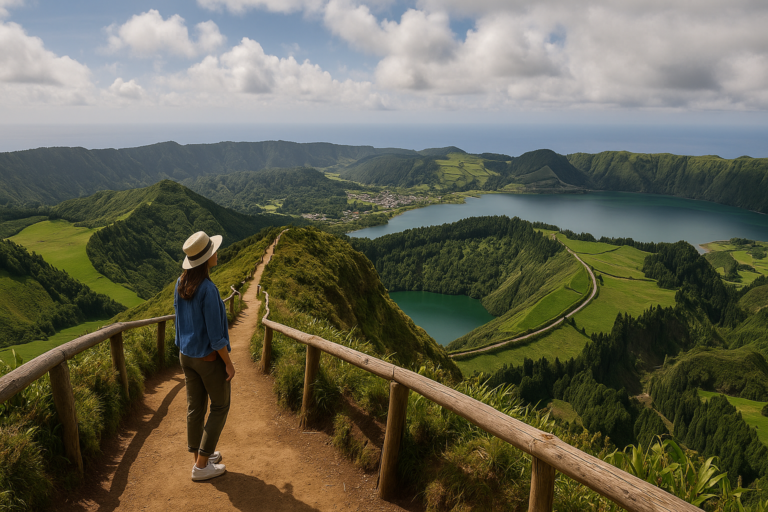
On day two, head west to Sete Cidades. This is one of those places that photographs can’t fully prepare you for. Two lakes — one green, one blue — sit inside a massive volcanic crater, surrounded by dense forest and farmland. Hike the crater rim trail for the full panoramic view, or rent a kayak and paddle across the lakes themselves. Either way, you’ll want to stay longer than you planned.
The west of São Miguel also has quieter villages, coastal cliffs, and viewpoints that most visitors skip in favor of the more famous spots. Take your time here. Pack a lunch, pull over when something catches your eye, and let the morning stretch out.
Days 3–4: Furnas Valley and the East of São Miguel
Furnas is unlike anywhere else in Europe. This geothermal valley in the east of São Miguel is where the earth genuinely feels alive — steam rises from vents in the ground, mineral-rich hot springs bubble up at the edges of the lake, and locals actually cook a traditional stew called cozido das Furnas by lowering pots into the volcanic ground for several hours. Find a restaurant serving it for lunch. It’s earthy, slow-cooked, and deeply satisfying.
After eating, head to Terra Nostra, a botanical garden with warm thermal pools that you can swim in. The water is a rich amber color from the iron minerals — it’s completely natural and surprisingly relaxing. Spend an hour or two soaking in the pools surrounded by century-old trees and exotic plants. It’s one of those experiences that feels indulgent but costs very little.
Day four is a good moment to visit Lagoa do Fogo, a volcanic crater lake in the center of the island that sits above the clouds on clear mornings. The hike down to the lake shore is worth every step. You might have the beach almost entirely to yourself. Also worth a stop: Europe’s only tea plantations, which grow on the hillsides of São Miguel. Tour one of the working tea estates and try a cup brewed from leaves grown right there in front of you.
Day 5: Whale Watching from Ponta Delgada
Set your alarm early for this one. The waters around the Azores are some of the best in the world for whale watching, and trips depart regularly from Ponta Delgada. The archipelago sits along major migration routes, which means you have a real chance of seeing sperm whales, blue whales, and dolphins depending on the season.
Most tours last around three hours and use traditional lookout points on the cliffs — a technique called vigia — to spot whales before guiding the boats out. It’s not a guaranteed sighting, but the odds are genuinely good, and even the boat ride itself, with the islands visible in the distance and the Atlantic stretching out around you, is worth it.
Spend the afternoon back in Ponta Delgada, packing for your island hop and exploring any parts of the city you haven’t seen yet. Try the local queijadas da Vila — small sweet pastries that are a regional specialty — from a bakery near the main square.
Day 6: Island Hop to Pico or Terceira
This is where your Azores 7 day itinerary opens up. Inter-island flights are short — often under 30 minutes — and connect the main islands regularly. Choose your second island based on what draws you most.
If you want raw, volcanic drama and a serious hiking challenge, fly to Pico. Pico Island is dominated by its namesake volcano, which is Portugal’s highest mountain. Climbing it is a full-day commitment that requires registering in advance and starting before dawn, but those who reach the summit describe it as one of the most memorable experiences of their lives. Even if you don’t summit, Pico’s landscape is extraordinary — black lava fields, UNESCO vineyards growing in stone-walled enclosures, and a sense of quiet intensity that sets it apart from São Miguel.
If you prefer history and culture alongside your nature, choose Terceira. The island’s main city, Angra do Heroísmo, is a UNESCO World Heritage Site with colorful 16th-century architecture, fortresses overlooking the sea, and a relaxed local atmosphere. Terceira also has volcanic caves to explore underground — a completely different kind of geological adventure from the open craters of São Miguel.
Day 7: Slow Down, Soak It In, Head Home
Don’t try to cram in one more hike on your last day. Use it differently. Wake up early and watch the sunrise from wherever you’re staying. Walk to a local café and have a proper breakfast — fresh bread, local cheese, strong coffee. Talk to people. Wander without a plan.
If you’re on Pico, the view across the channel to Faial Island is stunning in the morning light. If you’re back in Ponta Delgada for your flight, spend the morning at the harbor or revisit a spot that stayed with you. Buy something small and local to take home — a jar of Azorean honey, a bottle of local wine, a handmade ceramic piece.
Flights back to Lisbon or other European hubs depart regularly from Ponta Delgada. If you’re connecting onward, the journey home gives you plenty of time to process everything you’ve seen.
Island-Hopping Logistics: What You Need to Know
The practical side of island-hopping in the Azores is straightforward once you understand how it works. SATA Air Açores operates inter-island flights connecting the nine islands, with most routes running through São Miguel. Ferries also connect several of the central group islands during summer months, which is a slower but more atmospheric way to travel between them.
Book inter-island flights as early as you can, especially in summer. Prices are reasonable but availability on popular routes can get tight. If your plans are flexible, you’ll have more options — but if you have a specific island combination in mind, lock it in early.
Renting a car on São Miguel and Pico makes a significant difference. Public transport exists but is limited, and many of the best viewpoints and hiking trailheads are only accessible by road. Driving on the islands is easy — roads are well-maintained and traffic is minimal outside of Ponta Delgada. For more practical logistics and up-to-date transport information, Into the Azores is a reliable resource worth bookmarking before your trip.
Azores Food Culture: What to Eat and Where to Find It
Azorean food is honest, ingredient-led, and deeply tied to the land and sea. The islands produce some of Portugal’s best dairy — the cheese and butter here taste noticeably different from what you’ll find on the mainland, richer and more complex. Local restaurants take pride in sourcing from nearby farms and fishing boats, which means the food is almost always fresh.
Beyond the geothermal cozido in Furnas, look out for lapas — limpets grilled with butter and garlic, served sizzling on a hot plate. They’re a staple snack across the islands and one of those simple dishes that just works perfectly in context. Seafood is central to the Azorean diet, with tuna and grouper appearing on most menus. Wash it down with local wine from Pico, which has a mineral quality that reflects the volcanic soil it grows in.
Eat where locals eat. The best meals in the Azores rarely happen in tourist-facing restaurants near the main squares. Walk a few streets back, look for handwritten menus and full tables, and trust your instincts. A set lunch menu — the prato do dia — is usually excellent value and gives you a proper taste of what people here actually cook at home.
Best Time to Visit and What to Pack
The Azores have a mild, Atlantic climate year-round, but the best conditions for outdoor activities and island-hopping fall between May and October. Summer brings longer days, warmer temperatures, and calmer seas — ideal for whale watching, hiking, and swimming. Spring and early autumn are quieter and still beautiful, with lush green landscapes and fewer crowds on the trails.
Pack in layers. The weather in the Azores can shift quickly, especially at altitude — a sunny morning on a crater rim can turn misty within an hour. Bring a waterproof jacket, solid walking shoes, and a light fleece. Swimwear is essential, both for the thermal pools and for any coastal swimming. A reusable water bottle and a small daypack will serve you well on hiking days.
For inspiration on how to structure your trip and what to prioritize, Azores Getaways offers a well-organized overview of the archipelago’s main highlights across a seven-day timeframe.
Outdoor Activities Beyond the Obvious
Hiking volcanic craters and soaking in hot springs are the headline acts, but the Azores offer a lot more for travelers who want to push further. Diving here is world-class — the waters around the islands are clear, rich with marine life, and dotted with underwater volcanic formations that create extraordinary dive sites. Several operators on São Miguel and Faial offer guided dives for all experience levels.
Canyoning is another option that doesn’t get enough attention. The island’s river valleys and waterfalls create natural canyoning routes that are both challenging and visually stunning. If you’re into off-road adventures, guided 4×4 tours take you through terrain that’s impossible to reach on foot or by regular car.
And then there’s simply cycling. Pico and Flores, in particular, have routes that take you through landscapes so beautiful you’ll stop constantly — not because you’re tired, but because you can’t keep moving without looking back.
Final Thoughts: Seven Days Well Spent
An Azores 7 day itinerary isn’t about ticking off a list of landmarks. It’s about sitting at the edge of a volcanic crater and realizing the world is bigger and stranger than you remembered. It’s about eating food cooked by the earth itself, watching a sperm whale breach in open ocean, and falling asleep to the sound of Atlantic wind. The Azores have a way of slowing you down and sharpening your attention at the same time — and that’s a rare thing in travel.
Seven days is enough to feel the rhythm of the islands, to move between them without rushing, and to come home with stories that don’t need any exaggeration. The place does all the work. You just have to show up, stay curious, and let it happen.
This article was produced with AI assistance and reviewed editorially.


Japan for First-Timers: A 2-Week Itinerary Beyond the Guidebook

The Solo Travel Confidence Guide: How to Travel Alone Without the Anxiety


