
Portugal
7 Days in Madeira: A Local’s Itinerary Beyond the Guidebook (2026)
Discover a week-long Madeira itinerary written by a local resident, featuring hidden hiking trails, authentic food experiences, and coastal culture beyond typical tourist

Why Madeira Deserves a Full Week of Your Life
If you’ve been dreaming about a destination that combines dramatic hiking, volcanic coastlines, lush forests, and food worth planning your day around — a well-crafted Madeira 7 day itinerary might be exactly what you need to make it real. Madeira sits in the Atlantic Ocean, roughly 1,000 kilometres from mainland Portugal, and it feels like a world entirely its own. Volcanic peaks climb to nearly 1,900 metres, ancient laurisilva forests drape the highlands in green, and the coastline shifts between towering cliffs and sheltered black-sand coves. It’s a small island that somehow contains multitudes.
Seven days is the sweet spot. It gives you enough time to slow down, explore properly, and actually connect with a place rather than just photograph it. You’ll move through near-alpine scenery in the morning and sit in a subtropical garden by afternoon. You’ll eat grilled espada fish in a harbour-side restaurant and drink poncha at a local bar where nobody speaks much English. That’s the version of Madeira worth experiencing — and that’s exactly what this itinerary is built around.
Before You Go: What to Know About Madeira in 2026
Madeira is open year-round, and its climate is one of its best-kept secrets. The island sits at an elevation that creates genuinely different microclimates across short distances. The south coast — where Funchal sits — tends to be warm and dry. The north coast is wilder and wetter. The highlands can be cool and misty even in summer. Pack layers regardless of when you visit.
Getting around is easier than people expect. Madeira has a public bus network, but renting a car unlocks the island properly. The roads are winding and dramatic — some of the most scenic driving you’ll find anywhere in Europe. If you’re not comfortable with mountain roads, taxis and local tour operators are genuinely good alternatives. Resources like Beyond Madeira, which operates from a small office in Funchal and tests every recommendation personally, are worth bookmarking before you arrive.
Funchal is your base for most of the week. It’s a proper city — vibrant, walkable, and full of neighbourhood character — not just a transit point. Give it more than a single afternoon.
Day 1: Land, Explore Funchal, and Eat Well
Your first day in Madeira should be about arrival and orientation, not rushing to tick sights off a list. Check in, walk to the seafront, and let the city come to you. Funchal’s historic centre — known as the Zona Velha, or Old Town — is one of the most visually striking urban neighbourhoods you’ll find on any Atlantic island. The streets are lined with hand-painted ceramic tiles covering doorways, and the whole neighbourhood comes alive in the evening.
Spend your afternoon at the Mercado dos Lavradores, the city’s main covered market. It’s busy, colourful, and genuinely used by locals. Pick up tropical fruit you won’t find at home — custard apples, pitangas, passion fruit — and talk to the vendors. This is where you start understanding what Madeira actually grows and eats, rather than what it serves to tourists.
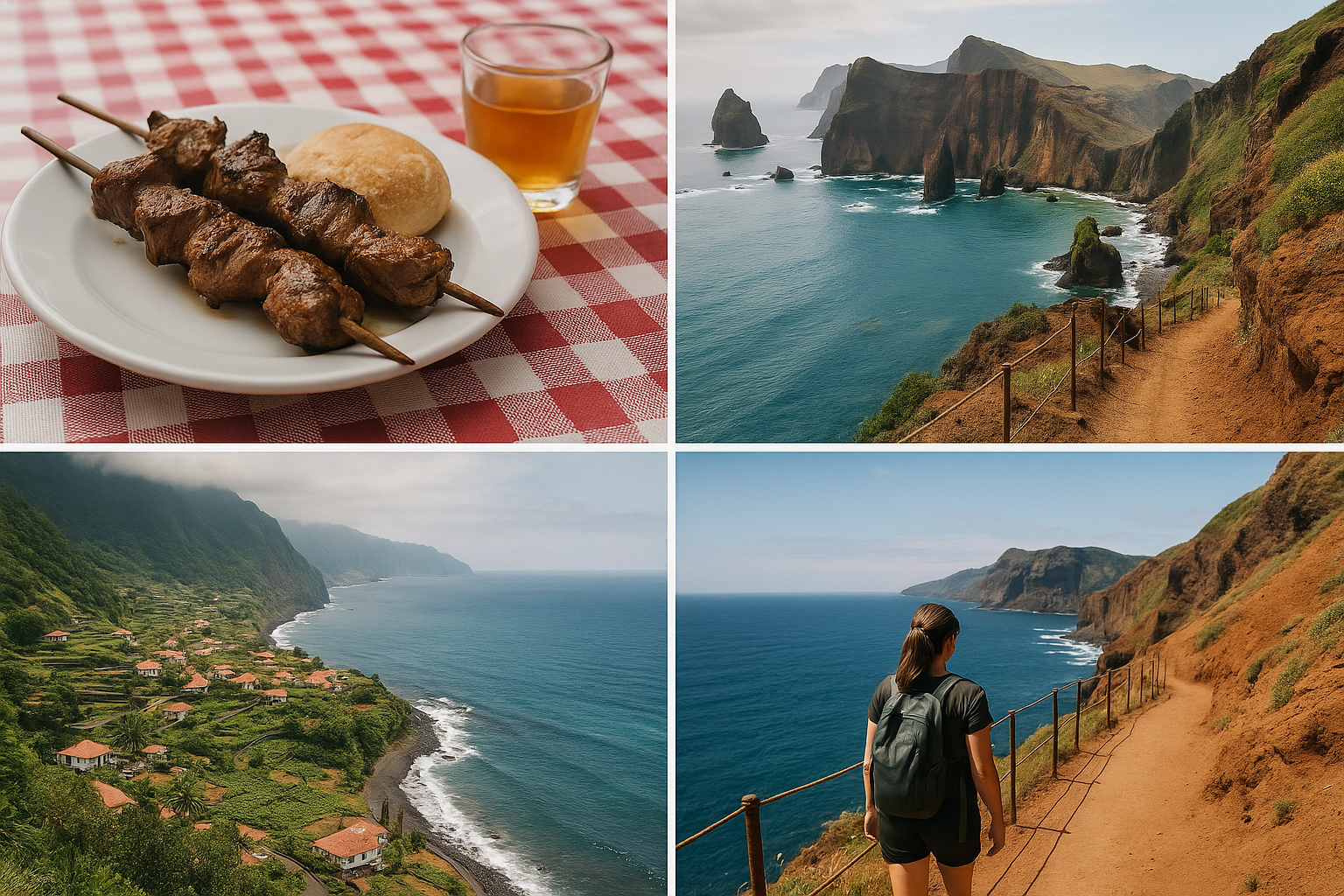
In the evening, find a restaurant in the Zona Velha and order espetada — beef skewered on a bay laurel stick and grilled over open coals. It’s a Madeiran classic for a reason. Pair it with local wine and settle into the pace of the island.
Day 2: Levada Walking Through Laurisilva Forest
Madeira’s levadas are irrigation channels that were built centuries ago to carry water from the wet north of the island to the drier south. Today, they double as some of the most extraordinary walking trails in Europe. The paths run alongside the channels through ancient laurisilva forest — a UNESCO-recognised ecosystem that has survived since before the last ice age.
A levada walk on your second day sets the tone for the whole week. The trails are relatively accessible compared to the island’s more demanding mountain routes, making them ideal for easing into Madeira’s hiking culture. The forest around you is dense, mossy, and genuinely ancient. You’ll hear water constantly. The light filters through in a way that makes everything feel slightly dreamlike.
Choose a trail that loops back to a viewpoint if you can. Finishing a levada walk with a panoramic view over the coast or the valley below is one of those moments that stays with you. Bring waterproof layers — the forest holds moisture even on sunny days — and good footwear.
Day 3: The North Coast and the Wild Atlantic Side
The north coast of Madeira is a different island. Where the south is warm and polished, the north is raw, dramatic, and far less visited. Rent a car or join a small group tour and drive up and over the mountains. The road itself is part of the experience — tunnels carved through volcanic rock, sudden views opening over vertiginous cliffs, and the Atlantic stretching endlessly below.
São Vicente is worth a stop. It’s a small town with a whitewashed church, a river running through it, and a genuinely local atmosphere. The volcanic caves nearby — formed by ancient lava flows — are fascinating if you’re curious about Madeira’s geological story.
Further along the north coast, Porto Moniz has natural lava rock pools where you can swim in seawater that’s been naturally contained by volcanic formations. It’s one of those places that photographs well but feels even better in person — cold, salty, and surrounded by black rock with the Atlantic crashing just beyond. Go in the morning before the day-trippers arrive.
Day 4: Hike Pico do Arieiro and the Mountain Plateau
This is the day you earn. Pico do Arieiro is Madeira’s third-highest peak, sitting at around 1,818 metres, and the views from the top are the kind that recalibrate your sense of scale. On a clear morning, you’re above the clouds. The landscape looks more like the Azores or the Canary Islands than anything you’d expect from a small Atlantic island.
The classic hike connects Pico do Arieiro to Pico Ruivo — Madeira’s highest point — along a ridge trail that passes through tunnels, across exposed ridgelines, and through cloud forest. It’s demanding. The path involves significant elevation change and some narrow sections, so check conditions before you set out and start early to beat the afternoon mist. But it’s one of the finest mountain walks in the entire Atlantic region, and completing it feels genuinely earned.
If the full ridge walk feels like too much, the summit of Pico do Arieiro alone is worth the drive up. The sunrise from the top — when the clouds below glow orange and the peaks above are still dark — is the kind of thing people describe for years. Set your alarm accordingly.
Day 5: Slow Down in the East — Canyons, Villages, and Coastal Paths
After a big hiking day, let day five breathe. The eastern end of Madeira is quieter and less developed than the west, and it rewards the travellers who make the effort to get there. The Ponta de São Lourenço peninsula is Madeira’s easternmost point — a narrow strip of volcanic rock jutting into the Atlantic with a walking trail along its spine. The landscape here is dramatically different from the lush interior: dry, windswept, and almost lunar in places. The contrast with the forest walks earlier in the week is striking.
On the way back, stop in one of the smaller villages in the eastern valleys. Santana is known for its traditional A-frame thatched houses — a genuinely distinctive architectural style that’s been preserved here. It’s a quiet, unhurried place. Sit in a café, order a bica, and watch the afternoon pass.
The east also has some quieter coastal paths and less-visited viewpoints. Ask locally about trails that don’t appear in the main guidebooks. Madeiran locals are generally happy to point you toward somewhere worth seeing — especially if you ask in a café rather than at a tourist office.
Day 6: Câmara de Lobos, Cabo Girão, and the Sunset Ritual
Câmara de Lobos is a fishing village just west of Funchal, and it’s one of the most visually compelling places on the island. The harbour is small and colourful, the boats are painted in vivid blues and greens, and the surrounding cliffs are enormous. It’s the kind of place that’s been painted by artists for centuries — and you’ll understand why immediately.
From Câmara de Lobos, the road climbs to Cabo Girão, one of the highest sea cliffs in Europe. There’s a glass-floored viewing platform at the top that juts out over the edge — not for the faint-hearted, but extraordinary. Look down at the small agricultural terraces clinging to the cliff face below. Farmers still work those plots, accessing them by cable car. It’s a reminder that Madeira’s relationship with its dramatic landscape is deeply practical, not just scenic.
Spend the late afternoon back in Funchal. Walk up through the Monte neighbourhood — either on foot or via the famous cable car — and take the traditional wicker toboggan ride back down through the streets. It’s touristy, yes, but it’s also genuinely fun and a piece of living local culture. End the evening somewhere with a view of the harbour as the sun goes down.
Day 7: Farmer’s Markets, Poncha, and a Final Wander
Your last full day should be unhurried. Sleep in. Walk somewhere you haven’t been yet. Madeira rewards the kind of exploration that happens when you put your phone away and just follow a street to see where it leads.
If it’s a Saturday, seek out a local market outside of Funchal’s main tourist circuit. Villages across the island hold weekly markets where you’ll find local cheese, honey, homemade spirits, and seasonal produce. These are the spaces where community gathers — not for visitors, but for itself. Being present in them, even briefly, gives you a different sense of the island.
Poncha is Madeira’s traditional drink — a mix of aguardente (sugar cane spirit), honey, lemon, and sometimes passion fruit. You’ll find it in almost every local bar, and it’s the kind of thing that tastes better at a wooden counter surrounded by regulars than it ever does in a tourist venue. Find a bar in a neighbourhood you haven’t explored yet and order one. It’s a good way to end a week.
For more inspiration on structuring your time and understanding what makes Madeira’s experiences genuinely local, The Smooth Escape’s Madeira road trip guide offers a useful complement to any itinerary you’re building.
Practical Notes for Your Madeira 7 Day Itinerary
- Getting around: A rental car gives you the most freedom, especially for the north coast and mountain days. Book in advance during peak summer months.
- Hiking preparation: Madeira’s trails range from easy levada walks to serious mountain routes. Check trail conditions and weather forecasts before each hike. The mountain weather changes quickly.
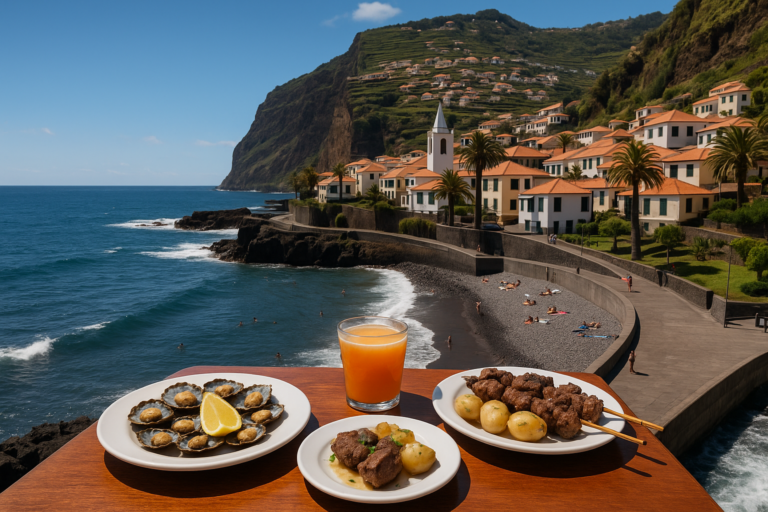
- Food: Eat where locals eat. Espetada, espada com banana (scabbard fish with banana), milho frito (fried polenta), and fresh tuna are all worth seeking out. Avoid restaurants with laminated picture menus near the main tourist zones.
- Accommodation: Funchal is the most convenient base, but staying a night or two in a village in the interior gives you a completely different perspective on the island.
- Budget: Madeira is generally more affordable than mainland European capitals, but prices in central Funchal have risen in recent years. Eating in local cafés and using public transport where possible keeps costs reasonable.
- Language: Portuguese is the local language. English is widely spoken in tourist areas, but learning a few basic phrases goes a long way — especially in smaller villages.
The Island That Stays With You
A thoughtfully planned Madeira 7 day itinerary isn’t really about covering maximum ground. It’s about spending enough time in each place to actually feel something — the cold mist of a levada forest, the vertigo of a sea cliff, the warmth of a fishing village at dusk. Madeira is small enough to feel manageable and wild enough to keep surprising you. The volcanic peaks, the ancient forests, the black-sand coves, the subtropical gardens — they all exist within a few kilometres of each other, and navigating between them is part of what makes a week here feel so full.
The best version of this Madeira 7 day itinerary is the one you adapt as you go. Let a local recommendation send you down a road you hadn’t planned. Stay longer at a viewpoint because the light is doing something extraordinary. Skip a sight if you’re tired and sit in a café instead. That’s not wasted time — that’s exactly how you collect the kind of memories that outlast any photograph. Madeira is one of those places you’ll still be thinking about long after you’ve gone home.
This article was produced with AI assistance and reviewed editorially.


Japan for First-Timers: A 2-Week Itinerary Beyond the Guidebook

The Solo Travel Confidence Guide: How to Travel Alone Without the Anxiety


