
Asia
Street Food Across Southeast Asia: What 200+ Stalls Taught Me That Guidebooks Won’t Tell You
Discover what 200+ street stall visits reveal about southeast asian street food culture, regional differences, and how to eat like locals—beyond guidebook recommendations

Why Southeast Asian Street Food Will Ruin Restaurant Dining for You (In the Best Way)
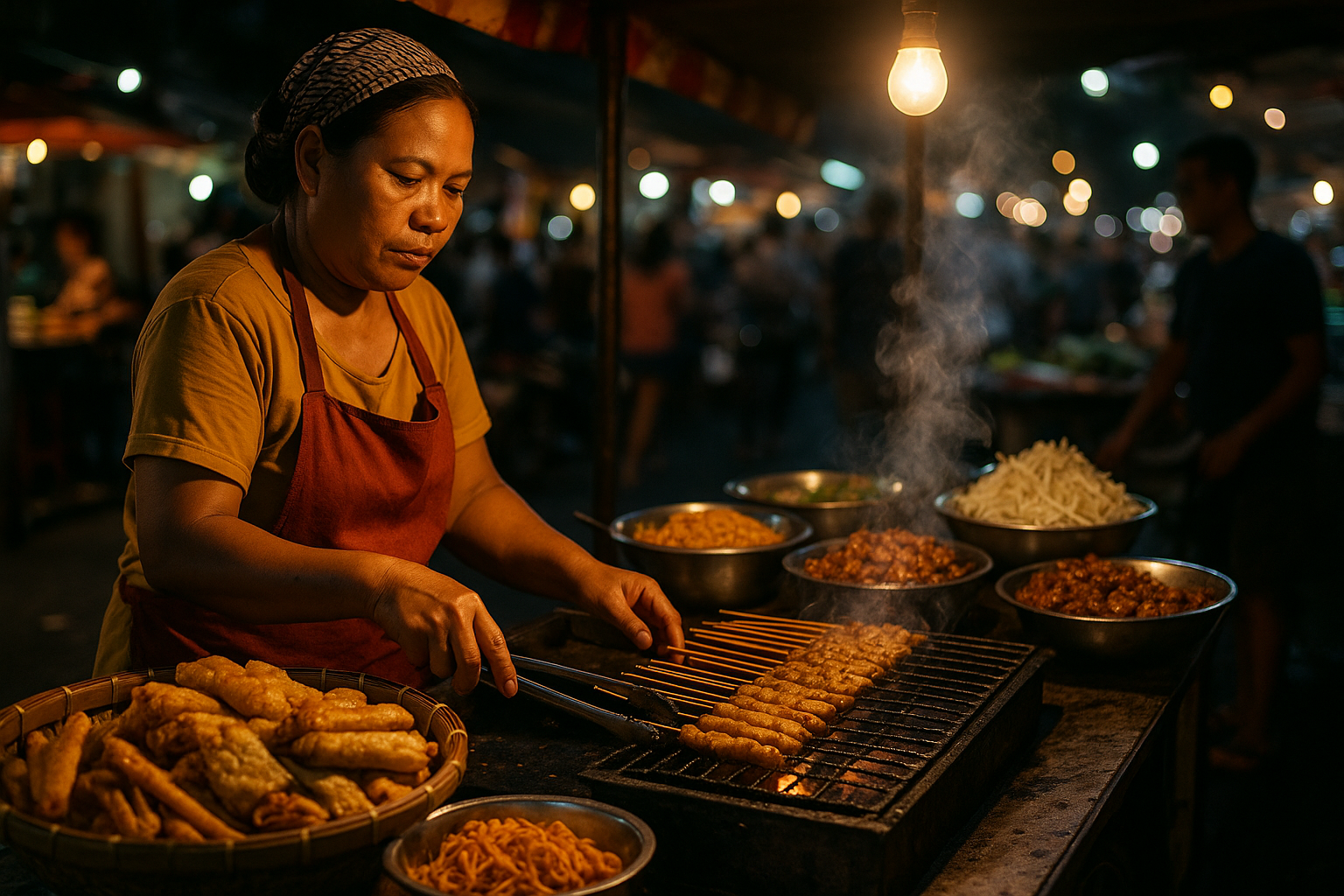
There’s a moment that happens to almost every traveler in Southeast Asia. You’re walking down a narrow alley, the air thick with charcoal smoke and lemongrass, and you spot a plastic stool wedged between a motorbike and a folding table. A vendor is working with quiet, practiced focus — ladling broth, scattering herbs, handing over a bowl to a construction worker who barely looks up from his phone. You sit down. You eat. And suddenly, every meal you’ve had in a restaurant back home feels slightly less alive. That’s the power of southeast asian street food. It doesn’t just feed you. It pulls you into a city’s rhythm in a way that no menu or guided tour ever could.
This guide goes deeper than a list of dishes to try. It’s about understanding why street food culture in Southeast Asia is the way it is, how to navigate it with confidence, and how to eat the way locals actually eat — not the way tourist maps suggest.
The Culture Behind the Cart: More Than Just a Meal
Southeast Asian street food isn’t a trend or a budget option. It’s a centuries-old institution. In countries like Thailand, Vietnam, Indonesia, Laos, and Singapore, eating outside the home has always been deeply woven into daily life. Street stalls are where people start their mornings, seal business deals over noodle soup, and catch up with neighbors after work. The food vendor isn’t just selling a meal — they’re holding a piece of community together.
What makes southeast asian street food so compelling is that vendors add their own personal touch to dishes that have been passed down through generations. A bowl of pho in Hanoi might look similar from one stall to the next, but each cook has their own ratio of spices, their own broth-simmering technique, their own way of balancing sweet, salty, sour, and spice. That individuality is exactly what you’re tasting when you sit down at a stall. It’s not standardized. It’s personal.
This is also why the same dish can taste completely different depending on the city, the region, or even the neighborhood. Street food is a living record of local history — influenced by trade routes, colonial history, religious practices, and agricultural geography. Eating your way through Southeast Asia is, in its own way, a form of cultural study.
Regional Differences That Will Surprise You
One of the biggest mistakes travelers make is treating Southeast Asia as a single culinary region. It isn’t. The food differences between countries — and even between the north and south of the same country — are dramatic.
Thailand: Bold, Fragrant, and Everywhere
Bangkok is widely recognized as one of the world’s great street food cities, and for good reason. The density of stalls is extraordinary. From early morning rice porridge vendors to late-night grilled skewer spots, the city never stops eating. Thai street food leans into bold flavors — fish sauce, galangal, kaffir lime leaves, and fresh chilies appear constantly. But travel north to Chiang Mai and the food shifts noticeably. Northern Thai cuisine features earthier, fermented flavors and dishes like khao soi, a coconut curry noodle soup that you won’t find on many Bangkok street corners.
Vietnam: The Art of Freshness
Vietnamese street food is built around freshness. Herbs are piled high, broths are clear and aromatic, and the balance between hot and cool, cooked and raw, is handled with real precision. Pho is the global ambassador, but banh mi — a baguette filled with pâté, pickled vegetables, fresh herbs, and your choice of protein — tells a more layered story about the country’s history. Hoi An’s white rose dumplings and cao lau noodles are dishes you can only find authentically in that specific town, made with local water that supposedly gives them a distinct texture. That kind of hyper-local specificity is what makes exploring Vietnamese street food so rewarding.
Indonesia: Depth, Spice, and Satay Smoke
Indonesian street food is rich and deeply spiced. One dish that captures the country’s approach beautifully is sate kambing — a traditional satay made with goat or mutton, marinated in kecap manis (sweet soy sauce), galangal, ground shallots, pineapple juice, and chili peppers, then grilled on bamboo skewers over charcoal. The marinade is complex and the cooking method matters enormously — the slight char from the grill is part of the flavor profile. It’s the kind of dish that rewards patience: watching a vendor fan the coals and rotate skewers with practiced ease tells you everything about how seriously Indonesians take their street food.
Laos: The Underrated Gem
Laos doesn’t get the same attention as its neighbors, but its street food scene is quietly brilliant. Nam khao is a perfect example — crispy deep-fried rice balls made with red curry paste, coconut flakes, and egg, then broken apart and mixed with sausage, tempura, peanuts, onion, and chili. You eat it wrapped in fresh lettuce leaves, which adds a cooling crunch to the warm, spiced rice. It’s a dish that involves your hands and your attention, and it’s the kind of thing you won’t find in most Western restaurants. Discovering it at a market stall in Vientiane feels like finding something genuinely off the beaten path.
Singapore: Hawker Centers as Cultural Institutions
Singapore’s approach to street food is unique. The country has formalized its vendor culture into hawker centers — large, open-air food complexes where dozens of stalls operate under one roof. You’ll find satay grilled fresh over charcoal and Hainanese chicken rice served with fragrant broth and chili sauce. Singapore’s hawker culture has even been recognized internationally as a significant culinary and social institution. The food is diverse, reflecting the country’s Chinese, Malay, and Indian communities, and the quality is consistently high. It’s a fascinating model: street food made accessible, organized, and deeply democratic — everyone eats here, from students to executives.
How to Find the Best Stalls (And Avoid the Tourist Traps)
Not all stalls are created equal, and learning to read a street food scene takes a little practice. Here’s what experienced travelers pay attention to.
Watch Where Locals Eat
This sounds obvious, but it’s genuinely the most reliable method. If a stall has a queue of people who clearly live and work nearby — not tourists clutching maps — that’s a strong signal. Locals don’t return to a stall out of loyalty alone. They return because the food is good and the price is fair. Follow that queue.
Look for Specialization
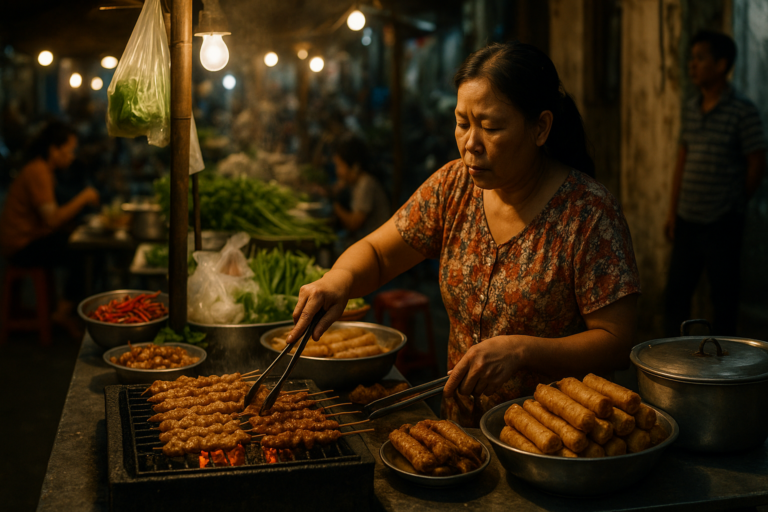
The best street food vendors usually do one thing, or a small handful of things, exceptionally well. A stall that sells only one type of noodle soup, or only grills skewers, has usually spent years perfecting that dish. Be cautious of stalls with enormous laminated menus covering every possible dish — that breadth often signals mediocrity designed for tourists who don’t know what to order.
Pay Attention to Turnover
High turnover is your friend. A stall that’s constantly cooking, constantly serving, and constantly restocking ingredients is working with fresh produce. A stall where food sits under a heat lamp for hours is a different story. Busy stalls in busy areas are usually your safest and most delicious bet.
Avoid the Obvious Tourist Zones
The stalls immediately surrounding major tourist attractions often charge inflated prices and calibrate their food to what they assume foreigners want — which usually means less spice, less authenticity, and more disappointment. Walk ten minutes away from the landmark and the food landscape changes completely. That’s where you find the real thing.
Eating Safely: Practical Tips for Street Food Confidence
One of the most common concerns travelers have about southeast asian street food is food safety. The honest answer is that eating street food carries some risk, but so does eating anywhere — and there are straightforward ways to minimize it without avoiding street food altogether.
- Eat hot food hot. Dishes cooked to order and served immediately carry far lower risk than pre-prepared food that’s been sitting out. Watch for the sizzle.
- Choose cooked over raw. Fully cooked dishes are generally safer than raw preparations, especially early in your trip while your stomach adjusts to new bacteria and flavor profiles.
- Be thoughtful about raw produce. Fresh herbs and salads are wonderful, but if you’re in an area with questionable water quality, be mindful about what’s been washed in what.
- Stay hydrated. Heat, spice, and unfamiliar food combinations can be hard on your body. Drink plenty of water — from sealed bottles — and don’t ignore what your body is telling you.
- Build up gradually. If you’re new to Southeast Asian food, don’t go straight to the spiciest dish on the menu on day one. Give your digestive system a few days to adapt.
- Trust your instincts. If a stall smells off, looks unclean, or has clearly been sitting in the heat for too long, move on. There’s always another stall around the corner.
Resources like the Broke Backpacker’s Southeast Asia street food guide offer additional practical advice for navigating the scene, and food-focused travel platforms like TasteAtlas are genuinely useful for researching regional dishes before you arrive.
The Stories Behind the Dishes
Every dish on a Southeast Asian street corner carries history. Understanding even a little of that context transforms eating from a passive activity into something more meaningful.
Hainanese chicken rice in Singapore traces its roots to Chinese immigrants from Hainan province who adapted their home cooking to local ingredients and tastes. What emerged is a dish that belongs entirely to Singapore now — poached chicken, fragrant rice cooked in chicken broth, and a chili sauce that every hawker makes slightly differently. It’s a dish built from displacement and adaptation, and it’s now one of the most beloved foods in the country.
Banh mi in Vietnam is a direct product of French colonial influence — the baguette itself arrived with French colonizers, but Vietnamese cooks made it entirely their own by filling it with local ingredients, pickled vegetables, and fresh herbs. The result is something neither French nor traditionally Vietnamese, but distinctly and deliciously both. Eating a banh mi is, in a small way, eating history.
Indonesian satay — whether made with chicken, beef, goat, or mutton — reflects the country’s position as a historic trading hub. The spices in the marinade, the technique of grilling on skewers, and the peanut sauce served alongside all carry traces of Arab, Indian, and Chinese culinary influence layered over centuries. That complexity is what makes Indonesian street food so endlessly interesting to explore.
How to Approach Street Food as a First-Timer
If you’ve never eaten much street food before, Southeast Asia can feel overwhelming at first. The noise, the smoke, the unfamiliar smells, the language barrier — it’s a lot to process. But here’s the thing: street food vendors are used to curious travelers. Most are genuinely happy to point at what they’re cooking, mime portion sizes, or hold up fingers to show you the price. A smile and a willingness to try goes a long way.
Start at a market rather than a lone roadside stall. Night markets in cities like Chiang Mai, Hanoi, or Luang Prabang offer a wide variety of dishes in one place, which lets you browse before committing. You can see what things look like before ordering, watch how dishes are prepared, and try small portions of several things rather than committing to one large meal.
Don’t be afraid to point at what someone else is eating and say you want the same thing. It’s one of the most universally understood forms of communication, and it almost always results in something delicious.
Why Street Food Is the Best Way to Understand a Place
You can visit every museum and temple in a city and still leave feeling like you only saw the surface. But eat where the locals eat — really eat there, sitting on a plastic stool, sweating in the heat, trying to figure out how to use chopsticks with a bowl that’s almost too hot to hold — and something shifts. You start to see the city differently. You notice the vendor who’s been at the same corner for thirty years. You notice the school kids sharing a bag of grilled corn on the way home. You notice that food, here, is never just food.
Southeast asian street food is one of the most accessible entry points into a culture that might otherwise feel foreign or hard to navigate. It requires no special knowledge, no expensive equipment, and no reservation. It just requires curiosity and a willingness to sit down somewhere unfamiliar and see what happens.
That’s the thing no guidebook can fully prepare you for: the feeling of being a stranger somewhere, and having a bowl of soup handed to you by someone who doesn’t speak your language, and realizing that this — right here — is exactly what travel is for. Go hungry. Stay curious. Let the food lead you somewhere unexpected.
This article was produced with AI assistance and reviewed editorially.


Southeast Asia on a Shoestring: Budget Routes Across Thailand, Vietnam & Cambodia

Southeast Asia Decoded: Hanoi 3-Day Itinerary + Vietnam Misconceptions Debunked


