
Tips & Tricks
Planning Your First Solo Trip: A Step-by-Step Blueprint for Unforgettable Travel
Learn how to plan your first solo trip with confidence. This guide covers destination selection, budgeting, safety, packing, and balancing structure with spontaneity.

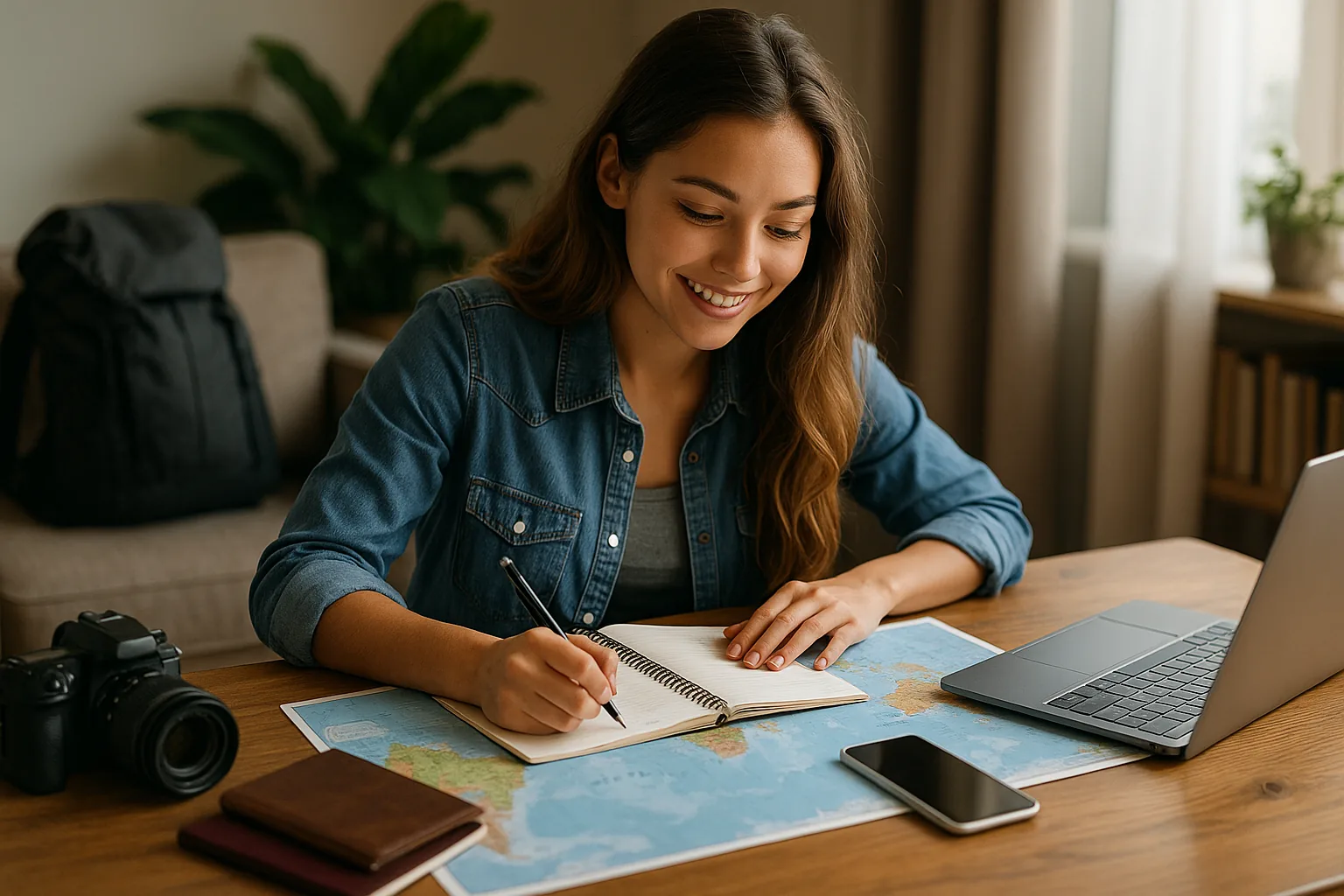
There’s a specific kind of excitement that hits when you finally decide to stop waiting for someone else’s schedule to align with yours and just book the trip yourself. Planning your first solo trip can feel overwhelming at first — where do you even start? — but it’s also one of the most empowering things you’ll ever do for yourself. This guide walks you through the entire process, from picking your destination to packing your bag, so you can swap anxiety for confidence and actually enjoy the journey ahead.
Why Solo Travel Is Worth the Leap
Solo travel isn’t just a travel style. It’s a mindset. When you travel alone, every decision is yours — where to eat, how long to linger in a market, whether to take the scenic route or the fast one. That freedom is intoxicating once you experience it.
But beyond the freedom, solo travel builds something harder to put into words. You figure out how to navigate an unfamiliar city, how to ask for help in a language you barely speak, how to sit comfortably with your own company. You come home different. Not dramatically, not overnight — but noticeably. More capable. More curious. More open.
The first trip is always the hardest to plan because you don’t yet know what kind of traveler you are. That’s okay. You’ll figure it out on the road. For now, let’s get you there.
Choosing the Right Destination for Your First Solo Adventure
The destination question is where most first-time solo travelers get stuck. The world is enormous, and narrowing it down can feel paralyzing. The trick is to start with yourself, not a map.
Ask yourself a few honest questions. What kind of experiences genuinely excite you — nature, history, food, nightlife, art, architecture? Do you want somewhere familiar enough to ease you in, or are you ready to dive into the deep end? How comfortable are you navigating language barriers? How much time do you have?
For a first solo trip, many travelers find it helpful to choose a destination with a well-established backpacker or solo travel community. These places tend to have good tourist infrastructure, plenty of English-speaking locals or signs, and a social scene that makes it easy to meet other travelers if you want company. Think cities with vibrant hostel cultures, well-documented public transport, and a reputation for being welcoming to independent travelers.
That said, “beginner-friendly” doesn’t mean boring. Southeast Asia offers an extraordinary mix of temples, street food, beaches, and jungle for relatively modest costs. Southern Europe rewards slow wandering through historic neighborhoods, local markets, and coastal villages. Central America delivers adventure — volcanoes, wildlife, surf — with a compact geography that makes logistics manageable. None of these are limiting choices; they’re launching pads.
Research top attractions according to your personal interests — nature reserves, museums, street food scenes, historic monuments — and let those interests guide your shortlist. Then pick one. You can always go somewhere else next time.
Building a Budget That Actually Works
Budgeting for a solo trip is less about finding the cheapest option for everything and more about knowing where your money goes furthest and where it’s worth spending more.
Start by estimating your major costs: flights, accommodation, food, local transport, activities, and a buffer for unexpected expenses. Be honest about your travel style. If you’re happy staying in hostel dorms and eating street food, your daily costs will look very different from someone who prefers private rooms and sit-down restaurants. Neither is wrong — they’re just different trips.
A useful approach is to research the average daily cost for travelers in your target destination. Travel forums, blogs, and budget travel communities are full of real spending breakdowns from people who’ve been there recently. Use those as a starting point, then adjust for your own habits.
👉 Read also: First Trip Abroad: The Complete Checklist for Young Travelers (Without the Overwhelm)
A few budget principles worth keeping in mind:
- Book flights early when you can, but stay flexible on dates if your schedule allows — mid-week departures and arrivals are often cheaper.
- Factor in travel insurance from the start, not as an afterthought. It’s a non-negotiable cost, not an optional extra.
- Set aside a contingency fund — roughly ten to fifteen percent of your total budget — for missed connections, medical expenses, or simply an experience you didn’t plan for but don’t want to miss.
- Notify your bank or credit card company before you travel so your cards aren’t blocked for suspicious overseas activity.
- Research whether your destination is predominantly cash-based or card-friendly, and plan accordingly.
The goal isn’t to spend as little as possible. It’s to spend intentionally, so you’re not cutting corners on the things that matter most to you.
Visas, Insurance, and the Documents You Actually Need
This is the part of planning first solo trips that people tend to procrastinate on — and it’s the part that can derail everything if you leave it too late.
Visas vary enormously depending on your nationality and your destination. Some countries offer visa-free entry or visa-on-arrival for certain passport holders; others require you to apply weeks or months in advance. Check the official government travel advisory website for your country, as well as the embassy or consulate website of your destination country. Don’t rely solely on travel blogs for visa information — rules change, and you need the most current official guidance.
Travel insurance is not optional. Full stop. A good policy covers medical emergencies and evacuation, trip cancellation or interruption, lost or stolen luggage, and sometimes activities like hiking or water sports if you plan to do them. Read the policy carefully before you buy — understand what’s covered, what’s excluded, and how to make a claim. The Travel Insured International planning guide is a useful starting point for understanding what to look for in a solo travel policy.
Beyond visa and insurance, make sure you have:
- A valid passport with enough blank pages and at least six months of validity beyond your return date
- Digital and physical copies of all important documents — passport, insurance policy, booking confirmations, emergency contacts
- Your accommodation addresses written down somewhere accessible offline, in case you lose phone signal on arrival
- Local emergency numbers for your destination
Share your itinerary with someone you trust at home. It doesn’t need to be minute-by-minute — just enough that someone knows where you’re supposed to be and how to reach you.
Booking Flights and Accommodation: The Practical Playbook
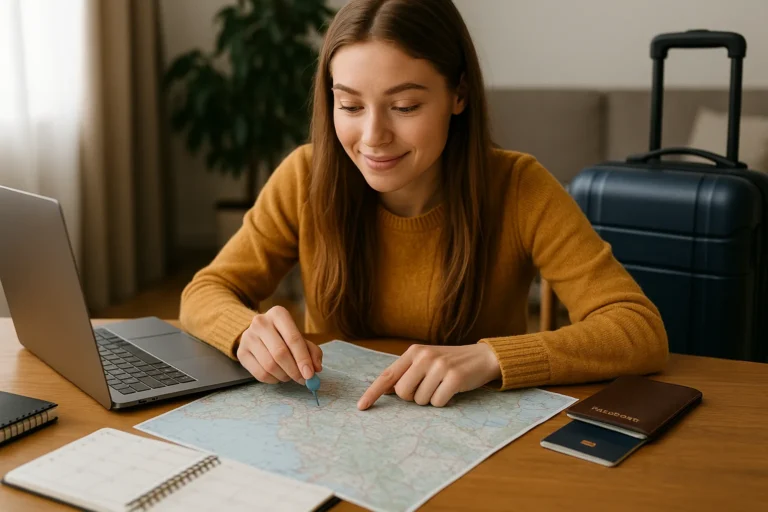
Once your destination is locked and your budget is set, it’s time to make things real. Booking your flight is the moment the trip stops being a fantasy and starts being a plan.
Use flight comparison tools to get a sense of price ranges across different dates and routes. Consider whether a layover city might be worth exploring — sometimes a longer journey with a stopover in an interesting hub costs less and gives you a bonus destination. Once you find a good fare, book it. Waiting for prices to drop is a gamble that rarely pays off.
For accommodation, solo travelers have more options than ever. Hostels remain one of the best choices for a first solo trip — not just because they’re cost-effective, but because they’re genuinely social environments. A good hostel common room or organized hostel event can turn a solo trip into something that feels surprisingly communal, without sacrificing your independence. Look for hostels with strong recent reviews, a central location, and a social atmosphere if that appeals to you.
If you prefer more privacy, guesthouses, budget hotels, and apartment rentals all work well for solo travelers. The key is to book your first few nights in advance, especially if you’re arriving somewhere new late at night or in a busy tourist season. After that, you can be more flexible and decide on the fly.
When choosing accommodation, pay attention to:
- Location relative to public transport and the areas you want to explore
- Solo traveler reviews specifically — they often highlight things group travelers don’t notice
- Security features like lockers, 24-hour reception, and key card access
- Cancellation policies, so you can adapt your plans without losing money
Planning Your Days Without Over-Scheduling Everything
Here’s where a lot of first-time solo travelers go wrong: they try to plan every hour of every day, then feel like they’ve failed when reality doesn’t match the spreadsheet. The better approach is to plan your foundations and leave room for the unexpected.
👉 Read also: Solo Travel in 2026: The Best Destinations for First-Timers Going It Alone
Map out the experiences you genuinely don’t want to miss. If there’s a specific museum, a day trip, a cooking class, or a viewpoint that’s central to why you chose this destination, book or research those in advance. Give yourself a loose structure for each day — a morning anchor, an afternoon direction — but resist the urge to fill every gap.
The best moments of most solo trips happen in the unplanned spaces. The conversation with a local at a café that turns into a recommendation for a neighborhood you hadn’t heard of. The afternoon you spend just wandering because you got pleasantly lost. The market you stumbled into on your way somewhere else. These things can’t be scheduled, but they need space to happen.
Setting intentions is more useful than building rigid itineraries. Instead of “visit five attractions on Tuesday,” try “spend Tuesday exploring the old quarter and eating somewhere the locals actually go.” That gives you direction without boxing you in.
Technology helps here. Offline maps, translation apps, and local travel forums mean you can research on the go, adapt your plans in real time, and find hidden gems without needing to have figured everything out in advance. Download what you need before you leave — offline maps especially — so you’re not dependent on a reliable data connection.
Safety, Confidence, and Trusting Your Instincts
Safety is a real consideration for solo travelers, and it’s worth taking seriously without letting it dominate your thinking. Most solo trips go smoothly because most people in most places are decent human beings who have no interest in ruining your holiday.
That said, good habits matter. Stay aware of your surroundings, particularly in crowded tourist areas where pickpocketing is common. Keep your valuables secure — a money belt or a hidden pocket for your passport and main cards, with a small amount of accessible cash for everyday use. Trust your gut. If a situation feels off, remove yourself from it. You don’t owe anyone an explanation.
Research your destination’s specific safety considerations before you go — not to scare yourself, but to be informed. Some areas have higher rates of petty theft; some have specific scams targeting tourists; some require more caution at night. Knowing this in advance means you can navigate confidently rather than nervously.
Connect with other travelers when it feels right. Solo travel doesn’t mean being alone the whole time — it means having the freedom to choose your company. Hostels, walking tours, and local meetups are all natural ways to find people heading in the same direction, literally or figuratively.
The Mindset That Makes Solo Travel Work
Planning a first solo trip is really two things at once: a logistical process and a personal one. The logistics — destination, flights, accommodation, documents, budget — are manageable once you break them into steps. The personal part is trickier, because it involves getting comfortable with uncertainty and trusting yourself to handle whatever comes up.
You will get lost. You will probably book something that turns out to be less exciting than the reviews suggested. You might have a day where everything goes slightly sideways and you feel very far from home. These things happen to every solo traveler, including the experienced ones. They’re not signs that you made a mistake. They’re part of the experience — and more often than not, they become the stories you tell later.
Set intentions for your trip beyond the practical. What do you actually want to get out of this? More confidence? A deeper connection with a culture you’ve always been curious about? Time to think? Permission to be spontaneous? Knowing your why helps you make decisions on the road and keeps you grounded when things don’t go to plan.
The travelers who get the most out of solo trips aren’t the ones with the most detailed itineraries. They’re the ones who stay curious, stay open, and say yes to things that feel slightly outside their comfort zone. That’s where the real adventure lives.
You don’t need to have everything figured out before you go. You just need to go. Start with the essentials, build in some flexibility, and trust that you’re more capable than you think. Your first solo trip won’t be perfect — it’ll be better than that. It’ll be yours.
This article was produced with AI assistance and reviewed editorially.


Planning Your First Solo Trip: A Step-by-Step Blueprint for Unforgettable Travel

Teaching English Abroad in 2026: Top Countries, Visa Requirements & Real Salaries


