
Asia
Samarkand & Bukhara: Chasing the Silk Road Through Uzbekistan’s Ancient Cities
Explore Samarkand and Bukhara in Uzbekistan along the ancient Silk Road. Discover visa requirements, transportation, authentic neighborhoods, and practical tips for 2026.

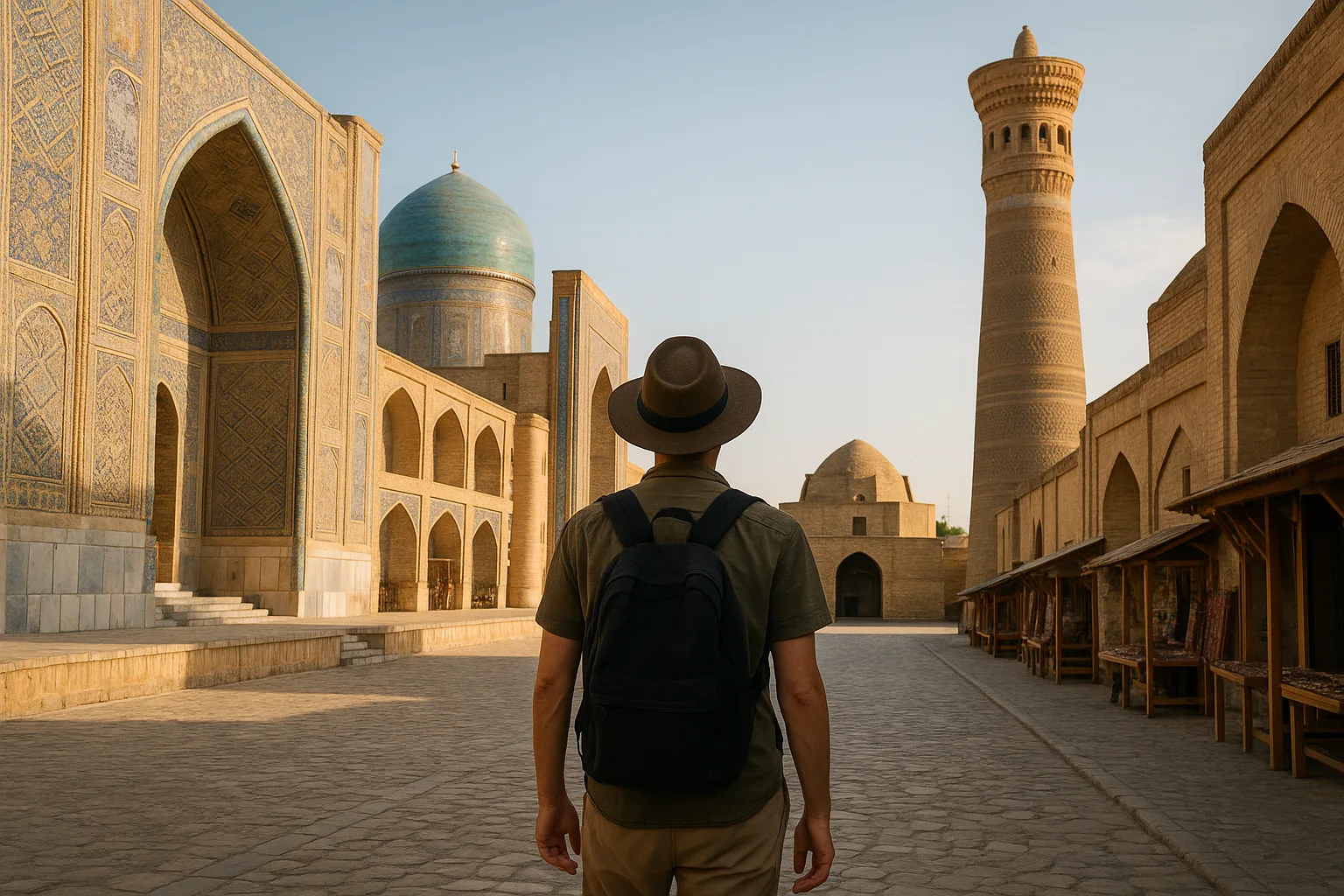
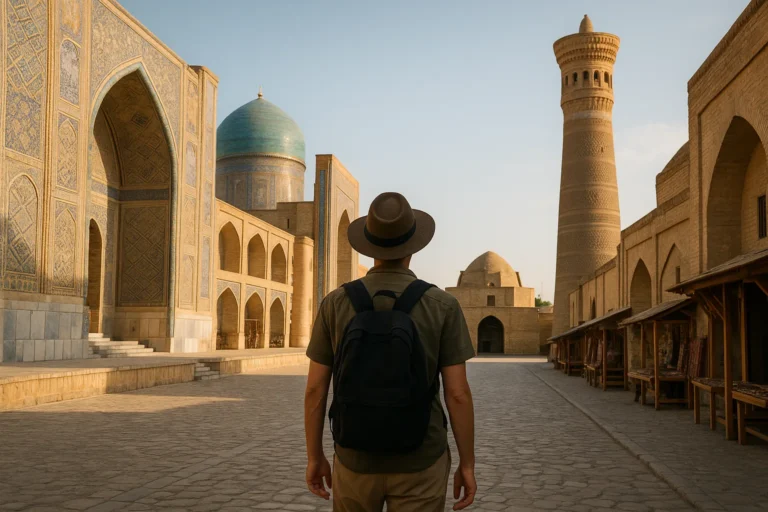
There’s a moment, somewhere between stepping off a train and standing in front of a 600-year-old tiled facade that seems to glow in the afternoon light, when you realize that Samarkand and Bukhara in Uzbekistan are not just destinations — they’re experiences that rewire the way you think about history, culture, and travel itself. These two cities sit along what was once the most consequential trade network the world has ever known: the Silk Road, a vast web of routes stretching over 6,400 kilometers across continents, carrying not just silk and spices but ideas, religions, and entire civilizations. If you’re in your twenties and looking for a journey that feels genuinely different from anything you’ve done before, Central Asia is calling — and it’s worth answering.
Why Samarkand and Bukhara Belong on Your Travel Radar
Most young travelers have heard of Southeast Asia, the Balkans, or South America as go-to adventure destinations. Uzbekistan doesn’t always make the shortlist — and that’s exactly what makes it so compelling right now. The country has been quietly transforming its tourism infrastructure over the past several years, simplifying visa access and streamlining transport connections in ways that make it far more accessible than it once was. You don’t need to be a seasoned expedition traveler to get here anymore. You just need curiosity and a willingness to step somewhere genuinely off the beaten path.
Samarkand and Bukhara are the twin anchors of any Uzbekistan itinerary, and they complement each other beautifully. Samarkand hits you with grandeur — enormous turquoise domes, monumental squares, and the feeling that you’ve walked into a history book. Bukhara is quieter, more intimate, a desert city that feels like it’s been preserved in amber. Together, they offer a portrait of a civilization that once sat at the crossroads of the ancient world, and they do it in a way that no museum ever could.
Samarkand: Standing at the Center of the Ancient World
When you arrive in Samarkand, give yourself a moment before you rush anywhere. The city has a particular energy — a mix of living, breathing community and monumental heritage — that rewards those who slow down and pay attention. The streets around the old city are lined with teahouses, bread stalls, and locals going about their day with a warmth that you’ll find characteristic of Uzbekistan as a whole.
The undeniable centerpiece is Registan Square, one of the most visually stunning public spaces anywhere in the world. Three grand madrasas — Islamic schools of learning — frame the square on three sides, each covered in intricate geometric tilework in shades of cobalt, turquoise, and gold. Standing in the middle of Registan at sunrise, before the tour groups arrive, is one of those travel moments you’ll genuinely struggle to describe to people back home. The scale is almost disorienting. The detail is almost overwhelming. Just stand there and let it settle.
Beyond Registan, make time for Shahi Zinda, a remarkable historical cemetery and necropolis that stretches along a narrow lane lined with tiled mausoleums. It’s quieter than Registan, more contemplative, and in many ways more moving. The tilework here is among the finest in Central Asia — deep blues and greens that seem to shift in different light. Locals still come here to pay their respects, which gives the site a living, spiritual quality that purely tourist-facing monuments sometimes lack. Respect that atmosphere when you visit.
Wander beyond the major landmarks and you’ll find neighborhoods where daily life unfolds at its own pace. Markets where fresh non — the round Uzbek flatbread baked in clay ovens — is sold warm from the baker’s hands. Workshops where craftspeople produce the silk and embroidery that have been Samarkand’s calling card for centuries. These quieter corners of the city are where you’ll find the most authentic connections, and they’re completely free to explore.
Bukhara: The Desert City That Time Forgot (Almost)
The train ride from Samarkand to Bukhara takes you through a landscape that shifts gradually from green to arid, and by the time you pull into the station, you’re already in a different mood. Bukhara has a more compact, walkable old city than Samarkand, and its atmosphere is distinctly more relaxed. Many travelers actually end up preferring it — there’s something about wandering Bukhara’s narrow lanes in the early evening, when the light turns golden and the heat of the day begins to ease, that feels almost cinematic.
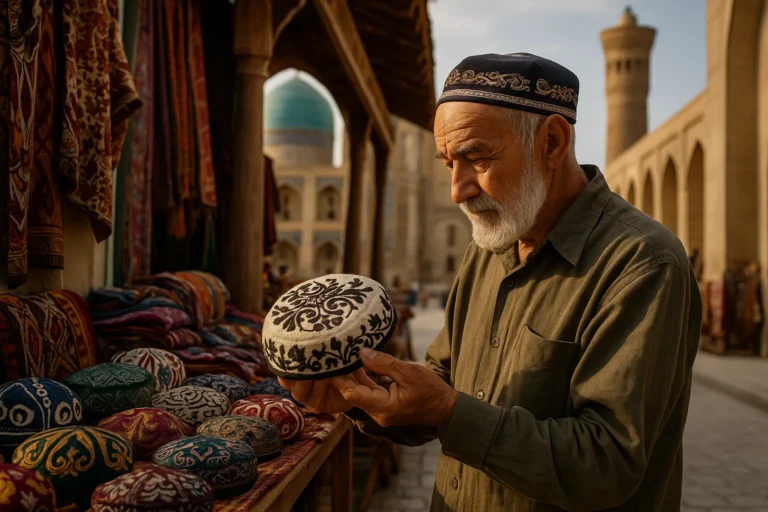
The old city is a UNESCO World Heritage Site, and the density of historic architecture here is extraordinary. Madrasas are central to Bukhara’s identity — the city was historically one of the great centers of Islamic scholarship, and you’ll find these elegant schools of learning around almost every corner. Some are still active cultural spaces; others have been converted into craft markets where local artisans sell ceramics, miniature paintings, and hand-embroidered textiles. It’s a genuinely good place to pick up something meaningful rather than mass-produced.
👉 Read also: Uzbekistan's Silk Road Cities: Samarkand & Bukhara in 2026
The Kalon Minaret dominates the skyline and has done so for nearly a thousand years. It’s one of those structures that earns its reputation simply by existing — you see it from across the city, and it keeps drawing you back. The surrounding complex, including the Kalon Mosque and the Mir-i-Arab Madrasa opposite, forms one of the most cohesive historic ensembles you’ll encounter anywhere in Central Asia.
Bukhara also rewards early mornings. Get up before the heat builds and walk to the Lyabi-Hauz pond area, a central plaza shaded by ancient mulberry trees where locals gather to drink tea and play chess. It’s the kind of scene that makes you want to pull up a chair and stay for hours — and you should. Order a pot of green tea, watch the city wake up, and resist the urge to check your phone. Some experiences deserve your full attention.
Getting Between the Cities and Around Uzbekistan
One of the genuinely exciting developments in Uzbekistan’s tourism scene is the high-speed rail connection between major cities. The Afrosiyob train service links Tashkent, Samarkand, and Bukhara, making travel between them fast, comfortable, and surprisingly affordable by international standards. It’s the kind of infrastructure that turns a multi-city trip from a logistical challenge into a straightforward adventure. Book tickets in advance where possible, especially during peak travel months, as seats can fill up.
Within Samarkand and Bukhara themselves, the old city areas are best explored on foot. Both cities are compact enough that you can cover the main sites without needing transport, though taxis and ride-hailing apps can help when you’re moving between the historic center and outlying attractions. Renting a bicycle is also worth considering in Bukhara, where the flat terrain and relatively quiet streets make it a genuinely pleasant way to explore.
If you’re planning a broader Uzbekistan itinerary, Khiva — with its dramatic ancient city walls — is a natural third stop, though it requires a longer journey westward. Many travelers do a Tashkent–Samarkand–Bukhara–Khiva circuit over two weeks, which gives you a satisfying sense of the country’s geographic and cultural range.
Visas, Entry, and Practical Essentials
Uzbekistan has made significant strides in making itself accessible to international visitors, and for many nationalities, entry is now considerably more straightforward than it was even a few years ago. Always check the current visa requirements for your specific passport before you travel, as policies can change and vary significantly depending on your nationality. The official Uzbekistan e-visa portal is the most reliable starting point for current, accurate information — don’t rely solely on travel blogs or forums for something this important.
For most visitors, the e-visa system allows you to apply online before arrival, which removes a lot of the uncertainty that used to surround travel to Central Asia. Processing times and fees vary, so build this into your planning timeline rather than leaving it to the last minute. It’s also worth checking whether your nationality qualifies for visa-free access, as Uzbekistan has been expanding its list of eligible countries.
A few practical notes that apply broadly: cash is still important in many parts of Uzbekistan, particularly in smaller establishments and markets, so don’t rely entirely on cards. The local currency is the som, and you’ll find exchange facilities at airports, banks, and many hotels. Mobile data is widely available through local SIM cards, which you can pick up at the airport or in city centers — a local SIM is one of the best investments you can make for navigating, translating, and staying connected on the road.
Cultural Respect and Traveling with Awareness
Uzbekistan is a predominantly Muslim country with deep traditions of hospitality, and traveling there with cultural awareness will enrich your experience enormously. Dress modestly when visiting mosques, madrasas, and other religious sites — covering your shoulders and knees is the baseline, and women may be asked to cover their hair in certain spaces. Carrying a light scarf is a practical solution that takes up almost no space in your bag.
👉 Read also: Central Asia 2026: Samarkand, Bukhara & Tashkent for First-Time Visitors
The concept of hospitality in Uzbek culture goes well beyond what most Western travelers are used to. If you’re invited into someone’s home or offered tea, accepting graciously is both polite and an opportunity for a genuine human connection that you won’t find in any guidebook. Take your shoes off at the door, accept food with both hands, and don’t rush. These moments of slow, genuine exchange are often the ones you’ll remember most vividly.
Photography is generally welcomed at major sites, but always ask before photographing people, particularly in more intimate or religious settings. A smile and a gesture go a long way even without a shared language. Uzbekistan has a tradition of warmth toward visitors that feels genuine rather than transactional, and meeting it with the same openness will shape the kind of trip you have.
Budget and Accommodation: What to Expect
Uzbekistan is, by global standards, a very affordable destination for young travelers. Accommodation ranges from basic guesthouses to beautifully restored historic riads and boutique hotels in converted traditional houses — the latter being particularly atmospheric in Bukhara’s old city, where staying within the historic center puts you steps from the main sites and lets you experience the city at its quietest, early morning hours.
Eating well is inexpensive by almost any measure. Plov — the beloved Uzbek rice dish cooked with lamb, carrots, and spices — is the national staple, and you’ll find it everywhere from roadside stalls to sit-down restaurants. Shashlik (grilled meat skewers), lagman (hand-pulled noodle soup), and freshly baked non bread will feature heavily in your days, and none of it will strain your budget. Eating where locals eat — look for busy spots with no English menus — is both the most authentic and most economical approach.
Entry fees for major sites like Registan Square apply and are worth factoring into your daily budget, though they remain modest compared to equivalent heritage sites in Europe or East Asia. A combined approach — paying to enter the headline monuments while spending freely in markets, teahouses, and neighborhoods — gives you the full picture without unnecessary expense.
The Best Time to Visit and How Long to Stay
Uzbekistan’s climate is continental and can be extreme in both directions. Spring (April to June) and autumn (September to November) are widely considered the most comfortable times to visit — temperatures are pleasant, the light is beautiful, and the cities feel alive without the intensity of summer heat, which can be genuinely punishing in July and August. If you do visit in summer, plan your sightseeing for early morning and late afternoon, and rest during the hottest part of the day.
For Samarkand and Bukhara specifically, plan for at least two full days in each city to cover the main sites without rushing and to leave room for the unplanned wandering that often produces the best memories. A week combining both cities, with a day or two in Tashkent on either end, gives you a satisfying and complete introduction to Uzbekistan. If you have more time, extending to Khiva or exploring the surrounding countryside adds real depth to the journey.
For more context on the history and geography of the Silk Road that shaped these cities, this overview of Silk Road history is a useful starting point before you go.
Samarkand and Bukhara are the kind of places that stay with you — not because they’re perfect or easy, but because they’re genuinely, irreducibly themselves. They’ve been standing at the crossroads of the world for centuries, absorbing influences from every direction while remaining unmistakably Central Asian. When you walk through Registan at dawn, or sit by the Lyabi-Hauz pond watching the day begin, you’re not just ticking off landmarks — you’re connecting with something much larger than a travel itinerary. That’s the thing about the Silk Road: it was always about the exchange, and the best version of your trip to Uzbekistan will be too.
This article was produced with AI assistance and reviewed editorially.


Teaching English Abroad in 2026: Top Countries, Visa Requirements & Real Salaries

Where to Stay in Latin America’s Top Destinations: Buenos Aires, Bogota & Beyond


