
Asia
Almaty, Kazakhstan: The Green City That Surprises Every Backpacker
Discover why Almaty is a hidden gem for backpackers. Explore Tian Shan mountains, vibrant neighborhoods, local food, and outdoor adventures in Kazakhstan’s most dynamic c

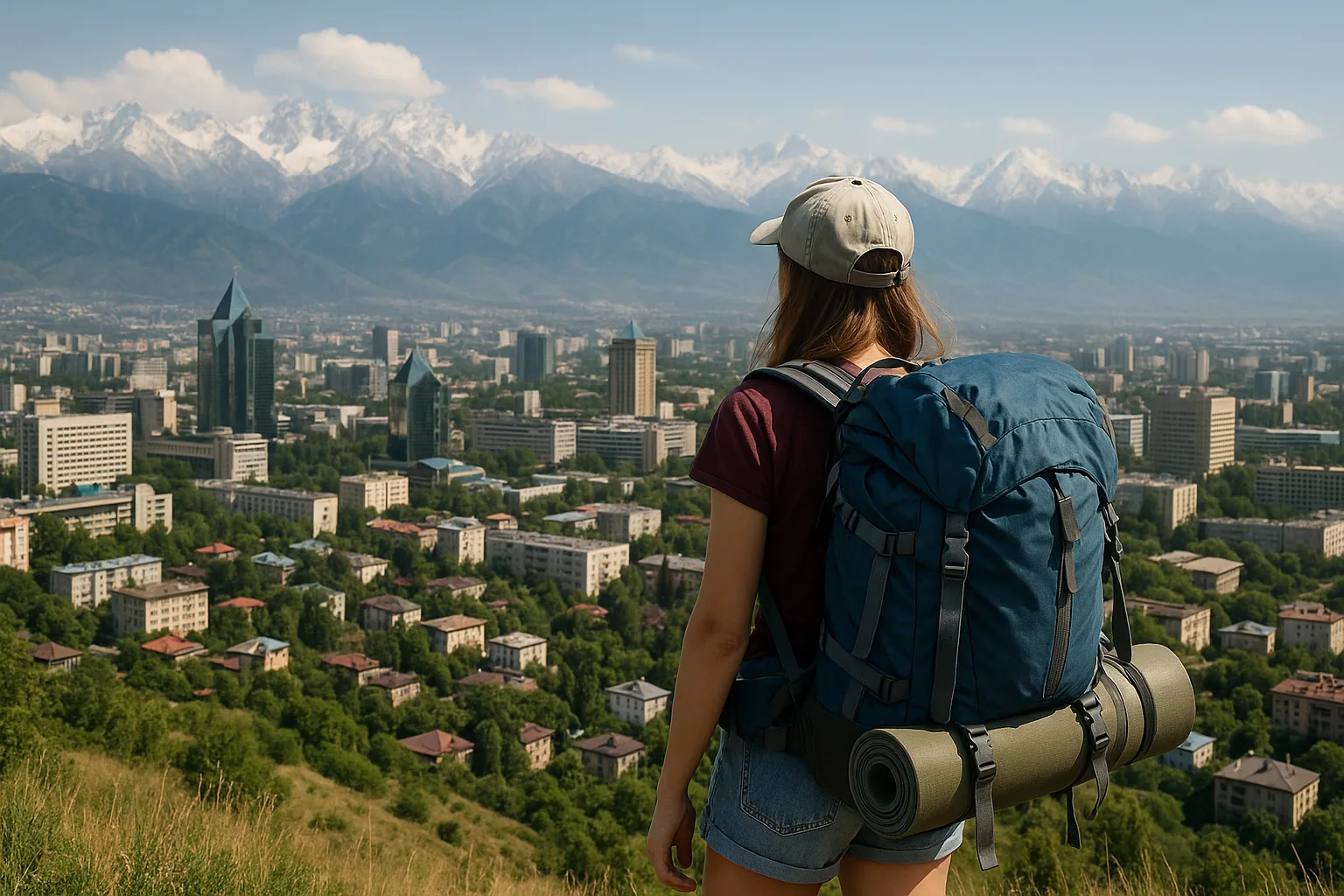
If you’re even slightly curious about backpacking Almaty, Kazakhstan, let this be the nudge you needed. Almaty sits at the foot of the Tian Shan mountains like a city that couldn’t quite decide whether it wanted to be a European capital or a Central Asian adventure base — and honestly, that tension is exactly what makes it one of the most quietly compelling destinations for young travelers right now.
Why Almaty Keeps Surprising First-Time Visitors
Most people arrive in Almaty expecting something grey, post-Soviet, and a little austere. What they find instead is a city bursting with tree-lined boulevards, a genuinely buzzing café culture, and snow-capped peaks visible from the city centre on a clear day. Almaty is Kazakhstan’s largest and most vibrant city — and while it’s no longer the official capital, it never really stopped feeling like one.
The architecture tells the whole story of the city’s layered history. Walk through the centre and you’ll pass Brutalist concrete giants from the Soviet era standing next to sleek modern glass towers and ornate bazaars. It’s visually chaotic in the best possible way. There’s the Children’s Republican Palace, a Soviet-era youth centre that looks like a golden yurt crossed with a UFO — one of those buildings you genuinely can’t believe is real until you’re standing in front of it. Then there’s Independence Square, anchored by the striking Golden Warrior Monument, which gives you a real sense of Kazakhstan’s post-independence identity.
Almaty’s food scene is another layer entirely. It’s been shaped by Kazakh nomadic tradition, Russian imperial influence, Silk Road trade routes, and Soviet internationalism — all at once. You can eat your way through centuries of history in a single afternoon, and it won’t cost you much to do it.
Exploring the Mountains Right on Almaty’s Doorstep
Here’s the thing that separates Almaty from almost every other city in Central Asia: you can be standing in a mountain landscape within an hour of leaving your hostel. The Tian Shan mountains rise well above 4,000 metres just beyond the city’s southern edge, and they’re not just scenic backdrop — they’re genuinely accessible for backpackers who want to get out there.
One of the most iconic spots is Big Almaty Lake, which sits at an altitude of 2,511 metres. The water is a surreal turquoise-green colour, surrounded by rocky peaks, and the whole scene feels almost too dramatic to be real. It’s the kind of place where you take a hundred photos and still feel like none of them quite capture it. Getting there involves a bit of effort — you’ll need to arrange transport or join a shared group — but that’s part of the experience.
The national park around Almaty covers an enormous 200,000 hectares, and it caters to every level of adventurer. If you’ve only got a few hours, there are easy valley walks that take around two hours and give you a genuine taste of the landscape. If you’re more serious about trekking, there are multi-day routes that climb to passes above 3,500 metres, where the air is thin and the views are the kind that reset your perspective on everything. Pack layers regardless of the season — the mountains don’t care what month it is.
And if you want to go deeper into Kazakh nomadic culture, yurt experiences are available within 60 to 90 minutes of the city. Spending a night in a traditional yurt in the mountains, eating local food and watching the stars from a landscape that feels untouched, is one of those memories that stays with you long after you’ve gone home.
Getting Up High: Kok-Tobe and the City View You Can’t Skip
Kok-Tobe Hill is one of those places that earns its reputation. You can take a cable car up from the city, and as you rise above the rooftops, the full scale of Almaty opens up beneath you — a dense green canopy of trees stretching out in every direction, with the Tian Shan mountains forming a dramatic wall to the south. It’s genuinely one of the better urban viewpoints in all of Central Asia.
👉 Read also: Kazakhstan's Hidden City: Almaty's Green Neighborhoods, Mountains & European Vibe
At the top, there’s a park with small rides, food stalls, and one of the city’s more endearing curiosities: a statue of The Beatles. It’s completely unexpected, slightly surreal, and very Almaty. The city has this habit of mixing the deeply local with the surprisingly international, and Kok-Tobe captures that perfectly. Go at sunset if you can — the light on the mountains at that hour is something else.
Eating Your Way Through Almaty’s Food Scene
Almaty is a serious food city, and if you approach it with curiosity, you’ll eat extraordinarily well without spending much. The Green Bazaar is the place to start. It’s a covered market that pulls you in with the smell of spices, the colour of dried fruits piled high, and stalls selling everything from aged cheeses to fresh-baked bread. Go hungry. Wander slowly. Try things you can’t identify.
The dishes you need to know before you arrive:
- Shashlik — skewered, grilled meat that you’ll smell before you see it, cooked over open coals and served with flatbread and fresh vegetables.
- Lagman — thick hand-pulled noodles in a rich, spiced broth with vegetables and meat, originally from the Uyghur culinary tradition and deeply embedded in Almaty’s food culture.
- Samsa — flaky baked pastries filled with meat and onion, sold from street stalls and bakeries throughout the city. They’re the kind of snack you buy once and then find yourself buying three more times before the day is out.
- Baursak — small pieces of fried dough, golden and slightly sweet, traditionally served at celebrations and gatherings. You’ll find them everywhere.
- Beshbarmak — the national dish, made from boiled meat and flat noodles, usually served in a large communal dish. It translates roughly to “five fingers” because it was traditionally eaten by hand. If someone invites you to share it, say yes.
The café culture in Almaty is also worth exploring beyond the markets. The city has a thriving independent coffee scene, and you’ll find places that feel genuinely creative — good spots to meet other travellers, charge your devices, and plan your next move.
Day Trips That Expand the Experience
Almaty’s real power as a backpacking base becomes clear when you start looking at what’s within reach. Charyn Canyon is one of the most dramatic landscapes in Central Asia — a vast, rust-coloured canyon that draws inevitable comparisons to the American Southwest, though it has its own distinct character. The colours shift throughout the day, and the scale of it is genuinely humbling. It makes for a full-day excursion from the city, and it’s the kind of place that earns its place on anyone’s itinerary.
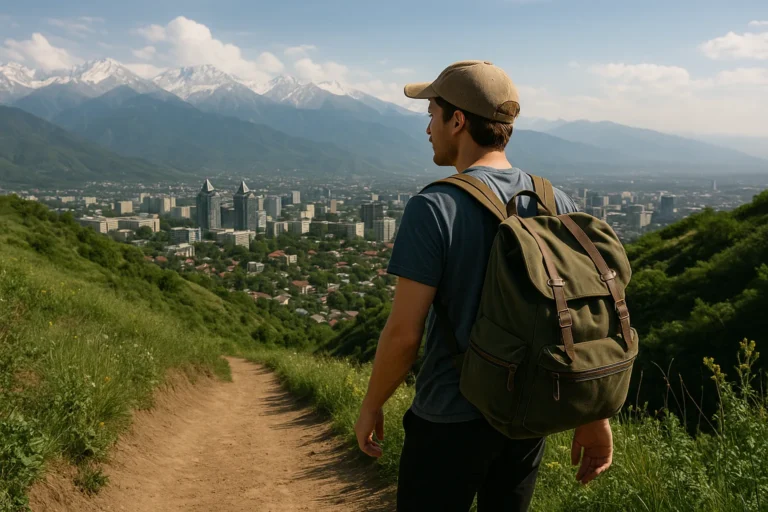
Kolsai Lakes are another day-trip option that rewards the effort of getting there. A series of mountain lakes at different altitudes, surrounded by dense forest and connected by hiking trails, they offer a quieter, more immersive natural experience than some of the more visited spots closer to the city. If you have a flexible schedule, consider staying overnight near the lakes to catch the morning light before the day-trippers arrive.
Organising these trips independently takes some planning — shared taxis and marshrutkas (minibuses) are the most common options for budget travellers, and connecting with other backpackers at your accommodation to split costs is a smart approach. The logistics are manageable; the payoff is significant.
Getting Around the City and Practical Backpacking Tips
Almaty has a functioning public transport network that gets you around the main areas without much stress. The city is large, but the central districts are navigable, and the public bus system covers most of the routes you’ll need. Ride-hailing apps work well here and are often the easiest option for getting to spots that aren’t well-served by buses.
In terms of where to stay, Almaty has a growing hostel scene concentrated in the central neighbourhoods, where you’re within walking distance of the main bazaars, parks, and transport connections. The city rewards slow exploration on foot — the tree-lined streets, the Soviet-era buildings, the unexpected street art — so staying centrally makes a real difference to how much you experience day to day.
👉 Read also: Almaty, Kazakhstan: The Underrated Mountain City That Surprises Everyone
A few practical things worth knowing before you arrive:
- Kazakhstan uses the tenge as its currency. ATMs are widely available in Almaty, and card payments are increasingly common in the city, though it’s worth carrying cash for markets and smaller vendors.
- The Kazakh and Russian languages are both widely spoken. Learning a few basic phrases in either — or both — will go a long way and is always appreciated.
- Dress layers for mountain excursions regardless of the season. Weather at altitude changes quickly, and being caught underprepared on a trail above 3,000 metres is not a situation you want to find yourself in.
- Registration requirements for foreign visitors have changed over time — check the current entry requirements for your nationality well before you travel, as visa policies in Central Asia can shift.
- Almaty is generally considered one of the safer cities in Central Asia for solo travellers, including solo women travellers, though standard urban awareness applies as it would anywhere.
For an authoritative starting point on entry requirements and travel advisories, the official Kazakhstan government portal is worth checking before you finalise your plans.
When to Go and What to Expect from Each Season
Almaty is a genuinely four-season city, and each one offers a different experience. Late spring through early autumn — roughly from May to September — is the most popular window for backpackers, and for good reason. The mountains are accessible, the trails are open, Big Almaty Lake is at its most vivid, and the city itself is warm and lively. Summer days can get genuinely hot in the city centre, but the mountains always offer a cooler escape.
Autumn is particularly beautiful. The trees along Almaty’s famous boulevards turn gold and red, the crowds thin out, and the light has that soft, cinematic quality that makes everything look slightly more dramatic than it is. If you’re drawn to photography or just enjoy having a bit more space to breathe, September and October are worth serious consideration.
Winter transforms the city entirely. Snow settles on the mountains and the city alike, and the skiing and snowboarding options near Almaty attract a very different crowd. It’s a quieter time to visit, accommodation is often more affordable, and the snowy mountain backdrop gives the city a completely different atmosphere. It’s not the obvious choice for a backpacking trip, but it’s far from a bad one if you’re prepared for the cold.
Spring brings the thaw, wildflowers on the lower mountain slopes, and a city that feels like it’s waking up. It can be unpredictable weather-wise, but that unpredictability is part of its charm.
The Bigger Picture: Why Almaty Belongs on Your Radar
Central Asia as a whole is having a moment among younger, more adventurous travellers — and Almaty is the natural entry point for anyone who wants to explore the region. It has the infrastructure to make backpacking manageable, the cultural depth to make it meaningful, and the natural landscape to make it genuinely thrilling. It doesn’t feel like a destination that’s been packaged for tourists, because it largely hasn’t been. The experiences you have here feel earned rather than curated.
What makes backpacking in Almaty, Kazakhstan different from most city-based travel is that combination of urban energy and immediate wilderness. You can spend the morning drinking coffee in a stylish café, the afternoon hiking above the treeline, and the evening eating shashlik in a market that’s been operating in some form for centuries. That range — that contrast — is rare, and it’s what keeps people talking about Almaty long after they’ve left.
Almaty isn’t trying to be the next big thing. It’s just being itself — layered, surprising, and genuinely worth the journey. If you’ve been looking for a destination that feels like a real discovery rather than a well-worn trail, this is the one. Start planning, pack your layers, and go find out what the city has been keeping to itself all this time.
This article was produced with AI assistance and reviewed editorially.


Teaching English Abroad in 2026: Top Countries, Visa Requirements & Real Salaries

Where to Stay in Latin America’s Top Destinations: Buenos Aires, Bogota & Beyond


