
Egypt
Egypt in 2026: Cairo’s New Museum, Giza Without the Crowds & What’s Actually Changed
Discover what’s changed in Egypt travel 2026—the new Grand Egyptian Museum, updated Giza experience, and honest tips for first-time solo travelers.

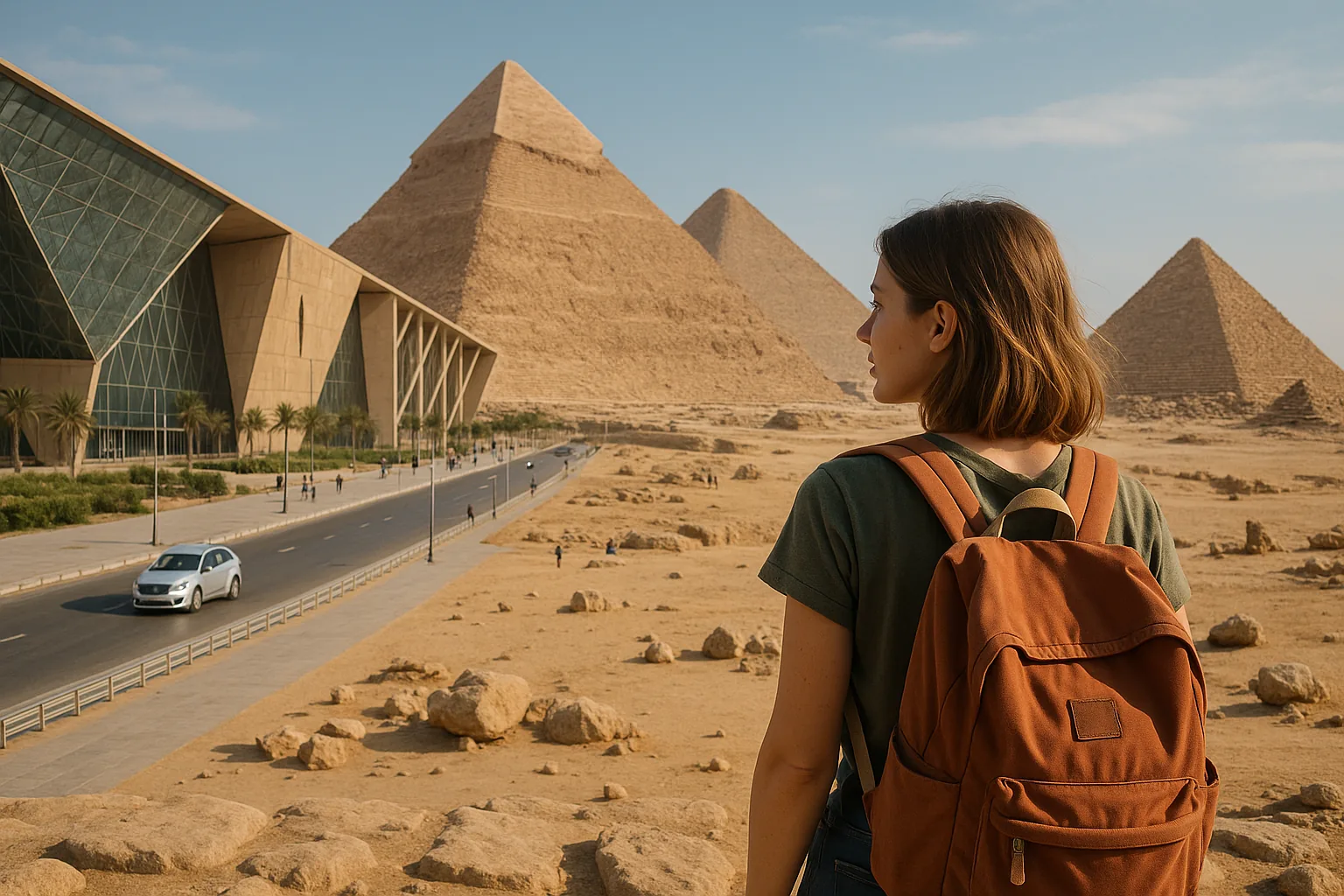
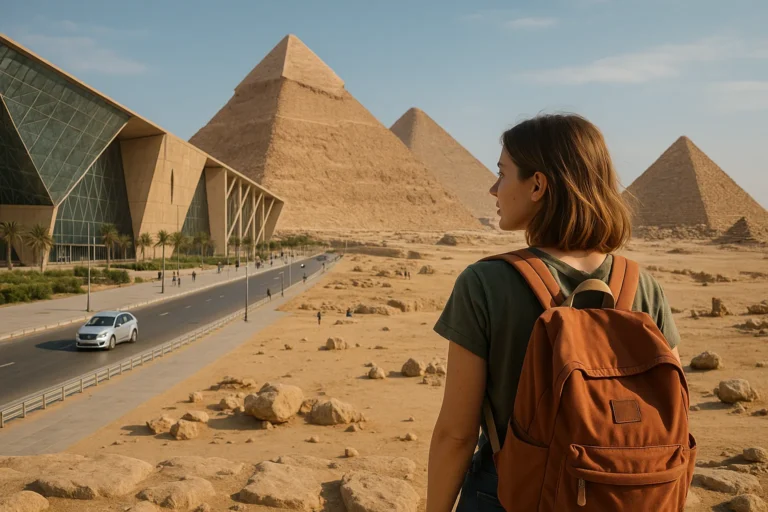
If Egypt has been sitting quietly on your travel list for years — half dream, half hesitation — then egypt travel 2026 might be the moment you finally stop waiting. Something genuinely significant has shifted. The country that gave the world the pyramids, hieroglyphs, and one of history’s most obsessed-over pharaohs now has a museum to match that legacy. Add to that a growing community of young solo travelers sharing their honest experiences, and the picture that emerges is more nuanced, more exciting, and more accessible than the one most people carry in their heads.
The Grand Egyptian Museum: Why It Changes Everything
On 1 November 2025, Egypt opened what may be the most ambitious museum project of this century. The Grand Egyptian Museum — a $1.2 billion institution sitting on the Giza plateau, roughly two kilometres from the Pyramids themselves — is now fully open, and it genuinely deserves the hype it’s been building for years.
To put the scale in perspective: the museum is roughly twice the size of the Louvre in Paris. It houses around 50,000 artefacts spread across 12 galleries that take you on a journey from prehistory all the way through to the Roman era. Walking through it isn’t just a museum visit — it’s more like moving through a civilisation in real time.
The headline attraction is the complete Tutankhamun collection. For the first time since Howard Carter opened the tomb in 1922, every one of the roughly 5,400 objects from Tutankhamun’s burial are displayed together under one roof. That’s not a small thing. For over a century, pieces from that collection have been scattered, loaned out, or stored in conditions that weren’t built for them. Seeing them united — the golden mask, the thrones, the chariots, the intimate personal objects — hits differently when you understand that context.
The museum also houses striking pieces like the sphinx of kings Ramesses II and Merenptah, and the gallery design gives these enormous sculptures the space they deserve. One of the genuine surprises for visitors has been how uncrowded it feels inside despite the scale of interest. The spacious galleries are designed to absorb large groups without creating the bottleneck frustration you might know from other world-famous museums. Natural ventilation systems keep the temperature and humidity at levels that are comfortable for visitors and ideal for preserving ancient materials — a detail that sounds technical but makes a real difference when you’re spending hours inside.
Tickets are online-only with timed entry slots, so you’ll need to plan ahead and book before you arrive. This is worth doing as early as possible, especially if you’re visiting during peak season. The timed slot system is one of the smarter decisions the museum has made — it keeps the experience manageable and means you won’t spend your first hour queuing in the Egyptian sun.
The Giza Pyramids in 2026: What to Honestly Expect
Here’s the thing about the Pyramids: no photograph, no matter how good, prepares you for the moment you actually stand in front of them. They are enormous in a way that rearranges something in your brain. The oldest of the Seven Wonders of the Ancient World, still standing after more than four thousand years — it’s one of those rare travel experiences that lives up to the anticipation.
But let’s be honest about the full picture, because that’s what actually helps you prepare. Giza remains an intense experience. Vendors, camel ride offers, and requests for photos are frequent and persistent. This is not a secret, and it’s not a reason to skip it — but it is something to walk in knowing. The key is to go in with a clear mindset: be friendly, be firm, and remember that you’re not obligated to engage with every approach. A calm, confident “no thank you” goes a long way.
👉 Read also: Egypt in 2026: Cairo, Giza & Dahab — Debunking Myths & What Solo Travelers Actually Experience
The proximity of the Grand Egyptian Museum to the plateau — just two kilometres away — now makes it genuinely easy to combine both in a single day, or to split them across two days if you want to go deeper. Many travelers find that visiting the museum first gives the Pyramids even more meaning. You arrive at Giza already understanding the world that built them.
Early morning visits remain the smartest move. The light is extraordinary, the crowds are thinner, and the heat is manageable before midday. Hiring a licensed guide through your accommodation or a reputable tour operator is worth considering — not because you can’t explore independently, but because a good guide adds layers of context that transform what you’re seeing from impressive stone to living history.
If you want to go inside one of the Pyramids, tickets for the interior are sold separately and numbers are limited each day. It’s not essential, but it’s a genuinely strange and memorable experience — a narrow, low passage leading into a chamber that has barely changed in millennia.
Cairo Beyond the Obvious: A City Worth Getting Lost In
Cairo is not a city that eases you in gently. It’s loud, layered, chaotic, and completely alive. For young travelers who want something real rather than polished, that’s actually a selling point. This is a city of 20 million people with thousands of years of continuous history, and every neighbourhood tells a different part of the story.
Islamic Cairo — the medieval district around Al-Muizz Street — is one of the most extraordinary urban environments you’ll walk through anywhere in the world. Centuries-old mosques, madrasas, and markets line streets that have barely changed their bones since the Fatimid era. The Khan el-Khalili bazaar nearby is the obvious tourist draw, and yes, it’s touristy — but it’s also genuinely worth a few hours of wandering, especially if you push into the smaller surrounding streets where locals actually shop.
Coptic Cairo offers a completely different atmosphere — quieter, older in some ways, with ancient churches and the remnants of a Roman fortress. The neighbourhood tells the story of Egypt’s Christian community, which predates Islam in the country by centuries. It’s a reminder that Egypt’s history is never just one thing.
For food, the rule is simple: follow the locals. Ful medames (slow-cooked fava beans) for breakfast, koshari (a layered mix of pasta, lentils, rice, and spiced tomato sauce) for lunch — these are cheap, filling, and genuinely delicious. Street food in Cairo is part of the experience, and the best spots are usually the ones with a queue of Egyptians outside them.
The Egyptian Museum in Tahrir Square — the old one — is still open and still worth a visit, particularly for travelers who want to see the museum in its historic setting. With the Grand Egyptian Museum now holding the Tutankhamun collection, Tahrir’s museum has a different feel, but it remains an extraordinary building packed with artefacts that would be the centrepiece of any other country’s national collection.
Practical Realities for Young Solo Travelers in 2026
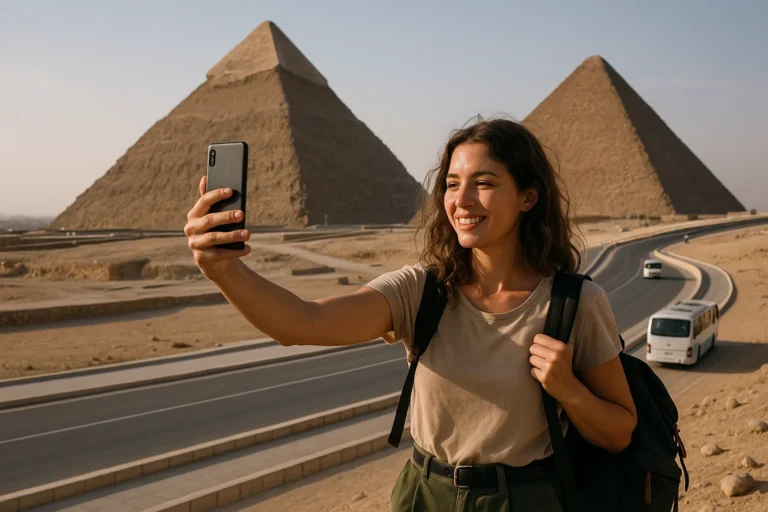
Planning for egypt travel 2026 means thinking through a few practical realities that will shape your experience on the ground. None of them are dealbreakers — but knowing them in advance makes everything smoother.
👉 Read also: Dahab, Egypt: The Hidden Red Sea Town You Didn't Know Existed
Getting Around
Cairo’s traffic is legendary, and not in a good way. Ride-hailing apps work well in the city and are far easier than negotiating taxi fares as a first-timer. For getting between major sites — Cairo, Giza, Luxor, Aswan — the overnight train is a classic option that saves on accommodation costs while covering distance. Booking in advance is strongly recommended, especially for sleeper carriages.
Money and Budget
Egypt is genuinely affordable by international standards, though prices have shifted in recent years due to currency fluctuations. Cash in Egyptian pounds is essential for markets, street food, and smaller sites. ATMs are widely available in Cairo, but having a backup card and some emergency cash in a separate location is always sensible. Budget travelers can eat well and move around comfortably on a modest daily spend — the bigger costs tend to be entrance fees for major sites, which have increased significantly in recent years to reflect their global significance.
Dress and Cultural Awareness
Egypt is a predominantly Muslim country, and dressing modestly — especially outside tourist areas — shows respect and tends to make your experience smoother. Covering shoulders and knees is the practical baseline. Inside mosques, you’ll need to remove shoes and women will need a headscarf. Most sites will have coverings available, but bringing your own is easier.
Safety and Confidence
Solo travelers — including solo women — visit Egypt regularly and have positive experiences. The persistent vendor culture at tourist sites can feel overwhelming at first, but it’s a very different thing from genuine threat. Staying aware, trusting your instincts, connecting with other travelers at your accommodation, and doing some research on common tourist scams before you arrive are all sensible steps. The solo travel community around Egypt is active and generous with real-time advice — forums and travel groups are worth checking before your trip.
Best Time to Visit
October through April is the sweet spot for most travelers. The heat between May and September can be genuinely brutal, particularly at outdoor sites like Giza. Winter months bring comfortable temperatures and clear skies — ideal for long days of exploring. Ramadan is a fascinating time to visit if you’re curious about Egyptian culture and want to experience the country at its most communal, but be aware that some restaurants and services have reduced hours during daylight.
Why Egypt Belongs on Your 2026 Travel List
There’s a version of Egypt that exists in most people’s imaginations — distant, complicated, maybe slightly intimidating. Then there’s the actual country: a place where ancient history and modern life collide in ways that are genuinely surprising, where the food is underrated, the people are warm, and the sheer density of things worth seeing is almost overwhelming.
The opening of the Grand Egyptian Museum is a genuine turning point for egypt travel 2026. It’s not just a new building — it’s a new way of understanding one of the world’s great civilisations, presented with the scale and care that the collection has always deserved. Combined with the Pyramids, the streets of Islamic Cairo, the Nile, and everything south of the capital, Egypt right now offers a travel experience that’s hard to find anywhere else.
For more details on planning your visit to the museum, the National Geographic guide to the Grand Egyptian Museum is a solid starting point before you book.
The question most people ask before going to Egypt is whether it’s worth it. The answer, for curious and open-minded travelers willing to meet the country on its own terms, is yes — more than ever. Go with realistic expectations, a sense of curiosity, and enough flexibility to be surprised. You’ll come back with stories that are genuinely yours, and that’s the whole point.
This article was produced with AI assistance and reviewed editorially.


Southeast Asia on a Shoestring: Budget Travel Guide to Border Crossings & Regional Itineraries

London Beyond the Eye: 8 Walks from Landmarks to Hidden Neighborhoods (2026)


