
Asia
The Kalka-Shimla Toy Train: Slow Down and Actually See India
Explore the iconic Kalka-Shimla toy train, a UNESCO World Heritage narrow-gauge railway through the Himalayas. Learn about the 96 km journey, 102 tunnels, and why this 5-

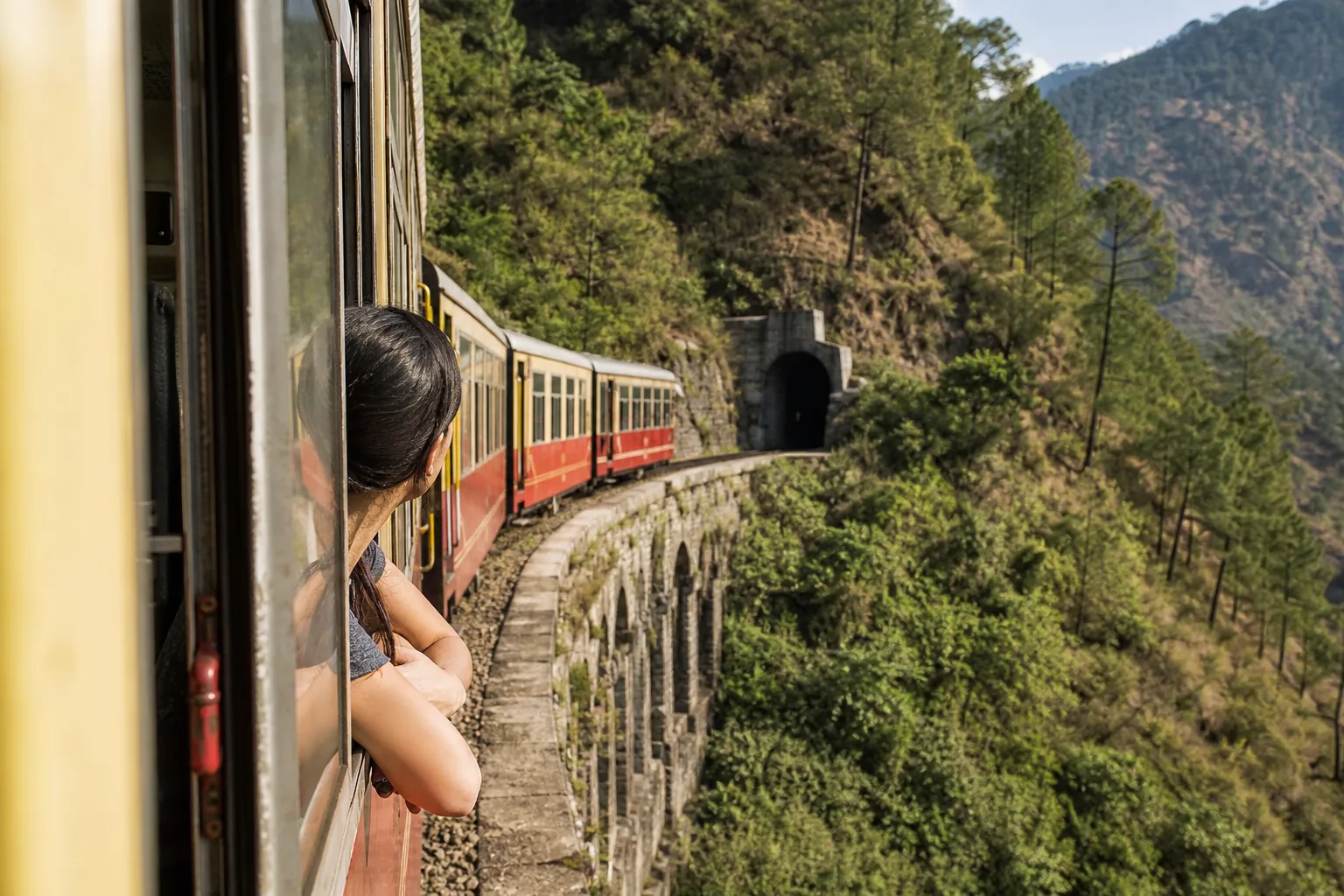
There’s a moment, somewhere between the plains of Haryana and the pine-covered ridges of Himachal Pradesh, when the Kalka-Shimla toy train rounds a bend and the entire valley opens up below you. The air changes. The light changes. And you realise you’re not just travelling — you’re moving through a landscape that feels genuinely untouched by the speed of modern life. This is one of those journeys that earns its reputation.
A Railway Built to Conquer the Hills
The Kalka-Shimla Railway was built by British colonists who needed a reliable connection between the plains and Shimla, which served as the summer capital of British India. Engineering a railway through the Shivalik foothills of the Himalayas was no small feat. The result was a 96-kilometre narrow-gauge track that winds, climbs, and tunnels its way through some of the most dramatic terrain in northern India.
The numbers alone tell part of the story: 102 tunnels and more than 864 bridges on a single route. Think about that for a second. Every few minutes, the train either plunges into darkness or rattles across a viaduct suspended over a forested gorge. It’s the kind of engineering that makes you quietly grateful for the people who figured it out long before GPS or modern drilling equipment.
Today, the railway holds UNESCO World Heritage Site status as one of three celebrated Indian mountain railways — a recognition that cements its place not just as a transport link, but as a living piece of history. Riding it feels less like catching a commuter train and more like stepping into a story that started more than a century ago.
What the Journey Actually Feels Like
The train departs from Kalka, a small town in Haryana that you’ll likely pass through rather than linger in. The early sections of the route are gentle — the landscape is green and relatively open, and you’re still finding your seat, figuring out which window gives the best angle, maybe grabbing a snack from the platform vendors before the doors close.
Then the climbing begins. Gradually at first, and then unmistakably. The engine works harder. The track curves more tightly. Villages appear clinging to hillsides, connected by steep paths rather than roads. Terraced fields give way to forests of oak and rhododendron. By the time you’re an hour or two into the journey, you’re in proper mountain country.
The tunnels are one of the great sensory experiences of the trip. Some are short — a blink of darkness before you’re back in the light. Others are long enough that the carriage goes completely black and all you can hear is the rhythm of the wheels and the rush of cool, damp air. Children on board inevitably shriek with delight. Adults pretend to be composed and then smile anyway.
The bridges are just as memorable. The viaducts carry the train across deep ravines, and if you’ve positioned yourself on the right side of the carriage, you’ll look straight down into valleys that seem impossibly far below. It’s not for the faint-hearted, but it is absolutely worth it.
The total journey from Kalka to Shimla takes approximately five to six hours, depending on which service you take. That’s a long time to sit on a train. It’s also a long time to watch the Himalayas unfold around you, read a book, talk to fellow passengers, eat something warm from a station vendor, and genuinely slow down. In a world where most travel is about getting somewhere as fast as possible, this journey is a deliberate reminder that the getting there can be the whole point.
Choosing the Right Train Service
Several different services run on the Kalka-Shimla route, and the one you choose will shape your experience quite noticeably. Understanding the options before you book means you’ll actually get what you’re hoping for.
→ Read also: Luxury Train Travel: What It's Really Like on the Eastern & Oriental Express (2026)
The Shivalik Deluxe Express is the most comfortable option and the one most travellers who are visiting specifically for the experience tend to choose. It has wider seats, larger windows, and a more relaxed atmosphere. Tickets for this service cost around ₹510 for adults — roughly the price of a decent coffee in a Western city, which puts the value in sharp perspective.
The Rail Motor Car is a smaller, more intimate option — essentially a motorised railcar rather than a full train. It’s faster than some of the other services and gives you a slightly different perspective on the route, sitting closer to the front. Tickets start at around ₹320 for adults, making it the most budget-friendly way to experience the line.
There are also ordinary passenger trains that locals use for daily travel between the stations along the route. These are slower, more crowded, and considerably more chaotic — which, depending on your travel style, might be exactly what you’re looking for. If you want an authentic, unfiltered slice of mountain life in Himachal Pradesh, sitting in a local carriage with farmers, schoolchildren, and commuters is genuinely one of the more memorable ways to spend a morning.
Tickets can be booked through the Indian Railway Catering and Tourism Corporation (IRCTC) website, which is the official online booking platform for Indian Railways. Booking in advance is strongly recommended, especially during peak tourist seasons — the train fills up quickly, and the most popular services can sell out days ahead.
Where to Sit for the Best Views
This is the question every traveller asks before boarding, and the honest answer is: it depends on the direction you’re travelling and what you prioritise.
If you’re travelling from Kalka to Shimla (the uphill direction), the left side of the train generally offers more dramatic views as you climb — you’ll be looking out over the valleys rather than into the hillside. The right side gives you more of the forest and rock face, which is beautiful in its own way but less vertiginous.
If you’re travelling from Shimla to Kalka (downhill), the situation reverses. The right side becomes the valley side, and you’ll get long, sweeping views down through the foothills toward the plains.
Window seats are, obviously, the priority. If you’re travelling on the Shivalik Deluxe Express, the windows are large enough that even an aisle seat gives you a reasonable view. On the older carriages, the windows are smaller, so a window seat matters more.
One underrated tip: sit near the front of the train if you can. As the route curves constantly, sitting toward the front means you can often see the engine disappearing around a bend ahead of you — one of those small visual details that makes the whole experience feel more cinematic.
Also worth knowing: the platforms at intermediate stations are often narrow and busy, and the train stops are short. If you want to step out at a station to take photos or grab food, keep an eye on the departure time and don’t wander too far. Missing this train means waiting a long time for the next one.
→ Read also: Backpacking Sri Lanka on a Budget: Hidden Temples, Train Rides & Local Eats
Stations Worth Paying Attention To
The route passes through dozens of small stations, and several of them deserve a moment of your attention beyond just a glance out the window.
Barog is one of the most interesting stops on the route. It sits roughly at the midpoint of the journey and is surrounded by dense deodar cedar forest. The station is quiet, the air is noticeably cooler than at Kalka, and there’s a simple restaurant nearby where travellers have been stopping for decades. It’s one of those places that feels like it exists slightly outside of time.
Solan is a larger town along the route and one of the more lively intermediate stops. It has a busy market feel, and the platform vendors here are worth seeking out — hot chai, fried snacks, and local sweets are all available if you time your arrival right. Solan also marks a point on the journey where the landscape starts to feel distinctly Himalayan rather than just hilly.
Kandaghat offers some of the most photogenic views on the entire route. The valley below opens up dramatically here, and on a clear day you can see an extraordinary distance across the ridges. If you’re going to have your camera ready at any point on the journey, this is one of the moments to do it.
The final approach into Shimla is its own kind of reward. The train curves around the hillside and the city slowly comes into view — a dense cluster of colonial-era buildings, temples, and tin rooftops stacked up the slopes. After five or six hours of forest and mountains, arriving into Shimla by train feels genuinely dramatic.
Practical Things to Know Before You Go
A few realities of the journey are worth understanding before you arrive at Kalka station with your bag and your expectations.
- The train is slow by design. The narrow-gauge track and the steep gradients mean this is never going to be a fast journey. If you’re in a hurry to reach Shimla, there are buses and shared taxis that do the route considerably faster. But you’d be missing the entire point.
- Mornings are the best time to travel. The light is better for photography, the air is clearer, and you arrive in Shimla with the whole afternoon ahead of you. The first trains of the day depart Kalka early, so plan your accommodation accordingly.
- Bring layers. The temperature drops noticeably as you climb. Even if it’s warm at Kalka, Shimla can be significantly cooler — and the tunnels introduce blasts of cold air throughout the journey. A light jacket is essential, not optional.
- Carry snacks and water. Food is available at some stations, but the quality and availability varies. Having your own supplies means you’re not dependent on timing the train stops perfectly.
- The train runs year-round, but the experience changes with the season. Monsoon (roughly July to September) brings lush, dramatic greenery but also mist and occasional delays. Winter can bring snow at the higher elevations, which makes the journey visually spectacular but occasionally disrupted. Spring and autumn are the most reliably pleasant times to travel.
- Book early for weekends and holidays. The Shivalik Deluxe Express in particular fills up fast during Indian public holidays and the peak October–November tourist season.
Why Slow Travel Is the Whole Point
There’s a growing conversation in travel culture about the value of slowing down — of choosing the journey that takes longer because the longer journey teaches you something. The Kalka-Shimla toy train is one of the clearest arguments for that philosophy you’ll find anywhere in Asia.
In five or six hours on this train, you’ll watch the landscape transform from flat agricultural plains to dense Himalayan forest. You’ll pass through more than a hundred tunnels and rattle across hundreds of bridges. You’ll share a carriage with locals going about their daily lives, with families on holiday, with other travellers who’ve made this journey specifically because they’ve heard it’s worth making. You’ll drink chai handed through a window at a tiny station and watch a child press their face against the glass as the train curves around another impossible bend.
None of that happens on a bus. None of it happens if you fly. It only happens if you give the journey the time it asks for — and trust that the slow way is sometimes the right way.
The Kalka-Shimla Railway has been carrying passengers through these hills for well over a century. It’s been declared a UNESCO World Heritage Site. It’s been photographed millions of times and written about in dozens of languages. And yet, sitting in one of those small carriages as the train climbs through the Shivalik foothills, it still manages to feel like a discovery. That’s the thing about journeys that have genuinely earned their reputation — they keep delivering, no matter how many times they’ve been made before. Go find out for yourself.
This article was produced with AI assistance and reviewed editorially.


Matera: Where Ancient Caves Meet Modern Culture—Before Everyone Else Discovers It

The Kalka-Shimla Toy Train: Slow Down and Actually See India


