
Asia
Luxury Train Travel: What It’s Really Like on the Eastern & Oriental Express (2026)
Discover what luxury train travel is really like on the Eastern & Oriental Express. An honest look at the iconic Southeast Asia route, costs, and onboard experience.

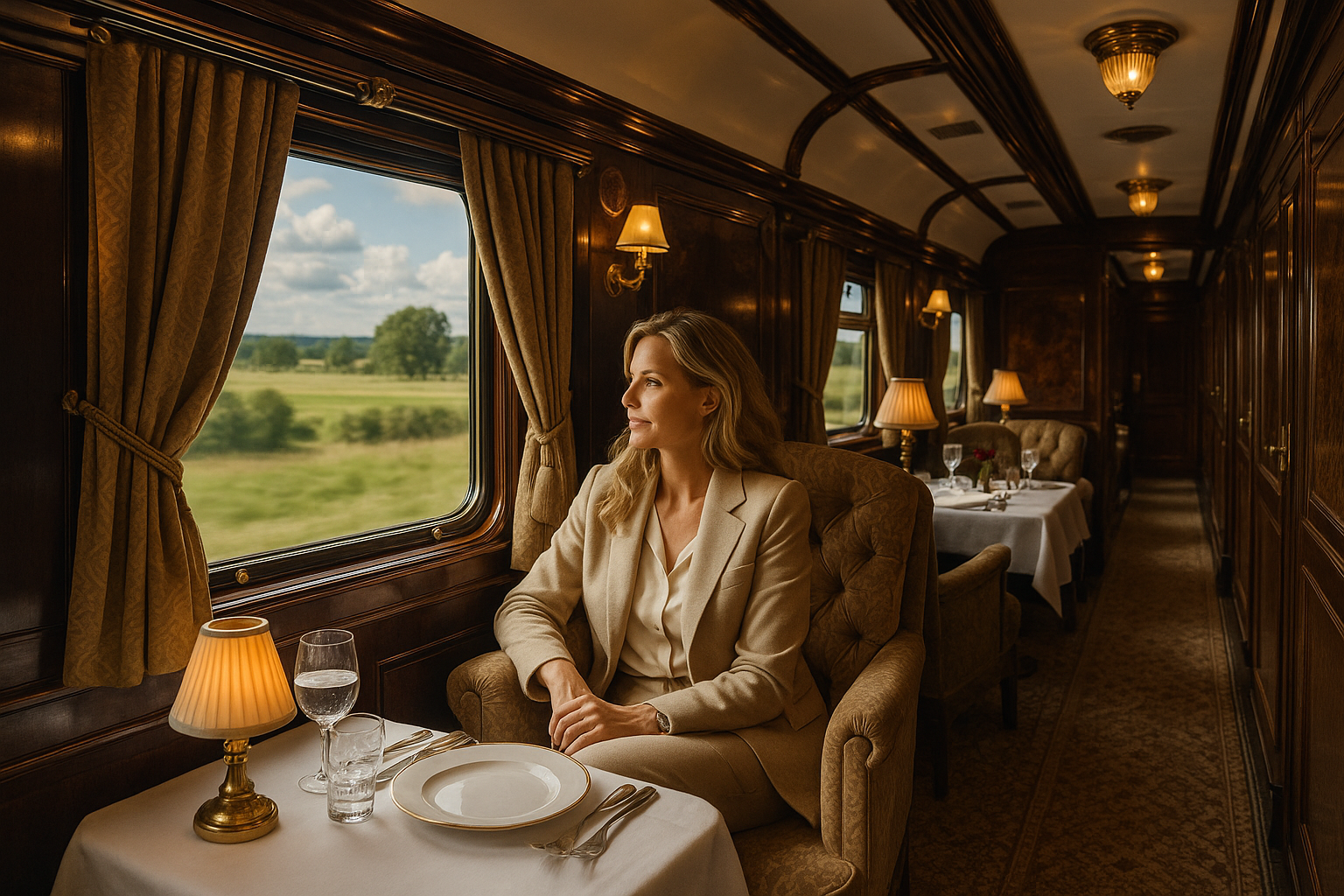
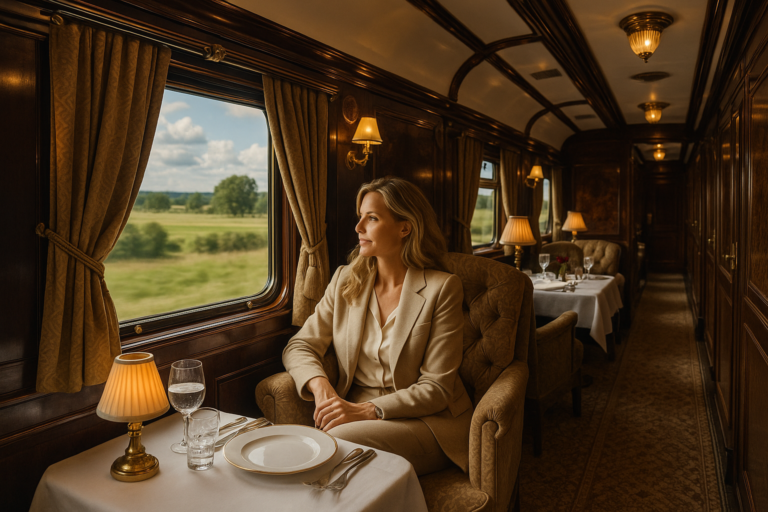
Luxury Train Travel in Southeast Asia: An Honest Look at the Eastern & Oriental Express
There’s something about a train journey that a flight can never replicate. You’re not just getting from A to B — you’re actually watching the world change outside your window, slowly, beautifully, at a pace that lets you breathe. And when it comes to luxury train travel, few experiences on the planet carry the same reputation as the Eastern & Oriental Express. Operated by Belmond, this iconic train has been rolling through the landscapes of Southeast Asia for more than 30 years, and in 2026, it’s still turning heads and sparking serious wanderlust. But is it really worth it for a younger traveler? Let’s get into it — honestly.
What Is the Eastern & Oriental Express?
The Eastern & Oriental Express is a long-distance luxury sleeper train operated by Belmond, one of the world’s most recognized names in high-end travel experiences. It connects Singapore and Malaysia, weaving through tropical landscapes, jungle-covered hillsides, and riverside towns that you’d never see from a plane window or a highway.
The train itself is immediately recognizable. Its distinctive cream and green carriages stand out on any platform, and the moment you step on board, you realize this is not your average commuter service. Inside, the design is a love letter to the region — cherry wood paneling, shining brass finishes, and silken fabrics with Asian-inspired touches that feel considered rather than over-the-top. It’s elegant in a way that feels rooted in the places it travels through, not just imported from a European idea of glamour.
What makes it interesting from a traveler’s perspective — even if you’re not usually the “luxury” type — is that the Eastern & Oriental Express isn’t trying to be a hotel on wheels. It’s trying to be a journey. And that’s a meaningful distinction.
The Route: Singapore to Malaysia and Back
One of the current journeys available in 2026 is the Essence of Malaysia route, which travels between Singapore and Malaysia. It’s a multi-day experience that combines time on the train with stays at destination hotels — including a two-night stay at the Shangri-La Hotel in Singapore, which sets the tone before you even board.
The landscape you move through is genuinely stunning. Southeast Asia has a way of shifting dramatically over short distances — dense jungle giving way to open paddy fields, colonial-era towns appearing between stretches of untouched forest, rivers catching the last of the afternoon light as the train curves alongside them. The pace of a train journey lets you actually absorb all of this rather than watching it blur past.
For adventurous travelers, the route offers something that purely resort-based holidays can’t: a sense of movement, of covering ground, of the journey itself being the destination. You wake up somewhere different from where you fell asleep, and that feeling never gets old.
For those curious about the full range of available 2026 departures and route options, Planet Rail’s dedicated Eastern & Oriental Express page is a solid starting point for comparing itineraries and timing.
What Life Onboard Actually Looks Like
This is where the Eastern & Oriental Express earns its reputation — and where it gets genuinely interesting even if you’re skeptical about luxury travel.
The Open-Air Observation Car
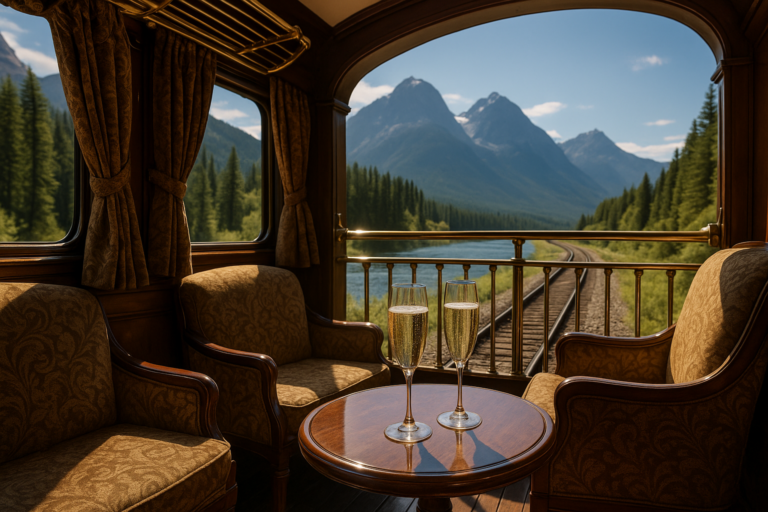
One of the most talked-about features is the open-air observation car at the rear of the train. Picture this: you’re sitting outside, warm tropical air moving past you, watching the tracks disappear into the landscape behind you as the train curves through the countryside. It’s cinematic in the best possible way. You’ll want to spend a lot of time here, especially at dawn and dusk when the light turns everything golden.
It’s also one of those rare travel moments that’s genuinely hard to capture on camera — not because it’s not beautiful, but because the feeling of being there, in the open air, watching the world move, is something a photo can only hint at.
The Piano Bar
Evenings on the train center around the Piano Bar, which offers nightly entertainment in an atmosphere that manages to feel both sophisticated and relaxed. It’s the kind of place where conversations start easily — with fellow travelers from all over the world, with staff who know the regions you’re passing through, with whoever happens to be sitting next to you when the music starts. If you’re traveling solo, this is where you’ll meet people. If you’re traveling with someone, this is where the night takes on a life of its own.
The bar serves cocktails that draw on regional ingredients and flavors, which gives you a sense of place even when you’re sitting in a beautifully decorated carriage in the middle of the night.
Dining Onboard
Food on the Eastern & Oriental Express is a serious part of the experience. The train serves fine dining, afternoon tea, and cocktails — and the culinary approach reflects the journey itself, drawing on the flavors and traditions of Southeast Asia while maintaining the kind of presentation you’d expect from a high-end restaurant.
Afternoon tea is particularly worth mentioning because it happens in a setting unlike any tearoom you’ve visited before — rolling countryside outside the window, the gentle rhythm of the train beneath you, properly brewed tea and carefully made pastries in front of you. It’s unhurried in a way that feels almost radical in today’s travel culture.
Meals are served in the dining cars, which are beautifully appointed spaces that fill up with conversation and the sounds of the train. The food isn’t just fuel — it’s part of how the journey tells its story.
The Dior Spa
Perhaps the most unexpected feature for first-time visitors: the train has a Dior Spa Eastern & Oriental Express, offering bespoke treatments while you travel. It’s genuinely unusual to be able to have a spa treatment on a moving train, and it speaks to how seriously Belmond has thought about making every hour onboard feel like an experience rather than downtime between destinations.
Whether you book a treatment or not, the spa’s presence signals something important about the philosophy of the train: nothing about your time here is meant to feel like waiting.
The Cost Question: Is It Worth It for Young Travelers?
Here’s the honest answer: the Eastern & Oriental Express is not a budget experience, and it’s not trying to be. Pricing varies depending on the journey, the cabin type, the time of year, and how you book — and because it changes regularly, you’ll want to check directly with Belmond or a specialist booking agent for current figures rather than relying on any number you see in an article.
What’s worth thinking about is what “value” means in this context. Luxury train travel of this kind bundles together accommodation, meals, entertainment, and the journey itself into a single experience. You’re not paying just for transport — you’re paying for several days of a carefully curated world that happens to be moving through one of the most beautiful regions on the planet.
For most travelers in their twenties, this probably isn’t an everyday choice. But as a once-in-a-while experience — a significant birthday, a post-graduation trip, a moment you’ve been saving toward — it hits differently than a hotel stay or even a high-end flight. The memories you come home with are specific and vivid in a way that’s hard to replicate.
It’s also worth noting that some journeys, like the Essence of Malaysia itinerary, include hotel stays at the beginning or end of the trip, which affects the overall value calculation. If you’re comparing costs, factor in what you’d otherwise spend on accommodation in Singapore or at your destination in Malaysia.
When to Go: Thinking About Timing
Southeast Asia has a tropical climate that varies significantly by season and by sub-region, so timing matters. Generally speaking, the cooler, drier months tend to be the most comfortable for travel in the region — roughly from late in the year through to early in the following year, though this varies between Singapore, peninsular Malaysia, and other areas the train passes through.
The good news is that the Eastern & Oriental Express operates across multiple departures throughout the year, so you’re not locked into a single narrow window. That said, certain departures fill up well in advance, particularly during popular travel periods. If you’re seriously considering this journey, looking at 2026 departure dates sooner rather than later gives you more options and, often, more flexibility on pricing.
Traveling in shoulder seasons — the periods just before or after peak demand — can sometimes mean smaller groups onboard, which changes the atmosphere in subtle but noticeable ways. The train feels more intimate, conversations come more easily, and you’re less likely to feel like you’re sharing the observation car with half the world.
Is This Experience Right for You?
The Eastern & Oriental Express attracts a certain kind of traveler — someone who values the journey as much as the destination, who finds meaning in slowing down, who’s curious about the cultures they’re moving through rather than just the landmarks they’re ticking off. That description fits a lot of young travelers, even if the train’s price point doesn’t immediately suggest it.
If you’ve spent time backpacking through Southeast Asia on a shoestring, you already know how extraordinary the region is. The Eastern & Oriental Express shows you a different layer of it — not better or more authentic, but different. You’re seeing the same landscapes, eating food rooted in the same culinary traditions, passing through the same towns — but from a perspective that’s unhurried, curated, and genuinely beautiful.
It’s also worth saying that luxury train travel has a particular social quality that other high-end experiences don’t always have. A luxury hotel room is private and contained. A luxury train puts you in shared spaces — the observation car, the dining car, the bar — with people who’ve made the same choice to be here. Conversations happen. Connections form. It’s one of the more socially alive travel experiences you can have, which makes it interesting even for travelers who don’t think of themselves as the “luxury” type.
How to Book and What to Research First
The clearest path to booking is directly through Belmond or through a specialist rail travel agent who works with the Eastern & Oriental Express regularly. Specialist agents often have access to detailed itinerary information, can advise on cabin types, and sometimes have insight into which departures are filling up quickly.
Before you commit, it’s worth spending time reading recent passenger accounts — travel blogs, forums, and review platforms where people describe their actual experiences onboard. The verified details about the train’s features and design give you a strong foundation, but first-person accounts will tell you things like how the cabins feel at night, how the staff interact with guests, and which moments surprised people most.
For a broader comparison of luxury train options and what distinguishes the Eastern & Oriental Express from similar experiences elsewhere in the world, resources like the Luxury Train Club’s dedicated profile offer useful context without the booking pressure.
The Bigger Picture: Why Train Travel Still Matters
There’s a reason luxury train travel has had such a sustained resurgence in recent years. In a world where most long-distance travel happens in a pressurized metal tube at 35,000 feet, the idea of moving slowly through a landscape — actually seeing the terrain change, watching small towns appear and disappear, feeling the rhythm of the tracks beneath you — has become genuinely countercultural.
It’s also, increasingly, a more thoughtful way to travel. Train journeys have a significantly lower environmental footprint than equivalent flights, and while the Eastern & Oriental Express is far from a budget eco-option, it represents a different relationship with distance and time that many younger travelers are finding more meaningful than speed and convenience.
The train has been running for more than three decades, and it’s still here because it offers something that hasn’t been replicated or made obsolete. The world has changed enormously since its inaugural journey, but the experience of watching Southeast Asia unfold slowly outside a beautifully appointed carriage, with a cocktail in hand and interesting people around you, remains one of those travel experiences that earns its reputation every single time.
Whether you’re planning this as a splurge for a milestone moment or simply adding it to a list of experiences you’re working toward, the Eastern & Oriental Express is the kind of journey that stays with you. Not because it’s expensive, not because it’s exclusive, but because it reminds you that sometimes the best way to understand a place is to move through it slowly, with your eyes open and nowhere you need to be until tomorrow.
This article was produced with AI assistance and reviewed editorially.


Caye Caulker Slow Travel: Snorkeling, Street Food, and Why You Should Stay Longer

Southeast Asia on a Shoestring: Budget Routes Across Thailand, Vietnam & Cambodia


