
Portugal
Madeira 2026: 25 Things to Do Beyond the Typical Tourist Trail
Discover authentic things to do in Madeira beyond typical tourist spots. Levada walks, coastal hikes, local neighborhoods, and hidden gems from a local’s perspective.

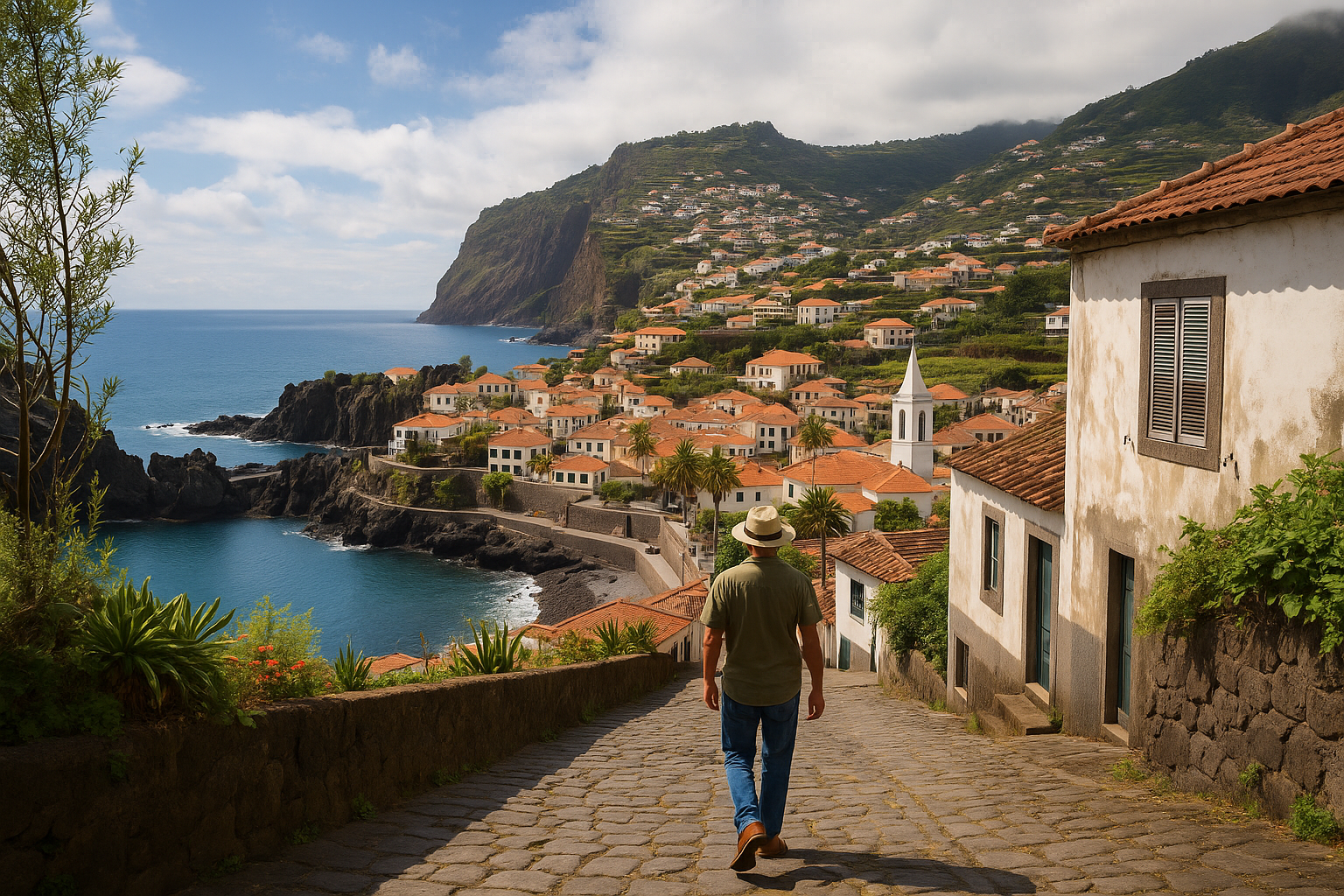
Why Madeira Belongs on Every Young Traveler’s Radar Right Now
If you’re looking for things to do in Madeira that go beyond the postcard version of the island, you’ve come to the right place. Madeira isn’t just a destination for retirees on cruise ships — it’s a volcanic island packed with dramatic hiking trails, vibrant local culture, wild coastlines, and food that will genuinely surprise you. The kind of place where you plan three days and end up wishing you’d booked three weeks. This guide cuts through the generic lists and gets into what actually makes Madeira worth your time in 2026.
A quick piece of geography to set the scene: Madeira is part of an archipelago that includes two inhabited islands — Madeira itself and Porto Santo — plus two uninhabited groups, the Desertas and the Selvagens. The main island is a Portuguese autonomous region sitting in the Atlantic Ocean, closer to Africa than to mainland Europe. Its name literally means “wood” in Portuguese, a nod to the dense forests that once covered it. And yes, the subtropical Mediterranean climate keeps temperatures between roughly 20 and 26 degrees Celsius year-round, which means there’s never really a bad time to visit.
Getting Your Bearings: The Island’s Personality
Madeira is compact but deceptively complex. You can drive from one end to the other in a few hours, but the terrain — steep valleys, towering cliffs, ancient laurel forests — means that almost every corner of the island feels like a different world. The south is warmer and sunnier, home to the capital Funchal and most of the tourist infrastructure. The north is wilder, greener, and far less visited. The interior is a landscape of volcanic peaks and misty ridgelines that genuinely earns the word dramatic.
Understanding this geography early helps you plan smarter. Don’t make the mistake of basing yourself somewhere and assuming you can casually pop between regions. The roads are winding and often steep. Build in time, embrace the journey, and you’ll discover that getting from A to B in Madeira is often half the experience.
25 Things to Do in Madeira That Actually Go Somewhere
1–5: Hike the Levadas
The levadas are Madeira’s most iconic feature — a network of narrow irrigation channels that were built over centuries to carry water from the rainy north to the drier south. The paths running alongside them have become some of the most rewarding hiking trails in Europe. Walking a levada means you’re following a near-flat route through landscapes that shift from dense laurel forest to open clifftops to terraced farmland, often within the same walk.
The trails range enormously in difficulty. Some are gentle, well-maintained paths suitable for anyone with a decent pair of trainers and a reasonable level of fitness. Others are narrow, exposed, and genuinely challenging — involving tunnels, vertiginous drops, and sections where a headtorch is essential. Before you set out, check current trail conditions through the Visit Madeira official tourism website, which publishes updates on closures and accessibility. Don’t underestimate the more remote trails, and always carry water and a light layer regardless of how warm it feels at the trailhead.
The experience of walking a levada is unlike any other hike you’ll do. The sound of running water follows you the entire way. The forest closes in around you. You’ll pass through small villages where locals still tend terraced gardens, and occasionally emerge onto viewpoints with drops of hundreds of metres. Give yourself at least two or three levada walks of varying difficulty, and you’ll start to understand why people return to Madeira specifically for this.
6–8: Tackle the Coastal Trails
Beyond the levadas, Madeira has coastal hiking that rivals anything in southern Europe. The eastern tip of the island, in particular, offers trails along dramatic peninsulas where the Atlantic crashes against dark volcanic rock on both sides. These routes are exposed, windswept, and genuinely exhilarating — the kind of hike that makes you feel small in the best possible way.
Coastal trails vary in length and exposure. Some can be done as half-day walks; others require a full day and solid footwear. The reward is consistent: sweeping views, almost no crowds once you get past the main access points, and a real sense of the island’s raw geography. Go early in the morning if you can — the light is better, the paths are quieter, and you’ll have the best viewpoints largely to yourself.
If you’re combining hiking with swimming, keep in mind that Madeira’s coastline is mostly rocky rather than sandy. Natural lava pools scattered around the island are where locals actually swim, and they’re far more interesting than any beach. Look for these pools particularly on the northern and western coasts — they tend to be less visited and genuinely beautiful.
9–11: Explore Funchal Beyond the Main Square
Funchal is the island’s capital and the place most visitors spend the bulk of their time. The instinct to stick to the seafront promenade and the main tourist drag is understandable, but it’s worth resisting. The city has distinct neighborhoods with their own rhythms, and the best way to understand Funchal is to walk uphill — literally.
The older parts of the city climb steeply from the waterfront, and as you go higher the streets get narrower, quieter, and more authentically local. You’ll find small bakeries, neighborhood cafés, elderly residents sitting outside their doors, and views back down over the harbor that no tourist overlook can quite replicate. Wander without a fixed destination for at least a morning, and let the city reveal itself at its own pace.
The covered market in Funchal is worth a proper visit rather than a quick pass-through. This is where you’ll see the full spectrum of what the island grows and catches — tropical fruits you may not recognize, fresh fish, flowers, local produce. Go in the morning when it’s most alive, and take the time to talk to vendors if you can. It’s a genuinely good window into everyday Madeiran life.
12–14: Eat Like You Mean It
Madeiran food is one of the island’s great underrated pleasures. The cuisine is built around fresh fish, grilled meat, and simple local produce, and it’s honest in the best sense — not trying to be anything other than what it is.
Seek out the local grilled fish and meat dishes that are staples across the island. Portions are typically generous, and eating at smaller, family-run restaurants away from the main tourist streets will almost always give you better food at a fraction of the price. Look for places where the menu is written on a chalkboard and the clientele is mostly local — these are almost always the right call.
Street food and bakery culture are strong here. Freshly baked bread, pastries, and local snacks are available throughout the day at small shops and cafés. Pair them with local coffee, which is excellent, and you have the foundation of a very good morning. The island also produces its own wine — Madeira wine is one of the most distinctive and historically significant wines in the world, and trying it in context, ideally with food, is an experience worth having even if you’re not usually a wine drinker. You can learn more about the island’s food and drink culture through resources like Visit Portugal’s Madeira guide.
15–17: Find the Best Viewpoints
Madeira is an island of dramatic elevation changes, which means viewpoints are everywhere — but not all of them are equal. The most visited ones can get crowded, particularly in the late morning when tour groups arrive. The trick is timing: go at sunrise, go at golden hour before sunset, or simply walk a little further than the signposted overlooks.
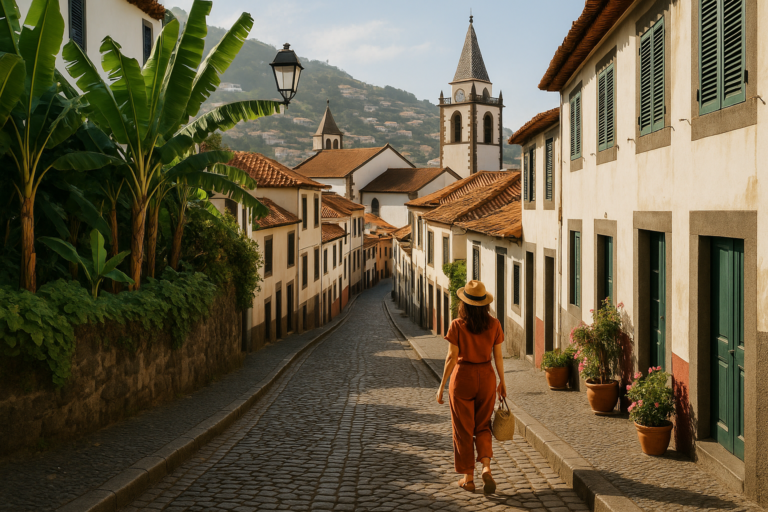
The interior of the island offers some of the most extraordinary views, particularly from the higher ridgelines where on a clear day you can see the curvature of the island’s coastline in multiple directions. These spots require more effort to reach — either by driving up switchback mountain roads or by hiking — but the isolation and the scale of the landscape make them genuinely memorable.
Sunset watching in Madeira is a communal activity. Locals and visitors alike gravitate toward the western-facing points of the island as the light changes, and there’s something genuinely warm about sharing that moment with a mix of people from everywhere. Bring a jacket — it gets cooler quickly once the sun drops, even in summer.
18–20: Get Off the Main Island
Porto Santo, the archipelago’s other inhabited island, is a different experience entirely. Where Madeira is green, volcanic, and dramatic, Porto Santo is flatter, drier, and home to a long stretch of golden sand beach — something the main island essentially doesn’t have. The crossing takes a few hours by ferry, and it’s worth doing as an overnight trip rather than a day trip if your schedule allows.
The contrast between the two islands is striking enough that the journey itself feels like part of the experience. Porto Santo is quieter, slower, and in some ways more authentically Portuguese. It’s the kind of place where you genuinely switch off, and after a few days of hiking and exploring on Madeira, that’s not nothing.
21–22: Go Deeper into the Laurisilva Forest
The ancient laurel forest — known as Laurisilva — that covers much of Madeira’s interior is a UNESCO World Heritage Site and one of the largest surviving areas of this type of forest in the world. Walking through it is a genuinely atmospheric experience: the trees are old, the canopy is dense, and the air feels different — cooler, moister, and rich with the smell of earth and vegetation.
The forest is best explored on the quieter levada trails that pass through its heart, ideally on weekdays when visitor numbers are lower. Take your time in here. It’s not a place to rush through. The Laurisilva has a quality of stillness that’s increasingly rare, and it rewards patience.
23: Try Something You Wouldn’t Normally Do
Golf is one of the most popular sports on the island, with courses that take full advantage of the dramatic terrain and views. If you’ve never played, or haven’t played in a while, this is an unexpectedly good place to try it — the settings are extraordinary and the pace of life on the island lends itself to a long, unhurried round. Beyond golf, the island has a growing scene of outdoor activities including canyoning, paragliding, and sea kayaking, all of which give you a completely different perspective on the landscape.
24: Visit a Local Festival or Event
Madeira has a strong tradition of festivals tied to the agricultural and religious calendar. Flower festivals, harvest celebrations, and local saints’ days all bring neighborhoods to life in ways that no tourist attraction can replicate. Timing your visit around one of these events — even a small local one rather than a major island-wide celebration — gives you access to a side of Madeiran culture that most visitors simply miss.
25: Slow Down and Stay Longer Than You Planned
This sounds like a cliché, but it’s genuinely the most useful piece of advice for Madeira. The island rewards a slower pace. The best experiences — the levada walk where you don’t see another person for two hours, the small restaurant where the owner brings you something that’s not on the menu, the viewpoint you found by taking a wrong turn — all require time and a willingness to not have everything scheduled.
When to Go: Making the Most of the Island’s Climate
One of Madeira’s genuine advantages over many European destinations is that it’s a year-round proposition. The subtropical climate keeps temperatures in a comfortable range throughout the year — broadly between 20 and 26 degrees Celsius — which means there’s no single “best” season in the way there is for, say, a Mediterranean beach destination.
The northern and interior parts of the island tend to be cloudier and wetter than the south, and this is true across all seasons. The south, including Funchal, gets more sunshine and is generally more sheltered. If hiking is your priority, the spring and autumn months tend to offer the most stable conditions, but even winter hiking is entirely possible on many trails. The island is never truly “off season” — it simply gets quieter, which for most young travelers is actually a point in its favor.
Visiting outside the peak summer months means fewer crowds on the levadas, easier access to popular viewpoints, and a more relaxed atmosphere in Funchal. Accommodation prices also tend to be lower, which matters when you’re trying to stretch a travel budget further.
Practical Things Worth Knowing Before You Go
- Renting a car gives you genuine freedom on Madeira, but be prepared for narrow, winding roads with steep gradients. Take your time and don’t underestimate journey durations.
- Public transport exists and covers the main routes, but it won’t get you to the best hiking trailheads efficiently. Factor this into your planning if you’re not renting a car.
- Pack layers even in summer. The temperature at altitude and on exposed coastal trails can be significantly cooler than in Funchal.
- Hiking boots or trail shoes are strongly recommended for anything beyond the most gentle levada walks. Proper footwear makes a real difference on wet or uneven paths.
- The island is generally safe, but some levada trails pass through tunnels and along narrow paths with significant drops. Read trail descriptions carefully and be honest about your fitness level and comfort with exposure.
- Portuguese is the language, but English is widely spoken in tourist areas. Learning a few basic phrases in Portuguese is always appreciated and will get you further in smaller villages.
The Real Reason Madeira Stays With You
Most destinations have a version of themselves that exists for tourists and a version that exists for everyone else. Madeira is unusual in that the gap between these two versions is relatively small. The things that make it genuinely special — the levada walks, the wild coastline, the ancient forest, the food, the pace of life — are all accessible to anyone willing to put in a little effort and step slightly off the main path. That’s what makes the things to do in Madeira so rewarding: they don’t require a big budget or a carefully curated itinerary. They require curiosity, decent footwear, and a willingness to let the island show you what it actually is rather than what you expected it to be. Go with that attitude, and Madeira will give you more than you came looking for.
This article was produced with AI assistance and reviewed editorially.


Caye Caulker Slow Travel: Snorkeling, Street Food, and Why You Should Stay Longer

Southeast Asia on a Shoestring: Budget Routes Across Thailand, Vietnam & Cambodia


