
North America
US Road Trip Essentials: Michigan, Florida, North Carolina & Beyond (2026)
Master your US road trip essentials with guides to Nashville, Asheville, the Blue Ridge Parkway, and beyond. Plan your American adventure today.

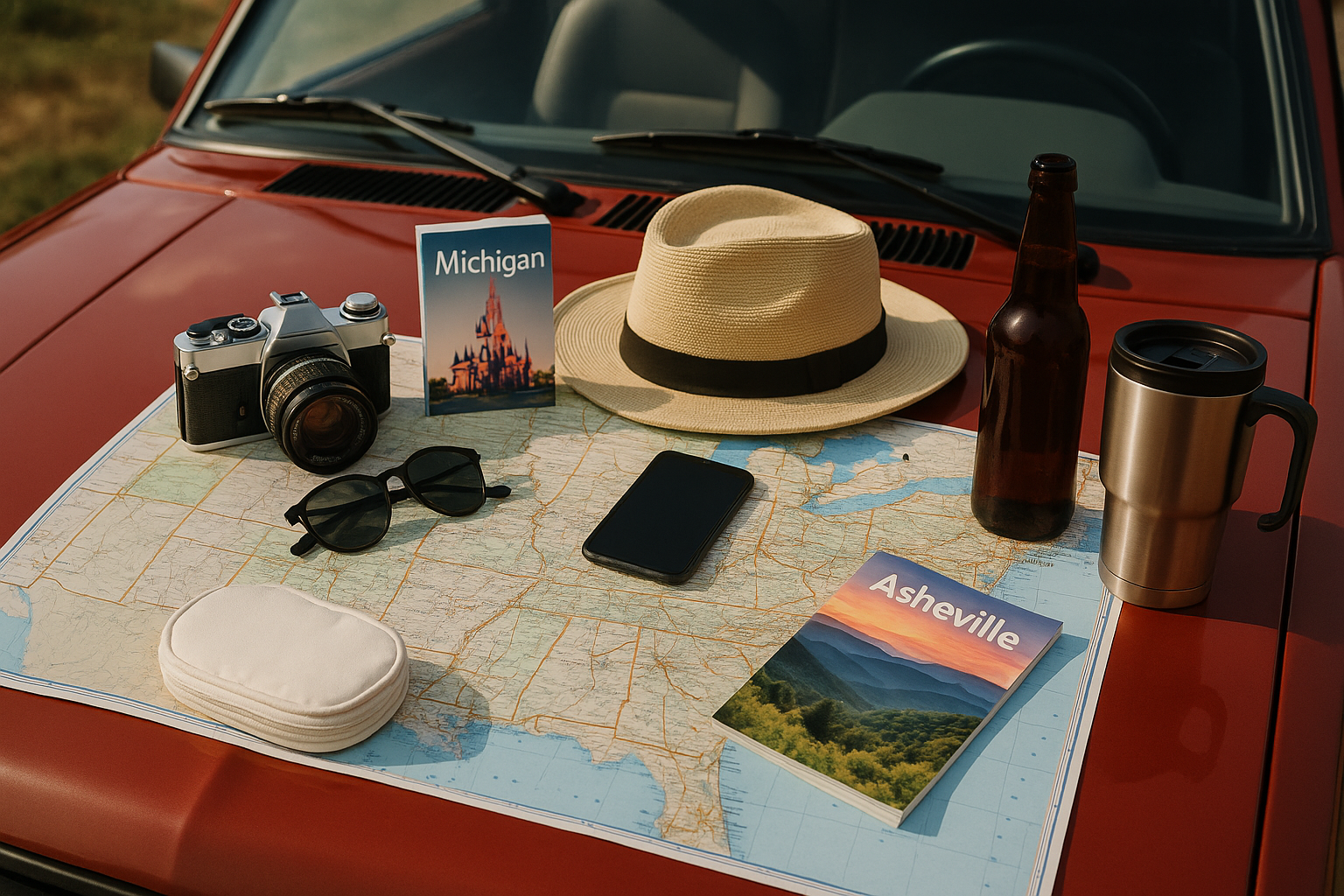
Why a US Road Trip Is Still the Best Way to Discover America
There’s something about rolling down a highway with the windows down, a playlist you’ve been building for weeks, and zero fixed plans that feels genuinely freeing. If you’re looking for the ultimate domestic adventure, mastering your us road trip essentials is the first step toward one of the most memorable journeys you’ll ever take. America is enormous, wildly diverse, and full of places that don’t make it onto the typical tourist trail — and the only real way to reach them is by hitting the open road.
From the misty ridgelines of the Blue Ridge Parkway to the warm coastlines of Florida, from the honky-tonk energy of Nashville to the craft beer culture of Asheville, the routes you can stitch together across this country are almost endless. Whether you’re planning a two-week sprint or a months-long cross-country odyssey, this guide will walk you through the routes worth exploring and the practical knowledge you need to make it all work.
The Routes That Should Be on Your Radar
Nashville to Asheville: Music, Mountains, and Everything Between
If you want a road trip that packs serious variety into a relatively short stretch of highway, the Nashville to Asheville corridor delivers. You start in Tennessee’s capital, a city that’s equal parts live music, late nights, and surprisingly good food beyond the tourist strip. Spend a day or two soaking it in before pointing east toward North Carolina.
The drive itself transforms gradually. The flat farmland of middle Tennessee gives way to rolling hills, then proper mountains as you cross into the Appalachians. Asheville sits right in the heart of it all — a small city with a big creative energy, known for its arts scene, independent restaurants, and some of the best craft brewing in the Southeast. It’s the kind of place where you can spend a morning hiking above the clouds and an evening eating exceptionally well. The Nashville-to-Asheville route is one of the most celebrated best US road trips for good reason — it gives you cultural richness and natural beauty without requiring you to drive for days to find either.
The Blue Ridge Parkway: America’s Favorite Drive
If you have any extra days to spare around Asheville, use them on the Blue Ridge Parkway. This legendary stretch of road winds along the spine of the Appalachian range, offering overlooks, hiking trails, and waterfall pullouts at almost every mile. The pace is deliberately slow — it’s not a highway, it’s an experience. You’ll share the road with cyclists, hikers crossing at trailheads, and other travelers who’ve pulled over just to stare at the view.
A North Carolina road trip itinerary built around the Parkway can easily fill three to five days if you’re willing to leave the car and use your legs. Some of the most rewarding moments come from short hikes to waterfalls tucked into the forest or early morning walks to overlooks before the crowds arrive. The light at sunrise along the ridgeline is the kind of thing you’ll be describing to people for years.
The East Coast Sweep: North Carolina Down to Florida
For those with more time and ambition, extending your journey south from North Carolina all the way to Florida opens up an entirely different set of landscapes and experiences. You move from mountain forests to coastal plains, from small Appalachian towns to sprawling southern cities, before eventually hitting Florida’s beaches and warm, humid energy.
This kind of east coast road trip lets you experience the genuine variety of the American South. You might spend a night in a small coastal Carolina town, wake up to salt air and fishing boats, then drive another few hours to reach something completely different. The contrast is the point. Florida itself offers everything from quiet Gulf Coast towns to the electric buzz of Miami — and plenty of natural spaces in between that most visitors never discover because they flew straight to the obvious destinations.
Heading North: Michigan and the Great Lakes Region
While the Southeast gets a lot of road trip attention, the Great Lakes region — particularly Michigan — is one of America’s most underrated driving destinations. The state’s geography is genuinely unusual: two peninsulas surrounded by freshwater that looks and feels like the ocean. The Upper Peninsula especially rewards the curious traveler willing to make the drive north.
Think dense forests, dramatic shorelines, small towns with strong local identities, and a pace of life that feels far removed from the noise of major cities. A Michigan loop can take you through sand dunes along Lake Michigan, along the rocky shores of Lake Superior, and through communities where you’ll eat well and meet people who are genuinely proud of where they live. It’s the kind of road trip that reminds you how much of America most people never see.
US Road Trip Essentials: What You Actually Need
Vehicle Preparation You Can’t Skip
Before anything else, your vehicle needs to be ready. This isn’t about having a perfect car — it’s about knowing your car is reliable. Get the basics checked before you leave: tire pressure and tread depth, oil level, coolant, brakes, and lights. If you’re due for a service, do it before the trip, not after. Carry a spare tire and make sure you know how to change it. A roadside emergency kit — jumper cables, a reflective triangle, a basic tool kit, and a flashlight — takes up almost no space and can save you hours of waiting on the side of the road.
Resources like the Car and Driver road trip essentials checklist offer a thorough pre-departure vehicle inspection guide that’s worth going through point by point before you leave your driveway.
Navigation: Digital and Analog
Your phone’s GPS is great until you lose signal in the mountains or on a remote stretch of highway. Download offline maps before you leave — apps like Google Maps and Maps.me allow you to save entire regions for offline use. If you’re driving through areas known for poor cell coverage (the Blue Ridge Parkway and rural Michigan both qualify), this is non-negotiable.
A paper atlas might feel old-fashioned, but it’s never run out of battery. Keep one in the car. It also gives you a much better sense of the big picture — where you are relative to everything else — in a way that a phone screen zoomed in on your immediate location simply can’t.
Packing Smart for the Long Haul
The biggest mistake first-time road trippers make is overpacking. You’re not checking into a hotel every night with a bellhop — you’re loading and unloading your own bags, often in cramped parking lots or campsite gravel. Pack less than you think you need. Clothes that can be layered and reworn, shoes that work for both hiking and walking around a city, and a small daypack for excursions will serve you far better than a suitcase full of outfit options.
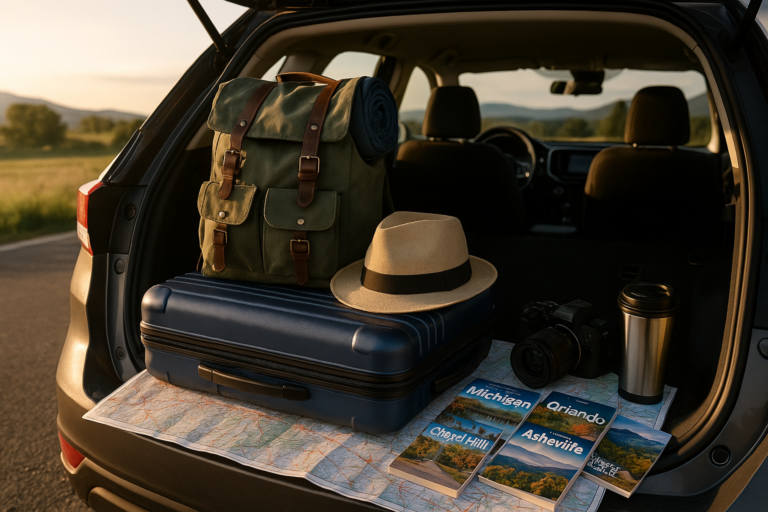
A few things worth having in easy reach rather than buried in your trunk:
- A reusable water bottle and a small cooler for snacks and drinks
- Sunscreen and a hat — you’ll be near windows for hours
- A portable phone charger and a car charging adapter
- A light rain jacket that packs small
- Earplugs and an eye mask if you’re sharing accommodation or camping
- A small first aid kit with basic medications, blister pads, and any prescriptions
- Cash in small bills — not everywhere takes cards, especially at rural gas stations or farmers’ markets
Sleep Arrangements: Flexibility Is Everything
One of the great joys of a road trip is that you don’t have to commit to a rigid accommodation schedule. Some nights you’ll want a proper bed and a hot shower. Other nights, a campsite under the stars makes more sense — and costs a fraction of the price. Mix it up. National forest campgrounds often charge very little and put you right in the middle of landscapes you’d otherwise only see from a car window.
If you’re traveling in peak summer months — especially along popular routes like the Blue Ridge Parkway or in Florida — book at least a few nights in advance. Some campgrounds and budget-friendly motels fill up fast, and showing up without a reservation on a Friday evening in July is a gamble that doesn’t always pay off.
Food and Fuel Strategy
Part of the magic of a road trip is eating at places you’d never find any other way. Diners on the edge of small towns, barbecue spots that have been run by the same family for decades, roadside fruit stands in the Carolinas, fresh seafood shacks along the Florida coast — these are the meals you’ll remember. Resist the pull of chain restaurants whenever you can. If you’re not sure where to eat, ask locals. Gas station attendants, campground hosts, and people walking their dogs at rest stops often give the best recommendations.
Keep your fuel tank above a quarter full when you’re driving through rural stretches. Gas stations can be genuinely far apart in parts of the Upper Peninsula of Michigan or on remote sections of the Appalachians. Running low on fuel in an area with no cell signal is a situation you want to avoid entirely.
Planning a Longer Journey: The Multi-Month Road Trip
For those with the time and appetite for something bigger, a multi-month US road trip is a transformative experience. Nomadic Matt’s extended USA road trip itinerary is one of the most comprehensive resources available for planning this kind of journey, covering how to structure months on the road without burning out or blowing your budget.
The key to making a long trip work is building in rest. It sounds counterintuitive, but the travelers who try to see everything end up exhausted and unable to appreciate any of it. Give yourself permission to stay somewhere for three or four days when it feels right. Slow down in places that surprise you. Some of the best memories from long road trips come from towns you’d never planned to stop in at all.
Budget planning matters too. Camping more, cooking some of your own meals, and avoiding tourist-trap areas where prices spike dramatically can stretch your money significantly further. The goal isn’t to spend less — it’s to spend smarter so the journey can last longer.
The Mindset That Makes It All Work
Here’s the honest truth about road trips: things will go wrong. A tire will go flat at an inconvenient moment. You’ll miss a turn and end up somewhere you didn’t plan to be. A campsite will be fully booked. Rain will arrive on the day you planned to hike. None of this is a disaster. In fact, some of the most memorable moments from any road trip come from exactly these situations — the detour that led somewhere unexpected, the diner you found because you needed to wait out a storm, the conversation with a stranger at a gas station that changed your perspective on something.
Approach the whole thing with curiosity rather than a rigid checklist. Have a rough plan, know your us road trip essentials, do your preparation — and then hold it all loosely. The road has a way of offering something better than what you planned if you’re open to it.
Gear Worth Investing In Before You Leave
You don’t need to spend a fortune on gear, but a few quality items make a real difference over days and weeks of travel. The NYT Wirecutter road trip gear guide offers tested, honest recommendations across categories from car organizers to portable coolers to sleep gear — worth a read before you start buying things you don’t actually need.
Some investments that consistently prove their worth on long trips:
- A quality car seat cushion if you’re driving for multiple hours daily
- A roof box or cargo organizer if you’re carrying camping gear
- A portable solar charger for off-grid camping situations
- A good insulated water bottle that keeps drinks cold for hours in summer heat
- Noise-canceling earbuds for overnight buses or shared accommodation
- A compact, packable down jacket — even in summer, mountain nights get cold
Making It Your Own
The routes covered here — Nashville to Asheville, the Blue Ridge Parkway, the east coast sweep down to Florida, the quiet vastness of Michigan’s Great Lakes shoreline — are starting points, not scripts. Every traveler brings their own pace, interests, and appetite for adventure. Some people want to hike every day. Others want to eat their way through a region. Some want live music and city energy; others want silence and stars. A road trip accommodates all of it.
That’s ultimately what makes the us road trip format so enduring. It gives you freedom in a way that almost no other style of travel does. You’re not locked into a flight schedule or a hotel booking that’s too expensive to change. You can decide at breakfast to go somewhere completely different by lunch. You can follow a recommendation from someone you just met. You can take the scenic route because you feel like it.
Getting your us road trip essentials sorted — the practical stuff, the vehicle prep, the smart packing — is what gives you the freedom to be spontaneous once you’re out there. When you’re not worrying about whether you have a spare tire or enough water or a way to navigate without cell signal, you can actually be present for the journey. And that’s when the real adventure begins.
So map out a rough route, load up the car, and start driving. The road will take care of the rest.
This article was produced with AI assistance and reviewed editorially.


Southeast Asia on a Shoestring: Budget Routes Across Thailand, Vietnam & Cambodia

Southeast Asia Decoded: Hanoi 3-Day Itinerary + Vietnam Misconceptions Debunked


