
Spain
Gran Canaria: Where to Stay for Every Travel Style (2026)
Discover where to stay in Gran Canaria across neighborhoods like Las Palmas, Maspalomas, and mountain villages. Find the right base for your travel style.

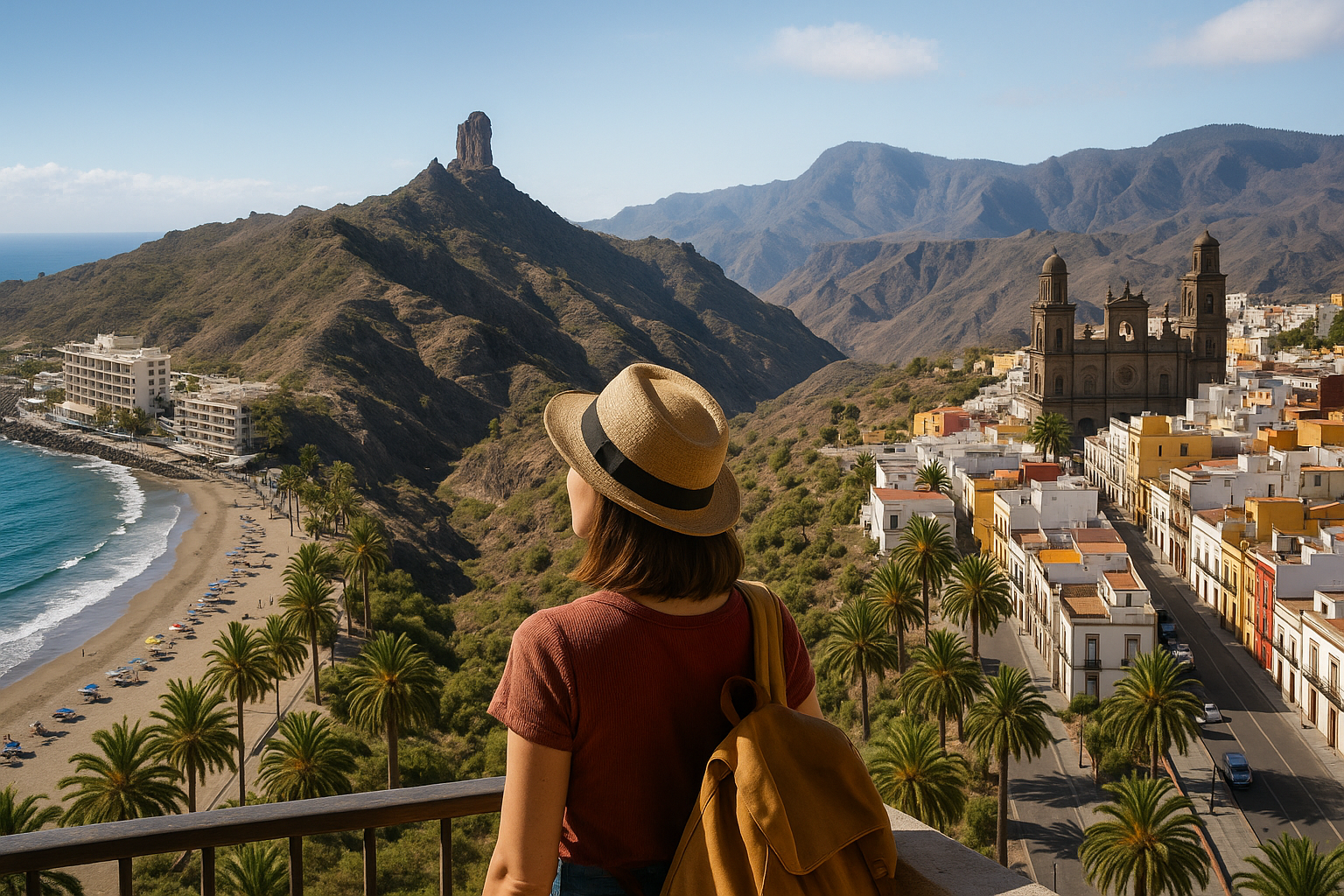
Where to Stay in Gran Canaria: A Guide for Every Kind of Traveler
Gran Canaria doesn’t fit neatly into a single category, and that’s exactly what makes it so compelling. Part city, part beach resort, part wild mountain landscape — this Spanish island in the Canary Islands has a completely different personality depending on where you plant yourself. Figuring out where to stay in Gran Canaria is genuinely one of the most important decisions you’ll make before your trip, because the island is big enough that your base shapes your entire experience. Get it right, and you’ll feel like you’ve unlocked a version of the island that most visitors never see.
Whether you’re chasing Atlantic sunsets, want to explore colonial architecture, or just need a solid base for hiking into the interior, this guide breaks it all down. No fluff, no generic advice — just honest, practical help for choosing the neighborhood that actually fits your travel style.
Why Gran Canaria Deserves More Than a Week
Most people know Gran Canaria for its southern resort strip and its year-round sunshine. And yes, that sunshine is real — the island sits off the northwest coast of Africa and enjoys a climate that makes it genuinely viable at any time of year. But reduce the island to sun loungers and all-inclusive buffets and you’re missing most of the story.
Gran Canaria packs golden sand dunes, dramatic Atlantic cliffs, lush mountain villages, and a working Canarian city all into one relatively compact space. The diversity of landscapes here is remarkable. You can spend the morning walking through Maspalomas Dunes — a landscape that feels more Saharan than European — and by afternoon be sitting in a cobblestoned square in the mountainous interior. That contrast is what keeps the island interesting well beyond a week.
For younger travelers especially, the range of accommodation options is a genuine advantage. Budget-friendly guesthouses and hostels sit alongside boutique hotels and apartment rentals, and prices across the island are generally accessible. You don’t need a huge budget to experience Gran Canaria properly — you need a smart plan.
Las Palmas: City Energy and Cultural Depth
If you want to experience Gran Canaria as a living, breathing place rather than a holiday bubble, Las Palmas is your answer. This is a real working Canarian city — the kind of place where people go about their daily lives, where the coffee shops are full of locals rather than tourists, and where the architecture tells a story that stretches back centuries.
The colonial old quarter, known as Vegueta, is one of the most atmospheric neighborhoods in the Canary Islands. Wander through its narrow streets early in the morning before the day heats up and you’ll feel like you’ve stepped into a different era. The cathedral, the colorful facades, the hidden courtyards — it rewards slow exploration.
But Las Palmas isn’t frozen in the past. The city also has a long urban beach called Las Canteras, which runs along the northern coast and is genuinely one of the best city beaches in Europe. It’s not a resort beach — it’s a neighborhood beach, lined with local restaurants and surf schools, where you’ll find families, joggers, and surfers all sharing the same stretch of sand.
Staying in Las Palmas makes sense if you:
- Want to connect with local culture and everyday city life
- Are interested in history, architecture, and authentic food scenes
- Plan to use the island’s bus network to explore further afield
- Prefer a mix of urban energy and beach access in the same place
- Are traveling solo and want to meet people organically
Accommodation in Las Palmas tends to be more affordable than the southern resorts, and you’ll find a solid range of hostels, guesthouses, and apartment rentals that suit most budgets.
Maspalomas and Playa del Inglés: The Classic South
The south of Gran Canaria is resort territory, and Maspalomas and Playa del Inglés sit at the heart of it. This is where the island’s famous dunes are located — a protected nature reserve that stretches for several kilometers and creates a genuinely surreal landscape right next to the beach.
Playa del Inglés is lively, loud, and unapologetically touristy. That’s not a criticism — it’s just the reality. If you want nightlife, a huge range of restaurants, and easy beach access, this area delivers. The strip buzzes after dark, and the beach itself is wide, well-maintained, and consistently sunny. It’s the kind of place where you can turn your brain off, soak up the warmth, and let the week carry you.
Maspalomas feels slightly more relaxed than its neighbor, with a bit more space and a slightly older crowd on average. But the two areas blend into each other, and staying in either one gives you access to both.
The accommodation here leans heavily toward all-inclusive hotels and large resort complexes, but you’ll also find apartments and smaller hotels that give you more independence. If you’re on a tighter budget, self-catering apartments are a smart choice — you control your food costs, and the local supermarkets are well-stocked.
Puerto de Mogán: The Quiet Alternative
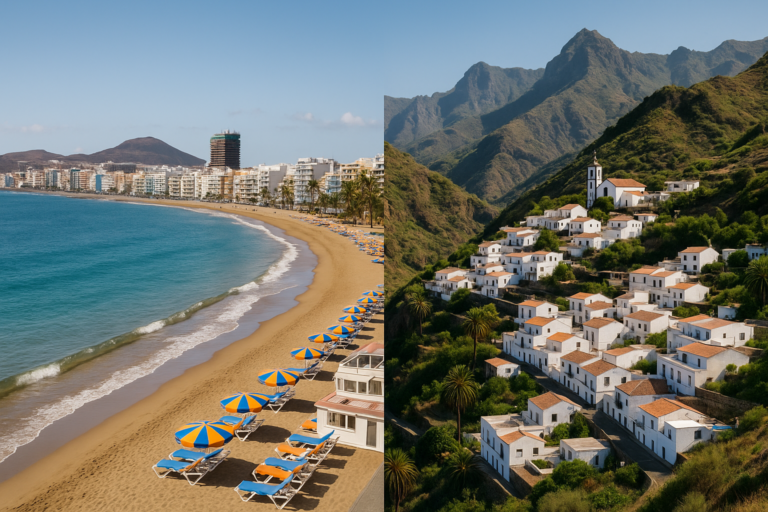
Puerto de Mogán is often described as a hidden gem, though it’s increasingly well-known among travelers who’ve done their research. It sits on the southwestern coast, about an hour from Las Palmas, and it has a completely different character from the busy resort towns further east.
The village is built around a small marina, with whitewashed buildings draped in bougainvillea and a relaxed, almost Mediterranean atmosphere. The beach is calm and protected, making it ideal for swimming. The restaurants along the waterfront serve fresh fish and local dishes rather than the generic tourist menus you’ll find elsewhere.
Puerto de Mogán is the kind of place where you slow down without even trying. Mornings feel unhurried. Afternoons drift pleasantly. It’s a genuinely beautiful spot that rewards travelers who value atmosphere over amenities.
It’s also a useful base for exploring the dramatic southwestern coastline, including the quieter beaches at Playa del Cura and Playa Taurito, both of which are within easy reach. If you’re renting a car — which is highly recommended for exploring Gran Canaria properly — staying in this area opens up some of the island’s most scenic coastal drives.
Puerto Rico and Arguineguín: Active and Affordable
Puerto Rico is a popular choice for travelers who want beach access and a social atmosphere without the overwhelming scale of Playa del Inglés. It’s a compact resort town built into a hillside, with a sheltered bay that makes it one of the calmest spots on the island for water sports. Jet skiing, windsurfing, sailing trips, and boat excursions all depart from here regularly.
The vibe is energetic and relatively young, with a good mix of bars, restaurants, and activity operators. Accommodation ranges from apartment complexes to mid-range hotels, and the prices tend to be reasonable compared to some of the larger resort areas.
Arguineguín, a short drive further along the coast, is a genuine fishing village that hasn’t been fully absorbed by the tourist machine. It has a working harbor, a lively weekly market, and a handful of excellent seafood restaurants where the catch is genuinely fresh. Staying here gives you a more local experience while still keeping you within easy reach of the southern beaches.
Meloneras and San Agustín: For a More Polished Stay
Meloneras sits between Maspalomas and Puerto de Mogán and has developed into one of the more upscale areas on the island. The promenade is wide and well-maintained, the hotels are generally newer and better appointed, and the overall atmosphere is calmer than the busier resort towns nearby.
If you’re traveling with someone and want a slightly more sophisticated base — somewhere with good restaurants, a quieter beach, and a bit more breathing room — Meloneras is worth considering. It’s also well-positioned for visiting the Maspalomas Dunes, which are just a short walk away.
San Agustín occupies the space between Maspalomas and Playa del Inglés and tends to attract travelers who want proximity to the action without being right in the middle of it. The beach here is quieter, the accommodation is a mix of apartments and hotels, and the pace feels a little slower.
The Interior and the North: Arucas, Teror, and Beyond
Most visitors to Gran Canaria never make it into the mountainous interior, which is a genuine shame. The landscape up here is completely different from the coast — green, dramatic, and dotted with small villages that feel like they belong to a different island entirely.
Arucas is a small town in the north known for its striking neo-Gothic church and its rum distillery, one of the oldest in the Canary Islands. It’s not a typical tourist destination, which is precisely what makes it interesting. Teror, further into the hills, is a pilgrimage town with a beautifully preserved historic center and a famous weekly market that draws locals from across the island.
Staying in the interior isn’t for everyone — you’ll need a car, and the accommodation options are limited compared to the coast. But if you’re the kind of traveler who finds joy in discovering places that haven’t been packaged for tourism, the mountain villages of Gran Canaria will stay with you long after you’ve gone home.
For a practical overview of the island’s geography and how its regions connect, resources like Wanderlust Chloe’s Gran Canaria guide and Travel Spain’s neighborhood breakdown offer useful context that complements boots-on-the-ground exploration.
How to Choose Where to Stay in Gran Canaria
The honest answer is that the best base depends entirely on what you’re hoping to get out of your trip. There’s no single right answer, but there are some useful questions worth asking yourself before you book.
- Do you want city life or beach life? Las Palmas gives you both, but the southern resorts give you beach in a more concentrated, resort-focused way.
- Are you renting a car? If yes, your base matters less — you can reach most of the island within an hour. If not, staying in Las Palmas or one of the larger southern resorts keeps you connected to public transport.
- What’s your budget? Hotel prices across the island start from a relatively accessible point, but all-inclusive resorts in the south can add up quickly if you’re not careful. Apartments and guesthouses in Las Palmas or smaller towns like Arguineguín often offer better value.
- How social do you want to be? If you’re traveling solo and want to meet people, Playa del Inglés and Puerto Rico have the most active social scenes. If you’re after quiet and atmosphere, Puerto de Mogán or the interior villages are far better choices.
- Are you planning day trips? Gran Canaria’s landscapes are diverse enough that day trips into the mountains, along the coast, or to quieter beaches are genuinely worth building into your itinerary regardless of where you stay.
Practical Tips Before You Book
A few things worth knowing before you commit to a neighborhood:
- Gran Canaria’s bus network (called Guaguas) connects most major areas, but services become less frequent in smaller towns and the interior. Check routes before assuming you can get around without a car.
- The north and south of the island have slightly different microclimates. The south tends to be sunnier and drier; the north and interior can be cloudier, especially in winter. This is worth factoring in if you’re visiting outside peak summer months.
- Booking accommodation in advance is sensible, particularly during peak season and around European school holidays when the island fills up quickly.
- If you’re staying in an apartment, check whether it’s in a residential building or a tourist complex — the experience can be quite different, and residential areas often give you a more authentic feel for daily life on the island.
- The island is compact enough that you can feasibly change bases mid-trip if you want to experience both the north and the south. Many travelers spend a few nights in Las Palmas and then move south, or vice versa.
Your Gran Canaria Adventure Starts with the Right Base
Knowing where to stay in Gran Canaria isn’t just a logistical question — it’s the foundation of your whole trip. Choose Las Palmas and you’ll leave with a genuine sense of Canarian culture, city energy, and a beach that feels like a local secret. Choose the south and you’ll wake up to reliable sunshine, easy beach access, and a social scene that runs well into the night. Choose Puerto de Mogán or the mountain villages and you’ll discover a quieter, more contemplative side of the island that most visitors never find.
The good news is that Gran Canaria is generous. Even if you pick the “wrong” base, the island rewards exploration. Rent a car for a day, take a bus to a different corner of the coast, or simply start walking in a direction you haven’t tried yet. The island has a way of surprising you when you least expect it — and those surprises tend to become the stories you tell when you get home.
This article was produced with AI assistance and reviewed editorially.


Vietnam Uncovered: Beyond the Chaos, Into the Real Story

Beyond the Guidebook: What Hanoi Actually Feels Like


