
Asia
Southeast Asia on a Budget: Sri Lanka, Bali, and Lombok Compared
Compare three budget destinations in Southeast Asia with honest cost breakdowns, weather data, and activities. Find your perfect trip for under $30/day.

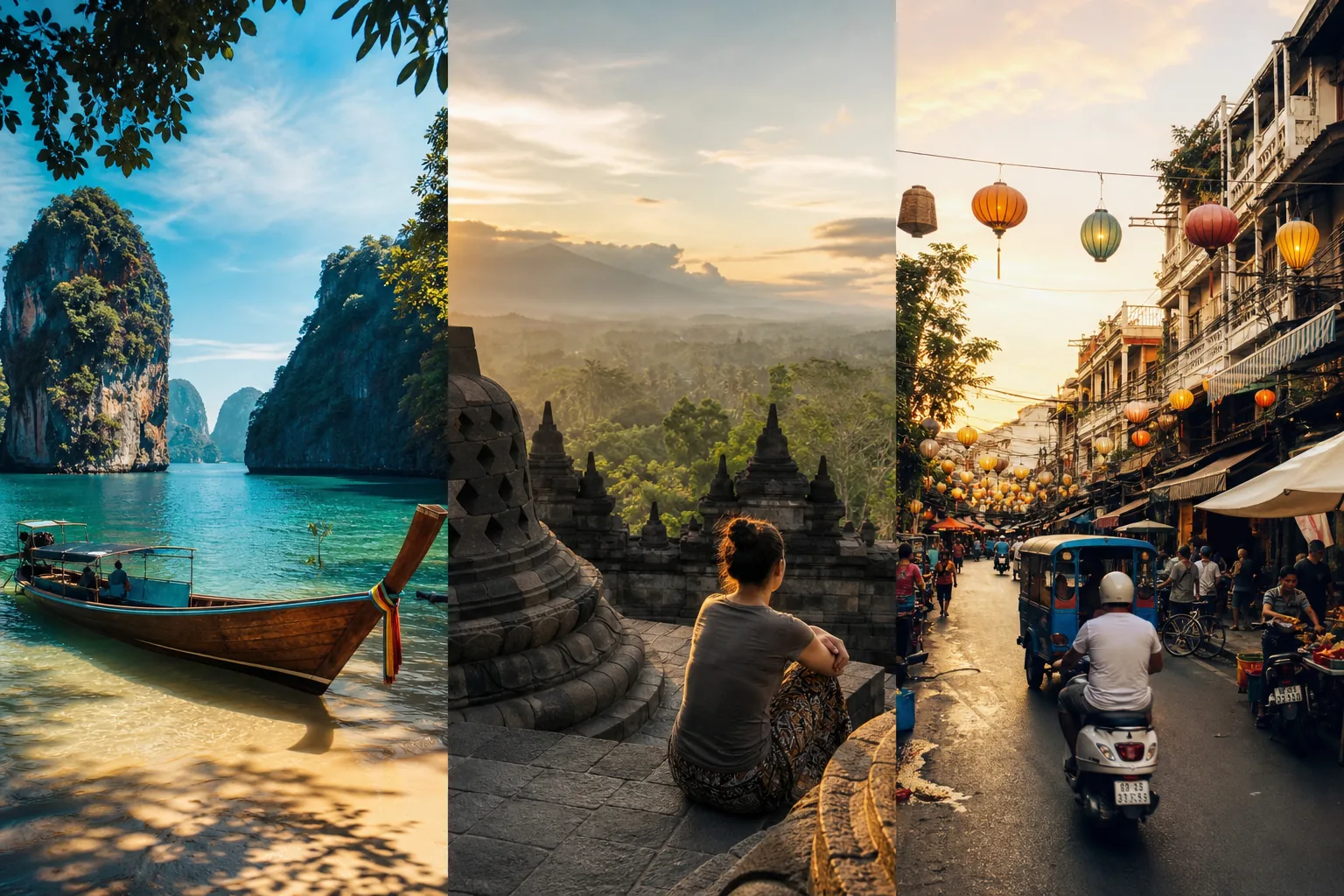
Planning a trip across Southeast Asia without draining your savings is one of the most exciting puzzles a young traveler can solve — and if you’re weighing up budget travel in Southeast Asia, three destinations consistently rise to the top of every conversation: Sri Lanka, Bali, and Lombok. Each one offers something genuinely different — ancient temples, volcanic landscapes, turquoise coastlines — but they vary wildly in terms of cost, crowd levels, and the kind of experience you’ll walk away with. This guide breaks all three down honestly, so you can stop second-guessing and start packing.
Why These Three Destinations Belong on Your Radar
Sri Lanka, Bali, and Lombok aren’t just trending on travel feeds — they’ve earned their reputation through sheer variety. Within a single trip, you can move from colonial hill towns to surf breaks to rice terraces, all without spending a fortune. What makes them particularly compelling for budget-conscious travelers aged 16 to 30 is that the infrastructure for independent travel is solid, the food scene is vibrant and affordable, and the cultural depth rewards curiosity rather than just ticking boxes.
That said, they’re not interchangeable. Sri Lanka leans heavily into history, wildlife, and a train network that’s genuinely one of the most scenic in the world. Bali is the social hub — the place where everyone seems to land first, where the sunsets are celebrated like events, and where the wellness and surf culture has taken on a life of its own. Lombok sits just east of Bali, quieter and rawer, with a pace that suits travelers who want to breathe a little more freely.
Understanding the differences before you book could save you both money and disappointment.
Sri Lanka: Culture, Coast, and Surprisingly Good Value
Sri Lanka tends to surprise people. It’s not always the first name that comes up in budget travel Southeast Asia conversations — partly because it sits in South Asia, technically — but the experience it offers punches well above its price tag. A 12-day trip to Sri Lanka can come in under ₹50,000 including everything, making it one of the most cost-efficient multi-experience destinations in the region.
On a backpacker budget, expect to spend around $30 per day. That’s slightly higher than Bali’s approximate $25 per day, but you’re getting a lot for that extra few dollars. Sri Lanka scores 8 out of 10 for cultural immersion, historical sites, and beaches — a rare triple threat that few destinations can genuinely claim. You’re moving between ancient rock fortresses, spice-scented markets, tea plantation viewpoints, and surf towns within the same two-week window.
Transport is one of Sri Lanka’s quiet strengths. Compared to Bali, Sri Lanka scores significantly higher for both transport infrastructure and walkability — 5 out of 10 versus Bali’s 1 out of 10 for transport, and 5 versus 3 for walkability. The train routes in particular are legendary among backpackers. The journey through the central highlands — past waterfalls, tea estates, and misty valleys — is the kind of travel memory that stays with you long after the photos fade.
What to Explore in Sri Lanka
The island’s geography makes it surprisingly easy to design your own route. The south coast offers excellent surf and laid-back beach towns where you can find guesthouses that won’t stretch your budget. The cultural triangle in the north-central region holds some of the most extraordinary ancient sites in Asia — massive dagobas, cave temples filled with centuries-old frescoes, and the famous rock citadel that rises dramatically above the surrounding jungle.
In the highlands, you’ll find a completely different atmosphere: cooler temperatures, mist rolling over tea bushes, and small towns where the pace of life feels genuinely unhurried. Wildlife sanctuaries in the south and east offer elephant encounters and leopard sightings in landscapes that feel far removed from tourist infrastructure.
One practical note: October sits in a transitional weather period for Sri Lanka. The southwest of the island — including the popular southern beaches — tends to experience the tail end of the southwest monsoon, which can bring rain. The east coast, however, is often clearer and calmer during this time. If you’re planning an October trip, building flexibility into your itinerary and being open to shifting between coasts will serve you well.
Bali: The Social Capital of Southeast Asia Travel
There’s a reason Bali remains one of the most visited islands in the world despite the crowds, the rising prices, and the endless “is Bali over?” debates online. It delivers. The combination of a deeply spiritual local culture, extraordinary food, world-class surf breaks, and a social scene that makes solo travel feel immediately welcoming is genuinely hard to replicate.
→ Read also: Southeast Asia on a Shoestring: Where to Go, When to Go, and Why You Should Leave Tomorrow
Budget-wise, a backpacker in Bali can realistically get by on around $25 per day. Accommodation ranges widely — while the average nightly rate can climb to $60 or more in popular areas, there are still plenty of guesthouses and hostels available in the $8 to $30 per night range if you book smart and stay slightly outside the main tourist hubs. Seminyak and Kuta will eat your budget faster than Ubud or Canggu, so knowing where to base yourself matters.
Bali scores 9 out of 10 for romance and 7 out of 10 for cultural immersion — which tells you something about the kind of traveler it attracts and the experience it prioritizes. The Balinese Hindu culture is genuinely woven into daily life: offerings placed on doorsteps each morning, temple ceremonies that spill into the streets, and a spiritual rhythm that gives the island a distinctive energy even as tourism has reshaped much of its surface.
Where Bali Shines and Where It Struggles
The honest truth about Bali in 2026 is that the most famous spots — Tegallalang Rice Terraces, Tanah Lot, the Ubud Monkey Forest — are genuinely busy. Peak season brings significant crowds, and the roads between popular areas can be frustratingly slow. If you arrive expecting a serene, undiscovered paradise, you’ll need to manage your expectations.
But here’s the thing: Bali rewards those who wander off the obvious path. The north of the island, around Lovina and Munduk, is dramatically quieter. The volcanic interior offers trekking that feels genuinely remote. And the local warung — small family-run eateries — serve some of the most satisfying food you’ll eat anywhere, at prices that make you want to order everything on the menu.
For budget travel in Southeast Asia, Bali’s social infrastructure is also a genuine asset. Hostels here tend to be well-designed, community-oriented spaces where you’ll meet other travelers within hours of arriving. If you’re on your first solo trip and want to ease into independent travel, Bali is one of the most forgiving places to start.
Lombok: The Quieter Alternative That’s Worth the Effort
Lombok sits just a short boat ride east of Bali, but it feels like a different world. The pace is slower, the beaches are less crowded, and the landscape — dominated by the imposing Mount Rinjani, one of Indonesia’s highest volcanoes — has a raw, unpolished quality that many travelers find deeply appealing.
A combined Bali and Lombok 19-day trip can come in around ₹65,000, which works out to a very reasonable daily spend when you factor in the variety of experiences across both islands. Lombok tends to be cheaper than Bali on a day-to-day basis, particularly for accommodation and food outside the Gili Islands, which attract their own premium.
The Gili Islands — three small islands off Lombok’s northwest coast — are a major draw. No motorized vehicles, clear water, and a laid-back atmosphere make them genuinely special. But Lombok itself has much more to offer beyond the Gilis. The south coast has some of the most dramatic surf beaches in Indonesia, largely uncrowded and visually stunning. The traditional Sasak villages in the interior offer a window into a culture that’s distinct from Bali’s Hindu traditions, with its own architecture, crafts, and way of life.
Bali vs Lombok: How to Decide
This is the question that fills travel forums and keeps people staring at flight comparison tabs at midnight. Here’s a practical framework for making the call:
- Choose Bali if you want a built-in social scene, a wide range of food and nightlife options, easy access to yoga and wellness activities, and a first-time travel experience with solid infrastructure.
- Choose Lombok if you want fewer crowds, a more physically adventurous experience (particularly if trekking Rinjani appeals to you), quieter beaches, and a destination that still feels like it’s being discovered rather than fully mapped.
- Do both if you have at least two to three weeks. The boat crossing between the islands is straightforward, and combining them gives you the best of both worlds — Bali’s energy and Lombok’s calm.
The traveler who has spent 15 years exploring Bali and lived in Lombok will tell you — and the community of long-term Southeast Asia travelers largely agrees — that Lombok suits those who’ve already done Bali and want to go deeper, or those who simply prefer their adventures with fewer tourist crowds from the start.
Honest Budget Breakdown: What Your Money Actually Gets You
Numbers matter when you’re traveling on a tight budget, so here’s a clear-eyed comparison across all three destinations.
→ Read also: Sri Lanka vs Bali vs Lombok: Which Southeast Asian Island Fits Your Travel Style in 2026
- Sri Lanka: Approximately $30 per day on a backpacker budget. A 12-day trip can come in under ₹50,000 all-in. Accommodation in guesthouses and budget hotels is widely available. Local food — rice and curry, kottu roti, fresh coconut — is extraordinarily cheap and genuinely delicious. Internal transport via train and bus is affordable and part of the experience.
- Bali: Approximately $25 per day on a backpacker budget. Accommodation ranges from $8 to $30 per night in budget options, though mid-range hotels can push $60 or more. Eating at local warungs keeps costs low. Scooter rental is the primary way to get around and adds a small but consistent daily cost.
- Lombok: Generally slightly cheaper than Bali outside of the Gili Islands, which carry a premium for their unique car-free atmosphere. Budget accommodation is easy to find on the main island. Food costs are low. A combined Bali and Lombok 19-day trip lands around ₹65,000.
One thing worth noting: how you travel matters as much as where you travel. Eating where locals eat, using public transport where possible, booking accommodation a day or two ahead rather than weeks in advance (which gives you flexibility to move on when a place doesn’t feel right), and traveling slowly rather than cramming in every highlight — these habits will stretch your budget further in any of these three destinations.
Local Experiences That Go Beyond the Obvious
The most memorable moments in any of these destinations rarely happen at the famous viewpoints. They happen when you slow down enough to notice what’s actually going on around you.
In Sri Lanka, that might mean joining a local family for a home-cooked meal in a village guesthouse, or watching a traditional drumming ceremony that’s part of a local festival rather than a tourist performance. The train journeys themselves are social experiences — conversations with students, monks, and families that give you a real sense of the country.
In Bali, it means getting up early enough to visit a temple before the tour groups arrive, or spending an afternoon learning to make offerings with a local family in a village that doesn’t appear in any guidebook. The island’s creative community — artists, musicians, craftspeople — is accessible if you make the effort to look beyond the main commercial strips.
In Lombok, it might be spending a night in a traditional Sasak village, learning about the distinct culture and architecture of the island’s indigenous people, or simply finding a stretch of south coast beach where the only other people around are local fishermen pulling in their morning catch.
For a useful starting point on planning your route and understanding visa requirements across these destinations, Hostelworld’s backpacking guides offer solid practical information for independent travelers.
Timing Your Trip: When to Go and Why It Matters
Seasonal timing can make or break a trip to any of these destinations, and it’s worth thinking about before you book flights.
Sri Lanka’s weather is shaped by two monsoons that affect different parts of the island at different times. Generally speaking, the southwest — including the cultural triangle and southern beaches — is best visited between December and March. The east coast comes into its own between May and September. October is a transitional month where flexibility is key; building an itinerary that can shift between coasts depending on conditions is a smart approach.
Bali’s dry season runs roughly from April through October, making this the most popular time to visit. The shoulder months — April, May, and September — offer good weather with slightly fewer crowds than the peak July and August period. November through March brings more rain, particularly in the interior, though the south coast can still be enjoyable.
Lombok follows a similar seasonal pattern to Bali, with the dry season from May to October being the most reliable for beach activities and the Rinjani trek. The Gili Islands are particularly appealing during this window, when the sea is calm and visibility for snorkeling and diving is at its best.
Whichever destination you choose — or whichever combination you piece together — the most important thing is to go with genuine curiosity and a willingness to be surprised. Budget travel in Southeast Asia isn’t about cutting corners; it’s about spending your money on the things that actually matter: the experiences, the connections, and the stories you’ll still be telling years from now. Sri Lanka, Bali, and Lombok each offer all of that in abundance — the only real question is which version of the adventure calls to you first.
This article was produced with AI assistance and reviewed editorially.


Madrid Like a Local: Why This City Gets Better the Longer You Stay

Southeast Asia on a Budget: Sri Lanka, Bali, and Lombok Compared


