
Asia
Sri Lanka vs Bali vs Lombok: Which Southeast Asian Island Fits Your Travel Style in 2026
Compare Bali, Sri Lanka, and Lombok across budget, vibe, and travel style. Discover which Southeast Asian island matches your 2026 adventure.

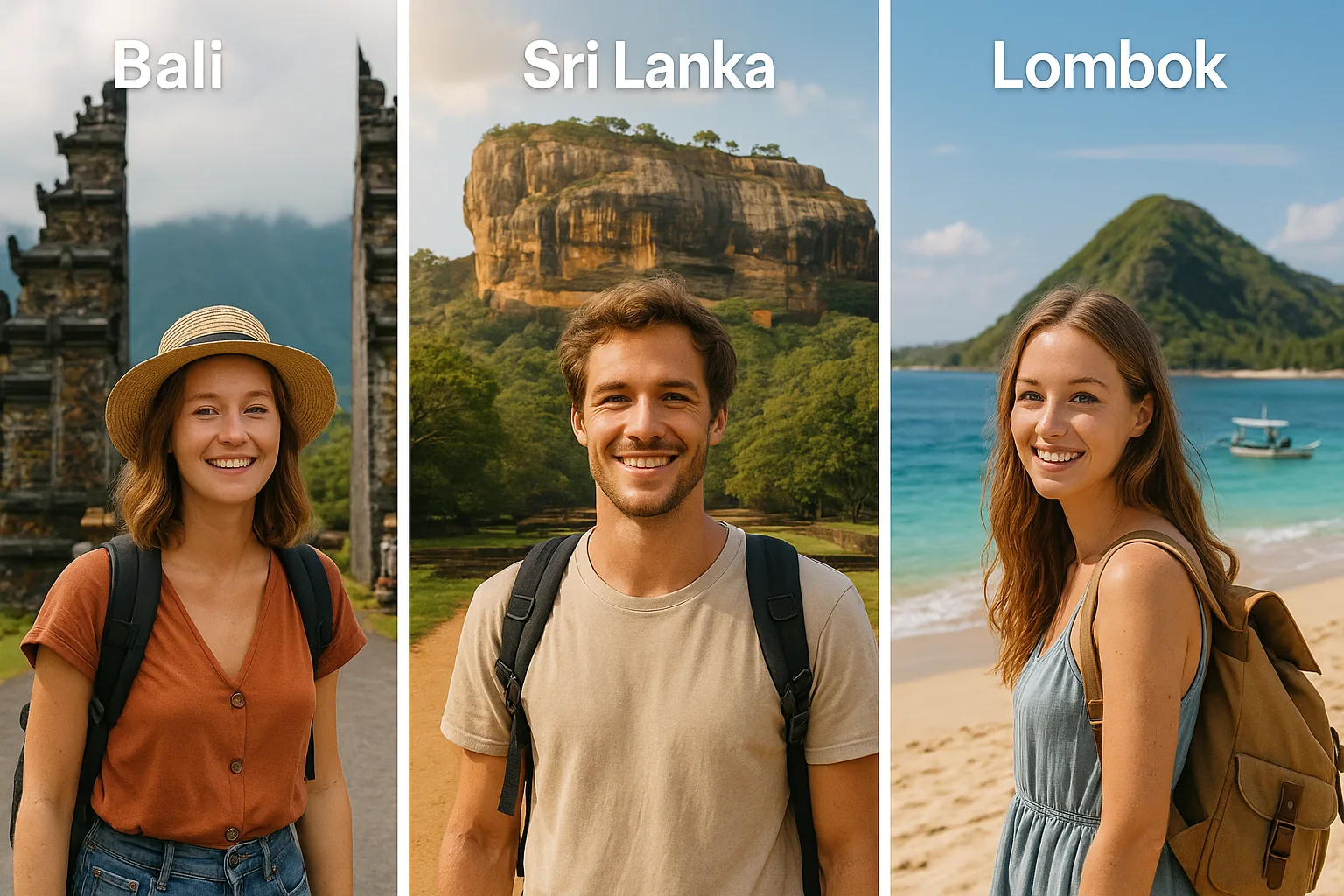
If you’ve been scrolling through travel forums trying to decide between Bali vs Sri Lanka vs Lombok, you’re not alone — these three destinations keep coming up as the top choices for young travelers chasing beaches, culture, and adventure without breaking the bank. Each one offers something genuinely different, and the right pick depends entirely on who you are as a traveler and what kind of trip you’re after in 2026.
Three Islands, Three Completely Different Energies
Before you start comparing prices or packing lists, it helps to understand the vibe of each destination. Because these three places aren’t interchangeable — they each pull you in a different direction.
Bali is the one everyone’s heard of. It’s polished, well-connected, and built for travelers. You can go from a rooftop brunch in Seminyak to a silent meditation session in Ubud to watching the sun melt into the Indian Ocean from the cliffs of Uluwatu — all in a single week. That variety is its biggest strength. Bali at 5,780 km² is slightly larger than Lombok, and it shows: there’s simply more of everything, from luxury eco-resorts to budget guesthouses, from ancient temples to beach clubs with international DJs.
Lombok, sitting just across the Lombok Strait at 4,607 km², is what Bali looked like before Instagram found it. Fewer crowds, quieter beaches, and a rawer kind of beauty. It attracts travelers who want to actually feel like they’ve discovered something — not just ticked a box.
Sri Lanka is a different world entirely. It’s not even in Southeast Asia geographically — it’s a teardrop-shaped island off the southern tip of India — but it constantly gets compared to Bali and Lombok because it attracts a similar kind of traveler. With over 2,500 years of recorded history, ancient kingdoms, and multiple UNESCO World Heritage Sites, Sri Lanka offers a depth of culture that the Indonesian islands simply can’t match in the same way.
What Bali Does Better Than Anywhere Else
Bali has earned its reputation for a reason. The infrastructure for travelers is exceptional — you’ll find reliable transport, a huge range of accommodation, and a well-worn backpacker trail that makes it easy to navigate even if it’s your first solo trip. That’s genuinely reassuring when you’re new to Southeast Asia.
The island covers an enormous range of experiences. Spend a few days in Ubud exploring the rice terraces of Tegallalang, visiting traditional healers, and catching a Kecak fire dance at sunset. Then head south to Uluwatu for world-class surf breaks and clifftop temples that look like they were designed for a film set. If you want to go out, Seminyak and Canggu have a nightlife scene that rivals many European cities — beach clubs, rooftop bars, and live music that keeps going until the early hours.
The spiritual side of Bali is equally real. Ubud in particular draws people looking for yoga retreats, sound healing, and a slower pace that genuinely resets your nervous system. It’s not performative wellness — it’s woven into daily Balinese life. You’ll see offerings placed at temple gates every morning, hear the distant sound of gamelan music drifting through the streets, and feel a rhythm to the days that’s hard to find elsewhere.
The trade-off? Bali is the most expensive of the three. Accommodation averages around $60+ per night for mid-range options, and popular areas like Seminyak can push that significantly higher. Budget travelers can still find cheaper guesthouses, but you’ll need to look harder and stay further from the main hubs.
👉 Read also: Sri Lanka & Lombok: Budget Backpacking Showdown for First-Time Southeast Asia Travelers
Why Lombok Is Winning Over Savvy Travelers Right Now
Here’s the thing about Lombok: it’s not just a cheaper Bali. It’s a genuinely different experience that happens to cost less. The beaches along the south coast — places like Kuta Lombok (not to be confused with Kuta Bali) and Mawun — are the kind of wide, white-sand stretches that feel almost untouched. The water is clear, the crowds are thin, and you can still find a warung on the beach where you’re the only foreigner eating there.
Getting there is easier than most people expect. Fast boats connect Bali to Lombok from Padang Bai or Serangan, making it a natural add-on to any Bali trip. The journey takes a few hours depending on conditions, and it’s affordable enough that there’s no real excuse not to go.
One of Lombok’s best-kept secrets is the Secret Gilis — a cluster of tiny islands in the southwest, including Gili Nanggu and Gili Sudak, that offer a private-island atmosphere without the price tag. These are the kind of places where you anchor a boat in clear water, snorkel over coral, and feel like you’ve fallen off the edge of the map in the best possible way.
Then there’s Mount Rinjani, an active volcano that rises to over 3,700 metres and draws trekkers from across the world. The two-to-three day hike to the summit is challenging, genuinely beautiful, and the kind of experience that stays with you long after you’ve come home. It’s one of the main reasons serious adventurers choose Lombok over Bali.
Accommodation across Lombok tends to fall in the $8–30 per night range for budget and mid-range options — a significant drop from Bali’s averages. Food is similarly affordable, with local warungs serving fresh fish, rice, and vegetables for just a couple of dollars. If you’re traveling on a tight budget, Lombok is where your money goes furthest.
Sri Lanka: Culture, Coast, and a Completely Different Kind of Journey
Choosing Sri Lanka over Bali or Lombok means choosing a fundamentally different kind of trip. This isn’t just about beaches — though Sri Lanka has stunning ones — it’s about immersing yourself in a living, breathing civilization that stretches back millennia.
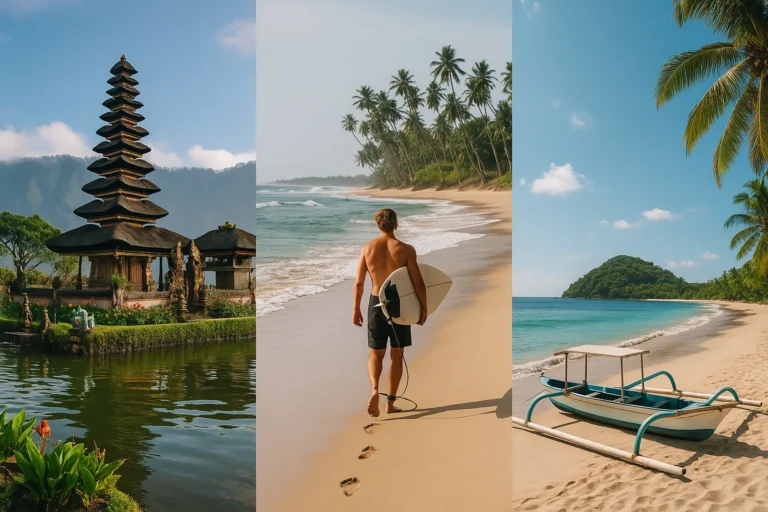
A typical Sri Lanka route might take you from the buzzing capital Colombo, with its colonial architecture and vibrant street food scene, up into the cool highlands of Kandy, home to the sacred Temple of the Tooth and surrounded by tea plantations that roll across the hills like a green carpet. From there, you can wind down to the southern coast and the beaches of Mirissa, where whale watching boats head out at dawn and the nights are filled with the smell of fresh seafood grilling over open fires.
The diversity of landscapes within a relatively small island is genuinely remarkable. You can go from ancient rock fortresses like Sigiriya — a UNESCO World Heritage Site that rises dramatically from the jungle floor — to elephant sanctuaries, to surf breaks, to spice gardens, all within a few days of travel. Sri Lanka rewards the curious traveler who wants more than just a beach holiday.
For Indian passport holders, Sri Lanka offers visa-free entry in 2026, making it an especially accessible choice. Other nationalities can typically obtain an electronic travel authorization easily online before departure. Check the official Sri Lanka Tourism website for the latest entry requirements before you book.
👉 Read also: Bali vs Lombok: Which Indonesian Island Matches Your Travel Style
Budget-wise, Sri Lanka sits somewhere between Lombok’s low costs and Bali’s higher averages. Food is generally very affordable — street food and local restaurants offer filling, flavourful meals for very little — but accommodation can vary widely depending on where you stay and what level of comfort you want. Traveling by train, particularly on the famous Kandy to Ella route through the tea country, is one of the cheapest and most spectacular journeys in Asia.
Budget Breakdown: Where Does Your Money Actually Go?
Let’s talk honestly about costs, because this is often what tips the decision. All three destinations are affordable compared to Europe or North America, but they’re not all the same.
- Bali is the priciest of the three, especially in tourist-heavy areas. Expect to spend more on accommodation, and be aware that popular restaurants and beach clubs in Seminyak or Canggu are priced accordingly. Budget travelers can manage on a tighter daily spend by staying in guesthouses, eating local food, and avoiding the nightlife circuit.
- Lombok is the most budget-friendly option overall. Accommodation in the $8–30 range is genuinely comfortable, local food is cheap and fresh, and activities like snorkeling, surfing lessons, and day trips to the Gilis won’t drain your wallet. The Rinjani trek requires a guide and permits, which adds cost, but it’s still very reasonable compared to similar hikes elsewhere in the world.
- Sri Lanka falls in the middle. Transport can be very cheap if you use trains and local buses, but private tuk-tuk tours or organised excursions add up. The range of accommodation is wide — from basic guesthouses near the beach to boutique tea estate hotels in the highlands.
As a general rule: if budget is your primary concern, Lombok wins. If you want the most variety for a slightly higher spend, Bali delivers. If you want culture, history, and coastal beauty combined, Sri Lanka offers the most layered experience for a moderate daily budget.
When to Go: Timing Your Trip in 2026
Timing matters more than most people realize, because all three destinations have distinct wet and dry seasons that genuinely affect your experience.
Bali and Lombok share a similar climate pattern. The dry season — roughly April through October — is the most popular time to visit, with lower humidity, less rain, and calmer seas. This is peak season, which means more crowds and slightly higher prices. If you want quieter beaches and lower costs, the shoulder months of April–May and September–October offer a good balance. The wet season from November through March brings heavier rainfall, particularly in the afternoons, but it’s not necessarily a deal-breaker — you’ll still get plenty of sunshine and the landscape turns lush and vivid.
Sri Lanka is more complex because the island has two distinct monsoon seasons affecting different coasts. The southwest coast — including the popular beach areas near Mirissa and Galle — is best visited from November through April, when the weather is dry and the sea is calm. The east coast flips this, with its best conditions running from May through September. This actually works in your favour if you’re planning a longer trip: you can chase the good weather around the island and experience both coasts at their best.
Choosing Based on Your Travel Style
Still not sure? Think about what you actually want from your trip — not what looks best in photos, but what kind of days you want to have.
- You want a mix of everything — party nights, spiritual mornings, surf, culture, and great food — go to Bali. It’s the most versatile destination of the three and the easiest to navigate as a first-time visitor to the region.
- You want to go off the beaten path without sacrificing beach quality — go to Lombok. You’ll spend less, feel more like an explorer, and come back with stories that aren’t on everyone else’s Instagram feed.
- You want depth — history, wildlife, tea plantations, ancient temples, whale watching, and a coastline that genuinely surprises you — go to Sri Lanka. It’s the choice for travelers who want a journey, not just a holiday.
It’s also worth saying: these destinations aren’t mutually exclusive. Bali and Lombok are a short boat ride apart, and many travelers combine them naturally into a single trip. Sri Lanka works brilliantly as a standalone adventure or as part of a longer South and Southeast Asia route.
The comparison between Bali vs Sri Lanka vs Lombok doesn’t have a single right answer — it has three right answers, depending on who’s asking. What all three share is the ability to make you feel genuinely alive: sun on your skin, unfamiliar flavors on your tongue, and the quiet certainty that you’re exactly where you’re supposed to be. Whichever one you choose, you’ll leave with stories worth telling. And honestly? That’s the whole point.
This article was produced with AI assistance and reviewed editorially.


Almaty & Tashkent: Central Asia’s Modern Cities Beyond the Silk Road Clichés

Stay Smart in Asia: Budget Accommodation in Osaka, Kyoto & Kuala Lumpur 2026


