
Ecuador
Ecuador’s Mountain Capital: Quito as a Base for Jungle, Amazon & Galápagos Adventures
Discover why Quito deserves more than a layover. This travel guide covers neighborhoods, altitude tips, and how to use Ecuador’s capital as a hub for jungle and island ad

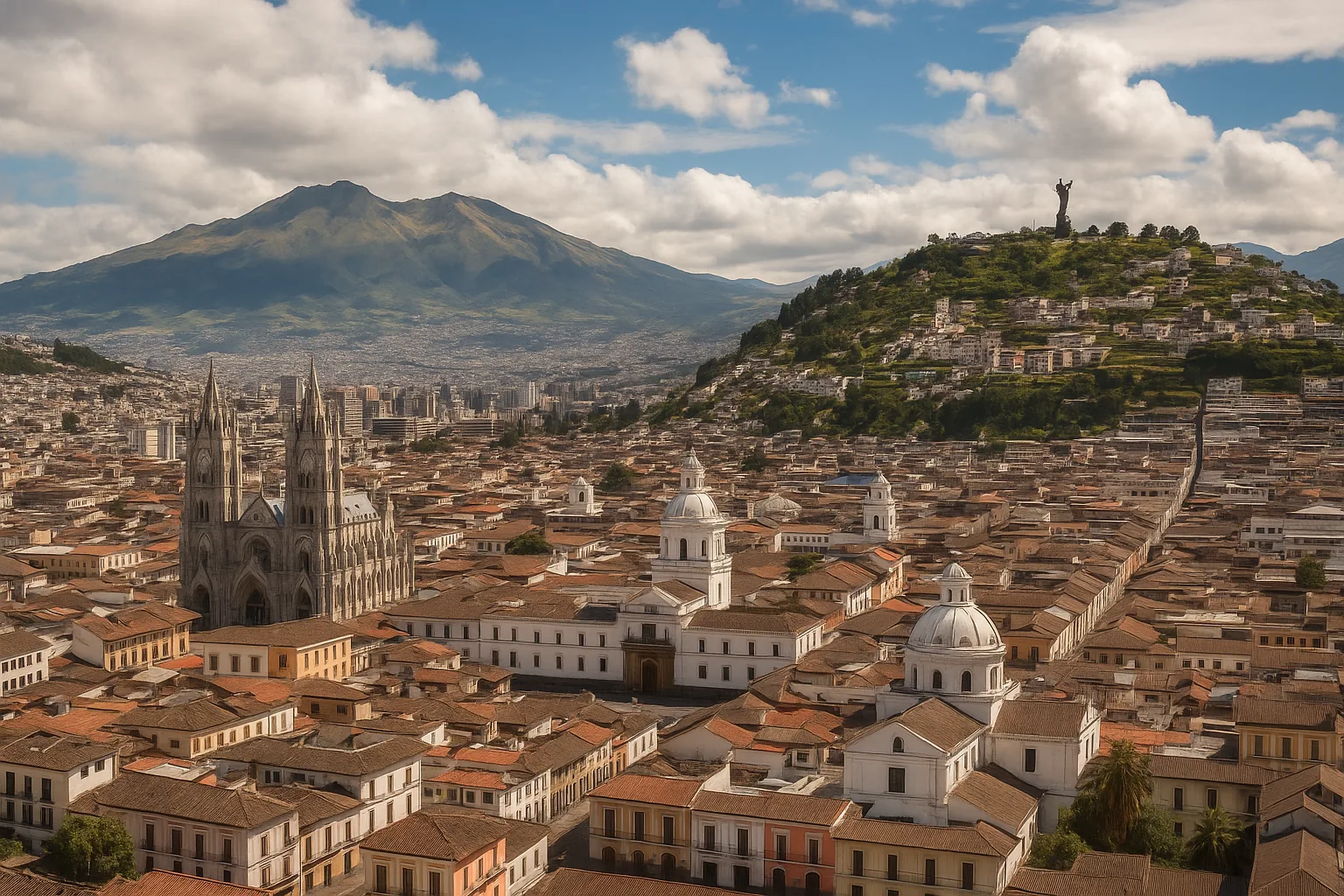
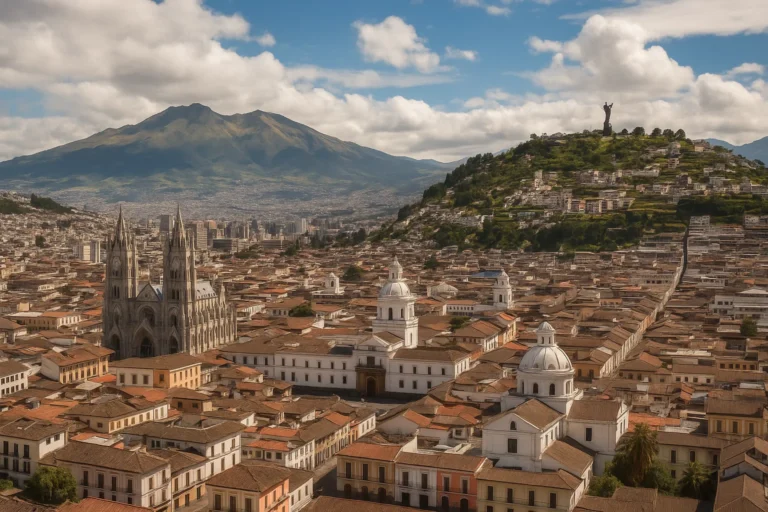
Most travelers land in Quito, spend a night or two catching their breath, and then rush off to the Galápagos or the Amazon without ever giving the city a real chance. That’s a mistake worth avoiding — and this Quito, Ecuador travel guide is here to make sure you don’t make it. Quito is one of South America’s most compelling capital cities: a colonial masterpiece sitting at 2,850 metres above sea level, ringed by volcanoes, full of neighbourhoods that each feel like a different world, and perfectly positioned as a launching pad for some of the most extraordinary ecosystems on the planet.
Why Quito Earns More Than a Layover
There’s a particular kind of city that gets underestimated simply because it sits next to something more famous. Quito is that city. While travellers obsess over the Galápagos Islands or the Amazon basin — both completely worth the obsession — the capital itself has a way of catching you off guard.
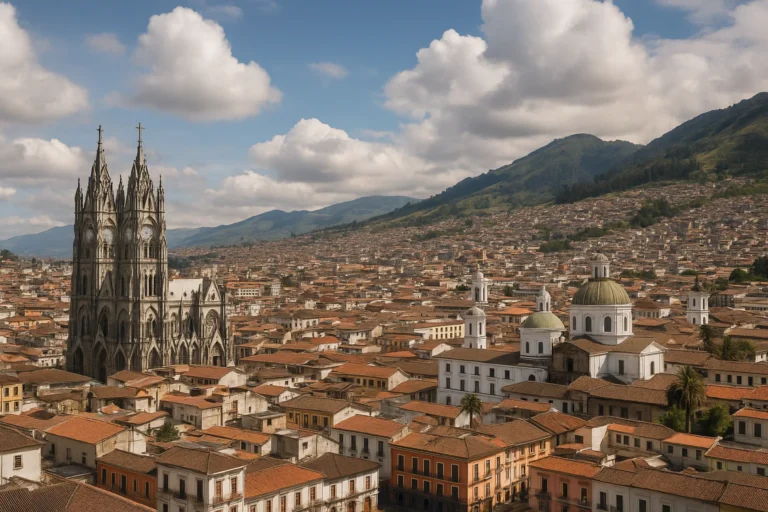
Walk into the Centro Histórico and you’ll understand immediately. This is one of the best-preserved colonial old towns in the Americas, a neighbourhood of grand plazas, gilded baroque churches, and cobblestone streets that climb and dip with the dramatic topography of the Andes. The light here is extraordinary — sharp, high-altitude light that makes everything look a little more vivid than it should. Grab a coffee from a street vendor, find a bench in Plaza Grande, and just watch the city move. It’s one of those slow, effortless travel moments that you don’t plan but always remember.
For a different energy entirely, head north to La Mariscal. This is where the hostels, rooftop bars, international restaurants, and late-night energy concentrate. It’s the obvious choice for solo travellers and backpackers who want to meet people easily and be close to practical things — tour operators, ATMs, and transport links. It can feel a little touristy during the day, but by evening it has a genuine buzz that’s hard to resist.
If you’re staying longer and want something calmer, the Cumbayá area — a suburb in a lower, warmer valley just outside the city — offers a completely different pace. Think leafy streets, local cafés, and a more residential atmosphere. It’s a great option if you’re working remotely or spending more than a week in Ecuador and want a base that feels less like a transit hub.
Getting Your Body to Agree With the Altitude
Here’s the thing nobody warns you about enough: Quito’s altitude hits differently depending on where you’re flying in from. At nearly 2,850 metres, the air is noticeably thinner than at sea level, and your body needs time to adjust. Some people feel completely fine within a day. Others get headaches, fatigue, or mild nausea for the first 48 hours. Neither experience is unusual.
The practical advice is simple but worth taking seriously. When you arrive, slow down. Don’t plan a full day of sightseeing on your first afternoon. Drink more water than you think you need. Avoid heavy meals and alcohol on your first night — both make acclimatisation harder. Sleep is often disrupted at altitude too, so be patient with yourself if you wake up feeling less rested than expected.
Light movement actually helps more than lying still. A gentle walk through the neighbourhood, a slow climb up to a viewpoint — these get your circulation going without overloading your system. Local herbal teas, particularly mate de coca (coca leaf tea), are widely available and traditionally used across the Andes to ease altitude discomfort. It won’t perform miracles, but it’s a warm, culturally authentic way to ease into the city.
👉 Read also: Quito, Ecuador: From 24-Hour Stopover to 10-Day Base Camp (Travel Guide 2026)
Most travellers feel noticeably better by day two or three. And once you’re acclimatised, Quito’s elevation becomes one of its gifts — the temperature stays mild and comfortable year-round, which makes exploring on foot genuinely pleasant.
Eating and Exploring Like You Actually Live There
Quito’s food scene is one of the most underrated parts of visiting. The city has a strong culinary identity rooted in Andean ingredients — locro de papa (a thick potato and cheese soup), llapingachos (pan-fried potato cakes), grilled meats, and fresh juices made from fruits you’ve probably never heard of. Markets are the best place to experience this without spending much at all.
The Mercado Central and neighbourhood markets scattered across the city are where locals eat lunch every day. Find a seat at a communal table, point at what looks good, and let the experience unfold. A full meal — soup, main course, juice — typically costs very little and tastes like something you’d pay three times as much for in a restaurant. This is the kind of eating that makes travel feel real.
Beyond food, Quito rewards curious walkers. The Basílica del Voto Nacional is worth climbing for the views alone — you can actually ascend into the towers and look out over the entire city, surrounded by the Andean skyline. The Telefériقo cable car takes you up the flanks of Volcán Pichincha to around 4,000 metres, where on clear days you can see multiple volcanoes stretching across the horizon. It’s one of those moments that genuinely puts the scale of Ecuador into perspective.
For something more local and less visited, explore the La Floresta neighbourhood — a creative, artsy district full of independent galleries, small bookshops, and cafés where students and artists spend their afternoons. It has none of the tourist infrastructure of La Mariscal, which is exactly the point.
Using Quito as Your Gateway: Amazon, Galápagos, and Beyond
This is where Quito really earns its place as one of South America’s most strategically valuable cities for young travellers. Almost nowhere else on the continent puts you within reach of so many radically different ecosystems from a single base.
The Amazon is closer than most people expect. Access typically involves a short domestic flight from Quito to either Coca or Lago Agrio, two small gateway towns on the edge of the rainforest. From there, you board a river canoe and head deeper into one of the most biodiverse places on Earth. Yasuni National Park is one of Ecuador’s most celebrated Amazon destinations — a protected reserve where the density of species per square kilometre is genuinely staggering. A typical Amazon lodge stay runs around three to four nights, which is enough time to do night walks, canoe through flooded forest, visit local communities, and start to understand just how alive a rainforest actually is.
The Galápagos Islands are a longer commitment but an unforgettable one. Flights depart from Quito (usually with a connection in Guayaquil) to either Baltra or San Cristóbal island. Whether you choose a cruise — which lets you move between islands efficiently — or a land-based stay with day tours, plan for at least four to eight days to make the journey worthwhile. Combining both the Galápagos and the Amazon in a single Ecuador trip is very doable: a combined itinerary typically spans ten to fourteen days total, making it an ideal structure for anyone with two weeks to spend.
👉 Read also: City Guides for Young Travelers: Buenos Aires, Quito, and Trujillo (Culture, Food & Adventure)
If you’re heading further south through the continent, Quito also connects you to southern Ecuador’s highlands — the famous Avenue of the Volcanoes, the indigenous markets of Otavalo (just a couple of hours north), and the colonial city of Cuenca, which many travellers consider even more beautiful than Quito’s old town. Ecuador is a compact country, which means distances that would take days elsewhere here take hours. That’s a genuine advantage when you’re planning a multi-stop journey.
When to Go and How to Get Around
Quito sits almost exactly on the equator, which means its climate is shaped more by altitude and rainfall patterns than by traditional seasons. The city is pleasant year-round, but there are drier and wetter periods worth knowing about. Generally, the months between June and September tend to be drier and sunnier, making them popular for travel. The period from December to February also sees relatively good weather. The rainiest months typically fall between March and May, though even then, rain usually comes in short afternoon bursts rather than all-day downpours — and the city stays lush and green.
Getting around Quito itself is straightforward once you understand the basics. The city has a trolleybus and electric bus network that covers major routes cheaply and efficiently. Ride-hailing apps work well in the city and are generally affordable. Walking is genuinely viable in compact areas like the Centro Histórico and La Mariscal, though the hills will remind you that you’re at altitude. For day trips — to Otavalo, Cotopaxi, or the Mitad del Mundo monument on the equator line — shared shuttles organised through hostels and tour operators are the most practical and budget-friendly option.
For budget accommodation, Quito has a well-developed hostel scene, particularly concentrated in La Mariscal. You’ll find everything from basic dorm beds to private rooms with good communal spaces, rooftop terraces, and tour-booking services. Booking a few nights in advance during peak travel periods is sensible, but Quito rarely feels as overcrowded as some other South American backpacker hubs.
Practical Things Worth Knowing Before You Arrive
Ecuador uses the US dollar as its official currency, which removes the currency exchange stress that comes with many South American destinations. Cash is still king in markets, small restaurants, and rural areas, so carry some at all times. ATMs are widely available in Quito, though fees vary by bank.
The city is generally navigable and welcoming, but like any large urban centre, it rewards awareness. Stick to well-lit, populated areas at night, use registered taxis or apps rather than flagging down unmarked cars, and keep valuables out of sight in crowded spaces. Most travellers move through Quito without any issues — the key is the same basic street sense you’d apply anywhere.
Spanish is the primary language, and while English is spoken in tourist-facing businesses, learning even a handful of phrases goes a long way. Locals genuinely appreciate the effort, and it opens doors — to conversations, to better prices at markets, to the kind of spontaneous human connection that makes travel memorable rather than just photogenic.
For authoritative information on combining Quito with Galápagos and Amazon itineraries, Galapagos Insiders offers detailed, experience-based guidance worth reading before you finalise your plans.
Quito has a way of becoming more than the place you passed through on the way to somewhere else. Give it a few days — really give it a few days — and you’ll find yourself wandering colonial streets at dusk, eating soup in a market that wasn’t in any guidebook, watching the Andes turn gold in the late afternoon light, and quietly rearranging your plans to stay just a little longer. That’s the thing about cities that surprise you: once they have your attention, they’re hard to leave.
This article was produced with AI assistance and reviewed editorially.


Ecuador’s Mountain Capital: Quito as a Base for Jungle, Amazon & Galápagos Adventures

Budget Stays in Japan: Capsule Hotels, Airbnbs & Guesthouses Across Tokyo, Kyoto & Mt. Fuji


